

I thought my dishwasher was broken. Dishes were coming out with a filmy residue, glasses had a cloudy haze, and there was a faint funky smell every time I opened the door. I was ready to call a repair technician when a neighbor casually asked, “When was the last time you cleaned your dishwasher?” The answer, embarrassingly, was never. I didn’t even know dishwashers needed cleaning — isn’t the whole point that they clean themselves while cleaning your dishes?
Turns out, no. Dishwashers accumulate food particles, grease, soap scum, and mineral deposits in places you never see: the filter, the spray arm holes, the door gasket, and the drain. Cleaning these areas took me exactly 15 minutes and completely fixed every problem I thought required a repairman. Here’s the step-by-step process.
| ⏱ Time Required: | 15 minutes active |
| 📈 Difficulty: | Easy |
| 💰 Supplies Cost: | $0-3 |
| 🔄 How Often: | Monthly |
What’s Behind It
- Fixes the most common dishwasher complaints — filmy dishes, cloudy glasses, bad smells, and poor cleaning performance are almost always caused by a dirty dishwasher, not a broken one
- Takes only 15 minutes of active work — the vinegar cycle runs on its own. Your hands-on time is about 15 minutes of cleaning the filter, spray arms, and gasket
- Prevents expensive repair calls — a clogged filter or blocked spray arm mimics the symptoms of a malfunctioning dishwasher. Cleaning first can save a $100+ service call
- Extends machine lifespan — mineral scale and grease buildup force the pump and motor to work harder. Regular cleaning reduces mechanical strain and prevents premature failure
- Improves energy efficiency — clean spray arms with clear holes distribute water more evenly, which means dishes get cleaner in the first wash cycle rather than needing a second run
- Uses two products you already own — white vinegar and baking soda are all you need for a complete deep clean
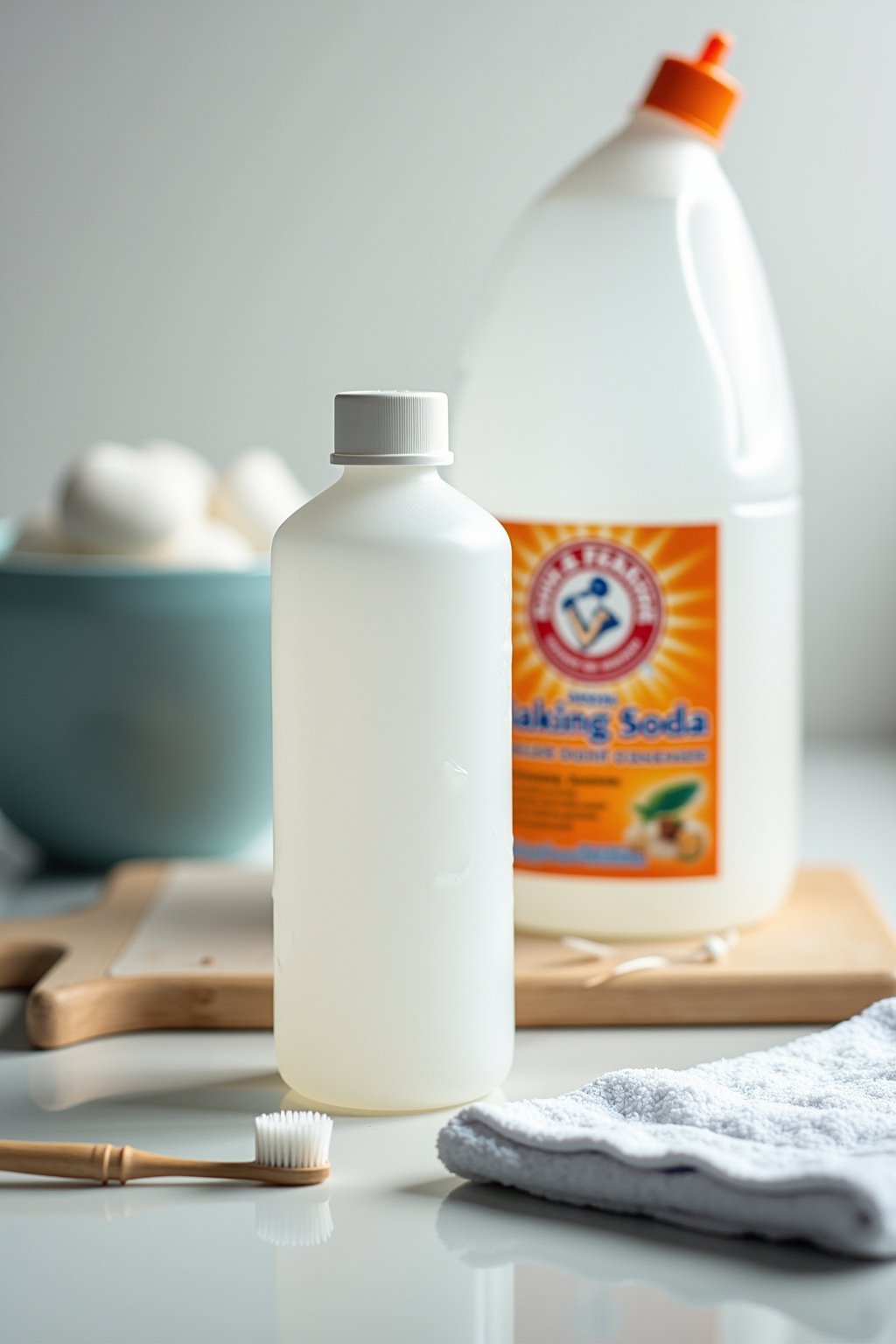
What to Have Ready
This deep clean requires minimal supplies and zero specialty products:
- White distilled vinegar — 2 cups, placed in a dishwasher-safe bowl on the top rack for the cleaning cycle
- Baking soda — 1 cup, sprinkled on the bottom of the tub for the final freshening cycle
- Old toothbrush — for scrubbing the gasket, spray arm holes, and drain area
- Toothpick or thin wire — for clearing clogged spray arm holes
- Microfiber cloth — for wiping the door, edges, and exterior
- Dish soap — a drop or two for cleaning the filter under running water
Stepping Through
Clean the Filter (5 Minutes)
The filter is the single most impactful component to clean and the one most people have never touched. It is located at the bottom of the dishwasher tub, usually near the base of the lower spray arm. Most filters twist-lock into place — turn counterclockwise and lift out. Some have a secondary flat mesh filter underneath as well. Remove both pieces. If you have never cleaned your filter, prepare to be impressed (or horrified) by what has accumulated.
Hold the filter under hot running water and scrub both sides with an old toothbrush and a drop of dish soap. Food particles, grease, and mineral scale will come off easily. If there are stubborn bits lodged in the mesh, soak the filter in warm vinegar water for 10 minutes, then scrub again. Once clean, replace the filter by setting it back into position and twisting clockwise until it locks. A clean filter alone can dramatically improve wash performance and eliminate bad odors.
Clear the Spray Arms (3 Minutes)
The spray arms are the rotating bars (usually one on the bottom and one under the top rack) that shoot water onto your dishes. Each arm has dozens of small holes that can become clogged with food particles, mineral buildup, or broken glass fragments. Remove the spray arms by pulling them up or unscrewing them (check your dishwasher manual for your specific model). Most simply snap or unclip.
Hold each arm under running water and look through the holes. Any that are blocked need clearing with a toothpick, thin wire, or wooden skewer. Push the debris out from the inside of the arm. You will be surprised at how many holes are partially or fully blocked. Rinse the arms thoroughly, shake out any loosened debris, and snap them back into place. Clear spray arm holes mean more water pressure on every dish, which translates directly into cleaner results.
Scrub the Door Gasket and Edges (3 Minutes)
The rubber gasket that seals the dishwasher door is a hidden grime trap. Fold back the gasket gently and you will likely find a black or brownish buildup of mold, mildew, and food debris. This is one of the primary sources of dishwasher odor. Dip an old toothbrush in a 50/50 vinegar and water solution and scrub the entire gasket, including the areas where it folds over and hides crevices.
While you have the toothbrush out, scrub the edges of the door interior, the area around the detergent dispenser, and the hinge areas at the bottom of the door. These spots do not get reached by the spray arms during a wash cycle, so they accumulate food splatter and moisture that grows mold over time. A quick scrub during each deep clean prevents this buildup from becoming a persistent smell source. Wipe everything with a damp microfiber cloth when done.
Run the Vinegar Cycle (Hands-Free)
Place 2 cups of white distilled vinegar in a dishwasher-safe bowl or measuring cup on the top rack of the empty dishwasher. Run the hottest cycle available (usually called “heavy” or “sanitize”). Do not add any detergent. The vinegar steam will circulate through the entire system, dissolving mineral scale deposits on the interior walls, in the pump, and inside the water lines. It also kills bacteria and deodorizes the tub.
This step is completely hands-free — just start the cycle and walk away. The hot water amplifies the vinegar’s cleaning power and ensures it reaches every internal component that you cannot access manually. This is the step that dissolves the invisible mineral scale that causes the white film on glassware and the chalky deposits on the interior walls. In hard water areas, this single step makes the most dramatic improvement.
Finish With the Baking Soda Freshener
After the vinegar cycle completes, sprinkle 1 cup of baking soda across the bottom of the empty dishwasher tub. Run a short hot cycle (the “quick wash” or “rinse” cycle works fine). The baking soda brightens the stainless steel interior, removes any lingering odors the vinegar did not catch, and leaves the dishwasher smelling clean and neutral.
When this cycle finishes, open the door and let the dishwasher air dry for 30 minutes. This allows any remaining moisture to evaporate rather than sitting in the tub creating a damp environment for mold. Your dishwasher is now clean, deodorized, and ready to perform at its best. The first load you run afterward will produce noticeably cleaner, spot-free dishes. Do this full deep clean once a month for best results, or every two weeks if you have very hard water or run your dishwasher daily.
The First Things to Check
- Never cleaning the filter — a clogged filter is the number one cause of poor dishwasher performance and bad odors. If you have not cleaned yours in months (or ever), start there first. It is the single highest-impact thing you can do
- Using bleach in a stainless steel dishwasher — bleach corrodes stainless steel interiors and can damage rubber gaskets and seals. Use vinegar for sanitizing and baking soda for brightening instead
- Running vinegar and baking soda in the same cycle — combining them neutralizes both, just like in laundry. Run the vinegar cycle first, then the baking soda cycle separately for maximum effectiveness
- Ignoring the spray arm holes — even a few clogged holes significantly reduce water coverage and cleaning power. Dishes on the side with clogged holes come out dirty while others are clean — a telltale sign
- Overloading the dishwasher regularly — overcrowding prevents water from reaching all surfaces and increases the food debris that accumulates in the filter and drain. Proper loading reduces how often you need to deep clean
Times This Earns Its Place
The Dishwasher Tub Interior
The stainless steel or plastic tub accumulates mineral scale and food residue that makes the interior look dingy and creates a breeding ground for odor-causing bacteria. The monthly vinegar cycle handles this. Between deep cleans, leave the dishwasher door slightly ajar after each wash cycle for an hour to let the interior dry and prevent mold growth.
The Door and Control Panel
The exterior door panel and control buttons get touched with greasy, food-covered hands constantly. Wipe the exterior with a damp microfiber cloth during your deep clean. For stainless steel door panels, use the same grain-following technique you would use for any stainless steel appliance. The control panel area collects food splatter and cleaning product drips — wipe it monthly.
The Area Around and Under the Dishwasher
Pull out the dishwasher’s kick plate (the panel at the bottom front) if removable and clean underneath with a vacuum. Food debris, pet hair, and dust accumulate here and can be drawn into the dishwasher during operation. Check for slow leaks from hose connections while you have access to this area. A small puddle or water stain under the dishwasher may indicate a connection that needs tightening.
From the Inbox
How often should I deep clean my dishwasher?
Once a month is ideal for most households. If you have very hard water, run the dishwasher daily, or notice odors or filmy dishes, every two weeks is better. The filter specifically should be checked and rinsed every 2-4 weeks.
Why do my glasses come out cloudy?
Cloudy glasses are caused by either hard water mineral deposits or etching. If the cloudiness rubs off with vinegar, it is mineral buildup and can be fixed with the vinegar cleaning cycle plus a rinse aid. If it does not rub off, it is etching (permanent damage to the glass surface) caused by soft water, too much detergent, or very hot water.
Can I use citric acid instead of vinegar?
Yes, citric acid is an excellent alternative and actually more effective at dissolving heavy mineral scale. Place 1-2 tablespoons of citric acid powder in the detergent cup and run a hot empty cycle. It is particularly recommended for areas with very hard water.
Why does my dishwasher smell bad even after cleaning?
If the smell persists after a full deep clean including the filter, check the drain hose connection under the sink. A kinked or improperly installed drain hose can trap food and water that breeds bacteria. Also check for food debris caught in the drain area at the bottom of the tub that the filter does not cover.
Is it safe to run an empty dishwasher?
Completely safe and recommended for deep cleaning. Running empty cycles with vinegar or baking soda is the standard method for maintaining dishwasher hygiene. It does not damage the machine, pump, or any components.
Should I use rinse aid in every load?
Rinse aid is especially beneficial if you have hard water. It prevents mineral deposits from forming on dishes and glassware during the drying cycle. Most dishwashers have a rinse aid dispenser that releases it automatically during each cycle. Keep it filled for best results, especially if you notice water spots on glasses.