
The first time I ate real galbi at a Korean BBQ restaurant in Los Angeles, I stared at my plate for a full minute before taking a bite. Those thin, glossy ribbons of beef with dark caramelized edges, shimmering in the light — they looked almost too beautiful to eat. Then I took one bite and understood why Korean BBQ has taken over the world. Sweet, savory, garlicky, with that unmistakable sesame-and-soy depth that makes you close your eyes.
Here’s the thing nobody tells you: galbi at home is stupidly easy. The marinade takes five minutes to blend (an actual blender does most of the work), and the short ribs sit overnight soaking up all that flavor. The next day, you throw them on a screaming hot grill for three minutes a side and they’re done. The sugars in the Asian pear and brown sugar caramelize into a sticky, smoky glaze that’s straight out of your favorite restaurant.
I make these for date nights, game days, and anytime I want to wow people without actually working. Serve them with steamed rice, kimchi, and lettuce leaves for wrapping — that’s how Koreans eat them, and once you try it, you’ll understand why.
What Holds It Together
- Restaurant-quality at home — tastes exactly like your favorite Korean BBQ spot for a fraction of the price
- Grill in minutes — thin-sliced short ribs cook in just 6-8 minutes total
- The marinade is magic — Asian pear tenderizes the meat while adding natural sweetness
- Makes leftovers amazing — leftover galbi makes the best next-day fried rice or bibimbap
- Impressive for guests — looks and tastes like you spent hours, but the marinade does all the work
- Uses budget-friendly flanken-cut ribs — cheaper than English-cut short ribs and cooks in a fraction of the time
Ingredients
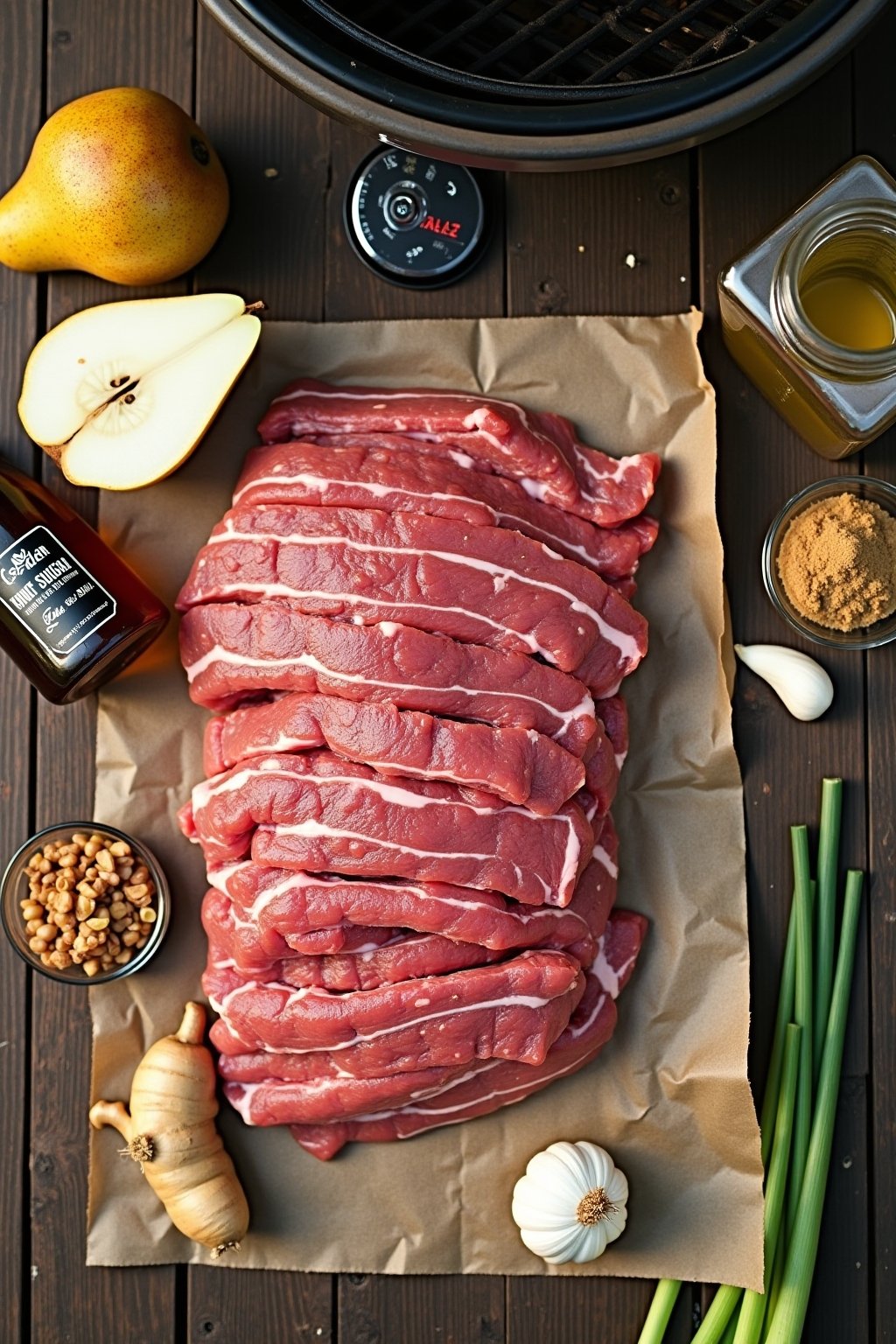
Flanken-cut short ribs — also called ‘kalbi cut’ or ‘Korean-style.’ The ribs are sliced across the bones into 1/4-inch thick strips with 3-4 round bone pieces per strip. Find them at Korean grocery stores, Costco, or ask your butcher to cut them. Regular English-cut short ribs don’t work — they need hours of braising.
Asian pear — the key ingredient. Contains enzymes that tenderize the meat and add clean, delicate sweetness. Bosc or Anjou pears substitute well. Don’t use regular pears — too soft and watery.
Mirin — a sweet Japanese rice wine that adds depth and shine. Find it in the Asian aisle. Dry sherry or 2 tablespoons sake mixed with 1 teaspoon sugar works as a sub.
Low-sodium soy sauce — important since the marinade reduces. Regular soy makes the ribs too salty. If you only have regular, dilute with 2 tablespoons of water.
Toasted sesame oil — not regular sesame oil. The toasted version has deep, nutty flavor that defines Korean BBQ. Use sparingly — it’s potent.
Korean Galbi Short Ribs on the Grill
Ingredients
Equipment
Method
-
Rinse the short ribs under cold water and pat dry with paper towels. This removes any bone fragments from the butcher.
-
In a blender, combine the Asian pear, onion, garlic, ginger, soy sauce, brown sugar, mirin, sesame oil, rice vinegar, and black pepper. Blend until completely smooth, about 30 seconds.
-
Place the short ribs in a large zip-top bag or glass dish. Pour the marinade over them, making sure every piece is coated. Seal and refrigerate for at least 4 hours, ideally overnight (up to 24 hours).
-
Remove the ribs from the marinade 30 minutes before cooking to take the chill off. Shake off excess marinade but don’t wipe them clean — you want some clinging to the surface for caramelization.
-
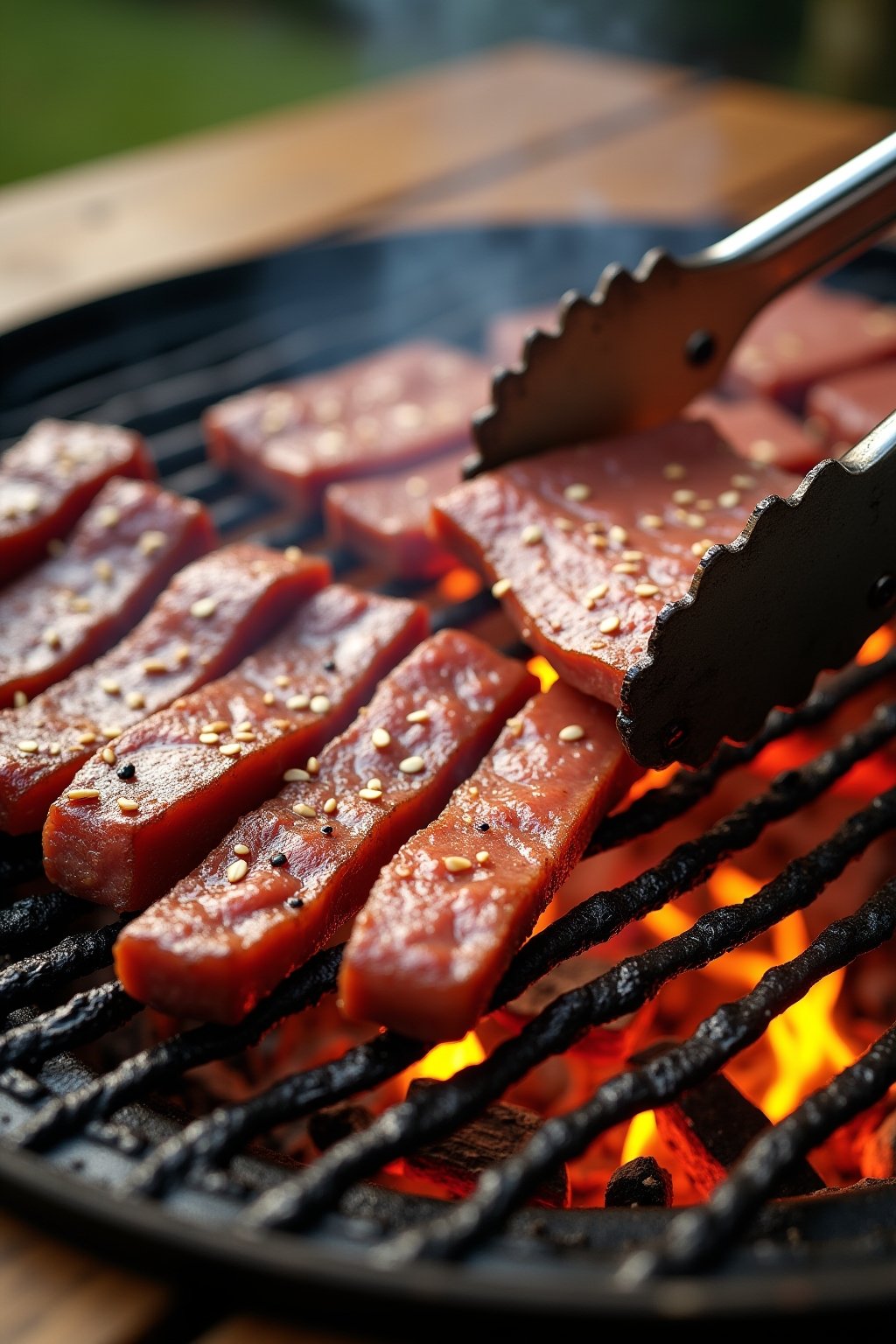
Preheat your grill to high heat (500°F or higher). A hot grill is essential for the signature char. Oil the grates well.
-
Place the short ribs on the grill in a single layer. Cook for 3-4 minutes per side, watching carefully — the sugar in the marinade caramelizes fast. You want deep char spots, not black.
-
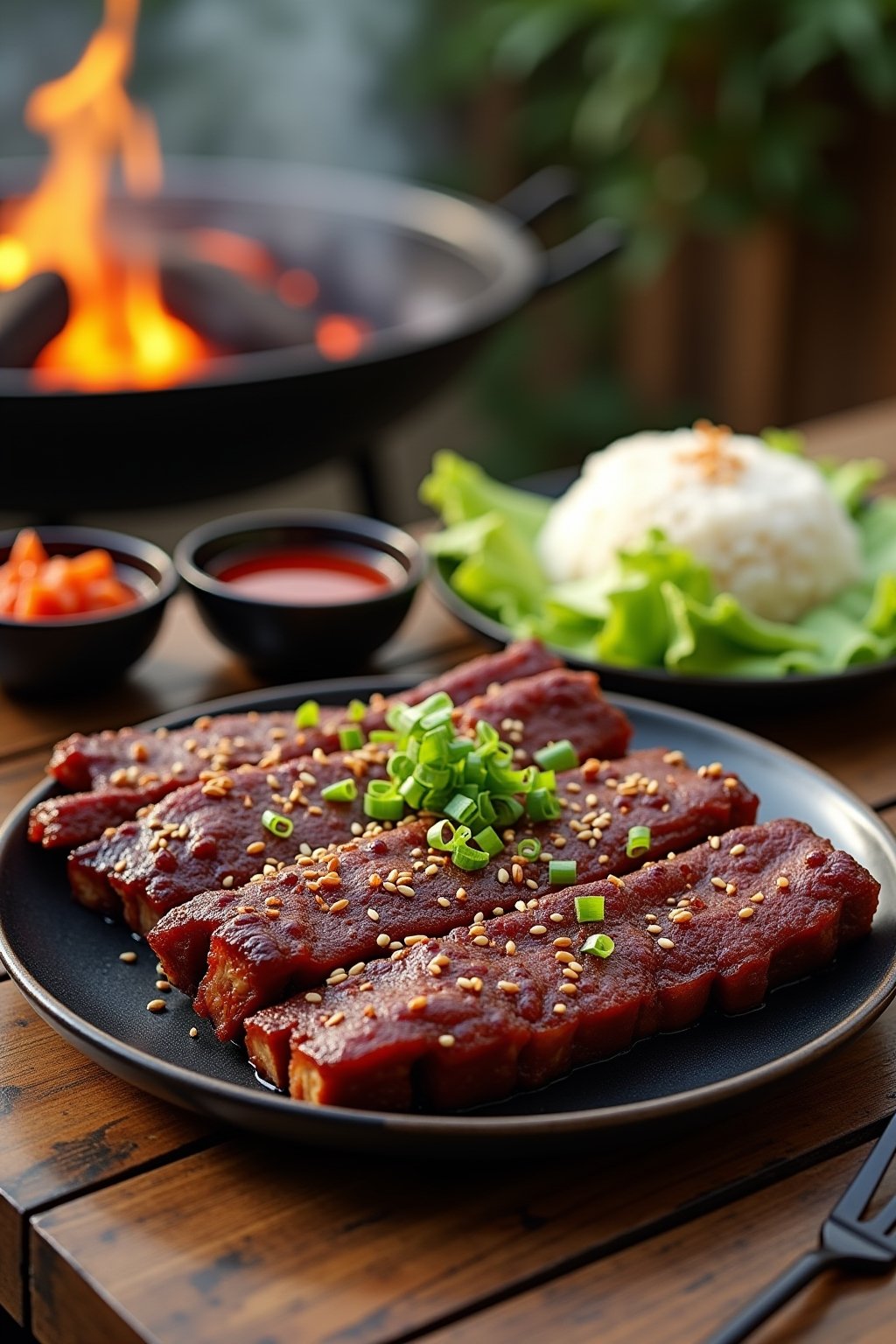
Transfer the ribs to a platter and let rest 2-3 minutes. Sprinkle with sliced green onions and toasted sesame seeds.
-
Serve immediately with steamed rice, lettuce leaves for wrapping, kimchi, and ssamjang on the side.
Notes
Nutrition Facts
Per serving
| Calories | 485 |
| Total Fat | 28g |
| Saturated Fat | 11g |
| Carbohydrates | 24g |
| Fiber | 1g |
| Sugar | 18g |
| Protein | 36g |
| Sodium | 820mg |
| Potassium | 620mg |
| Vitamin A | 4% |
| Vitamin C | 10% |
| Calcium | 6% |
| Iron | 25% |
* Percent Daily Values are based on a 2,000 calorie diet.
Re-Heat Notes
Refrigerator: Cooked galbi keeps for up to 4 days in an airtight container. The meat actually tastes better the next day as flavors deepen.
Freezer (cooked): Freeze portions for up to 3 months. Thaw overnight in the fridge and reheat in a hot skillet for 2-3 minutes to restore the char.
Freezer (raw marinated): Portion ribs with marinade into freezer bags, freeze flat for up to 3 months. Thaw overnight in the fridge — the meat marinates as it defrosts. Weeknight dinner that basically prepares itself.
Leftover magic: Chop leftover galbi and use it in fried rice, bibimbap, tacos, quesadillas, or ramen. Some of the best leftover eating you’ll have.
Off-Script Versions
- Spicy Galbi — add 2 tablespoons gochujang (Korean chili paste) and 1 teaspoon gochugaru (Korean chili flakes) to the marinade
- Pineapple Galbi — swap the Asian pear for 1 cup fresh pineapple chunks (but don’t marinate longer than 6 hours — pineapple breaks meat down too much)
- Boneless Galbi — use thinly sliced boneless short rib or ribeye for a faster, easier grill
- Chicken Galbi — same marinade with boneless chicken thighs for a lighter version
- Pork Galbi — substitute thin-sliced pork shoulder or pork belly for a rich, fatty variation
- Extra Sweet — double the brown sugar and add 2 tablespoons honey for a candy-like glaze
- Lettuce Cup Galbi — cut cooked ribs off the bone and serve in butter lettuce cups with rice and ssamjang
Other Things to Try
- Rinse the ribs first — removes bone dust and any small fragments from the butcher’s saw. Takes 30 seconds, makes a huge difference in texture
- Marinate overnight if possible — minimum 4 hours for flavor, 12-24 for full tenderization from the Asian pear enzymes
- Blend the marinade — don’t mince — pulverizing the pear and garlic releases their enzymes and flavors completely
- Don’t wipe the marinade off — that clingy layer caramelizes into the signature galbi glaze. Just shake off excess
- Scream-hot grill — 500°F+ is the target. Thin meat needs fast, hot cooking or it overcooks before charring
- Don’t move them until they release — the meat will stick at first. When it’s ready to flip, it releases naturally
With What on the Side
- Steamed short-grain rice — the base for every bite; non-negotiable in Korean dining
- Butter lettuce or perilla leaves — for wrapping the meat and rice into ssam (Korean wraps)
- Kimchi — spicy, funky, and essential contrast to the sweet grilled meat
- Ssamjang dipping sauce — the salty-savory condiment spread inside each wrap
- Korean pickled radish — bright yellow, crunchy, and refreshing
- Japchae (glass noodles) — traditional Korean side with sweet-savory sesame flavor
- Cold Korean lager or soju — the classic pairings for rich grilled beef
Splitting It Across Two Days
Marinate up to 24 hours ahead: The longer galbi sits (within 24 hours), the more the Asian pear enzymes tenderize the meat. Overnight is the sweet spot.
Freezer meal prep: Combine raw ribs and marinade in freezer bags and freeze flat. They marinate as they thaw in the fridge. Dinner solved for a random Tuesday three weeks from now.
Sauce and sides ahead: Kimchi, pickles, and ssamjang can all be prepped days or weeks in advance. Korean sides are built for storage.
Party strategy: Set up a Korean BBQ spread with rice, lettuce, kimchi, ssamjang, and a platter of fresh-grilled galbi. Guests build their own ssam wraps — fun, interactive, and lets them eat as much as they want.
Common Questions
What is flanken-cut vs. English-cut short ribs?
Flanken-cut (also called Korean-style or kalbi-cut) is sliced across the bones into 1/4-inch thick strips, with 3-4 round bone pieces per strip. English-cut is thick and chunky with one long bone per piece, designed for braising. Only flanken-cut works for galbi.
Where can I find flanken-cut short ribs?
Korean or Asian grocery stores almost always have them. Costco carries them seasonally. Any butcher shop can cut them for you if you ask for ‘flanken-style’ or ‘Korean-style’ short ribs, 1/4-inch thick.
Can I cook this without a grill?
Yes — a cast-iron skillet or grill pan on the stovetop works beautifully. Heat until screaming hot, then cook 2-3 minutes per side. Broiler also works: 3-4 minutes per side, 4 inches from the flame. Grill flavor is better but stovetop is very close.
Why Asian pear specifically?
Asian pears contain enzymes (protease) that break down protein and tenderize meat, plus natural sweetness that balances the soy sauce. Bosc or Anjou pears contain similar enzymes and substitute well. Apples work in a pinch but add a fruitier flavor profile.
How do I keep the marinade from burning on the grill?
Shake excess marinade off the meat before grilling, keep the grill very hot (fast cook = less time for sugar to burn), and don’t baste with extra marinade while cooking. The clingy layer that’s left on the meat will caramelize perfectly.
Can I use this marinade for other meats?
Absolutely — this is the foundation of Korean BBQ. It works on thin-sliced ribeye (bulgogi), pork belly (samgyeopsal variation), chicken thighs, and even firm tofu. The Asian pear tenderizes any protein beautifully.