
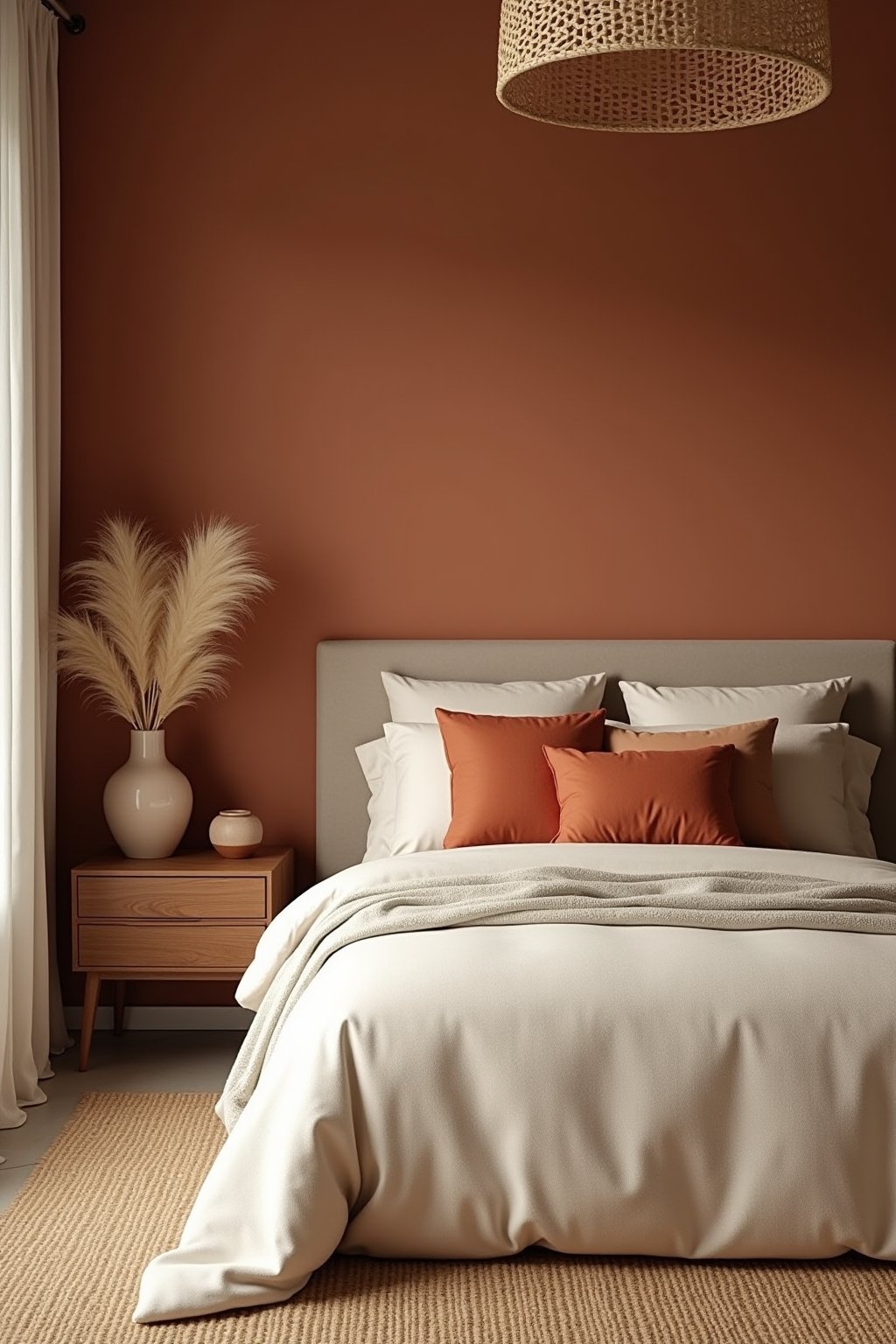
If your bedroom still feels cold, sterile, or just kind of blah, earth tones might be exactly what it needs. Terracotta, rust, clay, warm sand, and deep chocolate are replacing the gray-everything trend — and honestly, it is about time.
I swapped my cool gray bedding for a warm clay duvet and added rust-colored pillows, and the difference was instant. The room went from feeling like a generic hotel to feeling like a place I actually want to crawl into at the end of the day. Earth tones wrap around you. They feel grounded, natural, and deeply comforting in a way that cool neutrals never quite managed. Here is how to build a bedroom that feels like a warm hug.
What Most Recipes Skip
- Warm tones promote sleep — research shows warm, muted colors help the body relax and signal that it is time to wind down. Cool blues and grays can feel stimulating rather than calming
- Earth tones are the new neutrals — designers are calling terracotta, rust, and clay the replacement for gray. They are just as versatile but infinitely warmer
- Creates a cocoon effect — a bedroom wrapped in earth tones feels enclosed and protective, like a cozy nest you never want to leave
- Works with every material — wood, linen, wool, leather, ceramic, rattan — all the natural materials that make a bedroom feel organic pair perfectly with earth tones
- Seasonless — unlike bright summer colors or dark winter palettes, earth tones feel appropriate and comfortable year-round
- Easy to layer without matching — different earth tones naturally harmonize because they all come from the same natural palette. Terracotta, rust, sand, and chocolate look collected, not clashing
Gather These
Build your earth tone bedroom layer by layer:
- Bedding: Duvet cover or quilt in clay, terracotta, rust, or warm sand. White or cream sheets underneath
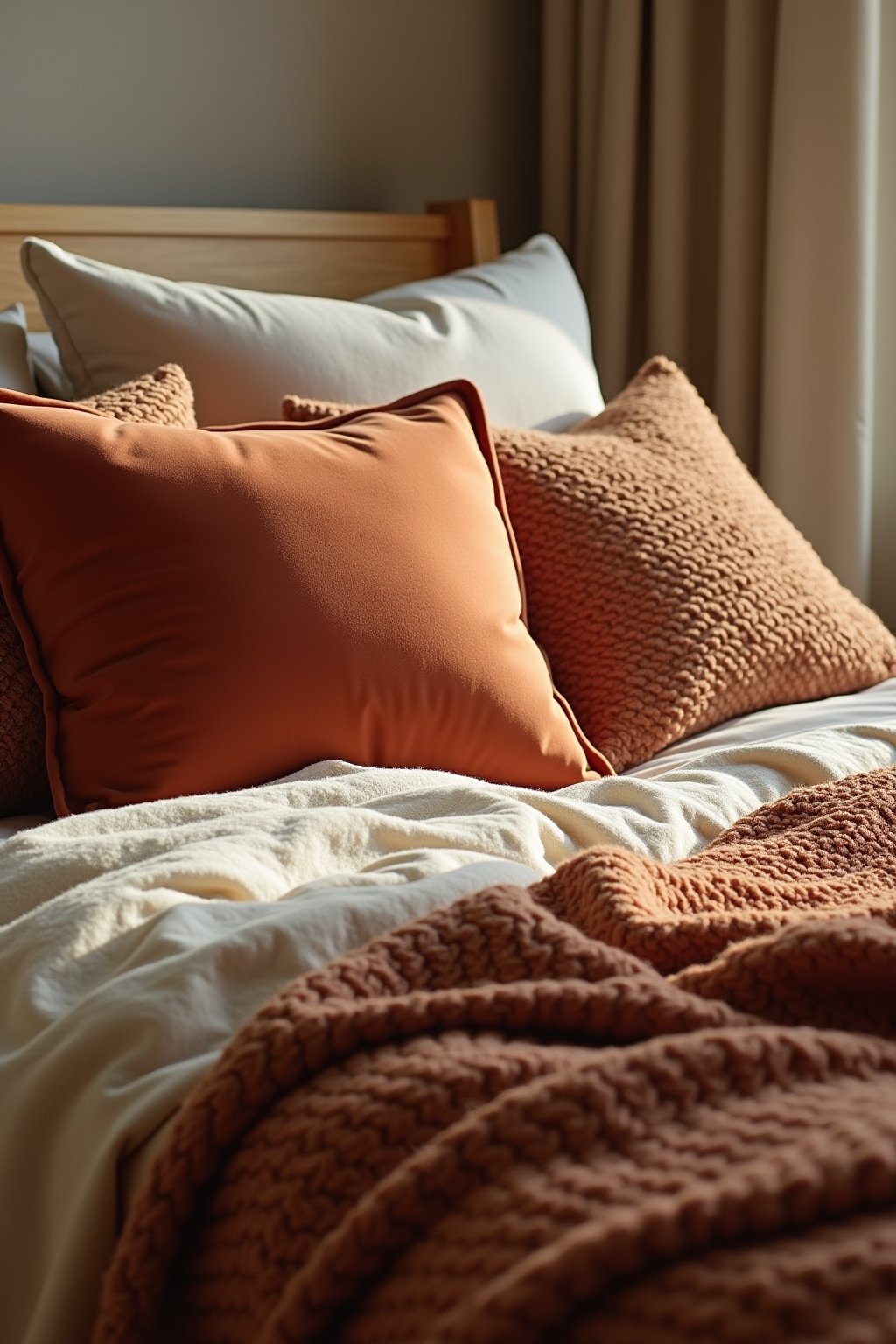
- Pillows: Mix of rust, clay, cream, and warm brown throw pillows in different textures (linen, velvet, knit)
- Throw blanket: A chunky knit or waffle-weave throw in a complementary earth tone
- Rug: A jute, sisal, or woven rug in natural tones beside the bed
- Accessories: Warm wood nightstand, ceramic vase, dried botanicals, warm-toned lamp or pendant
- Wall color (optional): Paint in warm white, sand, or a muted terracotta for an accent wall
How the Steps Stack Up
Start With Your Bedding
The bed is the biggest surface in any bedroom, so it sets the entire tone. Start with white or cream sheets as your base layer — this keeps things fresh and prevents the room from feeling too heavy. Then layer a duvet or quilt in your dominant earth tone — terracotta, rust, warm clay, or deep sand.
Add throw pillows in varying earth tones. Mix a rust velvet with a cream linen and a warm brown knit. The texture variation is what makes this look expensive and collected rather than flat and catalog-like. A folded throw blanket at the foot of the bed in a complementary tone finishes the layered look.
Layer Natural Textures Throughout
Earth tones come alive when paired with natural textures. A jute rug beside the bed, a rattan pendant light overhead, a wooden tray on the nightstand, and a ceramic vase with dried pampas grass on the dresser. Each texture adds dimension and warmth.
The key is variety — smooth ceramic next to rough jute next to soft linen next to warm wood. This creates the layered, organic feeling that makes earth-toned rooms feel so inviting. Avoid synthetic materials when possible — they break the natural illusion.
Choose the Right Wall Color
You do not need to paint every wall terracotta (unless you want to). A warm white or sand on all four walls keeps the room bright while still feeling warm. If you want more drama, paint a single accent wall behind the bed in a muted terracotta, warm clay, or deep rust.
Avoid pure white walls in an earth tone bedroom — they create too much contrast and make the warm elements look disconnected. A slightly warm-tinted white (like Benjamin Moore White Dove or Simply White) ties everything together seamlessly.
Add Warm Lighting
Lighting makes or breaks an earth tone bedroom. Use warm-toned bulbs (2700K) in every fixture. Cool daylight bulbs will fight against your warm palette and make everything look muddy.
Layer your lighting: a warm pendant or table lamp on each nightstand for ambient light, plus a floor lamp or overhead fixture for general lighting. If you have a bare bulb fixture, swap it for a woven rattan or linen drum shade that casts a soft, warm glow. Fairy lights or an LED candle add a cozy finishing touch for nighttime.
Finish With Organic Accessories
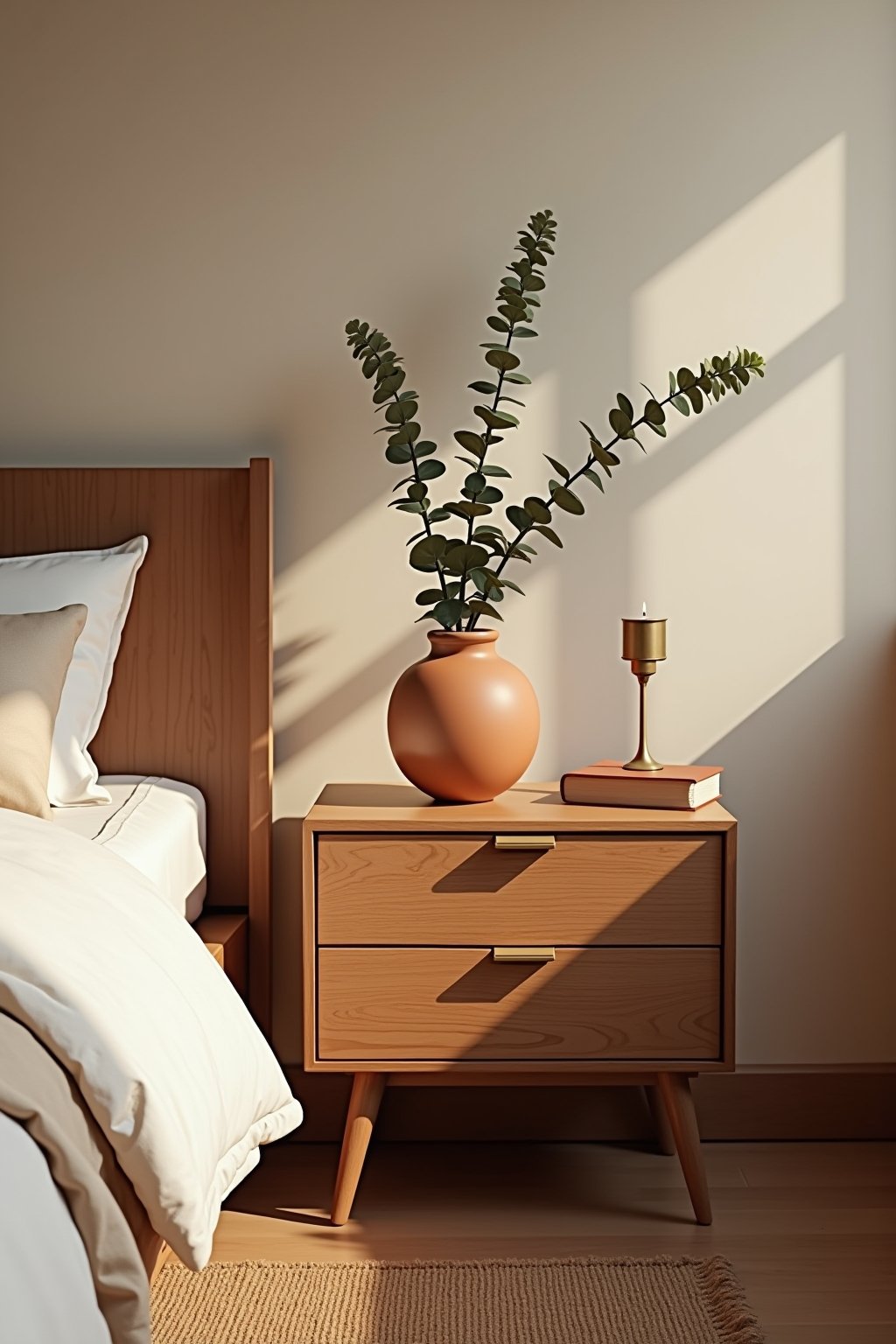
The final layer is the details that make the room feel personal. A ceramic vase with dried botanicals — pampas grass, eucalyptus, or dried florals in muted tones. A wooden tray on the nightstand holding a candle and a book. A small terracotta pot with a trailing plant on the dresser.
Keep accessories minimal and intentional. Earth tone rooms look best when they feel curated, not cluttered. Every piece should feel like it belongs — natural, warm, and purposeful. If it does not fit the palette, it does not go in the room.
When the Result Is Off
- Going too dark on every surface — if your walls, bedding, and rug are all deep brown, the room feels like a cave. Mix light earth tones (sand, cream) with deep ones (rust, chocolate) for balance
- Using cool-toned whites — bright, blue-white sheets against warm terracotta look jarring. Use warm whites and creams as your light base
- Forgetting texture — earth tones without texture look flat and boring. The magic is in the mix of linen, wool, wood, ceramic, and woven materials
- Matching everything exactly — you do not want five things in the exact same shade of terracotta. Vary the shades — a deeper rust here, a lighter clay there — for a collected, layered look
- Skipping green — a room with only brown and rust tones can feel monotonous. A single green plant or sage accent adds life and freshness that the palette desperately needs
Less-Expensive Substitutes
Dye your own bedding: White cotton bedding can be dyed with fabric dye in terracotta, rust, or warm clay for a fraction of buying new. Rit Dye makes it surprisingly easy.
Thrift store ceramics: Earth-toned vases, bowls, and pots are some of the most common thrift store finds. A coat of matte spray paint can unify mismatched pieces in the same warm palette.
Nature is free: Dried branches, seed pods, stones, and found wood make beautiful, on-palette accessories that cost nothing. A branch in a tall vase is endlessly stylish.
Warm bulbs cost the same: Swapping cool bulbs for warm 2700K bulbs is a free upgrade that dramatically changes how your earth tones read in the room.
Finishing Touches
- Use white or cream as your breathing space — white sheets and white ceiling prevent the warm tones from feeling heavy
- One statement piece per surface — one vase on the nightstand, one framed print on the wall, one throw on the bed. Restraint keeps it elegant
- Warm metals only — brass, brushed gold, and copper complement earth tones. Avoid chrome, silver, or nickel
- Dried botanicals over fresh flowers — dried pampas grass, eucalyptus, and cotton stems fit the earth-tone palette perfectly and last forever
- Layer your blankets — a folded quilt, a draped throw, and a knit blanket at different spots on the bed creates that irresistible layered look
- The floor matters — a warm jute or woven rug ties the room together. If your floors are cold tile or light wood, the rug is essential
Where It Reads Right
Minimalist Earth Tone Bedroom
Sand-colored walls, white linen sheets, a single rust-colored duvet, two cream linen pillows, and a warm wood nightstand with one ceramic vase holding dried eucalyptus. A jute rug beside the bed and a simple brass pendant light overhead. Nothing else. Clean, warm, and deeply calming.
Layered Bohemian Earth Tone Bedroom
Terracotta accent wall behind the bed, layered bedding in rust, clay, cream, and warm brown with multiple throw pillows in different textures. A woven rattan headboard, macrame wall hanging above, a vintage kilim rug on the floor, and dried pampas grass in a large ceramic vase. Warm, collected, and full of personality.
Modern Earth Tone Bedroom
Warm white walls, a low-profile platform bed in warm walnut, clay-colored bedding with one deep chocolate throw pillow, a round travertine nightstand, and a sculptural ceramic lamp. Arched floor mirror leaning against the wall. A single large fiddle-leaf fig in a matte black pot. Minimal, warm, and sophisticated.
Quick Answers
What colors count as earth tones?
Terracotta, rust, clay, warm sand, ochre, sienna, burnt orange, chocolate brown, warm tan, olive green, and muted sage. Think of the colors you see in nature — desert, clay, stone, and dried vegetation.
Will earth tones make my bedroom feel dark?
Not if you balance deep shades with lighter ones. Use sand, cream, and warm white as your light tones and save the deep rust and chocolate for accents. The mix keeps the room warm without being dark.
Can I mix earth tones with other colors?
Yes. Sage green, dusty pink, and muted navy all work beautifully alongside earth tones. The key is choosing muted, warm-leaning versions of those colors rather than bright or cool-toned ones.
What wood tone works best with earth tones?
Warm wood tones like walnut, warm oak, and acacia are perfect. Avoid cool-toned gray washes or very light blonde woods as they can clash with the warm palette.
How do I keep an earth tone room from looking boring?
Texture is the answer. Mix linen, velvet, knit, woven, ceramic, and wood materials. The variety of textures creates visual interest even within a limited color palette.
Are earth tones just another trend that will be out next year?
Earth tones have been used in interior design for thousands of years across every culture. They are not a trend — they are a return to timeless, natural color palettes that never really go out of style.