
Chicken breast has a reputation for being the saddest meat on the menu, and for years I agreed. Every time I tried to cook one, it came out either undercooked and slimy, or overcooked and chalky. There was no middle ground. I’d cut into it, see that perfect-looking chicken outside, and know before tasting that it would be dry as cardboard. I gave up and started buying thighs.
Then I learned that chicken breast isn’t actually difficult — I was just doing it wrong. The trick to juicy chicken breast comes down to four things, and once you know them, you can’t really mess it up. Pound the breast to even thickness so it cooks at the same rate. Salt it generously and let it sit for at least 15 minutes. Sear it in a screaming-hot pan for the perfect golden crust. And — most importantly — let it rest for five minutes before cutting into it.
That’s it. Four steps, no tricks, no fancy ingredients. The chicken comes out with crispy golden skin (well, the seared surface), juices running clear, and meat that’s tender and flavorful in a way you didn’t think breast meat could be. It works for salads, sandwiches, pasta, sliced over rice — anywhere you’d use chicken. After mastering this, you’ll wonder why anyone bothers with the dry-stringy version.
Why I Make This
- Juicy every time — four simple rules give you tender breast meat, no exceptions
- Beautiful golden crust — the high-heat sear creates restaurant-quality color and flavor
- Twelve minutes total — faster than ordering chicken from any restaurant
- Versatile protein base — slice for salads, sandwiches, pasta, grain bowls, or eat as-is
- High protein, low fat — about 35g of protein per breast with minimal added fat
- Meal prep champion — cook 4 breasts on Sunday, eat them all week
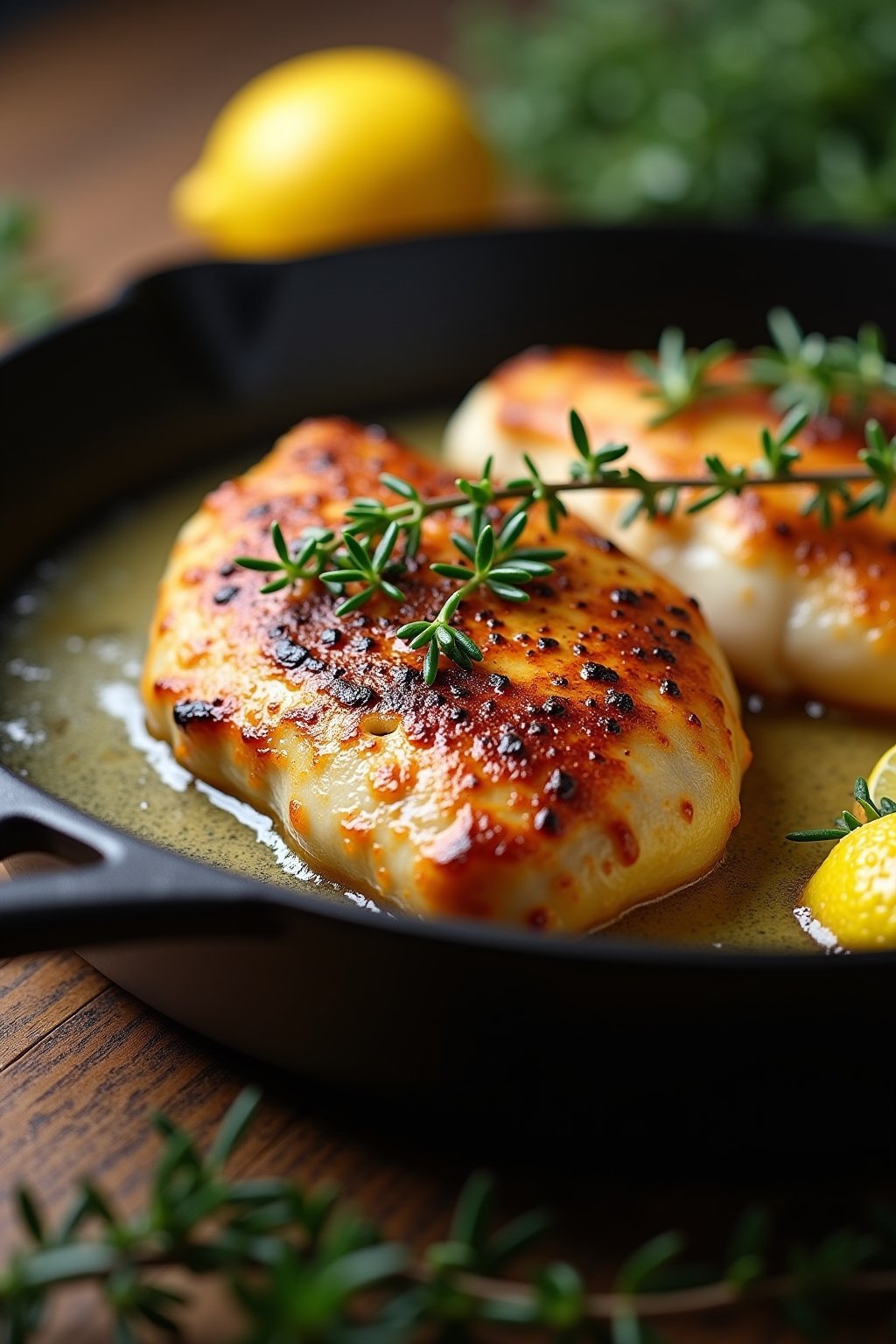
What You’ll Need
Chicken breasts — buy boneless and skinless of similar size. If they’re huge (10+ oz), butterfly them or pound them to even thickness. If they’re tiny (under 5 oz), reduce cook time by 1-2 minutes per side.
Kosher salt — coarse salt is essential for the dry-brine step. Table salt is too fine and can over-salt. If you only have table salt, use half the amount.
Olive oil — for the high-heat sear. Avocado oil works too and has a higher smoke point. Don’t use extra-virgin — it burns at high heat.
Butter — added at the end for browning and flavor. The combo of oil + butter gives the best of both worlds: high heat tolerance and rich flavor.
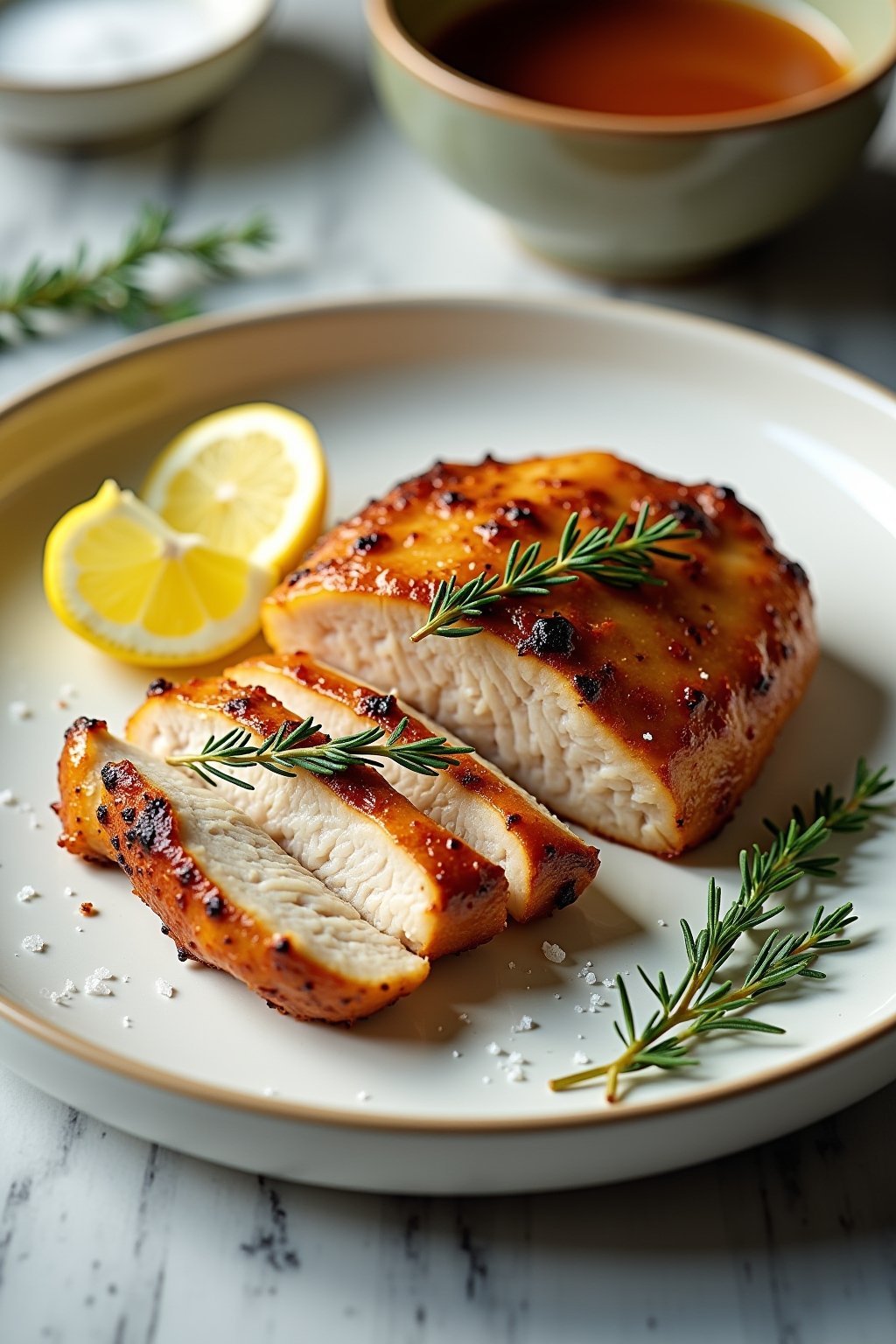
Perfect Pan-Seared Chicken Breast (Juicy, Never Dry)
Ingredients
Equipment
Method
-
Place each chicken breast between two sheets of plastic wrap and pound with a meat mallet or heavy pan to an even 3/4-inch thickness. Even thickness equals even cooking.
-
Pat the chicken completely dry with paper towels — wet chicken steams instead of sears.
-
In a small bowl, mix salt, pepper, garlic powder, and smoked paprika. Sprinkle generously over both sides of each breast and rub in. Let rest at room temperature for 15-20 minutes — this is a quick dry brine that draws moisture out and flavor in.
-
Heat a large stainless steel or cast iron skillet over medium-high heat for 3 minutes until very hot. Add olive oil and let it shimmer.
-
Carefully lay each chicken breast in the pan. Don’t crowd. Sear undisturbed for 5-6 minutes — resist the urge to peek or move them. A deep golden crust needs uninterrupted contact.
-
Flip the breasts. Add the butter to the pan along with thyme sprigs and the cut lemon halves (cut-side down). Cook for another 4-5 minutes on the second side, basting with the melted butter using a spoon.
-
Check internal temperature — it should read 160°F (71°C) at the thickest part. Pull the pan off heat. Carryover cooking will bring it to the safe 165°F (74°C) during rest.
-
Transfer the chicken to a plate or cutting board. Let rest for 5 full minutes before slicing — this is non-negotiable for juicy chicken. Slice against the grain and serve.
Notes
Nutrition Facts
Per serving
| Calories | 320 |
| Total Fat | 17g |
| Saturated Fat | 5g |
| Carbohydrates | 1g |
| Protein | 38g |
| Sodium | 640mg |
| Potassium | 330mg |
| Vitamin A | 5% |
| Vitamin C | 2% |
| Calcium | 2% |
| Iron | 5% |
* Percent Daily Values are based on a 2,000 calorie diet.
Storage and Reheating
Refrigerator: Slice or store whole, refrigerate in an airtight container for up to 4 days. The chicken stays moist if you store it whole and slice as needed.
Freezer: Cool completely, slice or leave whole, wrap tightly in plastic and foil. Good for up to 3 months. Thaw overnight in the fridge.
Reheating: The trick is gentle heat. Reheat sliced chicken in a covered pan with 1 tablespoon of water or broth over low heat for 3-4 minutes. Microwaving works in a pinch but dries the chicken.
Cold uses: Sliced cold chicken is excellent in salads, sandwiches, and grain bowls. Don’t underestimate the cold-from-the-fridge possibilities.
If You Want to Change It Up
- Lemon Garlic — squeeze the seared lemon over the chicken before serving; add 4 minced garlic cloves to the butter
- Italian Herb — replace smoked paprika with Italian seasoning; serve over pasta with marinara
- Cajun Style — swap the seasoning for Cajun blend; serve with creamy sauce or remoulade
- Honey Mustard — brush with a mix of honey and Dijon in the last minute of cooking
- Greek Style — add 1 tsp dried oregano; serve with tzatziki and a Greek salad
- BBQ Style — brush with BBQ sauce in the last 2 minutes; let it caramelize
- Stuffed Breast — butterfly, stuff with cheese and spinach, then pan-sear and finish in oven
From the School of Burnt Dinners
- Pound to even thickness — uneven breasts cook unevenly. 3/4-inch is the sweet spot
- Salt and rest 15+ minutes — this dry-brine step is what makes the meat juicy and seasoned through
- Hot pan, hot oil — preheating the pan for 3 minutes is non-negotiable for a proper crust
- Don’t move during sear — let it sit undisturbed for 5-6 minutes per side. Movement breaks the crust
- Use a thermometer — pull at 160°F. Carryover takes it to 165°F during rest. Above 165°F = dry
- Rest before slicing — 5 full minutes. Cutting too soon spills the juices and the chicken dries out
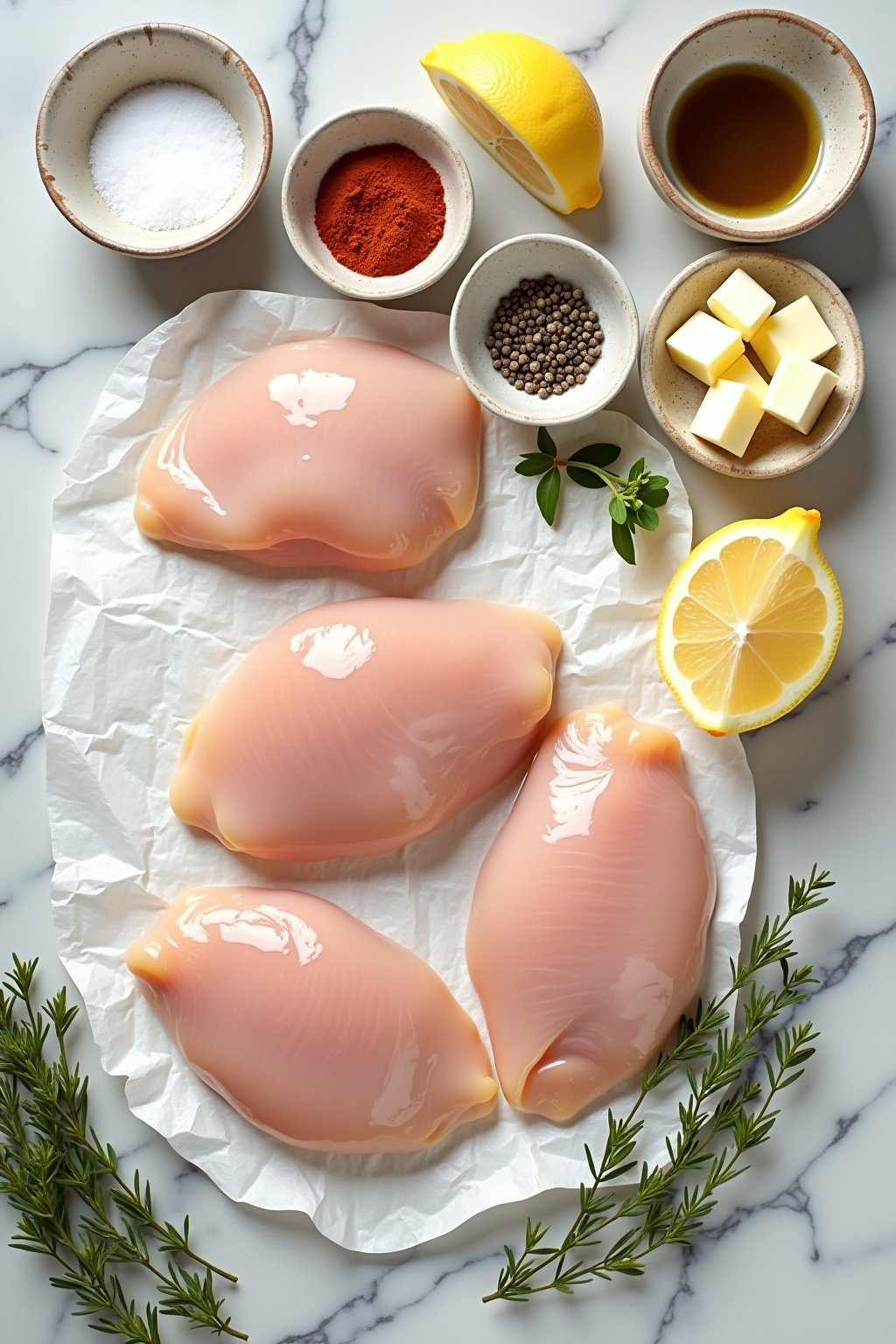
Plate-Mates
- Garlic mashed potatoes — creamy starch + juicy chicken = classic dinner
- Roasted vegetables — broccoli, asparagus, brussels sprouts all pair beautifully
- Caesar salad — slice chicken on top for the ultimate weeknight dinner
- Pasta with butter and parmesan — simple pasta lets the chicken shine
- Grain bowls — quinoa, farro, or rice with roasted veggies
- Crusty bread and salad — for a simple French-style dinner
- Lemon rice pilaf — bright, citrusy side that complements the chicken perfectly
What You Can Do the Day Before
Brine ahead: Salt the chicken up to 24 hours in advance. Cover and refrigerate. The longer it sits, the more flavorful the chicken — this is the dry-brine method top restaurants use.
Cook ahead: Cook the chicken up to 4 days before. Slice as needed and reheat gently or use cold in salads.
Meal prep batch: Cook 4-6 breasts on Sunday. Keep whole in the fridge. Slice fresh for each meal — slicing exposes more surface to drying air.
Frozen prep: Cook, cool, slice, freeze in single-serving portions. Thaw and use in salads or grain bowls. Lifesaver for busy weeks.
Frequently Asked Questions
Why does my chicken always come out dry?
Three usual suspects: cooked too long (use a thermometer, pull at 160°F), didn’t rest before slicing (5 full minutes is non-negotiable), or didn’t dry-brine first (15+ minutes with salt is essential). Fix these three and the dryness disappears.
Do I really need to pound the chicken?
Yes, if your breasts are thick on one end and thin on the other. By the time the thick part hits 165°F, the thin part is at 180°F (dry). Even thickness = even cooking.
Can I cook this in a non-stick pan?
You can, but you won’t get the same deep golden crust. Stainless steel or cast iron handles high heat better and creates better browning. If using nonstick, increase cook time by 1 minute per side.
What if I don’t have a thermometer?
Cut into the thickest part of the chicken. If the juices run clear and the meat is opaque white throughout, it’s done. Slightly pink still equals undercooked. But honestly, a thermometer costs $10 and changes your cooking forever.
Can I marinate the chicken instead of dry-brining?
Yes — marinades work too. They take longer (4-24 hours) and add their own flavor. The dry-brine is just faster and lets the natural chicken flavor come through.
Why is my chicken sticking to the pan?
Either the pan wasn’t hot enough or you tried to move the chicken too soon. A properly seared piece of chicken releases on its own when ready. Hot pan + patience = no sticking.