
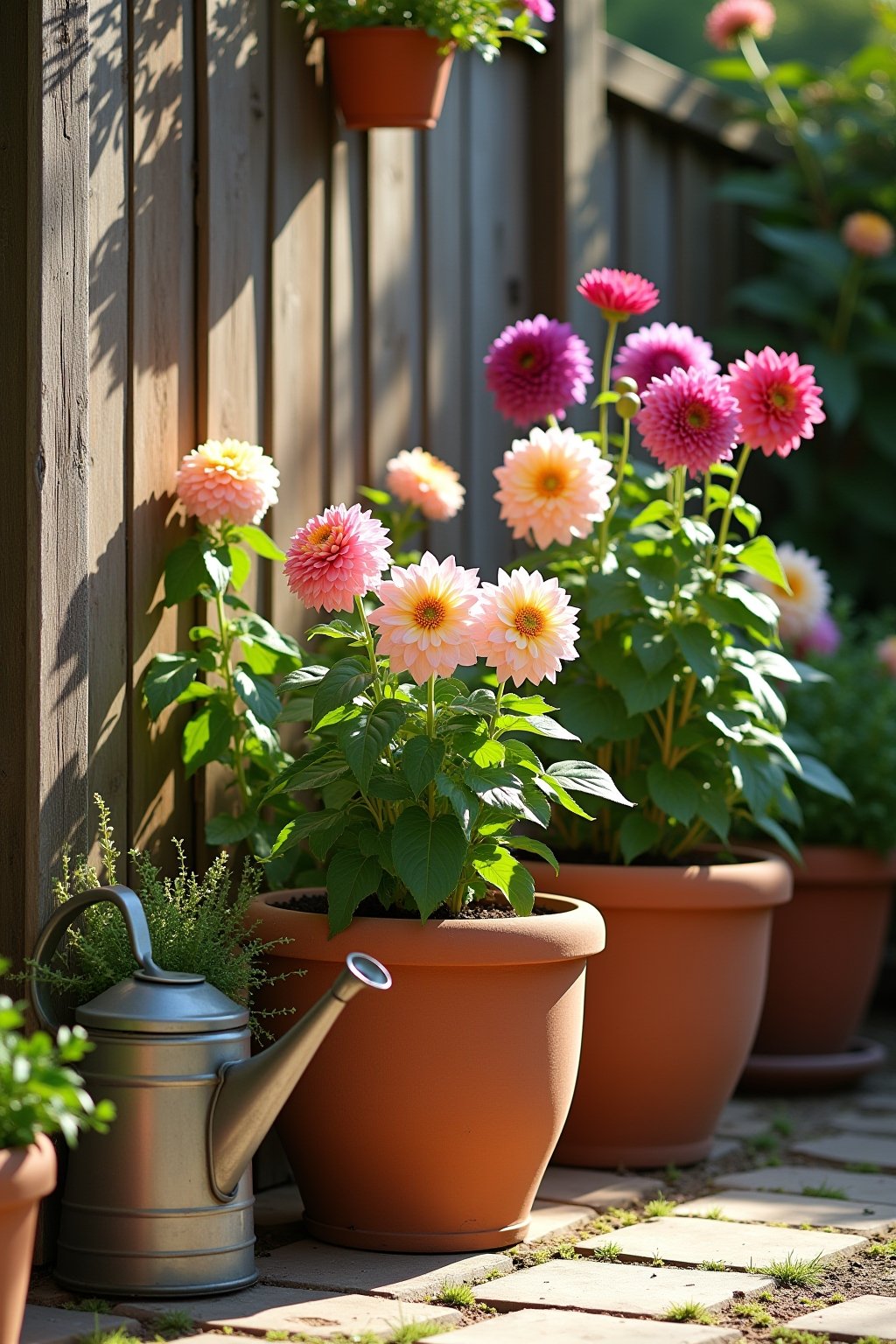
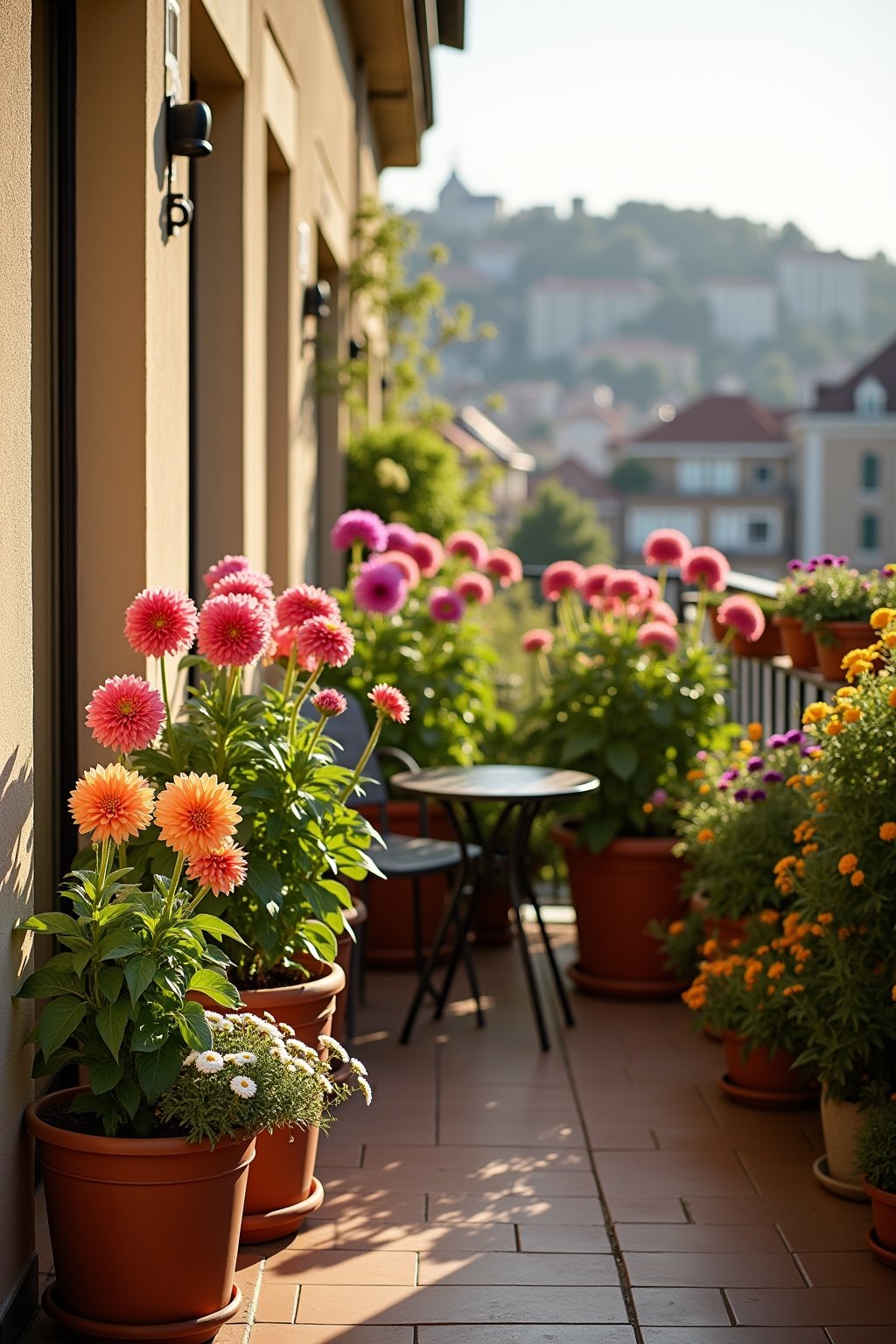
You do not need a garden bed to grow spectacular dahlias. A sunny balcony, a patio, or even a front stoop with a few large pots is all you need. Container-grown dahlias can be just as impressive as garden-grown ones if you choose the right varieties, use the right soil, and adjust your watering routine for pots.
I started growing dahlias in pots because my first apartment had no garden at all, just a south-facing balcony. Four pots of Gallery series dahlias gave me armloads of cut flowers from July through October. Now even with a full garden I keep a dozen dahlias in pots because they are portable, easy to protect from frost, and let me grow varieties right next to the front door where visitors see them first.
Quick Facts
| Sun | Full Sun (6-8 hours minimum) |
| Difficulty | Beginner |
| Season | Plant in pots after last frost |
| Zone | All USDA Zones (pots are portable) |
| Time to Harvest | 8-12 weeks from planting to first blooms |
What You’ll Need
- Large pots (minimum 12 inches wide and deep, 16-24 inches preferred)
- Quality potting mix (not garden soil)
- Compost to blend with potting mix
- Compact dahlia tubers (Gallery, Mystic, or Happy Single series)
- Low-nitrogen fertilizer (5-10-10 or tomato fertilizer)
- Bamboo stake or tomato cage (for varieties over 18 inches)
- Mulch (straw or shredded leaves)
- Watering can or drip system
- Plant dolly with wheels (for heavy pots)
- Saucers (optional — remove after watering drains)
Choose compact varieties for pots: The best container dahlias stay under 2 feet tall. The Gallery series (Art Deco, Art Fair, Pablo, Vincent) tops out at 16 inches with 4-6 inch blooms and needs no staking. The Happy Single series (First Love, Romeo, Wink) offers single-petaled flowers that pollinators love. The Mystic series (Spirit, Illusion) has stunning dark foliage. Other great compact options include Fresco (only 12 inches), Figaro, and the tiny Stacy Rachelle at just 8 inches.
Avoid dinner plate dahlias in pots unless you use very large containers (20+ inches) and provide sturdy staking. Their tall stems and heavy blooms topple easily in pots, especially on windy balconies. Save the big dramatic varieties for the garden bed.
Step 1: Choose the Right Pot and Soil Mix
Bigger pots are always better for dahlias. Minimum size is 12 inches wide and 12 inches deep (approximately a 5-gallon pot) for dwarf varieties. For medium varieties, use 16 to 24 inch pots (10-20 gallons). One tuber per pot unless the container is very large.
The pot must have drainage holes — this is non-negotiable. Drill extra holes if the pot does not have enough. Do not add gravel to the bottom (this actually worsens drainage by creating a perched water table). Use a mix of two-thirds quality potting mix and one-third compost. Pure potting soil alone dries out too quickly in containers. Pure garden soil is too heavy and compacts. The blend gives you the best of both worlds.
Step 2: Plant the Tuber at the Right Depth
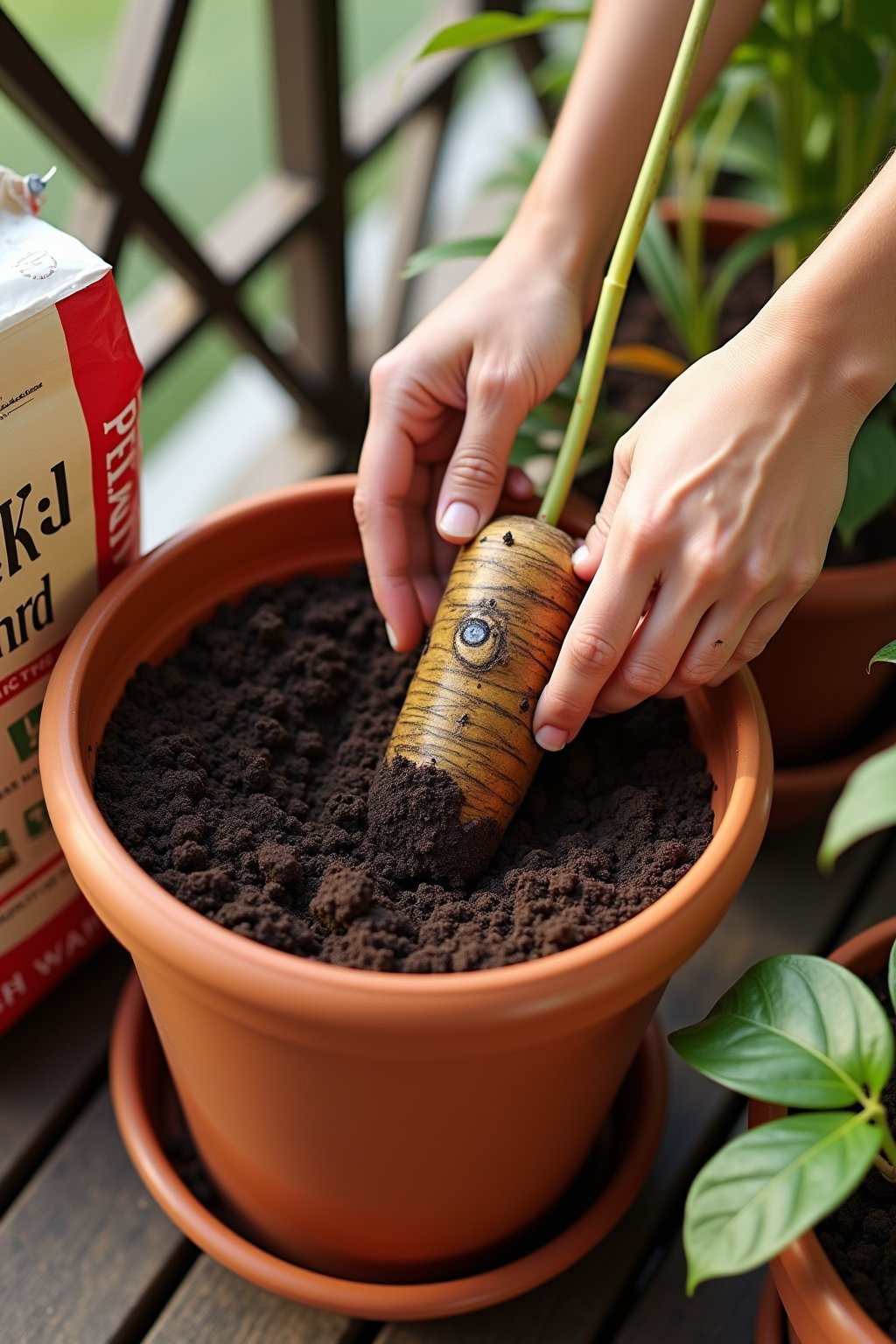
Fill the pot about halfway with your soil mix. Place the tuber horizontally about 2 inches deep with any visible eye pointing up. If you cannot tell which end is up, lay it on its side — the sprout will figure it out. Cover with soil, leaving about 2 inches of space below the pot rim for watering.
Do not water immediately. The potting mix should be lightly moist but not wet when you plant. Just as with in-ground planting, do not water again until you see green growth emerging above the soil. This is the most critical rule for container dahlias — wet soil around a dormant tuber in a pot rots even faster than in the ground because pots retain moisture longer in the center.
Step 3: Position for Maximum Sun
Dahlias need 6 to 8 hours of direct sunlight. Place pots where they get the most morning sun — morning light is gentler and more beneficial than harsh afternoon sun, especially in warm climates. A south-facing or east-facing balcony or patio is ideal.
One of the biggest advantages of growing dahlias in pots is that you can move them. Track the sun patterns on your balcony or patio through the day and reposition pots to capture maximum light. Rotate pots a quarter turn every week so all sides of the plant get even light and growth stays symmetrical. In zones 8-10, move pots to afternoon shade during the hottest weeks when temperatures exceed 90°F.
Step 4: Water and Feed on a Container Schedule
Before sprouts emerge: Water sparingly, about once a week at most. Keep the soil barely moist. After sprouts emerge and the plant is growing: Water daily, or twice daily in hot weather. Container soil dries out much faster than garden soil. Check by inserting your finger 2 inches deep — if dry, water thoroughly until it drains from the bottom.
Start feeding with low-nitrogen fertilizer (5-10-10 or tomato fertilizer) once the plant is 6 to 8 inches tall, about 30 days after planting. Container dahlias need more frequent feeding than in-ground plants because nutrients wash out with every watering. Feed every 2 to 3 weeks through the growing season. Switch to a bloom-boosting formula once buds appear.
Step 5: Support, Deadhead, and Enjoy
Install a bamboo stake or small tomato cage at planting time for any variety expected to grow taller than 18 inches. Tie stems loosely with soft garden twine as they grow — leave room for natural movement. Dwarf varieties (Gallery, Fresco, Stacy Rachelle) do not need staking at all.
Deadhead regularly to keep flowers coming. The trick is telling new buds from spent blooms: buds are round and firm while spent flowers are pointed and cone-shaped when you look from the side. Pinch the center shoot when the plant reaches 12 inches to encourage bushier growth with more flowering stems. Each pinched stem produces two new branches, doubling your potential blooms.
Step 6: Overwinter Your Container Dahlias
After the first frost kills the foliage, you have two options. Option A (easiest): Leave the tubers in the pot. Cut stems to 4 inches, stop watering completely, and move the pot to a dark location that stays between 40 and 50°F — an unheated garage, basement, or insulated shed. Check monthly and mist the soil surface lightly if it feels bone-dry.
Option B: Carefully tip the pot and remove the tuber clump. Clean, cure, divide, and store tubers in vermiculite just like garden-grown dahlias. In spring, repot in fresh potting mix (do not reuse old mix — it is depleted of nutrients and may harbor disease). Resume the cycle with the divided tubers and you will have even more pots of dahlias each year.
Common Hiccups
Tuber rotting in pot before sprouting: The most common container problem. The soil is too wet. Do not water until sprouts emerge. Make sure the pot has adequate drainage holes. Use a well-draining soil mix with perlite or compost blended with potting mix.
Plant toppling over in wind: The variety is too tall for the pot size, or the pot is too light. Switch to a heavier pot (terracotta or glazed ceramic), use a shorter variety, or install a sturdy stake. Placing the pot against a wall on the sheltered side of the balcony also helps.
Leaves wilting every afternoon: Container soil dries out fast in hot weather. Water more frequently (morning and evening if needed), add mulch to the soil surface, and consider moving pots out of the hottest afternoon sun. Larger pots hold moisture longer than small ones.
Lots of leaves, few flowers: Too much nitrogen. Switch to a low-nitrogen, high-phosphorus fertilizer. Also make sure the plant gets enough sun — insufficient light causes dahlias to produce foliage instead of blooms.
What Each Season Brings
Early Spring: Choose varieties and order tubers. Prepare pots with fresh soil mix. Start tubers indoors in small pots 4-6 weeks before your last frost date for earlier blooms, or wait to plant directly in the final pot after frost passes.
Late Spring: Move planted pots to their sunny position after all frost danger passes. Do not water until sprouts emerge. Install stakes at planting time.
Summer: Water daily (or twice daily in heat). Feed every 2-3 weeks. Deadhead spent blooms. Pinch center shoot at 12 inches for bushier growth. Rotate pots weekly for even light.
Fall: Enjoy the best blooms (dahlias peak in fall). After frost, cut back stems and move pots to frost-free storage or dig and store tubers. Plan next year’s pot layout and order new varieties.
Built From Mess-Ups
- Gallery series dahlias are the ultimate container variety — only 16 inches tall, no staking needed, prolific bloomers with 4-6 inch flowers in a wide range of colors. They were specifically bred for pots and small spaces.
- A plant dolly is essential for large pots — a 20-inch pot filled with wet soil weighs 50-80 pounds. A wheeled dolly underneath lets you reposition for sun, move to shelter before storms, and bring inside for winter without throwing out your back.
- Do not add gravel to the bottom of pots — contrary to popular belief, this actually hinders drainage by creating a perched water table. Just use drainage holes and a well-draining soil mix.
- Terracotta pots dry out fastest, plastic holds moisture longest — terracotta is heavy and stable but you will water twice as often. Plastic is light and retains moisture but can tip over with tall plants. Choose based on your watering habits and plant height.
- Pinch the center stem at 12 inches for double the blooms — when the main stem reaches about 12 inches tall, pinch out the growing tip. This forces two side branches to develop, each producing its own flowers. More stems equals more flowers.
- Sweet alyssum makes the best container companion — plant it around the edges of the dahlia pot as a living mulch. It keeps roots cool, suppresses weeds, cascades beautifully over the pot edge, and attracts pollinators to your dahlias.
Worth Your Next Click
- Growing Dahlias for Beginners: How to Plant Tubers This Spring for Stunning Summer Blooms
- Best Soil for Dahlias (Beginner Mistakes to Avoid)
- Growing Tomatoes in 5-Gallon Buckets (Complete Container Guide)
Common Questions
What size pot do I need for dahlias?
Minimum 12 inches wide and 12 inches deep (about 5 gallons) for dwarf varieties. For medium varieties, use 16-24 inch pots (10-20 gallons). Bigger is always better because larger pots hold more moisture and give roots more room. One tuber per pot unless the container is very large.
What are the best dahlia varieties for pots?
The Gallery series (Art Deco, Art Fair, Pablo, Vincent) is the gold standard at only 16 inches tall with no staking needed. Happy Single series and Mystic series are also excellent. The tiniest option is Stacy Rachelle at just 8 inches. Avoid dinner plate varieties in pots — their tall stems and heavy blooms topple easily.
Can I use garden soil in dahlia pots?
No. Garden soil compacts heavily in containers, suffocates roots, and drains poorly. Use a mix of two-thirds quality potting mix and one-third compost. Pure potting soil alone dries out too fast; pure garden soil is too heavy. The blend provides good drainage, moisture retention, and nutrients.
How often do I water dahlias in pots?
Before sprouts emerge, water very sparingly (once a week at most). After the plant is actively growing, water daily or even twice daily in hot weather. Container soil dries out much faster than garden beds. Check by inserting your finger 2 inches deep — if dry, water thoroughly until it drains from the bottom.
Can I overwinter dahlia tubers in the pot?
Yes. After frost kills the foliage, cut stems to 4 inches, stop watering, and move the pot to a dark location that stays between 40-50 degrees Fahrenheit. An unheated garage or basement works well. Check monthly and mist the soil lightly if completely dry. In spring, move to warmth and resume watering when sprouts appear.
Do dahlias in pots need staking?
Dwarf varieties under 18 inches (Gallery, Fresco, Stacy Rachelle) do not need staking. Any variety expected to grow taller should have a bamboo stake or small tomato cage installed at planting time. Install the support when you plant the tuber to avoid damaging roots later.