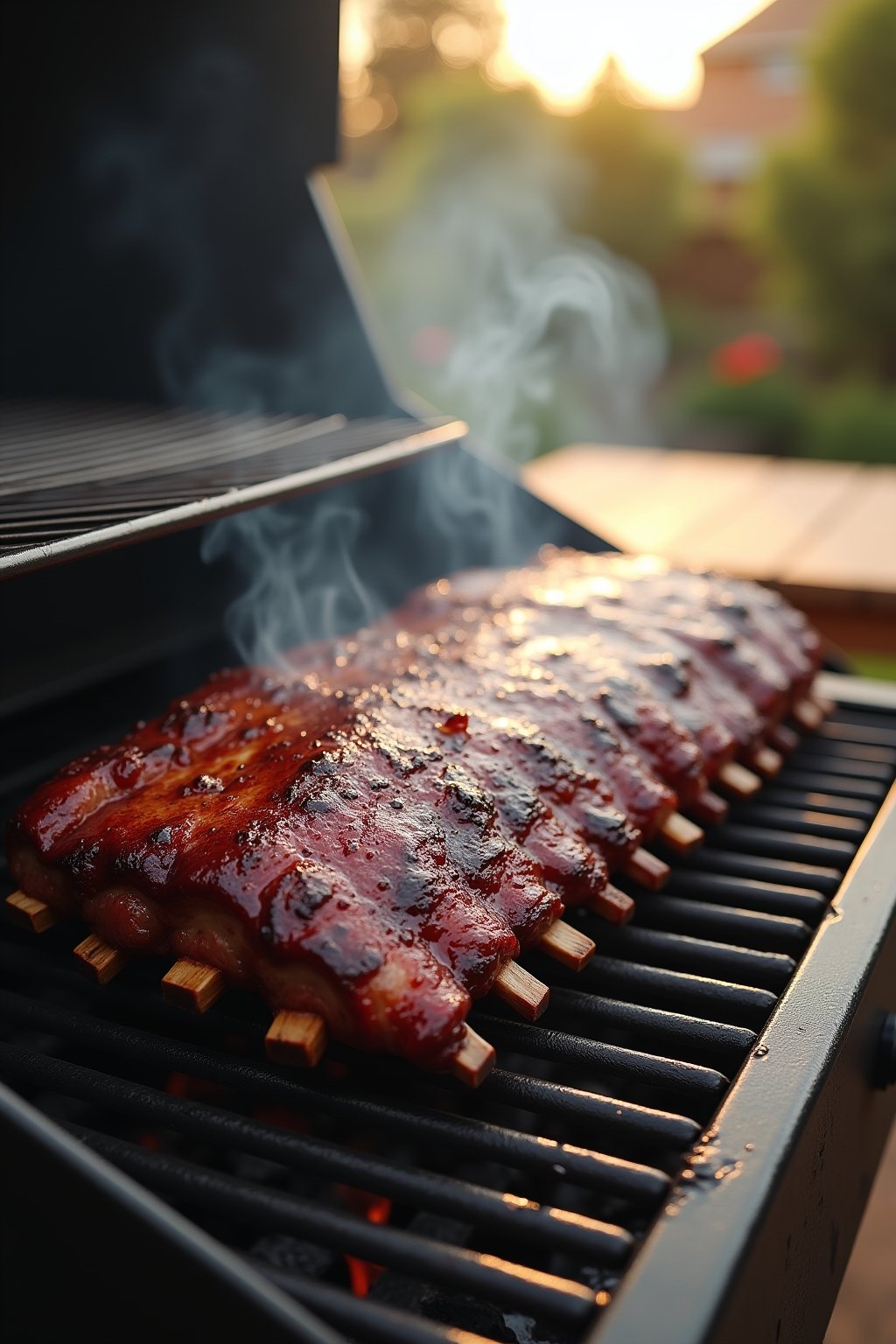
If you’ve only ever had saucy wet ribs, dry-rubbed Memphis-style ribs are going to change your world. No sticky sauce, no sweet glaze — just deeply seasoned pork with a crackling bark, smoky interior, and that unmistakable peppery-paprika-brown-sugar rub that sticks to your fingers and makes you want to lick them clean. This is the way BBQ purists eat ribs, and once you try it, you’ll understand why sauce feels like a distraction.
The beauty of dry ribs is that they’re actually less work than wet ribs. No wrapping, no saucing, no multiple stages — just a generous rub, low heat for a long time, and occasional spritzing with apple juice to keep them moist. The bark forms naturally from the sugar and spice crust meeting smoke and heat, and the pork fat renders down into the most flavorful meat you’ve ever tasted. Memphis-style is BBQ at its purest.
I converted to dry ribs after visiting a Memphis BBQ joint where the pit master told me ‘if your ribs need sauce, they weren’t cooked right.’ He was right. These don’t need sauce — they don’t even want sauce. Serve them with classic sides, cold beer, and extra rub in a shaker on the side for dipping, and you’re eating ribs the way they’re meant to be eaten.
The Hook
- Pure smoky pork flavor — no sauce to mask the meat, just deep seasoning and smoke
- Crackling bark — the dry rub creates a crispy, flavorful crust that shatters in your teeth
- Less hands-on than wet ribs — no saucing stage, just rub, smoke, and wait
- Makes incredible leftovers — the rub stays flavorful for days without getting soggy
- Budget-friendly — baby back ribs are the most affordable cut for this method
- Foolproof for beginners — no saucing timing to mess up, just low and slow smoking
What to Have Ready
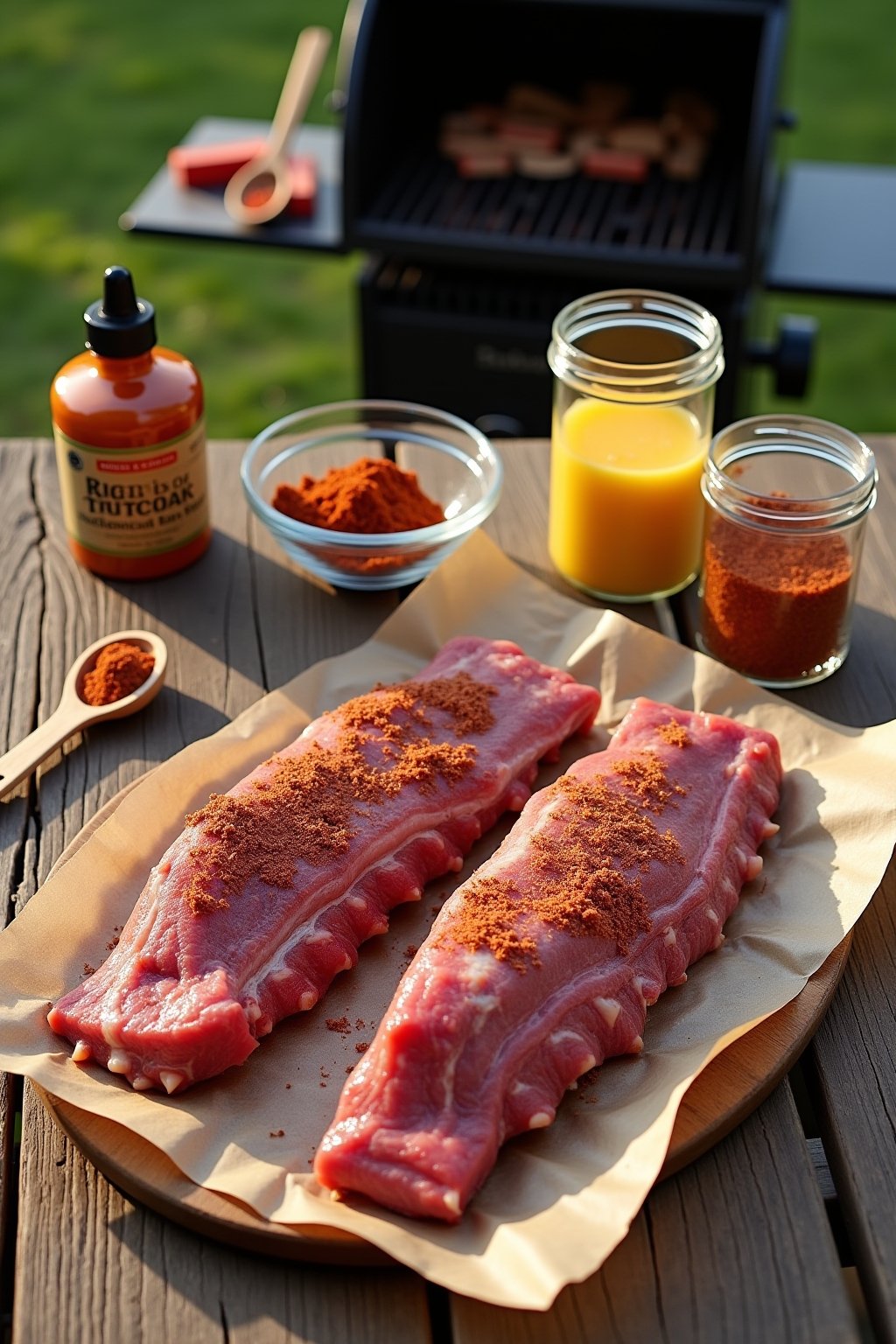
Baby back ribs — smaller and leaner than spareribs, they cook faster (about 4-5 hours vs 6). Look for racks with consistent meat coverage over the bones. Remove the silvery membrane on the back or the rub can’t penetrate.
Yellow mustard — just a thin coat as a binder. You won’t taste it in the finished ribs. Olive oil or hot sauce work as alternatives.
Paprika — the base of the rub. Use Hungarian or Spanish sweet paprika for the main flavor. Smoked paprika adds the second layer of smoky depth.
Brown sugar — balances the pepper and helps build bark. Dark brown sugar has more molasses flavor than light.
Ground mustard — adds subtle tang that sets Memphis-style apart from other regional BBQ rubs.
Celery seed — don’t skip it. Adds a slight herbal-bitter note that rounds out the rub. Found in the spice aisle.
Wood chunks — hickory is classic Memphis. Pecan is milder and sweet. Apple is mild and fruity. Avoid mesquite for pork — too strong.
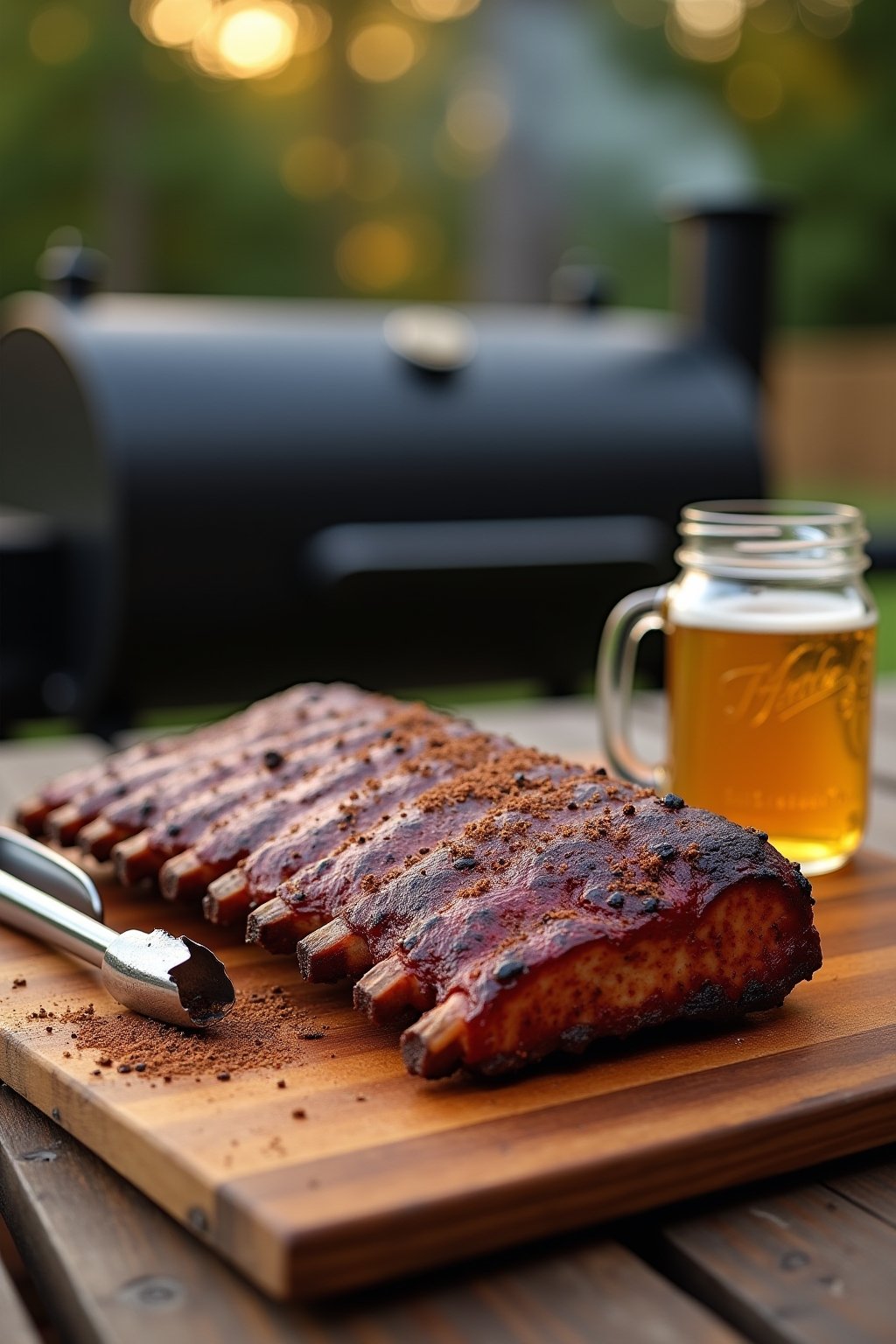
Dry-Rubbed BBQ Baby Back Ribs (Memphis Style)
Ingredients
Equipment
Method
-
Remove the membrane from the back of the rib racks. Slide a butter knife under it at one end, grab with a paper towel, and pull it off in one piece. Pat the ribs dry.
-
Mix all the rub ingredients in a bowl. You’ll have about 3/4 cup — more than you need for 2 racks, but reserve the extra for the shaker at the table.
-
Coat the ribs with a thin layer of yellow mustard on both sides. Sprinkle the rub generously over the ribs, pressing it in firmly. Use about 3-4 tablespoons per rack, with more on the meaty side. Let ribs sit at room temperature for 30 minutes while you set up the grill.
-
Set up your grill for indirect heat at 225°F (107°C). Push charcoal to one side, or light only outer burners on gas. Add 2-3 wood chunks directly on the coals or in a smoker box.
-
Place the ribs bone-side down on the cool side of the grill. Close the lid. Maintain 225°F for the next 4-5 hours.
-
Combine the spritz ingredients in a spray bottle. After the first 90 minutes, spray the ribs lightly every 45 minutes to keep them from drying out. Don’t spray so much that you wash off the rub — a light mist.
-
Add another wood chunk at the 2-hour mark if smoke production has decreased.
-
Check for doneness at around 4 hours. Pick up one rack from the middle with tongs — if the rack bends and the surface cracks, they’re done. Internal temp should be 195-203°F in the meatiest part.
-
Pull the ribs, tent loosely with foil, and rest for 15 minutes. Shake extra rub over the top for serving.
-
Slice between the bones and serve immediately. Memphis tradition: no sauce on the table. Just rub in a shaker for dipping.
Notes
Nutrition Facts
Per serving
| Calories | 450 |
| Total Fat | 28g |
| Saturated Fat | 10g |
| Carbohydrates | 14g |
| Fiber | 2g |
| Sugar | 10g |
| Protein | 36g |
| Sodium | 780mg |
| Potassium | 520mg |
| Vitamin A | 30% |
| Vitamin C | 4% |
| Calcium | 6% |
| Iron | 16% |
* Percent Daily Values are based on a 2,000 calorie diet.
Tomorrow’s Lunch
Refrigerator: Wrap cooled ribs in foil and refrigerate up to 4 days. They’re arguably better the next day — the rub flavor deepens overnight.
Freezer: Slice into portions, wrap in foil then freezer bags. Good 3 months. Thaw overnight in fridge.
Reheating: 275°F oven wrapped in foil with a splash of apple juice for 30 minutes. The ribs stay shockingly moist this way.
Outdoor reheat: Back on a 300°F grill for 15-20 minutes wrapped in foil. Almost as good as fresh.
Leftover ideas: Pull meat off leftover ribs for BBQ sandwiches, loaded nachos, chopped into chili, or tossed in fried rice. The dry-rubbed pork is incredibly versatile.
Off-Script Versions
- Spicy Memphis — double the cayenne and add 1 teaspoon ghost pepper powder for serious heat
- Coffee-Rubbed — add 2 tablespoons finely ground coffee to the rub for deep, earthy notes
- Maple Sweet — increase brown sugar to 1/4 cup and add 2 tablespoons maple sugar
- Carolina Style — skip the sugar, add 1 tablespoon red pepper flakes, serve with vinegar sauce on the side
- Texas Central — simplify to just salt, pepper, garlic powder, and paprika for the Texas treatment
- Kansas City — double the brown sugar, add 1 tablespoon celery salt, sauce optional at the end
- Herb Garden — add 1 tablespoon each dried thyme, rosemary, and sage for an herbal twist
What’s Different Here
- Remove the membrane — non-negotiable. Tough membrane blocks rub penetration and stays rubbery
- Apply rub generously — 3-4 tablespoons per rack minimum. Thin application means no bark, no flavor
- Let rub set 30 minutes — room temperature rest lets salt penetrate and rub adhere to the meat
- Don’t peek constantly — every lid open costs you 15 minutes. Check only at spritz intervals
- Bend test for doneness — lift from the middle with tongs. Ribs should bend and crack, not break clean in half (overdone) or stay rigid (underdone)
- Rest before slicing — 15 minutes tented with foil lets juices redistribute. Cut too soon and they’ll be dry
Sides I Reach For
- Vinegar-based coleslaw — Memphis-style slaw with vinegar instead of mayo is the classic pair
- Baked beans — sweet, smoky, and perfect with ribs
- Cornbread with butter — the essential BBQ side in the South
- Macaroni and cheese — rich, creamy, and kid-friendly
- Pickles and pickled onions — acid cuts through the richness of the pork
- Cold beer — a crisp pilsner or pale ale is the traditional choice
- Sweet tea — Southern tradition for a reason
Get-Ahead Notes
Rub ahead: Rub the ribs up to 24 hours in advance. Cover and refrigerate. The salt cures the meat slightly, deepening flavor and improving bark formation.
Mix rub in bulk: Quadruple the recipe and store in a mason jar. Keeps 6 months in the pantry and is ready for any pork cook.
Cook ahead: Finish the ribs earlier in the day, wrap in foil and towels, and hold in a cooler. Stays hot for 2-3 hours and the meat relaxes further, becoming more tender.
Next-day ribs: Cook completely, cool, wrap in foil, refrigerate. Next day, reheat wrapped at 275°F for 30 minutes. Many BBQ cooks swear day-two ribs are better. I agree.
Frequently Asked Questions
What’s the difference between baby backs and spareribs?
Baby backs come from the top of the rib cage near the spine — shorter, leaner, and meatier on top. They cook in 4-5 hours. Spareribs come from the belly side — longer, fattier, more flavorful. They take 5-6 hours. Baby backs are a great starting point for new BBQ cooks.
Do I really not need sauce?
Memphis-style is genuinely better without sauce — the rub forms a flavorful bark that sauce would soften. If you really want sauce, offer it on the side for dipping, but don’t brush it on before serving. Try them naked first and see.
My ribs turned out too dry — what went wrong?
Three common issues: not spritzing often enough, grill temperature running too hot, or overcooking. 225°F is the magic number. Spritz every 45 minutes after the first 90. And pull them when they pass the bend test, not when the clock says they should be done.
Can I do this on a pellet grill?
Pellet grills are perfect for dry ribs. Set to 225°F, load with hickory or pecan pellets, and let the machine do the work. No wood chunk additions needed. Many pit masters actually prefer pellet grills for consistent, steady smoke.
Do I need to soak the wood chunks?
No — this is an outdated myth. Wet wood produces more steam than smoke, actually reducing flavor. Use dry wood chunks. They’ll produce real smoke rather than wet, bitter smoke.
What if my ribs aren’t tender after 5 hours?
Every rack is different. Bone size, meat thickness, and grill quirks all affect time. Give them another 30-45 minutes and check again with the bend test. Sometimes 5.5-6 hours is needed. Trust the test, not the clock.