
Some rooms are just dark. Maybe it faces north, maybe the windows are small, maybe a tree blocks half the light, or maybe you rent and cannot repaint the builder-beige walls. Whatever the reason, a dark room does not have to feel depressing — it just needs smarter design.
I have a north-facing living room that barely gets direct sunlight, and for the first six months I lived here it felt like a cave. Then I made a series of small, intentional changes — no painting, no renovation, nothing permanent — and the difference was honestly shocking. The room went from gloomy to glowing without a single can of paint. Here is everything I did, in order of impact.
What Makes It Stay
- Not everyone can repaint — renters, people in shared housing, and anyone who loves their current wall color need brightness solutions that do not involve paint
- Addresses the actual problem — dark rooms are usually about light management, not wall color. The right reflective surfaces, lighting, and textiles solve the real issue
- Renter-friendly from top to bottom — every technique in this guide is completely reversible and leaves zero damage
- Stacks with any style — whether your room is modern, traditional, boho, or minimalist, these brightness techniques work universally
- Works in any season — dark rooms feel especially gloomy in winter. These changes make the space feel bright and warm year-round
- Costs less than paint — many of these brightness boosts are free (rearranging furniture, cleaning windows) or very affordable (mirrors, light-colored textiles)
What You’ll Need
Pick the changes that apply to your room:
- Mirrors — one large mirror or several smaller ones to bounce light around the room
- Light-colored textiles — white or cream curtains, light throw pillows, a light rug
- Better bulbs — daylight-temperature LED bulbs (5000K) for task areas and warm-bright bulbs (3000K) for ambient light
- Sheer curtains — to replace heavy drapes that block natural light
- Reflective surfaces — glass, metallics, lucite, or glossy finishes that bounce light
- Plants — low-light varieties that add life and freshness to dark corners
The Steps
Place Mirrors Opposite and Adjacent to Windows
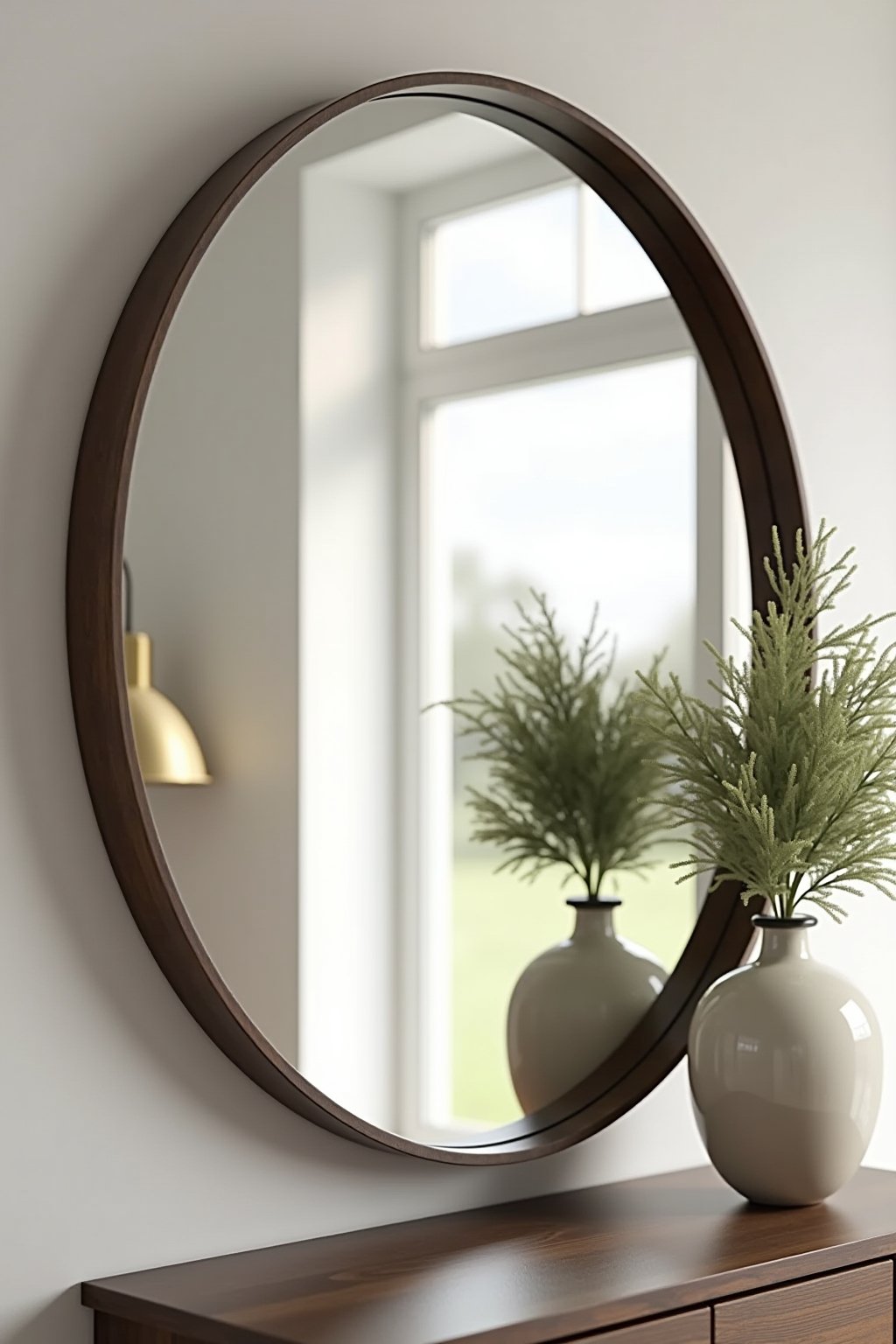
This is the single most effective change for a dark room. Hang a large mirror directly across from your biggest window. The mirror reflects the incoming natural light back into the room, effectively doubling the light from that window.
If you cannot hang directly opposite, place mirrors on adjacent walls — the wall next to the window — so they catch the light at an angle and redirect it deeper into the room. Even a leaning floor mirror does the trick. The bigger the mirror, the more light it bounces.
Swap Heavy Curtains for Sheers or Light Linens
Dark rooms often have dark, heavy curtains that block half the natural light even when open. Replace them with sheer white or cream linen panels that filter light softly without blocking it. If you need privacy at night, use a double rod — sheers closest to the window and a heavier panel on the outer rod that you only close at night.
Hang curtains as high and wide as possible — mount the rod just below the ceiling and extend it 6-8 inches beyond each side of the window frame. This makes the window look bigger and lets maximum light enter even when the curtains are closed.
Lighten Your Textiles
Every dark textile in a room absorbs light. Swap a dark rug for a lighter one — cream, light gray, or warm beige. Trade dark throw pillows for lighter ones in cream, soft yellow, or white. If your sofa is dark, layer a light throw blanket over the back to break up the dark surface.
You do not have to replace everything — even changing two or three key textiles from dark to light makes a surprising difference. The light-colored surfaces reflect the available light instead of absorbing it, making the whole room feel brighter.
Layer Your Lighting Strategically
A single overhead light in a dark room creates harsh shadows and leaves corners dark. Instead, layer multiple light sources at different heights: a floor lamp in the darkest corner, table lamps on side tables, and a warm overhead light for general illumination.
Use bright daylight bulbs (5000K) in task areas where you need to see clearly, and warm-bright bulbs (3000K) everywhere else for ambient warmth. The multiple sources fill in the shadows and create even, comfortable brightness throughout the room.
Add Reflective and Glossy Surfaces
Beyond mirrors, add other reflective surfaces throughout the room. A glass-topped coffee table, metallic picture frames, a brass lamp base, a glossy ceramic vase, or a lucite side table all catch and bounce light around the space.
Position these near light sources for maximum effect. A brass lamp next to a window reflects light all day. A glass coffee table in the center of the room catches light from every direction. These small touches collectively amplify the available light significantly.
If You Hit Trouble
- Blocking windows with furniture — even partially. Move bookshelves, tall plants, and furniture away from windows to let every possible ray of light in
- Using only one overhead light — a single ceiling fixture creates harsh shadows and dark corners. Layer floor lamps, table lamps, and ambient lighting for even brightness
- Ignoring dirty windows — clean windows let in dramatically more light than grimy ones. Clean the inside and outside of your windows. It is free and the difference is noticeable
- Too many dark accessories — if your walls are already dark, every additional dark element (dark shelves, dark frames, dark vases) absorbs more light. Offset with lighter accessories
- Choosing matte finishes for everything — matte surfaces absorb light while glossy and metallic surfaces reflect it. In a dark room, lean toward reflective finishes where possible
Going Cheaper
Clean your windows first: This is free and can increase the light entering your room significantly. Clean both sides thoroughly, including the window frame and sill.
Thrift store mirrors: Large mirrors show up at thrift stores constantly. Size matters more than frame style — you can always paint the frame white or gold to match your decor.
Swap bulbs, not fixtures: Simply replacing dim or warm bulbs with brighter daylight LED bulbs in your existing lamps and fixtures costs very little and makes an immediate difference.
White IKEA curtains: Simple white sheer curtain panels are one of the most affordable ways to lighten a room. Hang them high and wide for maximum effect.
The Last Layer
- The bigger the mirror, the better — one oversized mirror does more work than five small ones. Go as large as your wall can handle
- Place lamps in the darkest corners first — this eliminates the cave-like shadows that make a room feel gloomy
- Use metallic accents as light amplifiers — a brass tray, gold frames, or a chrome lamp base all bounce light and add warmth
- Light-colored art and prints on dark walls reflect light back into the room. Dark moody art on dark walls absorbs it
- Keep surfaces uncluttered — clutter blocks light paths and creates shadows. Clear surfaces let light bounce freely
- A light rug is transformative — the floor is the largest surface in the room. A light rug reflects light upward, brightening the entire space from the ground up
Rooms That Take to It
North-Facing Living Room
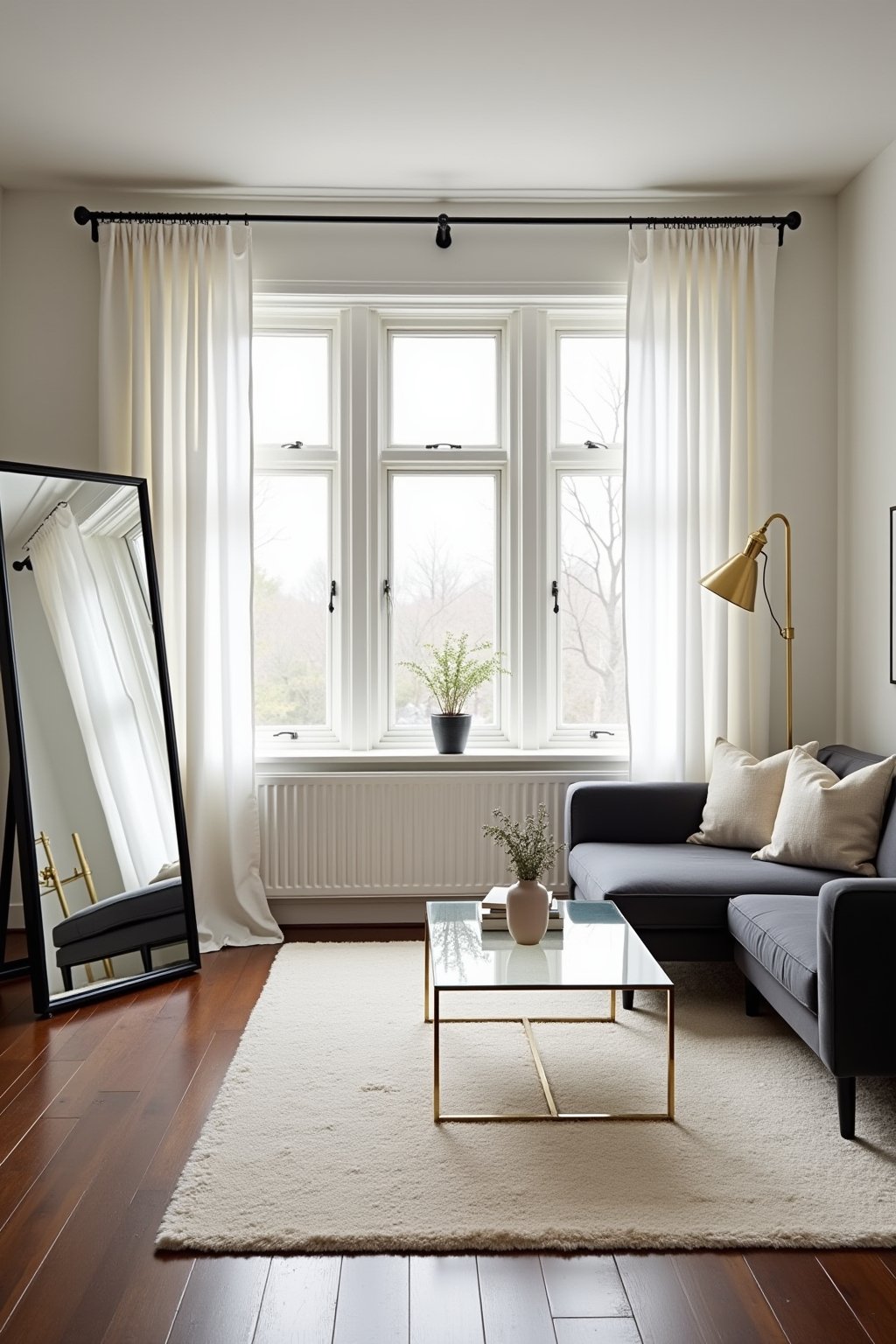
A large leaning floor mirror opposite the window, sheer white linen curtains hung high and wide, a cream rug over dark hardwood, light throw pillows on a dark sofa, a brass floor lamp in the far corner, and a glass-topped coffee table in the center. The room feels twice as bright as before despite zero paint.
Dark Bedroom
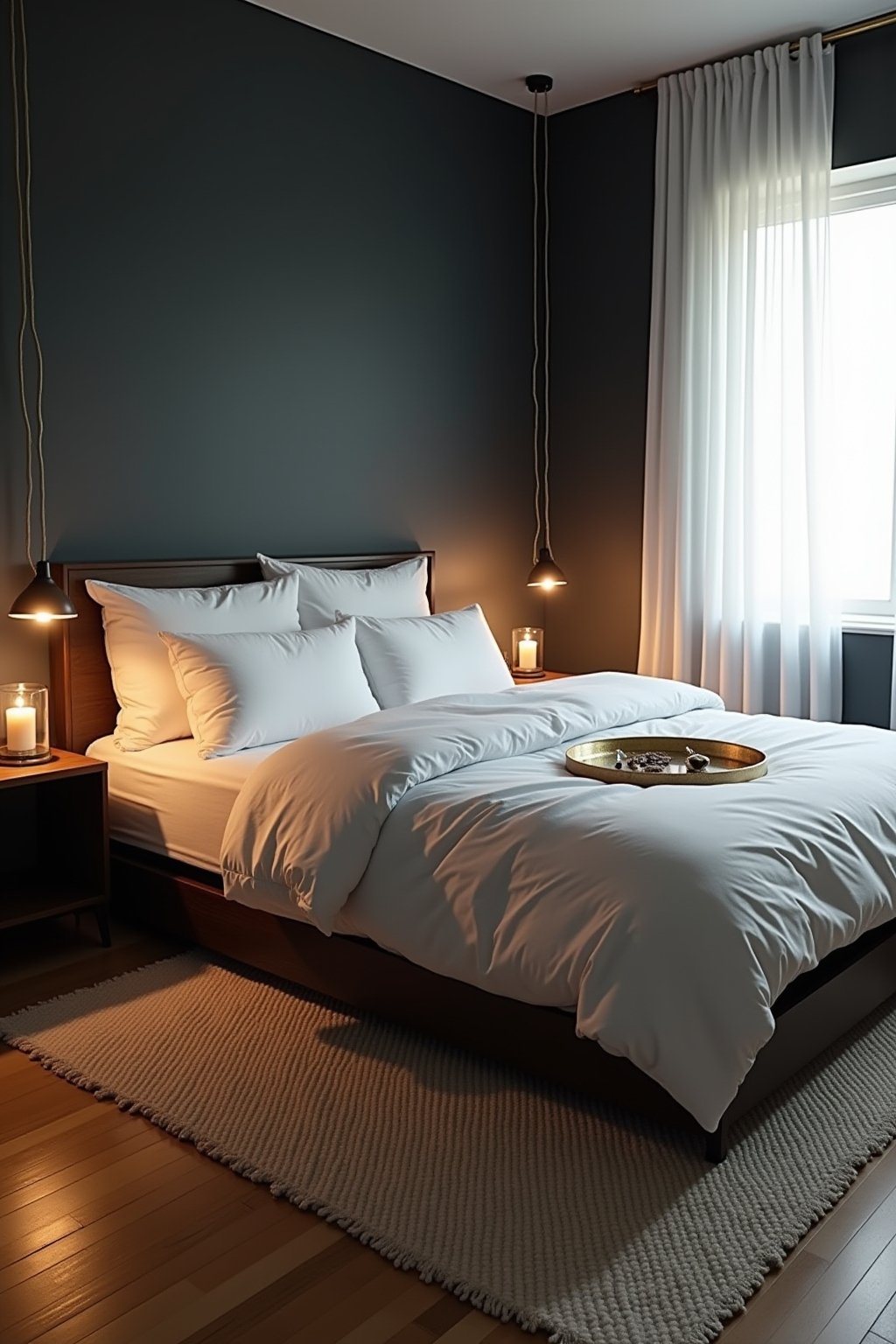
A large round mirror above the headboard, warm-bright table lamps on each nightstand, white bedding on a dark bed frame, sheer curtains letting in maximum light, and a light woven rug beside the bed. A small reflective tray on the nightstand holds a candle and catches lamplight beautifully at night.
Basement or Windowless Space
Multiple light sources at different heights — a tall floor lamp, two table lamps, and LED strip lighting behind a bookshelf. A large mirror on the longest wall creates the illusion of a window. All textiles in light colors, reflective metallic accessories, and one large low-light plant (snake plant or ZZ plant) for life and freshness.
What Comments Bring
Will mirrors really make a noticeable difference?
Yes. A large mirror placed opposite a window can make a dark room feel significantly brighter. It literally doubles the light from that window by reflecting it back into the space. The bigger the mirror, the bigger the impact.
What bulb temperature should I use in a dark room?
Use 5000K daylight bulbs in work areas where you need clarity and 3000K warm-bright bulbs for living areas. Avoid very warm 2700K bulbs in dark rooms as they can make the space feel dim and cave-like.
Can I use these tips if my walls are painted a dark color?
Absolutely. These techniques work especially well with dark walls because the light-colored textiles, mirrors, and reflective surfaces create beautiful contrast while solving the brightness problem.
What is the cheapest thing I can do right now?
Clean your windows inside and out, and rearrange furniture away from windows. Both are completely free and make an immediate difference in how much natural light reaches the room.
Are there plants that survive in dark rooms?
Yes. Snake plants, ZZ plants, pothos, and cast iron plants all thrive in low light conditions. They add life and freshness to dark corners without needing direct sunlight.
Should I avoid dark furniture in a dark room?
Not necessarily. Dark furniture can look beautiful in a dark room — the key is offsetting it with light textiles, mirrors, and good lighting. A dark sofa with light pillows and a light rug works perfectly.