
The hardest part of gardening for beginners is waiting. You plant seeds, water them, check every morning, and nothing seems to happen for weeks. Then you read that tomatoes take 80 days and wonder if this whole gardening thing is worth the patience.
Here is the secret experienced gardeners know: some crops grow shockingly fast. You can go from seed to harvest in less than a month. These quick-growing plants are the best confidence builders for new gardeners, the perfect gap-fillers between slow crops, and a way to turn any empty pot or garden corner into food within 30 days. I grow every one of these in my zone 6 garden and they never fail to impress guests who cannot believe something grew that fast.
Quick Facts
| Sun | Full Sun to Part Shade (most prefer 4-6+ hours) |
| Difficulty | Beginner (these are the easiest crops to grow) |
| Season | Spring, summer, and fall planting windows |
| Zone | Zones 5, 6, 7, 8, and 9 |
| Time to Harvest | 7-30 days from seed |
What You’ll Want On Hand
- Seeds for fast crops (radish, lettuce, arugula, spinach, turnips)
- Microgreen seed mixes (radish, broccoli, sunflower, pea shoots)
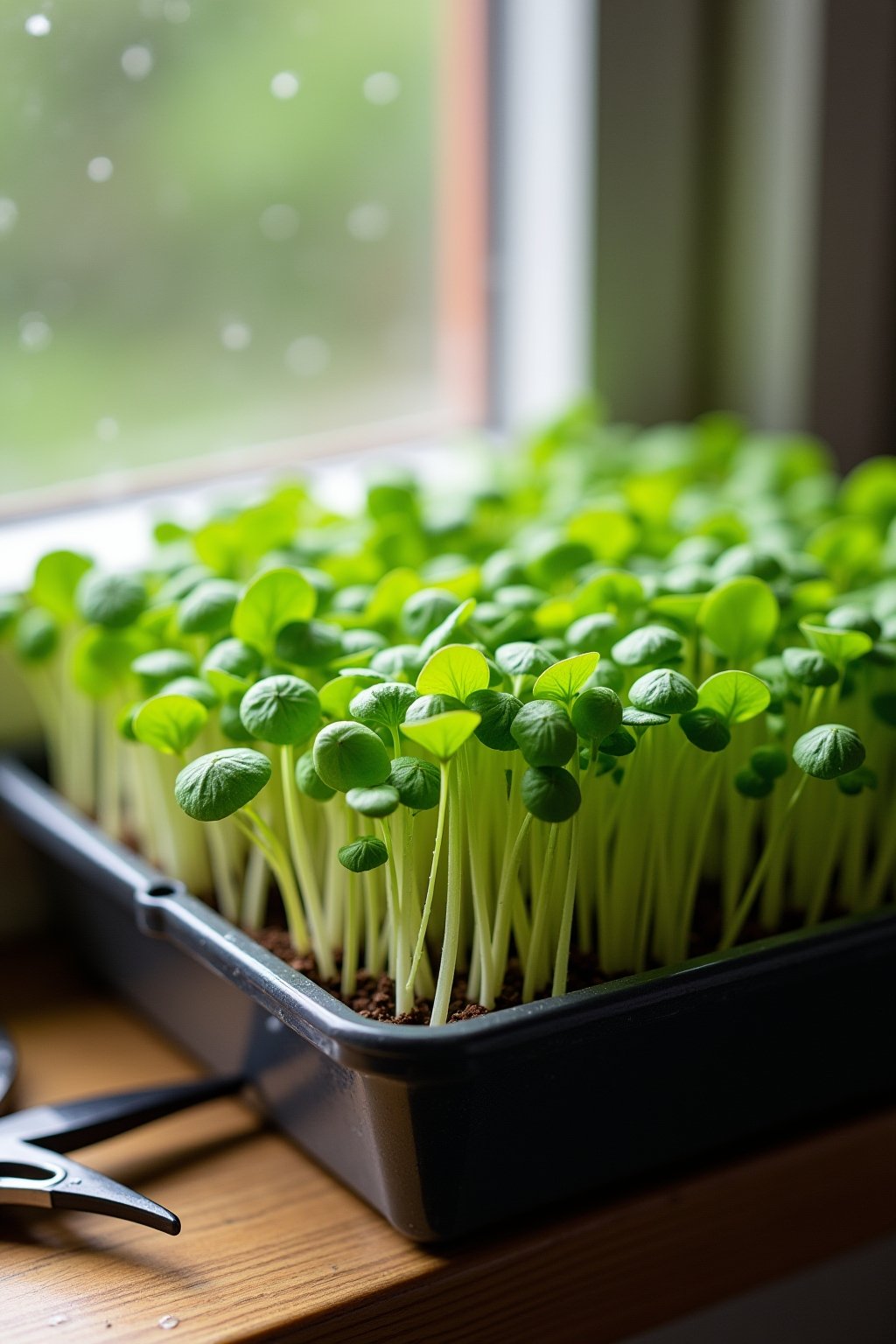
- Shallow trays for microgreens
- Potting mix or garden bed with compost
- Watering can with fine rose head
- Containers (any size works for fast crops)
- Row cover for extending the season
- Plant labels (important for succession sowing)
- Scissors for cut-and-come-again harvesting
- Seed starting mat (optional, speeds germination)
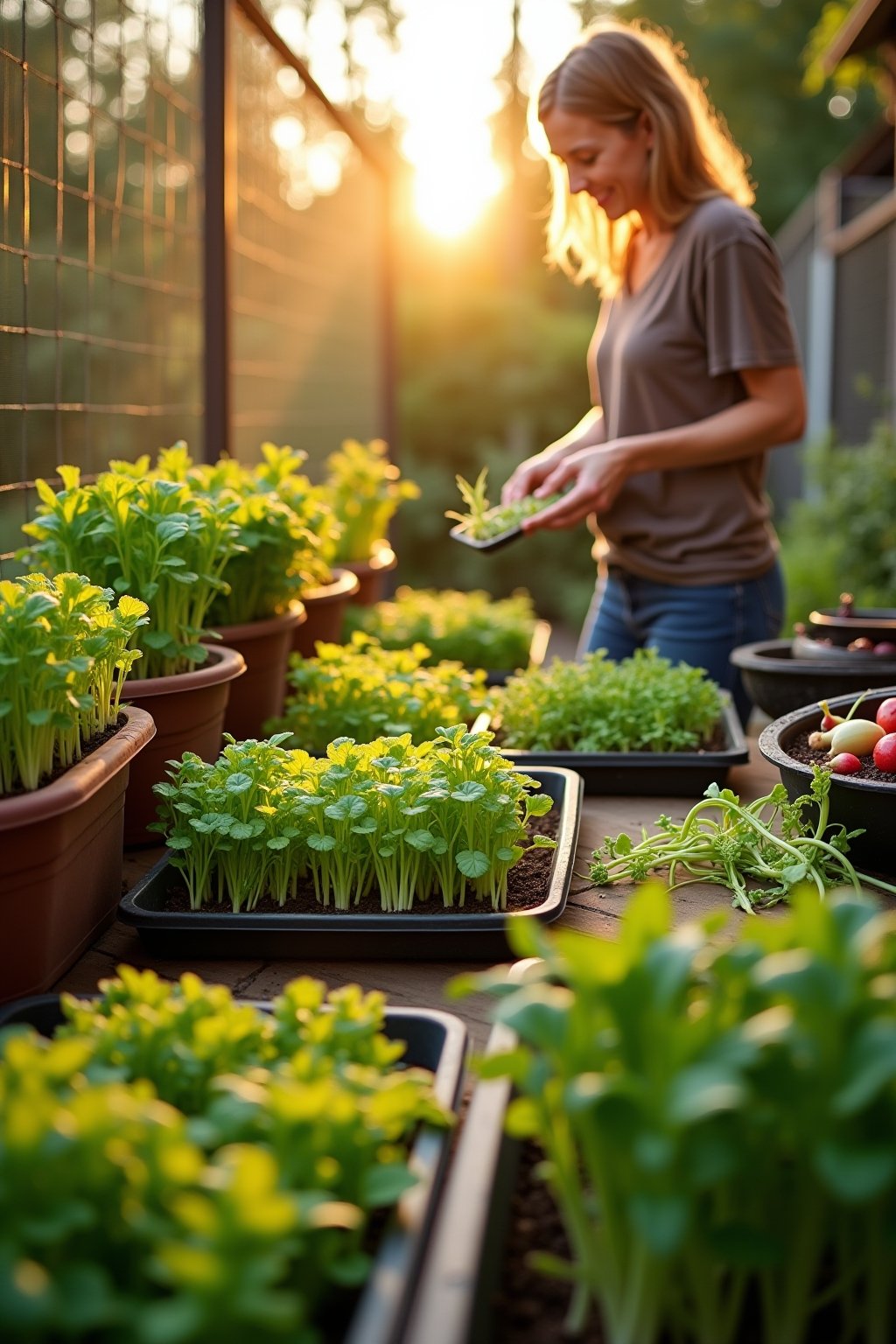
Succession sowing is the key to fast crops: Plant a short row every 7-10 days instead of everything at once. This gives you a continuous stream of fresh food instead of one overwhelming harvest. Mark each planting with a date label so you know what is ready when.
Fast crops are perfect for containers: Every plant on this list grows happily in pots as small as 6-8 inches deep. Window boxes, salad bowls, even a recycled baking tray with drainage holes works for microgreens and baby greens.
7-14 Days: Microgreens — The Fastest Edible Plants
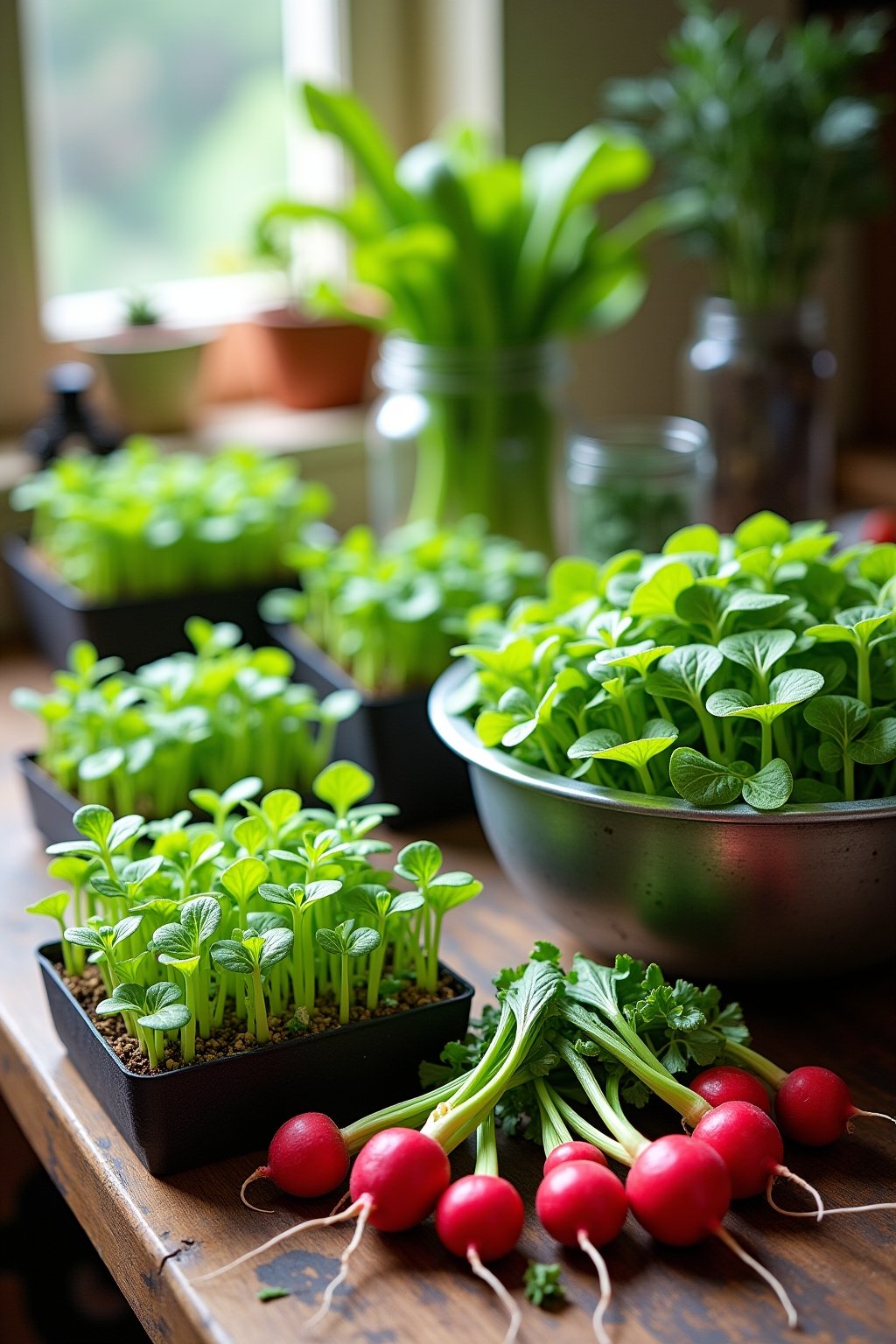
Microgreens are the sprinters of the plant world. Harvest in just 7-14 days from sowing. They are simply vegetable and herb seedlings harvested when the first true leaves appear, packed with 4-40 times more nutrients than mature plants.
How to grow: Fill a shallow tray (1-2 inches deep) with moist potting mix. Scatter seeds densely across the surface. Mist daily. Keep in a bright spot or under grow lights. Harvest with scissors when seedlings are 2-3 inches tall. Best microgreen varieties: Radish (spicy, ready in 7-10 days), broccoli (mild, 8-12 days), sunflower (nutty, 10-14 days), pea shoots (sweet, 10-14 days). You can grow microgreens year-round on a sunny windowsill.
14-21 Days: Green Onions and Baby Spinach
Green onions from scraps (14-21 days): Buy green onions from the grocery store. Cut the tops for cooking and plant the white root ends 1 inch deep in soil. They regrow in 2-3 weeks. Repeat indefinitely for free scallions. You can also grow them in a glass of water on a sunny windowsill.
Baby spinach (21-28 days): Sow seeds ½ inch deep in cool soil (40-70°F). Spinach germinates in 5-9 days and baby leaves are ready to harvest in 3-4 weeks. Pick outer leaves for cut-and-come-again harvests. Spinach bolts in heat, so grow it in spring and fall. In zones 8-9, plant in partial shade. Zones 5-7 can plant from March through May and again in September.
21-25 Days: Radishes and Arugula
Radishes (21-25 days): The fastest root vegetable. Cherry Belle is ready in 22 days, making it the ultimate instant-gratification crop. Sow ½ inch deep, 1 inch apart, in soil as cool as 45°F. Thin to 2 inches. Pull when the root pushes up above the soil surface. They grow in any zone during spring or fall.
Arugula (21-28 days for baby leaves): This peppery salad green germinates in 3-5 days and produces harvest-ready baby leaves in 3-4 weeks. Sow ¼ inch deep. Cut outer leaves at 3-4 inches and the plant regrows for 3-4 more harvests. Arugula bolts quickly in heat — plant in spring and fall or in the shade of taller crops during summer.
25-30 Days: Baby Lettuce, Baby Kale, and Bok Choy
Baby lettuce (25-30 days): Sow seeds ¼ inch deep and harvest baby leaves when they reach 4-6 inches. The cut-and-come-again method gives you 3-4 harvests from one sowing. Mix varieties (romaine, butterhead, red leaf) for stunning salad bowls. Grows in partial shade.
Baby kale (25-30 days): Sow directly or transplant. Harvest baby leaves at 3-4 inches for tender, mild kale perfect for salads. Baby kale is sweeter and less tough than mature kale. It handles light frost and actually tastes sweeter after a cold snap.
Baby bok choy (30 days): Compact Asian greens that grow fast in cool weather. Sow ¼ inch deep, thin to 4 inches. Ready at baby stage in 30 days. Perfect for stir-fries and soup. Grows well in containers and partial shade. Zones 5-9 in spring and fall.
28-30 Days: Mustard Greens, Turnip Greens, and Cilantro
Mustard greens (28-30 days for baby leaves): Spicy, nutrient-dense greens that germinate in 3-5 days. Mizuna and Red Giant are the fastest varieties. Harvest baby leaves at 4-6 inches for mild flavor. Mature leaves are intensely peppery. Grows in any zone in spring and fall.
Turnip greens (28-30 days): Most people grow turnips for the root, but the greens are actually faster and more nutritious. Sow seeds and harvest the tender young greens at 4-6 inches in under 30 days. The roots take 45-60 days if you want both.
Cilantro (28-30 days for first harvest): The fresh herb that transforms any dish. Sow seeds ¼ inch deep and harvest outer leaves at 4-6 inches. Cilantro bolts fast in heat — succession sow every 2 weeks for continuous supply. In zones 8-9, grow in fall and winter.
When It’s Not Coming Together
Seeds not germinating: Most fast crops prefer cool soil. If it is too hot (above 80°F), lettuce and spinach seeds go dormant. Plant in morning shade, water with cool water, and try again when temperatures moderate.
Greens bolting immediately: Too much heat. Bolting (flowering) is triggered by long hot days. Plant fast greens in early spring, fall, or in the shade of taller crops during summer. Arugula and cilantro bolt fastest in heat.
Microgreens getting moldy: Too much moisture and not enough airflow. Mist instead of pouring water. Ensure some air circulation (a small fan on low helps). Do not cover trays after seeds germinate.
Radishes all leaf and no root: Overcrowded or not enough sun. Thin radishes to 2 inches apart and ensure at least 6 hours of direct sunlight. Excess nitrogen fertilizer also produces leafy tops at the expense of root development.
What Each Season Brings
Early Spring (March-April): Prime time for all fast crops in zones 5-9. Direct sow radishes, lettuce, arugula, spinach, and peas in cool soil. Start microgreens indoors anytime.
Late Spring / Summer (May-August): In zones 5-7, continue succession sowing fast crops. In zones 8-9, shift to shade-grown greens and wait for fall. Microgreens grow year-round indoors.
Fall (September-November): The second prime season for fast crops. Cooling temperatures produce the sweetest greens. Plant through October in zones 7-9. Use row cover in zones 5-6 to extend the harvest into November.
Winter: Grow microgreens and green onions indoors on a sunny windowsill. In zones 8-9, mild winters allow outdoor growing of lettuce, spinach, and radishes with row cover protection.
What the First Time Showed Me
- Succession sow every 7-10 days for nonstop harvests — plant a new short row or container of fast crops weekly. Label each sowing with the date so you know what to harvest when.
- Microgreens are the fastest food you can grow — 7-14 days from seed to harvest, packed with concentrated nutrition, and you can grow them year-round on a windowsill with zero garden space.
- Regrow green onions from grocery store scraps for free — plant the white root ends and harvest new green tops every 2-3 weeks. This is the easiest gardening project in existence.
- Radishes are the ultimate garden gap-filler — sow them between rows of slow-growing crops. They will be harvested before the main crop needs the space. Their roots also loosen compacted soil for their neighbors.
- Baby greens taste better than mature greens — baby kale, baby spinach, and baby lettuce are more tender and mild. Harvest at 3-6 inches for the best flavor and texture.
- Cut-and-come-again harvesting doubles your yield — harvest outer leaves at 4-6 inches and leave the center growing point intact. One planting of lettuce or kale produces 3-4 harvests over 6-8 weeks.
Adjacent Reading
- 10 Fast-Growing Vegetables You Can Harvest in Under 60 Days This Spring
- Succession Planting: How to Harvest Fresh Vegetables All Season Long
- Container Gardening for Beginners: Everything You Need to Know
Frequently Asked Questions
What is the fastest vegetable to grow from seed?
Microgreens are the absolute fastest at 7-14 days from seed to harvest. For a traditional garden vegetable, radishes are the fastest at 21-25 days. Baby arugula and baby lettuce are ready in 21-30 days. Green onions regrown from scraps take 14-21 days.
Can I grow fast vegetables in containers?
Absolutely. Every fast-growing crop on this list thrives in containers. Most need only 6-8 inches of soil depth. Window boxes work perfectly for lettuce, arugula, and spinach. Microgreens grow in trays just 1-2 inches deep. Radishes grow in any pot that is at least 6 inches deep.
What are microgreens and how do I grow them?
Microgreens are vegetable and herb seedlings harvested when they are 7-14 days old and just 2-3 inches tall. They contain 4-40 times more nutrients than mature plants. Grow them in a shallow tray with moist potting mix, scatter seeds densely, mist daily, and harvest with scissors when the first true leaves appear.
What fast-growing vegetables can I plant in summer?
In summer heat, focus on heat-tolerant fast growers: radishes (in partial shade), bush beans (50-55 days), green onions, and microgreens (grow indoors). Lettuce, spinach, and arugula bolt in summer heat but can be grown in the shade of taller plants or under shade cloth.
How do I keep a continuous supply of fast-growing greens?
Succession sowing. Plant a new short row every 7-10 days from early spring through late fall. As one row is being harvested, the next is growing. Label each sowing with the date. This eliminates the feast-or-famine cycle where everything ripens at once.
Are microgreens more nutritious than regular vegetables?
Research shows that microgreens contain 4 to 40 times higher concentrations of vitamins, minerals, and antioxidants compared to their mature counterparts. They are among the most nutrient-dense foods you can grow. Broccoli, radish, and red cabbage microgreens have the highest nutrient levels.