
There’s a trick to grilled salmon that nobody teaches you until you’ve ruined about four expensive fillets. I know because I ruined exactly four expensive fillets before I figured it out. The secret isn’t a fancy technique or a specific temperature — it’s the glaze. A simple mix of brown sugar, soy sauce, Dijon, and smoked paprika brushed on in the last three minutes creates a caramelized, sticky, deeply-flavored crust that makes salmon taste like a completely different fish.
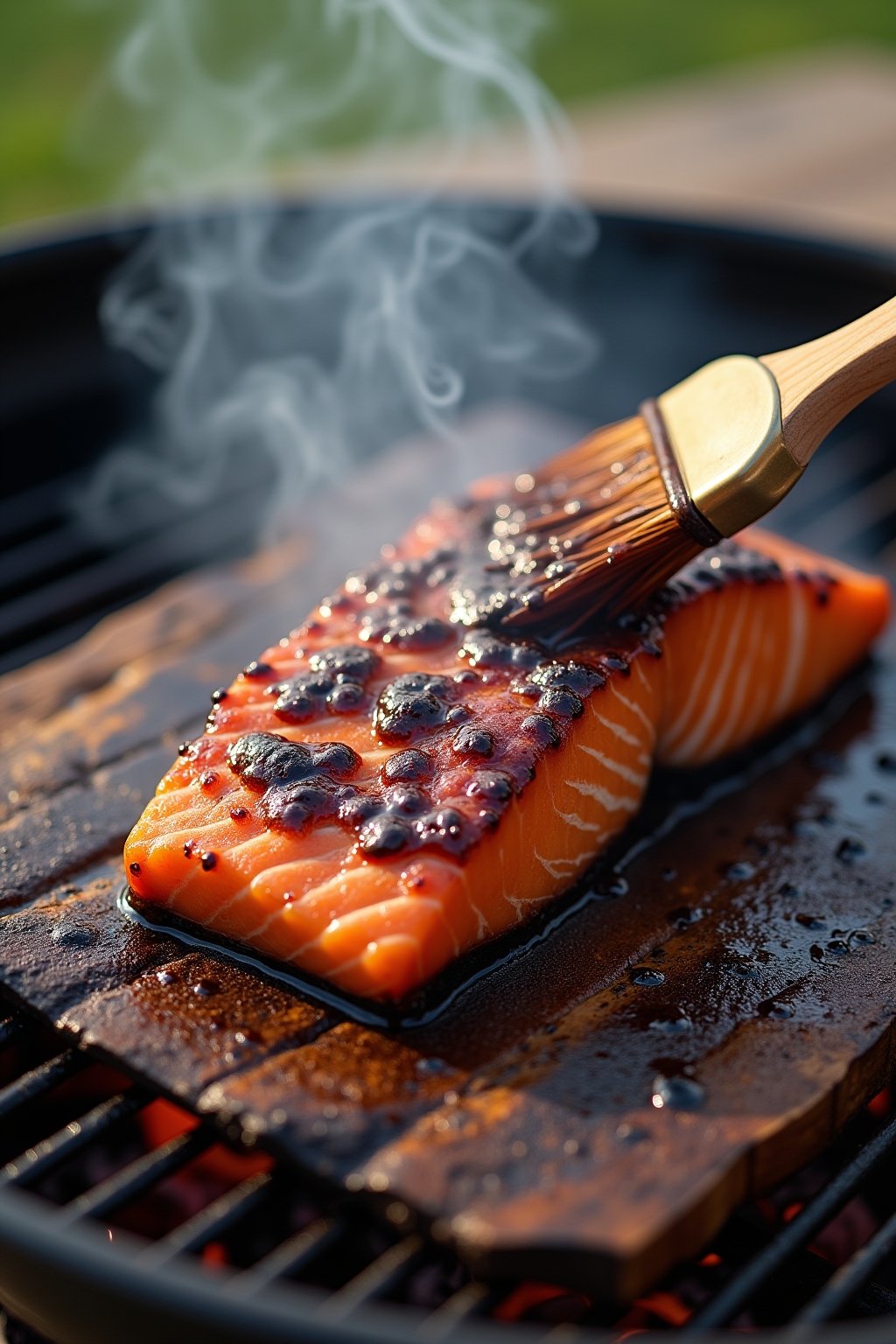
What makes this recipe foolproof is the combo of indirect heat and a cedar plank. The plank does two things: it keeps the salmon from sticking to the grates (the single biggest disaster in fish grilling), and it infuses the fish with subtle wood smoke that tastes like you spent hours on a proper smoker. The plank takes about five minutes to soak and costs almost nothing.
I make this when I want to seem fancier than I actually am. It looks impressive, the glaze is restaurant-level, and the whole thing takes 15 minutes of active cooking time. I’ve served it to in-laws, dinner party guests, and once to a visiting French friend who genuinely asked for the recipe. It’s that good.
What Most Recipes Skip
- Foolproof grilling — the cedar plank means no sticking, no flipping, and no salmon disasters
- Sticky-sweet glaze — brown sugar and soy caramelize into a gorgeous dark crust
- Restaurant-quality at home — looks and tastes more expensive than the effort deserves
- Omega-3 packed — genuinely healthy while still feeling indulgent
- Cedar smoke adds depth — subtle woodsy flavor that rivals a proper smoker
- Dinner in 20 minutes — from packaging to plate faster than most oven recipes
What You’ll Need
Salmon — wild-caught sockeye or king salmon has the best flavor. Farmed Atlantic salmon works too and is usually more budget-friendly. A whole side is more impressive and actually easier to cook evenly than individual fillets.
Cedar planks — look for them at grocery stores (seasonal), hardware stores, or online. Avoid treated cedar used for fencing — you want food-grade untreated cedar. Planks can be reused 2-3 times if cleaned and dried between uses.
Brown sugar — dark brown sugar has more molasses flavor and caramelizes deeper. Light brown works fine too.
Low-sodium soy sauce — the glaze concentrates on the grill, so regular soy becomes overly salty. Tamari works as a gluten-free sub.
Dijon mustard — smooth, not grainy, for glaze. Adds subtle sharpness that balances the sweetness.
Maple syrup — real maple syrup, not pancake syrup. Adds depth the brown sugar alone can’t provide.
Smoky Grilled Salmon with Brown Sugar Glaze
Ingredients
Equipment
Method
-
Soak the cedar planks in water for at least 30 minutes (1 hour is better). Weigh them down with a can or bowl to keep them submerged.
-
Meanwhile, whisk all the glaze ingredients together in a small bowl until the sugar dissolves. Reserve 2 tablespoons in a separate container for basting.
-
Pat the salmon dry with paper towels and brush lightly with olive oil. Season both sides with salt and pepper.
-
Preheat your grill for indirect heat at 375°F (medium-high). On a gas grill, light only the outer burners. On charcoal, push coals to one side.
-
Remove planks from water and shake off excess. Place them on the direct-heat side of the grill for 2-3 minutes until you hear crackling and see light smoke.
-
Use tongs to move planks to the indirect heat side and immediately place the salmon skin-side down on top of the planks.
-
Brush half the glaze over the salmon. Close the grill and cook for 12-15 minutes, glazing every 5 minutes with more sauce.
-
In the last 3 minutes, brush with the reserved clean glaze for a glossy finish. Salmon is done at 135-140°F internal temperature (it’ll keep cooking a bit after pulling).
-
Carefully remove the planks with oven mitts (they’ll be hot and charred) and let the salmon rest on the plank for 5 minutes.
-
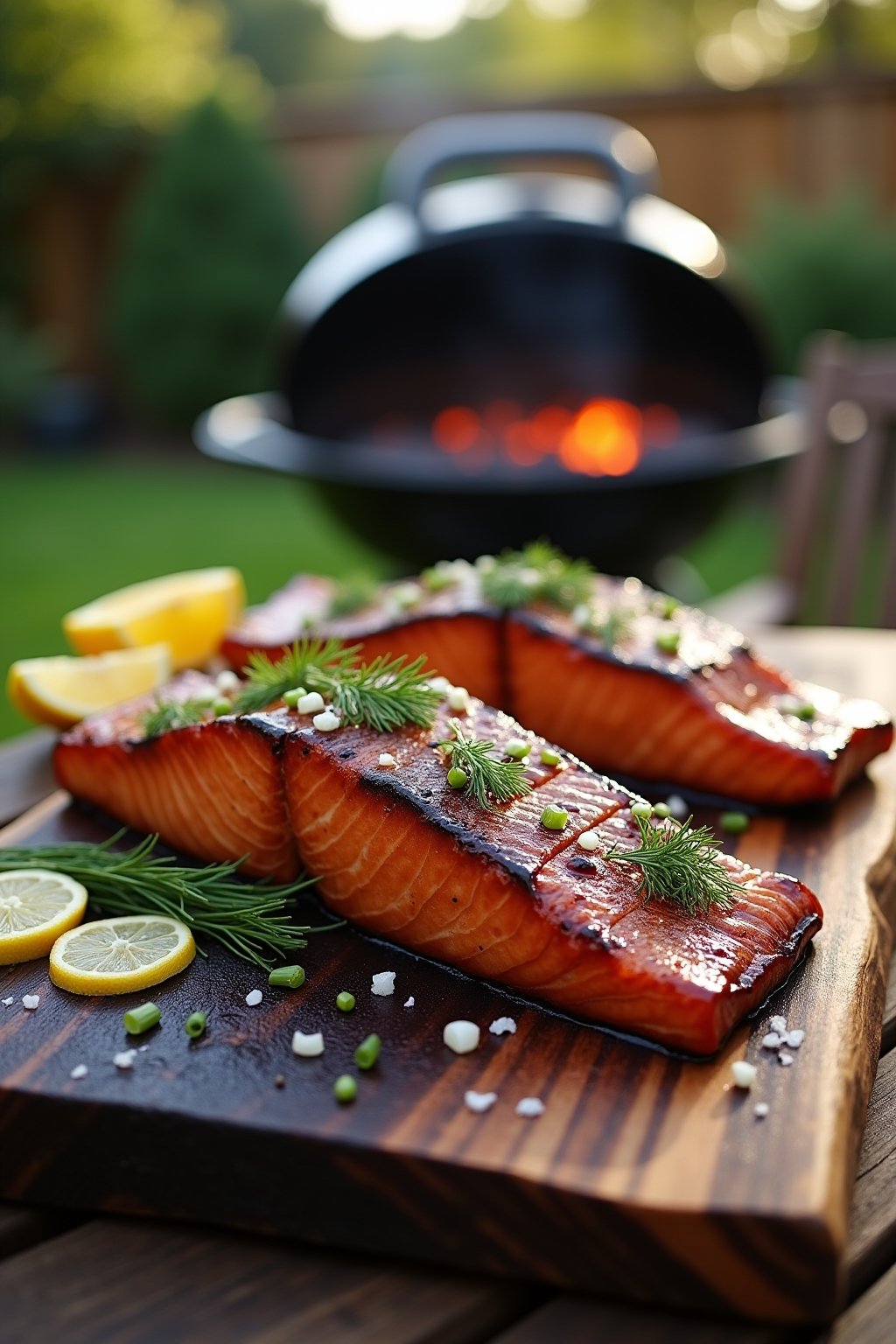
Garnish with lemon wedges, fresh dill, green onions, and a pinch of flaky sea salt. Serve straight from the plank for dramatic presentation.
Notes
Nutrition Facts
Per serving
| Calories | 340 |
| Total Fat | 16g |
| Saturated Fat | 3g |
| Carbohydrates | 16g |
| Sugar | 14g |
| Protein | 32g |
| Sodium | 620mg |
| Potassium | 680mg |
| Vitamin A | 6% |
| Vitamin C | 8% |
| Calcium | 3% |
| Iron | 8% |
* Percent Daily Values are based on a 2,000 calorie diet.
Refrigerator Tips
Refrigerator: Cooked salmon keeps 3 days in an airtight container. Excellent cold in salads, on bagels with cream cheese, or flaked into pasta.
Freezer: Freeze portions for up to 2 months. Thaw overnight in the fridge. Freezing slightly changes the texture, so use for dishes like salmon cakes or pasta.
Reheating: Gently. Microwave at 50% power for 90 seconds, or warm in a 275°F oven for 10 minutes. High heat ruins salmon texture.
Leftover magic: Cold grilled salmon flaked over a green salad with lemon vinaigrette is genuinely one of the best lunches. Also makes incredible salmon cakes — flake, mix with panko and egg, pan-fry.
Other Routes
- Asian-Style Glaze — add 2 tablespoons fresh ginger and 1 tablespoon toasted sesame oil to the glaze
- Honey Garlic — swap maple syrup for honey and double the garlic
- Chipotle Maple — add 2 chipotles in adobo, minced, to the glaze for sweet heat
- Miso Glaze — replace Dijon with 2 tablespoons white miso paste for umami depth
- Citrus Herb — add 1 tablespoon each of lemon zest, orange zest, and chopped fresh thyme
- Bourbon BBQ — add 2 tablespoons bourbon and your favorite BBQ sauce to the glaze
- Coffee-Rubbed — before glazing, rub salmon with 2 tablespoons finely ground coffee and brown sugar
Fine-Tuning
- Soak planks thoroughly — 30 minutes minimum, 1 hour better. Dry planks catch fire and burn the fish
- Pre-char the plank — 2-3 minutes on direct heat before adding fish releases the cedar aromatics and primes the surface
- Indirect heat only — direct flame under the plank will set it on fire. Keep the fish over the cool side
- Pull at 135°F — salmon continues to cook as it rests. 140°F internal is medium, 150°F is overcooked
- Reserve clean glaze for finishing — never baste raw fish then use the same sauce for serving
- Don’t flip — the whole point of the plank is that the skin stays stuck. Leave it alone and trust the process
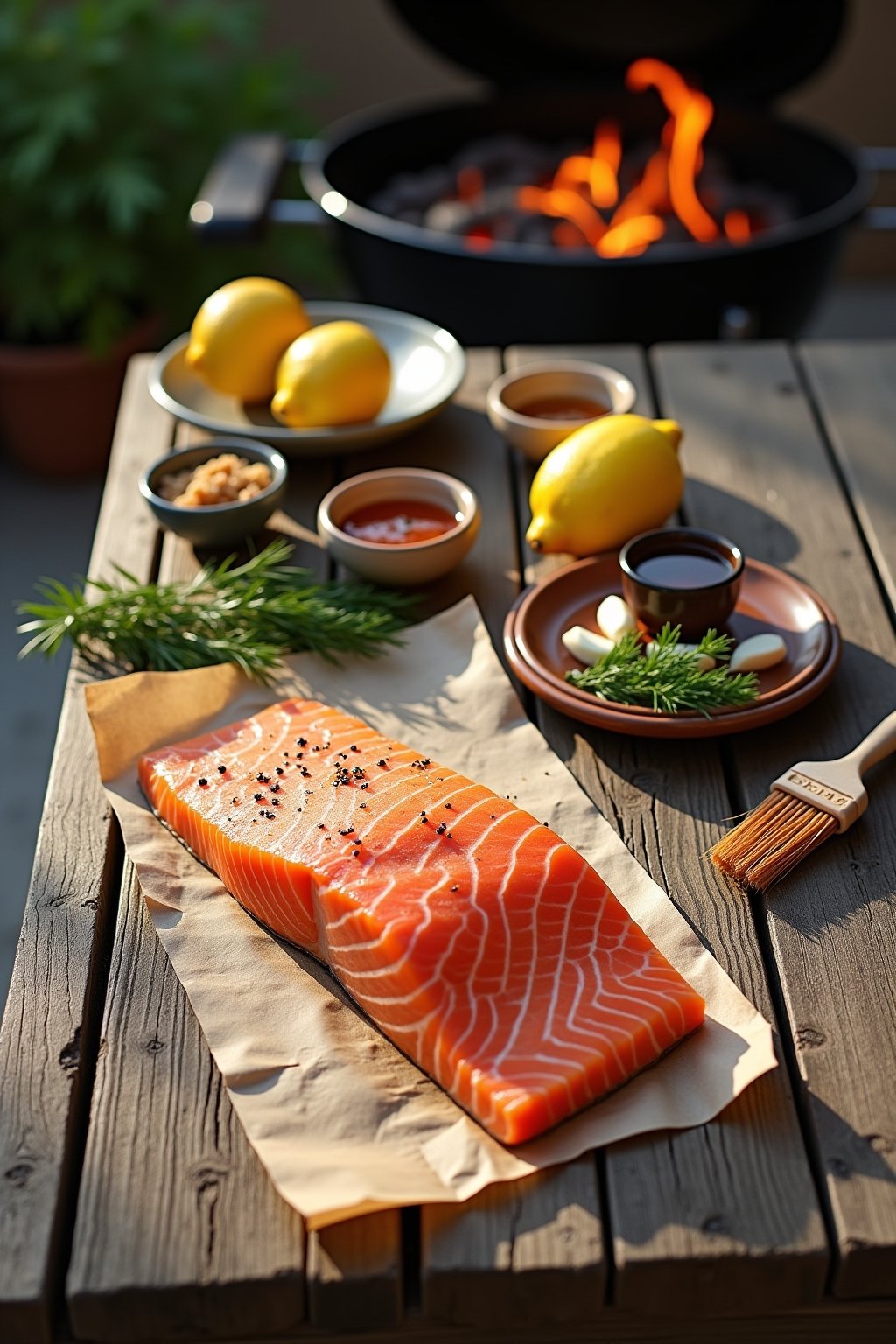
Plate-Mates
- Grilled asparagus — toss on the grill during the last 5 minutes of cooking
- Lemon herb rice — fluffy rice with dill and a squeeze of lemon
- Roasted baby potatoes — dill and butter brings out the salmon beautifully
- Garden salad with vinaigrette — bright, fresh, and cuts through the richness
- Quinoa with herbs — protein-packed side that pairs perfectly
- Grilled zucchini or corn — summer sides that work off the same grill
- Crisp white wine — Sauvignon Blanc or Chardonnay lifts the smoky glaze
When to Start
Glaze ahead: Mix the glaze up to 3 days in advance and refrigerate. The flavors meld and deepen with time.
Pre-soak planks: Planks can soak overnight — no downside to a longer soak. Drain just before grilling.
Portion salmon: If using individual fillets, portion and season up to 6 hours ahead. Keep refrigerated.
Party strategy: A whole salmon side on a cedar plank is one of the most dramatic presentations in grilling. Serve right on the charred plank, garnished with lemons and dill. Guests are always impressed and it actually takes very little effort.
Common Questions
Do I have to use a cedar plank?
No — you can grill salmon directly on well-oiled grates, but the plank prevents sticking and adds subtle smoke flavor. A grill basket or piece of heavy-duty foil also works as a plank substitute (without the smoke).
Can I reuse cedar planks?
Yes, 2-3 times if they’re not too charred. Wash with mild soap, dry completely, and store. Once they’re deeply blackened or crack, they’re done.
What if my salmon is skinless?
Skinless works on a plank — place it directly and it won’t stick to the wood. On direct grates, skinless salmon is much harder to grill without it falling apart. Stick with the plank method.
How do I know when salmon is done?
Internal temperature is the only reliable indicator. 135°F = tender and slightly translucent (recommended). 140°F = medium. 150°F+ = overcooked and dry. An instant-read thermometer is the best $20 you’ll spend for grilling.
Can I cook frozen salmon this way?
Always thaw first — overnight in the fridge or 30 minutes in cold water still in its sealed package. Cooking from frozen leads to uneven cooking and rubbery texture.
What if I don’t have a grill?
Bake the salmon on the cedar plank at 400°F for 15-18 minutes. You won’t get the smoke but the plank still imparts cedar flavor and prevents sticking. Works beautifully in the oven.