

A few months ago, I watched a friend scrub her granite countertops with a vinegar solution she’d seen recommended on a cleaning blog. She was being thorough — really working it in with a sponge, feeling proud of her natural cleaning approach. What she didn’t know was that vinegar’s acidity was slowly etching the stone surface with every wipe, creating dull spots that would eventually need professional polishing to fix.
That moment stuck with me because it captures the biggest problem with deep cleaning advice: good intentions combined with wrong information can actually damage your home. After years of testing cleaning methods and hearing from readers about their cleaning disasters, I’ve compiled the most common deep cleaning mistakes people make — and more importantly, exactly what you should do instead. Some of these will surprise you.
| ⏱ Time Required: | Varies |
| 📈 Difficulty: | Medium |
| 💰 Supplies Cost: | $0 |
| 🔄 How Often: | Reference guide |
What Holds the Line
- Prevents costly damage to surfaces — knowing which products damage which materials saves you from expensive repairs and replacements
- Improves actual cleaning results — correcting these mistakes means your deep cleaning efforts actually work instead of just moving dirt around
- Saves wasted time and product — many mistakes involve using too much product or the wrong technique, which means you’re working harder for worse results
- Based on real cleaning chemistry — every correction is explained with the science behind why the right method works and the wrong one doesn’t
- Protects your health — some common mistakes involve mixing chemicals that create toxic fumes; knowing what to never combine is critical safety knowledge
- Applies to every room — these mistakes happen across kitchens, bathrooms, bedrooms, and living areas, so fixing them improves your entire cleaning routine
What You’ll Need
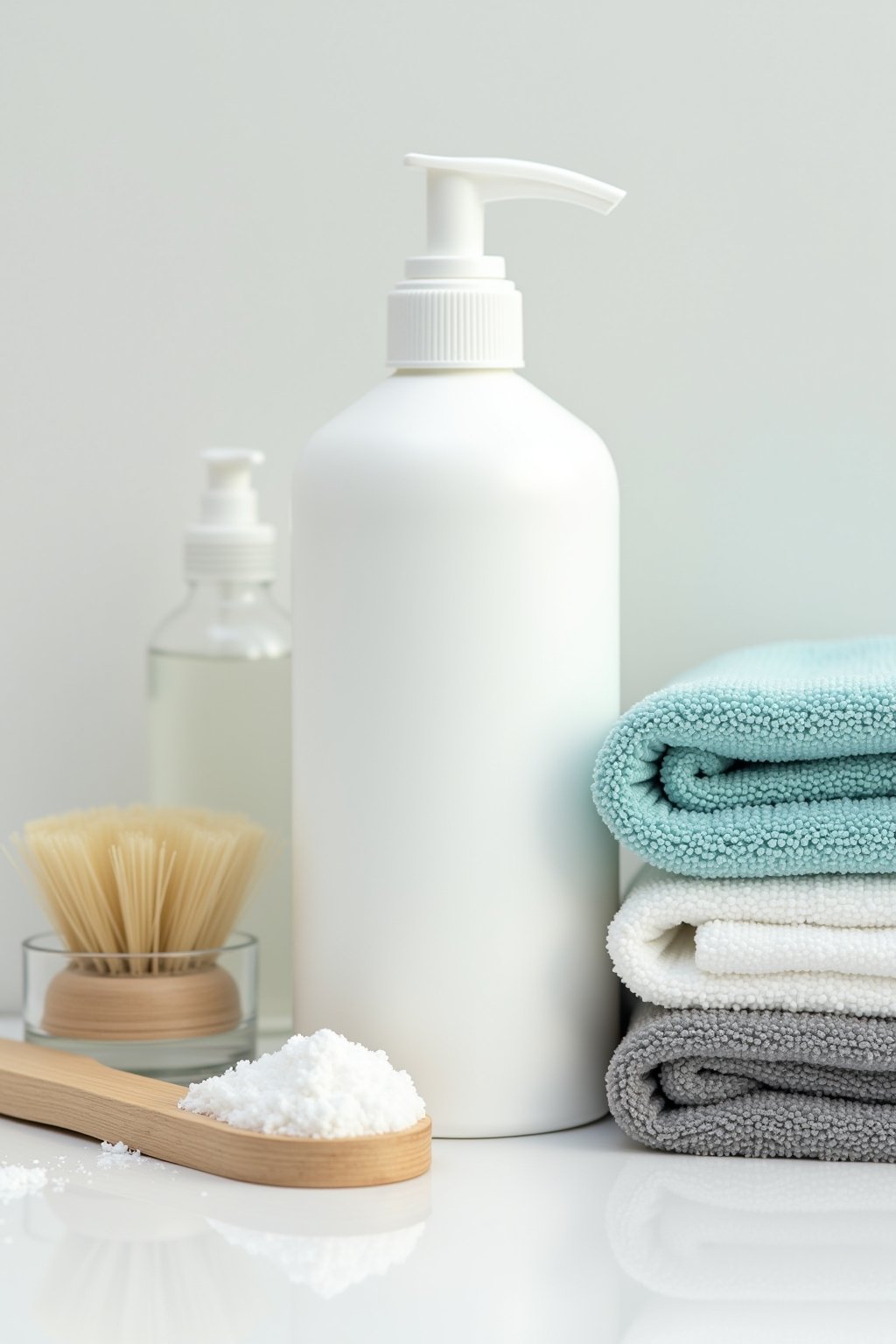
Once you know the correct methods, you’ll need fewer products, not more. Here’s the streamlined toolkit:
- pH-neutral all-purpose cleaner — safe for virtually all surfaces including natural stone, wood, and sealed countertops
- Microfiber cloths in multiple colors — designate colors for different areas (blue for bathroom, green for kitchen) to prevent cross-contamination
- White distilled vinegar — excellent for glass, porcelain, and stainless steel but keep it away from natural stone and hardwood
- Baking soda — a gentle abrasive and deodorizer; far safer than powdered cleanser on most surfaces
- Dish soap — a few drops in warm water makes the safest general cleaner for nearly every surface in your home
- Soft-bristle brushes — firm enough for grout but gentle enough not to scratch; avoid wire brushes entirely
The Order That Works
Stop Using Vinegar on Everything (Especially Stone and Wood)
This is the most damaging misconception in natural cleaning. Vinegar is acidic (pH 2-3), which makes it great for dissolving mineral deposits on glass and porcelain. But that same acidity etches natural stone (marble, granite, travertine, slate), dulls hardwood floor finishes, and can corrode certain metals over time. I’ve seen marble countertops with visible etch marks shaped exactly like spray patterns from vinegar cleaning.
What to do instead: use a pH-neutral cleaner for natural stone and sealed wood surfaces. For daily countertop cleaning, a few drops of dish soap in warm water is the safest universal solution. Save your vinegar for glass, mirrors, porcelain sinks, and toilets where acidity is actually an advantage. If you’ve been using vinegar on stone, examine the surface under a bright light at an angle — if you see dull spots or hazy patches, those are etch marks that may need professional restoration.
Stop Spraying Cleaner Directly on Surfaces
Watch anyone clean and they’ll typically spray the surface, then wipe. The problem is that spraying directly creates overspray that lands on adjacent surfaces, leaves behind residue that builds up over time, and wastes product. On electronics and screens, direct spraying can push liquid into seams and ports. On wood furniture, pooling spray can penetrate the finish and cause warping or white marks.
What to do instead: spray your cleaner onto the microfiber cloth, then wipe the surface. This gives you complete control over how much product touches the surface, eliminates overspray, and uses about 60 percent less cleaner per session. The only exception is heavy-duty jobs where the cleaner needs dwell time — oven interiors, soap scum in showers, and toilet bowls. For these, spray directly and let the product sit for the recommended time before wiping. For everything else, cloth first, surface second.
Stop Using Too Much Product (More Is Not Cleaner)
This is human nature — if a little works, more must work better. But with cleaning products, extra product leaves residue that actually attracts more dirt, creates streaks on glass, and leaves surfaces feeling sticky or filmy. Floors are the worst offenders: mopping with too much floor cleaner creates a tacky film that collects dust, footprints, and pet hair faster than a clean floor would.
What to do instead: follow the product label’s dilution ratio exactly. For homemade solutions, less is more — one tablespoon of dish soap per gallon of water is typically plenty for floor mopping. For spray cleaners, one or two spritzes per two-square-foot area is sufficient. If your floor feels sticky after mopping, you’re using too much product. Re-mop with plain warm water to remove the residue, then use less product next time. This single change will make your floors stay cleaner longer between mopping sessions.
Stop Scrubbing Before the Product Has Time to Work
The biggest mistake in bathroom and kitchen deep cleaning is spraying a product and immediately scrubbing. Every cleaning product works through chemical reactions that need contact time — this is called “dwell time” in the cleaning industry. When you scrub immediately, you’re doing 90 percent of the work with your arm muscles instead of letting the chemistry do it.
What to do instead: spray your cleaner, set a timer for the dwell time listed on the label (usually 3-10 minutes), and walk away to do something else. Come back and you’ll find that the grime wipes away with minimal effort. For tough soap scum in showers, I spray and wait a full 15 minutes. For oven cleaner, 30 minutes minimum. This approach is not only more effective — it’s dramatically easier on your body. Your scrubbing should be gentle finishing work, not the main event. If you’re breaking a sweat scrubbing, you didn’t let the product sit long enough.
Stop Cleaning Windows on Sunny Days
This one surprises everyone. Sunny days seem like the perfect time to wash windows because you can see every smudge and streak. But direct sunlight heats the glass and evaporates your cleaning solution before you can wipe it, leaving behind streaks and residue that are impossible to buff out once they dry. Professional window cleaners always work on overcast days or in the shade for exactly this reason.
What to do instead: clean windows on a cloudy day, in the early morning before direct sun hits them, or in the evening. If you must clean on a sunny day, work on the shady side of the house first and follow the sun around. Use a squeegee for large panes — starting at the top and pulling downward in a single stroke per row overlapping each pass by about an inch. For smaller windows, spray a vinegar-water solution onto a microfiber cloth and wipe in a Z-pattern. Finish with a dry microfiber cloth to catch any remaining moisture before it dries into streaks.
Stop Mixing Cleaning Chemicals (This One Is Dangerous)
The most dangerous deep cleaning mistake isn’t ineffective — it’s actively hazardous. Mixing bleach with ammonia creates chloramine gas, which causes respiratory distress. Mixing bleach with vinegar or acidic cleaners creates chlorine gas. Mixing hydrogen peroxide with vinegar creates peracetic acid, which can irritate skin, eyes, and lungs. These combinations happen accidentally more often than you think, especially when people switch between products without rinsing the surface first.
What to do instead: use one product at a time and rinse the surface thoroughly with plain water before switching to a different product. Never mix bleach with anything except water. If you’re cleaning a bathroom and using bleach-based toilet cleaner, don’t use a vinegar-based spray on the sink at the same time — the fumes can combine in the enclosed space. Open windows and run the exhaust fan whenever you use any chemical cleaner. If you feel lightheaded, develop a headache, or notice a strong chemical smell while cleaning, leave the room immediately, open windows, and don’t return until the air has fully cleared.
Likely Culprits
- Using the same cloth for the entire house — a cloth used in the bathroom carries bacteria to the kitchen; use color-coded microfiber cloths and switch between rooms
- Vacuuming without checking the filter first — a clogged filter reduces suction by up to 50 percent, meaning you’re passing over dirt without picking it up; clean or replace filters before each deep clean
- Washing windows from inside only — exterior windows accumulate different grime (pollen, pollution, mineral deposits) that requires separate attention; clean both sides for truly clear glass
- Using hot water for everything — hot water sets protein stains like blood, milk, and egg; always use cold water first on protein-based stains, then switch to warm water for grease-based stains
- Ignoring the cleaning order — always clean top to bottom and dry to wet; dusting after mopping means dust settles on your wet floors, and cleaning floors before counters means crumbs fall onto clean floors
Best Used When
Kitchen
The most common kitchen mistakes are using vinegar on stone countertops, too much soap on floors, and scrubbing the oven without dwell time. Switch to pH-neutral cleaner for counters, use minimal floor soap with a thorough rinse, and let oven cleaner sit for at least 30 minutes before you touch a sponge. Your kitchen deep clean will be faster and produce better results with half the effort.
Bathroom
Bathroom mistakes center on chemical mixing (bleach toilet cleaner near vinegar shower spray) and not allowing products enough contact time on soap scum and hard water stains. Always ventilate, use one product at a time with rinsing between switches, and spray your shower cleaner at least 15 minutes before scrubbing. You’ll be shocked at how much easier soap scum removes when you let chemistry do the work.
Living Areas and Bedrooms
The biggest mistake in carpeted rooms is vacuuming too fast. Slow, overlapping passes let the brush bar agitate fibers and the suction actually pull out embedded dirt. For wood furniture, spray cleaner on the cloth, never directly on the wood. For upholstery, always check the care tag and test any cleaner in a hidden area before treating a visible stain.
What Comes Up
Is vinegar safe on all surfaces?
No. Vinegar is safe on glass, porcelain, ceramic tile, stainless steel, and most sealed surfaces. It should never be used on natural stone (marble, granite, travertine), hardwood floors, cast iron, or aluminum. The acid in vinegar will etch, dull, or corrode these materials over time, sometimes after just a few uses.
Why do my floors feel sticky after mopping?
You’re using too much cleaning product. The excess doesn’t evaporate — it dries into a sticky residue that attracts dirt. Rinse the floor with plain warm water to remove the film, then re-mop using the correct dilution ratio. For most floors, one tablespoon of cleaner per gallon of water is enough.
Can I mix bleach and vinegar for a stronger cleaner?
Absolutely not. Combining bleach and vinegar (or any acid) produces chlorine gas, which is toxic and can cause serious respiratory harm. Never mix bleach with anything except water. If you need both products in the same space, use one, rinse thoroughly with water, and allow the area to ventilate before using the other.
How long should I let cleaning products sit before wiping?
Most general cleaners need 3 to 5 minutes of contact time. Bathroom cleaners and degreasers work best with 10 to 15 minutes. Oven cleaners need 20 to 30 minutes for baked-on residue. Always check the product label for the recommended dwell time — this is the single most impactful change you can make in your cleaning routine.
Should I dust or vacuum first?
Dust first, then vacuum. Dusting dislodges particles that fall to the floor, and vacuuming picks them up. If you vacuum first and then dust, you’ll need to vacuum again. Work from the highest surfaces down to the floor in every room for maximum efficiency.
Why do my windows streak even when I use glass cleaner?
Three common causes: cleaning in direct sunlight (the solution evaporates before you wipe it), using too much product, or using a dirty cloth. Clean windows on overcast days or in shade, use minimal spray, and switch to a clean microfiber cloth frequently. A squeegee eliminates streaking almost entirely on large glass surfaces.