
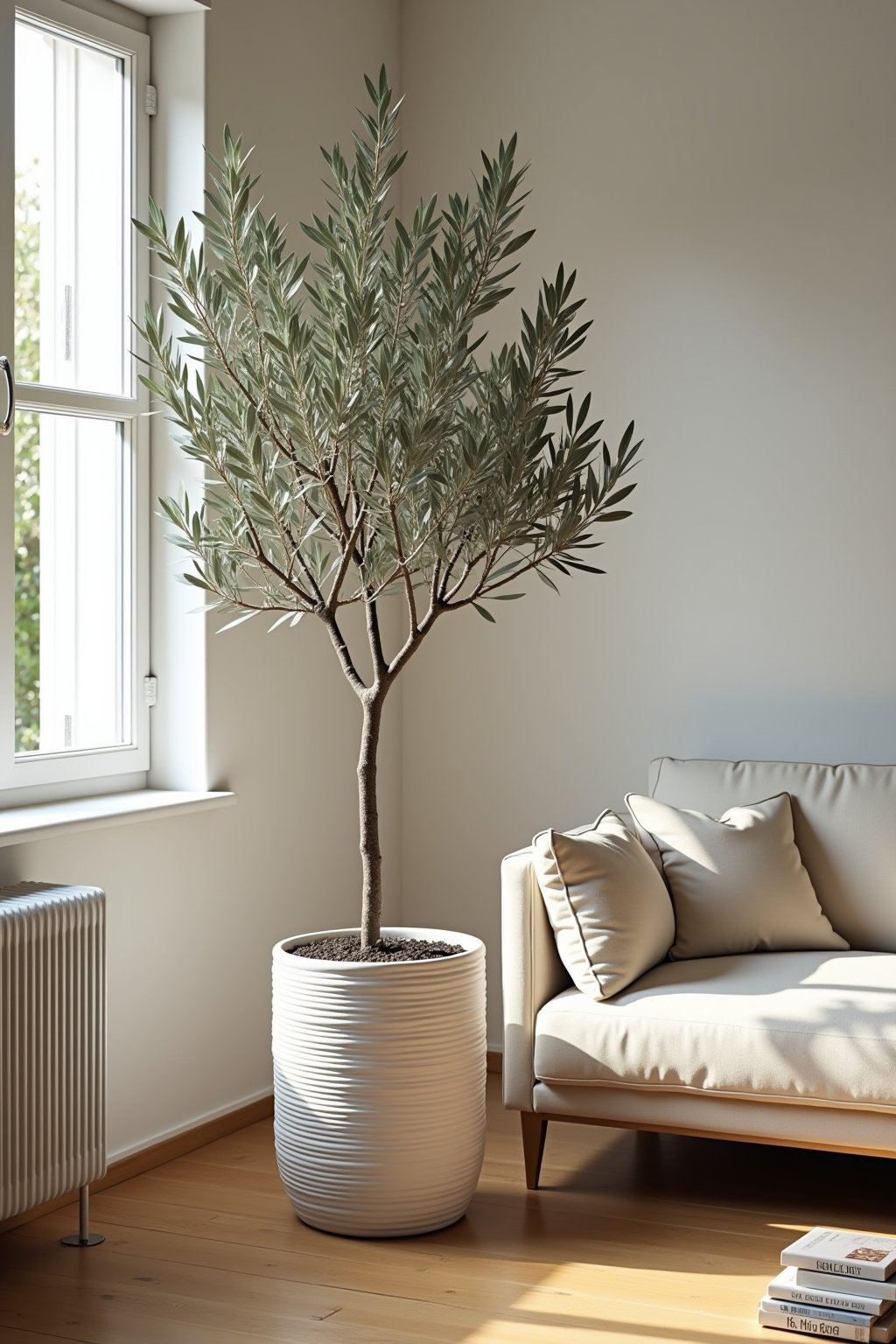
Move over, fiddle leaf fig — the indoor olive tree has officially taken over as the It Plant of 2026. Scroll through Pinterest or Instagram for more than thirty seconds and you will see one. A tall, sculptural olive tree in a beautiful pot, anchoring a living room corner or framing a dining area with its silver-green leaves and gnarled trunk.
I resisted for months because I thought they would be hard to keep alive indoors. Then I bought a five-foot olive tree from a local nursery, put it in a large ribbed ceramic pot by my living room window, and it has been thriving for almost a year. The thing about olive trees is they are surprisingly low-maintenance compared to the drama of fiddle leaf figs — and they bring a Mediterranean, collected-over-time quality that no other plant can match.
What’s Behind It
- Architectural presence — an olive tree fills vertical space with organic structure that small potted plants simply cannot provide. One tree does the work of ten smaller plants
- 2026’s number one trending plant — curated indoor greenery with architectural presence is replacing the random plant accumulation trend, and olive trees lead the pack
- Mediterranean aesthetic — olive trees instantly evoke the warmth and effortless style of Italian and Greek interiors, which are dominating design boards right now
- Surprisingly low-maintenance — olive trees tolerate drought, prefer bright indirect light, and do not need constant attention like fussier tropical plants
- Year-round beauty — unlike seasonal flowering plants, olive trees look gorgeous every month of the year with their silvery-green evergreen foliage
- Works with every design style — modern minimalist, coastal, Mediterranean, Scandinavian, bohemian — an olive tree complements virtually any room aesthetic
Starting Position
Here is everything you need to successfully style an indoor olive tree:
- Olive tree: A 4-6 foot potted olive tree from a nursery, garden center, or online plant shop. Look for a thick trunk with established branching
- Pot or planter: A large ceramic, concrete, or woven basket pot — at least 16-20 inches in diameter with drainage
- Well-draining soil: Cactus or citrus potting mix works perfectly. Olive trees hate soggy roots
- Bright location: The sunniest window in your home — south or west-facing is ideal
- Pot filler: Decorative stones, moss, or dried moss on top of the soil for a finished look
The Walk From A to Z
Choose the Right Tree
When shopping for your olive tree, look for one with a thick, gnarled trunk — this is what gives olive trees their characteristic Mediterranean charm. Young, thin-trunked trees look spindly and take years to develop that sculptural quality. Spend a little more for a mature specimen and you will be happier from day one.
Check the foliage for healthy silver-green leaves with no yellowing or brown spots. Gently shake the tree — if leaves fall off easily, it may be stressed. A healthy olive tree holds its leaves firmly and has new growth visible at the branch tips.
Pick the Perfect Pot
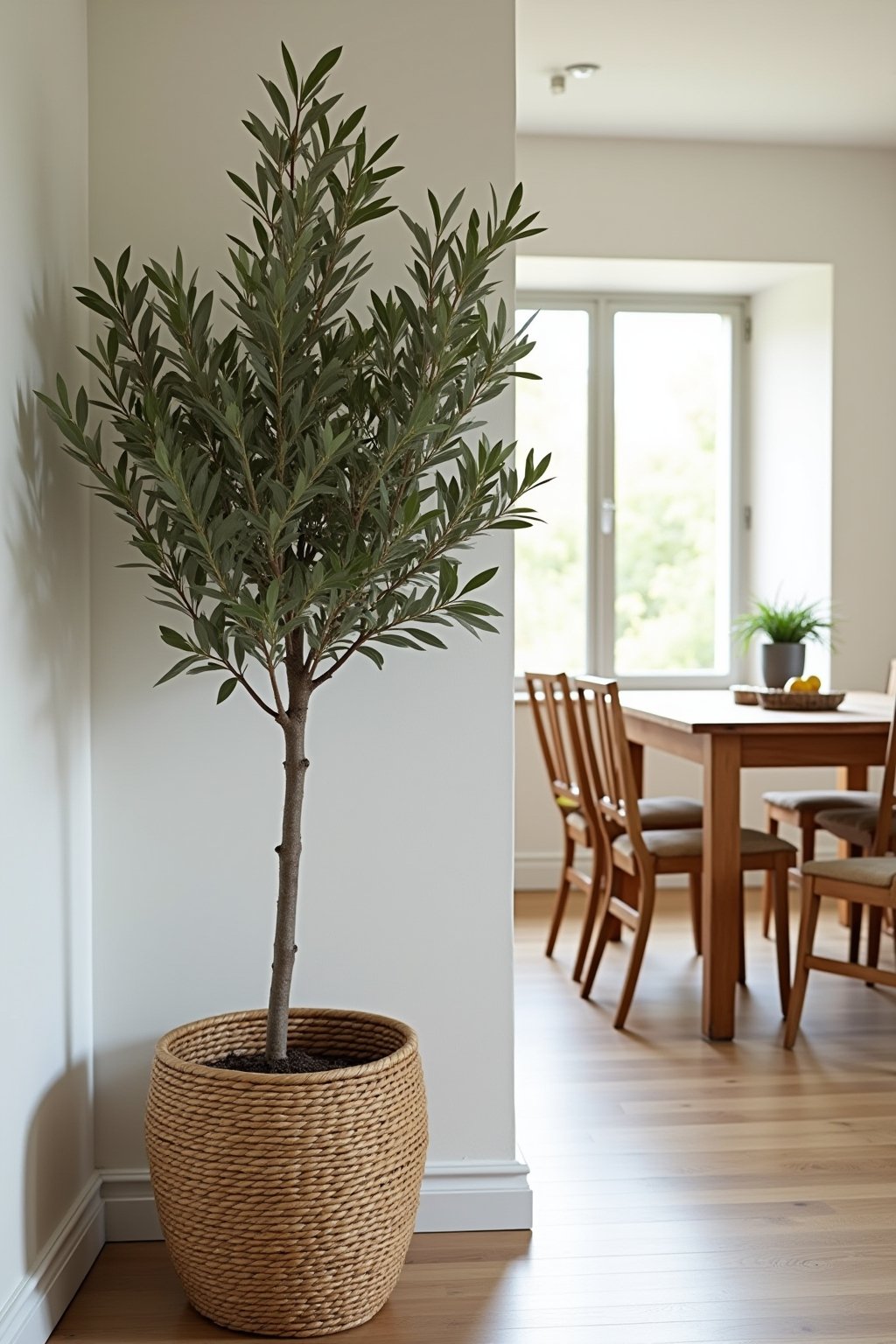
The pot is half the styling equation. A ribbed ceramic pot in matte white, warm terracotta, or concrete gray is the most popular choice and pairs beautifully with the silvery foliage. Large woven baskets (seagrass or rattan) give a more relaxed, bohemian look. Black matte pots work for modern spaces.
Make sure the pot has drainage holes — this is non-negotiable. Olive trees will develop root rot quickly in standing water. If you love a pot without drainage, use it as a decorative sleeve and keep the tree in a plastic nursery pot inside.
Find the Best Spot in Your Home
Olive trees need at least six hours of bright light daily. A south-facing or west-facing window is ideal. If your brightest spot gets direct afternoon sun, even better — olive trees love it. They evolved in the Mediterranean sun, and replicating that indoors is the biggest factor in keeping them happy.
Common placement spots that work well: next to a large window in the living room, in an empty corner that needs height, flanking a fireplace, or beside a dining table. The tree should be visible from the main seating area so it can do its job as a statement piece.
Style the Base and Surrounding Area
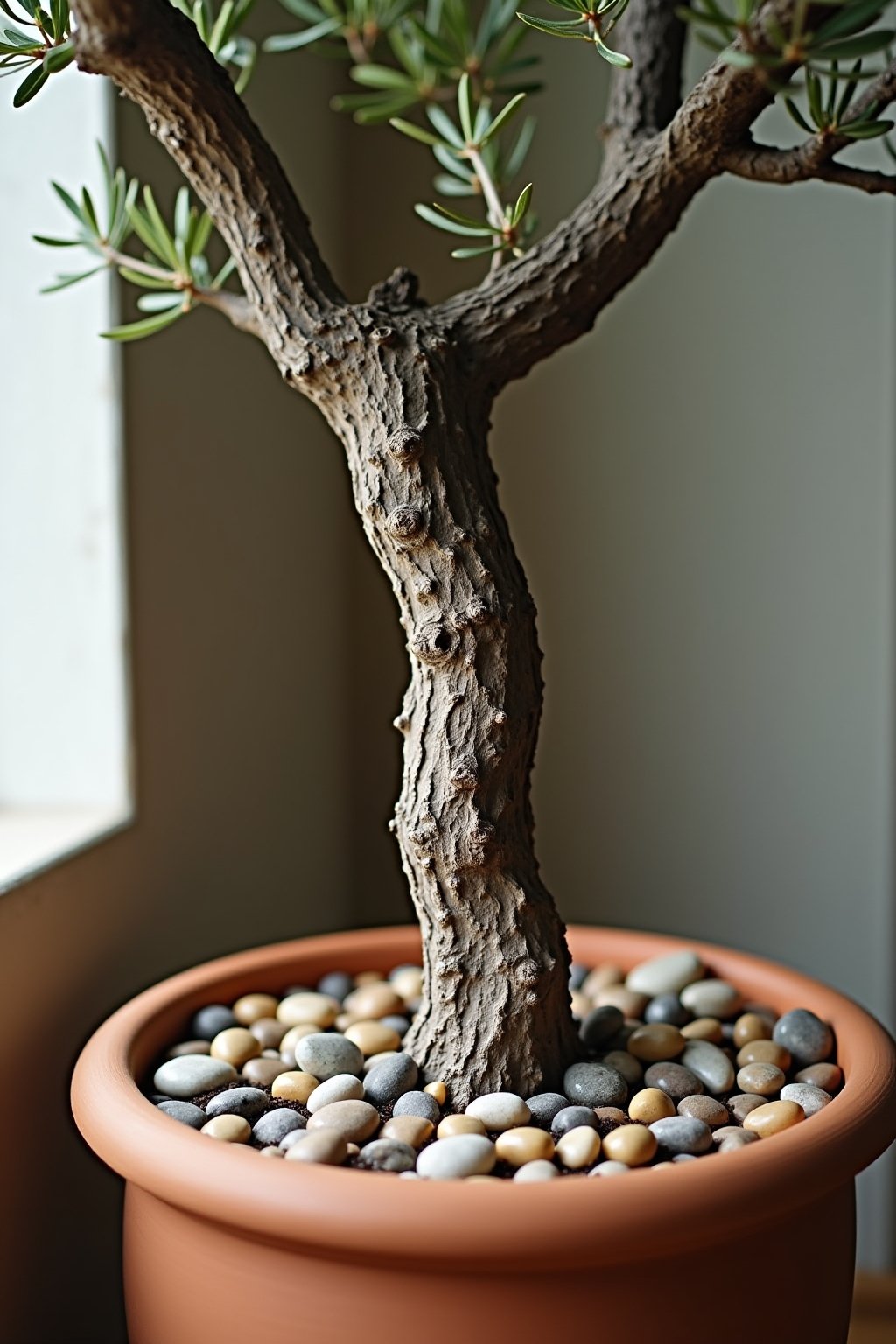
Top the soil with decorative moss, smooth river stones, or dried sphagnum moss for a polished, finished look. Bare potting soil reads as unfinished and takes away from the designer aesthetic you are trying to create.
Style the area around the tree’s base to create a vignette. A stack of oversized books, a low ceramic bowl, or a woven basket nearby creates visual grounding. The tree should not stand alone in an empty corner — give it context, like it has always been part of the room.
Care for Long-Term Health
Water your olive tree when the top two inches of soil are completely dry — roughly every one to two weeks depending on your home’s humidity and temperature. Overwatering is the number one killer of indoor olive trees. When in doubt, wait another day.
Give the pot a quarter turn every week so all sides get even light exposure, preventing the tree from leaning toward the window. In winter, growth slows and watering should decrease. In spring and summer, the tree may push new growth — this is the time to feed it with a diluted citrus fertilizer once a month.
Diagnosing the Issue
- Overwatering — this is the number one killer of indoor olive trees. They are drought-tolerant and prefer dry soil between waterings. Yellowing leaves and mushy trunk base are signs of overwatering
- Not enough light — an olive tree in a dark corner will slowly drop leaves and decline. If your home does not have a bright, sunny spot with at least six hours of light, this is not the right plant for you
- Choosing a pot without drainage — decorative pots without holes lead to standing water and root rot. Always ensure proper drainage, even if it means using a nursery pot inside a decorative one
- Buying a too-small tree — a two-foot olive tree looks like a random houseplant. The statement impact comes from height. Invest in at least a four-foot tree for the designer look you are after
- Placing it where nobody can see it — this is a statement piece. Put it in the most visible spot in your living space, not tucked behind a door or in a hallway no one walks through
Budget-Conscious Notes
Buy from local nurseries: Big box stores like Home Depot and Lowe’s carry olive trees seasonally for forty to eighty dollars, which is a fraction of what specialty plant shops charge. Check in spring when stock is freshest.
Use a basket as a pot cover: A large woven seagrass belly basket from Target or IKEA costs fifteen to twenty dollars and gives an expensive, designer look. Keep the tree in its nursery pot inside the basket.
Propagate from cuttings: If you know someone with an olive tree, ask for a cutting. Olive trees root from semi-hardwood cuttings in a few months, though you will need to wait longer for a full-sized tree.
Faux alternative: If your home truly does not have enough light, a high-quality faux olive tree from Pottery Barn, Target’s Threshold line, or Amazon looks surprisingly realistic from a few feet away and requires zero maintenance.
Pulling the Look
- Odd number grouping — if you want multiple plants, group the olive tree with one or two smaller plants in complementary pots at its base for a layered, natural look
- Match the pot to your room palette — a terracotta pot for warm rooms, matte white for minimal rooms, concrete gray for industrial spaces, woven basket for bohemian rooms
- Add uplighting — a small LED uplight at the base of the tree creates dramatic shadows on the ceiling at night and makes the tree a sculptural focal point after dark
- Keep the trunk visible — prune lower branches so the gnarled trunk is exposed. The trunk texture is what gives olive trees their character and distinguishes them from ordinary houseplants
- Rotate seasonally — move the tree to your sunniest room in winter and consider putting it on a covered patio in summer for a growth boost. Just transition gradually to avoid shock
- Style the saucer — even the drainage saucer should look intentional. A matching ceramic saucer or a brass tray underneath elevates the whole presentation
Different Rooms, Different Vibes
Living Room
A five-foot olive tree in a ribbed white ceramic pot positioned next to a large window in the living room corner. A stack of oversized art books on the floor beside it, a small woven basket with a throw blanket, and a brass floor lamp nearby. The silver-green foliage catches afternoon light and fills the vertical space between the sofa and the ceiling beautifully.
Dining Room
An olive tree flanking one end of the dining table creates a restaurant-like atmosphere. Place it in a textured concrete pot with smooth river stones covering the soil. The tree frames the table and adds organic warmth to what can often feel like the most formal, stiff room in the house.
Bedroom
A smaller olive tree (three to four feet) in a woven basket next to the dresser or in an empty corner by the window. Pair with white linen bedding, natural wood furniture, and a few terracotta accents. The Mediterranean vibe turns an ordinary bedroom into a serene, vacation-like retreat.
Frequently Asked Questions
Can olive trees actually survive indoors?
Yes. Olive trees adapt well to indoor conditions as long as they get at least six hours of bright light daily. They are more forgiving than fiddle leaf figs and tolerate indoor humidity levels and temperatures well.
How big do indoor olive trees get?
Indoor olive trees typically stay between four and eight feet tall, growing slowly at about six to twelve inches per year. You can prune them to maintain your desired height and shape.
Do indoor olive trees produce olives?
It is rare for indoor olive trees to fruit because they typically need outdoor pollination and a cold dormancy period. Most people grow them for their beautiful foliage and sculptural trunk, not for fruit production.
How often should I water an indoor olive tree?
Water when the top two inches of soil are completely dry, typically every one to two weeks. Overwatering is the most common mistake. In winter, water even less frequently as growth slows.
What is the best pot for an indoor olive tree?
Choose a pot with drainage holes that is two to four inches wider than the root ball. Ceramic, concrete, and terracotta are all excellent choices. Woven baskets work as decorative covers over a nursery pot with drainage.
Are faux olive trees worth it?
High-quality faux olive trees from Pottery Barn, Target, or specialized faux plant shops look remarkably realistic and are a great option if your home does not have enough natural light. They range from sixty to three hundred dollars depending on size and quality.