

I have a confession. For years — and I mean years — I cleaned my windows religiously but completely ignored the tracks. I just pretended they didn’t exist. Then one day I was opening a window and my mother-in-law leaned over and peered directly into the track. I wanted the floor to swallow me whole. There was a black, gritty layer of dust, dead bugs, and mystery gunk that had been building up since we moved in.
That evening, I tried every method I could find online. Most of them involved tedious scrubbing with a toothbrush for 20 minutes per window. Then I discovered the baking soda and vinegar foam method, and everything changed. The foam does the scrubbing for you — it lifts the gunk out of the narrow channels so you can just wipe it away. Combined with the sock method for blinds, my entire window cleaning routine now takes a fraction of the time it used to. Here’s exactly how both methods work.
| ⏱ Time Required: | 30-45 minutes |
| 📈 Difficulty: | Easy |
| 💰 Supplies Cost: | $0-5 |
| 🔄 How Often: | Every 2-3 months |
What Quiet Step Mattes
- Chemical reaction does the hard work — the baking soda and vinegar foam physically lifts embedded dirt from track grooves, eliminating the need for intense scrubbing
- Reaches narrow channels brushes can’t — the expanding foam fills every crevice in the track, including the tiny drainage holes most people don’t know exist
- The sock method covers both sides of blinds simultaneously — one pass per slat cleans top and bottom at once, cutting blind cleaning time in half
- Uses only pantry staples — baking soda, white vinegar, dish soap, and old socks are all you need; zero specialty products required
- Works on all window types — sliding windows, double-hung windows, and patio doors all have tracks that benefit from this method
- Results visible in minutes — the before-and-after difference is dramatic and immediately noticeable, especially on neglected tracks
What You’ll Need
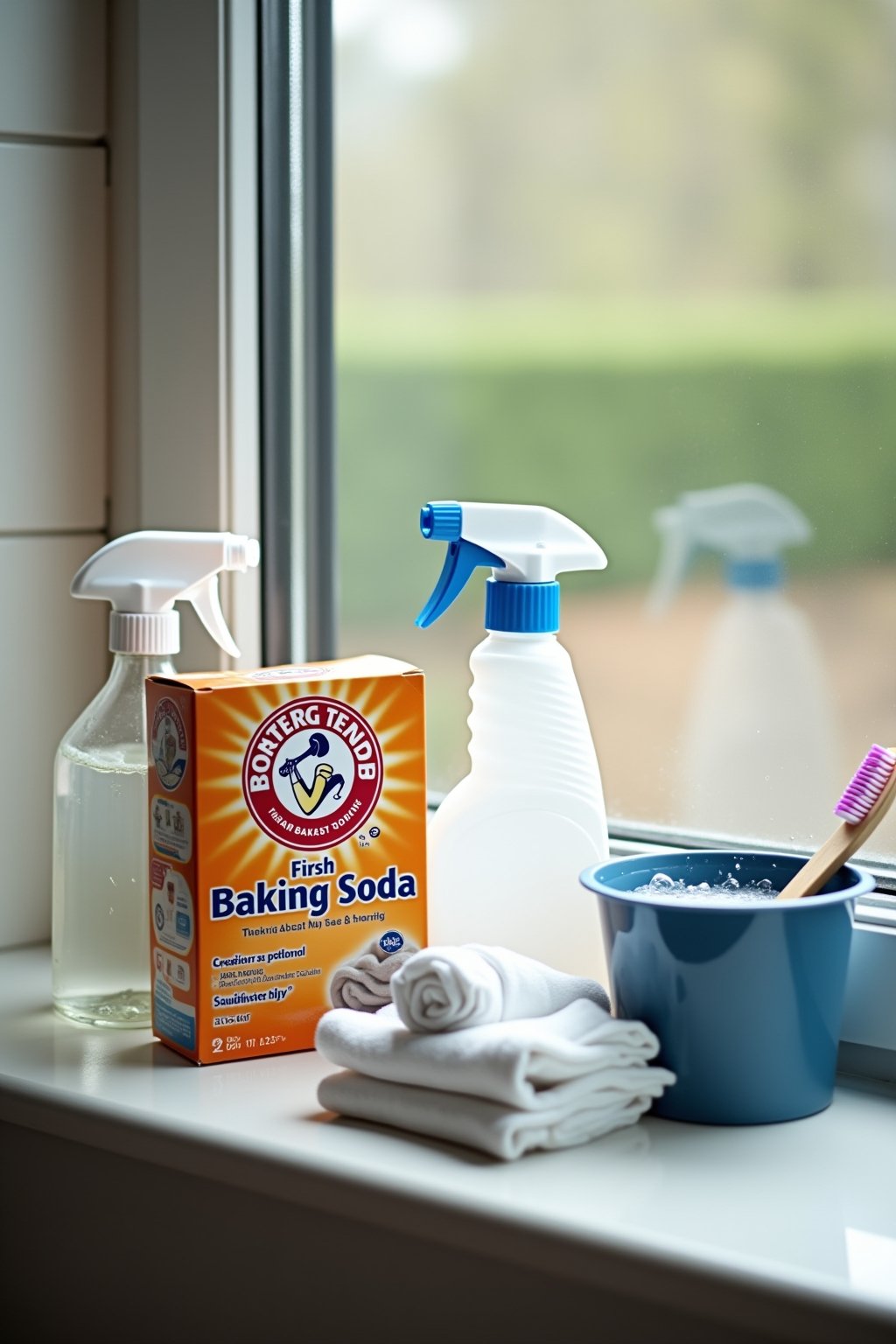
Gather these simple supplies before you start — everything costs under five dollars total:
- Baking soda — the base of the foam reaction; sprinkle it directly into the track channels
- White distilled vinegar in a spray bottle — triggers the foaming reaction when sprayed onto the baking soda
- Old toothbrush or small detail brush — for agitating loosened grime in tight corners after the foam works
- Paper towels or rags — for wiping up the loosened dirt and excess foam
- Butter knife or flat-head screwdriver — wrapped in a cloth for scraping compacted dirt from deep grooves
- Old socks (clean) — the secret weapon for blind cleaning; slip one on each hand like a mitten
- Bucket of warm soapy water — for the sock method and for rinsing cloths between windows
- Vacuum with crevice attachment — for removing loose debris before the foam treatment
How the Steps Stack Up
Vacuum Loose Debris From Tracks First
Before applying any liquid, use the crevice attachment on your vacuum to remove loose dust, dead insects, and debris from all window tracks. This is critical because wet gunk is much harder to remove than dry gunk. Run the attachment slowly along each channel, angling it into the corners where dirt accumulates most heavily. For sliding glass door tracks, which tend to have the worst buildup, you may need to use the brush attachment first to dislodge packed debris.
Don’t skip this step even if the tracks look like they need liquid cleaning. Removing the dry layer first means the foam treatment only has to deal with the sticky, embedded residue — the stuff that’s actually bonded to the track surface. This cuts the foam’s job in half and prevents you from creating a muddy paste that just smears around. If your tracks are extremely neglected, use a butter knife wrapped in a paper towel to scrape out any thick, compacted grime before vacuuming.
Apply the Baking Soda and Vinegar Foam Treatment
Sprinkle a generous line of baking soda along the entire length of each track channel. Don’t be shy — you want enough to cover the bottom of the track in a visible white layer. Then spray white vinegar directly onto the baking soda. It will immediately begin to fizz and foam, expanding to fill the track’s grooves and corners.
Let the foam sit and work for 10 to 15 minutes. You’ll see it bubbling and lifting dark residue to the surface — this is the carbon dioxide from the reaction physically agitating and loosening the grime that’s been baked onto the track by sun exposure and moisture. While you wait, move on to cleaning blinds or another window. When you come back, use an old toothbrush to gently scrub any remaining stubborn spots, then wipe the entire track clean with a damp cloth or paper towel. For the drainage weep holes at the bottom of the track (small slots or holes designed to let water escape), clear them with a toothpick or pipe cleaner so rainwater can drain properly.
The Sock Method for Horizontal Blinds
This is the fastest blind-cleaning technique that exists, and once you try it you’ll never go back to individual-slat wiping. Slip a clean old sock over your dominant hand like a mitten. Dip your sock-covered hand into a bucket of warm water with a few drops of dish soap. Squeeze out the excess so the sock is damp, not dripping. Now pinch each blind slat between your thumb and fingers and slide from one end to the other. The sock cleans both the top and bottom of the slat in a single pass.
Rinse the sock in the bucket every few slats as it picks up dust. For very dusty blinds, you may want to use two socks — start with a dry sock to remove the dust layer, then follow with a damp sock for the grimy residue underneath. This dual-pass method prevents you from turning dust into muddy streaks. Work from the top slat down so any drips fall onto uncleaned slats below. A standard window’s worth of blinds takes about three minutes with this method versus 15 to 20 minutes cleaning each slat individually with a cloth.
The Bathtub Soak for Extremely Dirty Blinds
If your blinds haven’t been cleaned in over a year and the sock method isn’t cutting through the buildup, the bathtub soak is your nuclear option. Remove the blinds from the window (most horizontal blinds lift off the mounting brackets by tilting the front valance forward and pulling up). Lay them flat in your bathtub filled with warm water and a quarter cup of dish soap. Let them soak for 30 minutes.
After soaking, the grime will have loosened significantly. Use your sock-covered hand or a soft cloth to wipe each slat while the blinds are still in the water. Drain the tub (prepare to be disgusted by the color of the water), then rinse the blinds with clean water from the shower head. Hang them back on the brackets while still slightly damp — they’ll air dry in place and any remaining water drops will evaporate. This method works on aluminum, vinyl, and faux-wood blinds. Do not bathtub-soak real wood blinds as the water will warp and damage them. For wood blinds, stick to the dry-then-damp sock method only.
Clean Vertical Blinds and Fabric Shades
Vertical blinds require a different approach. Close them flat, then wipe each vane from top to bottom with a damp microfiber cloth. For vinyl vertical blinds, a mix of warm water and dish soap works perfectly. For fabric vertical blinds, check the care label — most can be spot-cleaned with a damp cloth but shouldn’t be soaked. Some fabric vanes are removable and can be hand-washed in a tub with mild detergent, then hung back up to air dry.
For cellular (honeycomb) shades, use a vacuum with the brush attachment on the lowest suction setting. The honeycomb cells trap dust inside their chambers, and vigorous cleaning can crush the pleats. For spot stains, dab gently with a damp cloth — never rub. Roman shades and roller shades can usually be wiped down with a damp cloth or vacuumed with the brush attachment. If your shades are particularly dusty, take them down and lay them flat on a clean surface to vacuum both sides thoroughly before rehanging.
Maintain Clean Tracks and Blinds Year-Round
The baking soda foam treatment is a deep-clean method you’ll only need to do twice a year — once during spring cleaning and once in fall before you seal up the house for winter. Between deep cleans, a quick monthly wipe of the tracks with a damp cloth prevents buildup from reaching the point where you need the full foam treatment.
For blinds, dust them weekly during your regular cleaning routine. The fastest weekly method is closing the blinds flat and running a microfiber duster across all slats in one sweeping motion, then flipping them and doing the other side. This 30-second habit prevents the heavy dust buildup that requires the sock method or bathtub soak. For window tracks, keep the weep holes clear by checking them seasonally — a blocked weep hole can cause water to pool in the track during rain, leading to mold growth and potential water damage to the window frame and surrounding wall.
Where I Look First
- Using the foam method without vacuuming first — adding liquid to loose debris creates a muddy paste that’s harder to clean than the original dry grime; always vacuum tracks before applying any wet solution
- Soaking real wood blinds in water — wood absorbs water and will warp, crack, or delaminate; use only a damp cloth or dry dusting for genuine wood blinds
- Ignoring the weep holes in window tracks — these tiny drainage slots allow rainwater to escape; if they’re clogged, water pools in the track and causes mold, rust, and potential water damage
- Using abrasive scrubbers on aluminum tracks — steel wool or abrasive pads scratch the anodized finish on window tracks, creating rough spots where dirt accumulates even faster
- Cleaning blinds in place without dusting first — wiping dusty blinds with a wet cloth turns dust into muddy streaks; always do a dry dusting pass before any wet cleaning
Best Situations for This Fix
Kitchen Windows
Kitchen window tracks accumulate grease in addition to dust, creating a sticky film that’s tougher than standard dirt. Add a few drops of dish soap to the baking soda before spraying vinegar for extra degreasing power. Kitchen blinds also need more frequent attention — the grease film from cooking makes dust stick faster. Wipe kitchen blinds with a soapy sock weekly rather than just dry dusting.
Bathroom Windows
Moisture from showers creates mold-friendly conditions in bathroom window tracks. After the foam treatment, spray the clean tracks with a light mist of vinegar and let it air dry — the residual acidity discourages mold regrowth. Check bathroom window tracks monthly for early signs of mold (black or green spots in corners) and treat immediately.
Patio and Sliding Glass Door Tracks
These tracks take the worst beating because they’re exposed to outdoor debris, rain, and foot traffic. Plan on doing the full foam treatment quarterly rather than biannually. Keep a small vacuum or dustpan near the door for quick track sweeps after windy days. Clear the weep holes monthly to prevent water pooling during rainstorms.
Quick Answers
How often should I clean window tracks?
A deep clean with the baking soda foam method twice a year (spring and fall) is sufficient for most homes. Between deep cleans, a quick monthly wipe with a damp cloth prevents buildup. Homes in dusty areas, near construction, or with pets may benefit from quarterly deep cleaning.
Can I use the baking soda foam method on vinyl window frames?
Yes, this method is safe for vinyl, aluminum, and painted wood window frames and tracks. Baking soda is mildly abrasive but not enough to scratch these materials. Avoid using it on bare or unsealed wood, as the moisture can cause swelling. Rinse and dry vinyl frames thoroughly after cleaning to prevent residue buildup.
What is the fastest way to clean a lot of blinds?
The sock method is the fastest manual approach — about three minutes per window. For a house full of blinds, the bathtub soak is most efficient: remove all blinds, soak them in batches while you clean tracks, wipe them in the tub, and rehang. You can clean an entire house worth of blinds in under two hours using the batch soak method.
My window tracks have black mold. Is the foam method enough?
For light mold, the foam method combined with a scrub will remove it. For established mold (visible black spots that don’t come off with scrubbing), apply a paste of baking soda and hydrogen peroxide, let it sit for 20 minutes, then scrub and rinse. If mold keeps returning, check for moisture issues like failed window seals or blocked weep holes.
Can I put blinds in the dishwasher instead of the bathtub?
Technically you can fit mini-blinds in a dishwasher, but it’s not recommended. The high heat can warp vinyl and faux-wood slats, and the detergent is harsher than dish soap. The bathtub soak with mild dish soap is safer, gives you more control, and works equally well without risking damage.
How do I clean window tracks on upper-floor windows I can’t reach from outside?
You don’t need to access the exterior for track cleaning — tracks are on the inside of the frame. For the glass itself, clean interior glass normally and use a magnetic window cleaner or an extending squeegee for exterior upper-floor glass. The baking soda foam method works entirely from inside the house.