
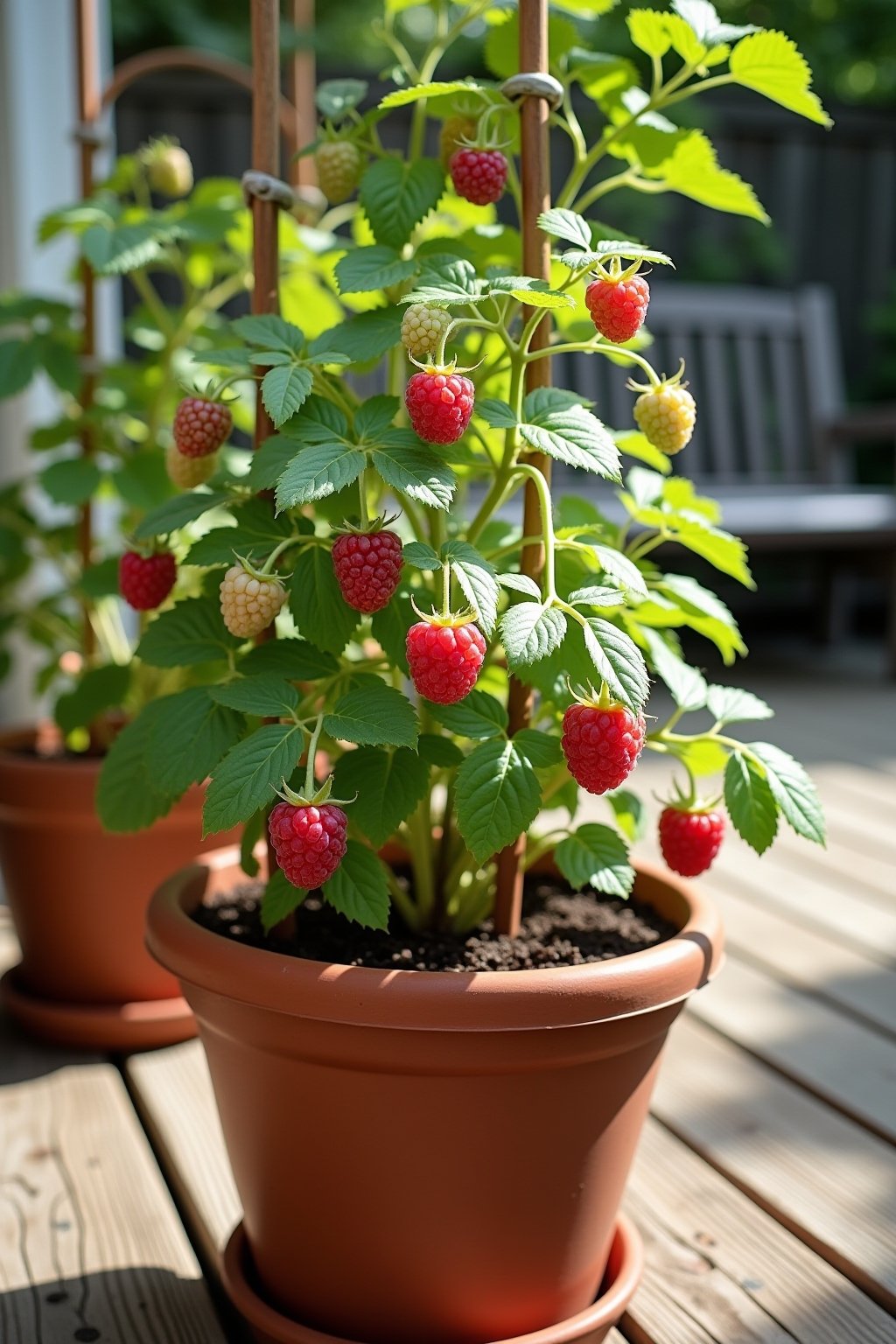
I was convinced raspberries were a crop for people with acreage. My grandmother grew a whole hedge of them along the fence line of a farm in Vermont — that was my entire mental picture of raspberry growing. So when I moved into a rowhouse with a 12×18 backyard, I mentally crossed raspberries off my list along with sweet corn and pumpkins.
Then I visited a friend in Brooklyn who had three raspberry canes in a 16-inch pot on a fourth-floor fire escape, pulling quart after quart of the sweetest fruit I had ever tasted. “It is Raspberry Shortcake,” she said, grinning. “A dwarf variety. No thorns. It just makes berries.” I went home and ordered two plants that night. Three seasons later I have four container raspberries and a narrow 2-foot-wide raised bed along my side yard that produces from June through first frost. This guide walks through exactly which varieties work in containers and small spaces, the trellis systems that actually fit a patio, and the pruning schedule that keeps plants productive instead of turning into a thorny mess.
Quick Facts
| Sun | Full Sun (6+ hours for best production) |
| Difficulty | Beginner-friendly once variety and pruning are right |
| Season | Plant March-May (spring) or October (fall) |
| Zone | USDA zones 3-9 (variety dependent) |
| Time to Harvest | First small crop year one on primocane varieties, full production year two |
What You’ll Need
- Dwarf or compact raspberry variety (Raspberry Shortcake, Heritage, Fall Gold)
- 16-inch minimum container with drainage holes OR 2-foot-wide raised bed
- Quality potting mix (about 3 cubic feet per container)
- Balanced slow-release fertilizer (10-10-10 or organic equivalent)
- Compact trellis or tomato cage (for varieties taller than 3 feet)
- Mulch (straw, pine needles, or wood chips)
- Pruning shears (sharp, not the dull kitchen scissors sitting in the drawer)
- Bird netting for ripening season
- Gloves (even for thornless varieties, canes can still scratch)
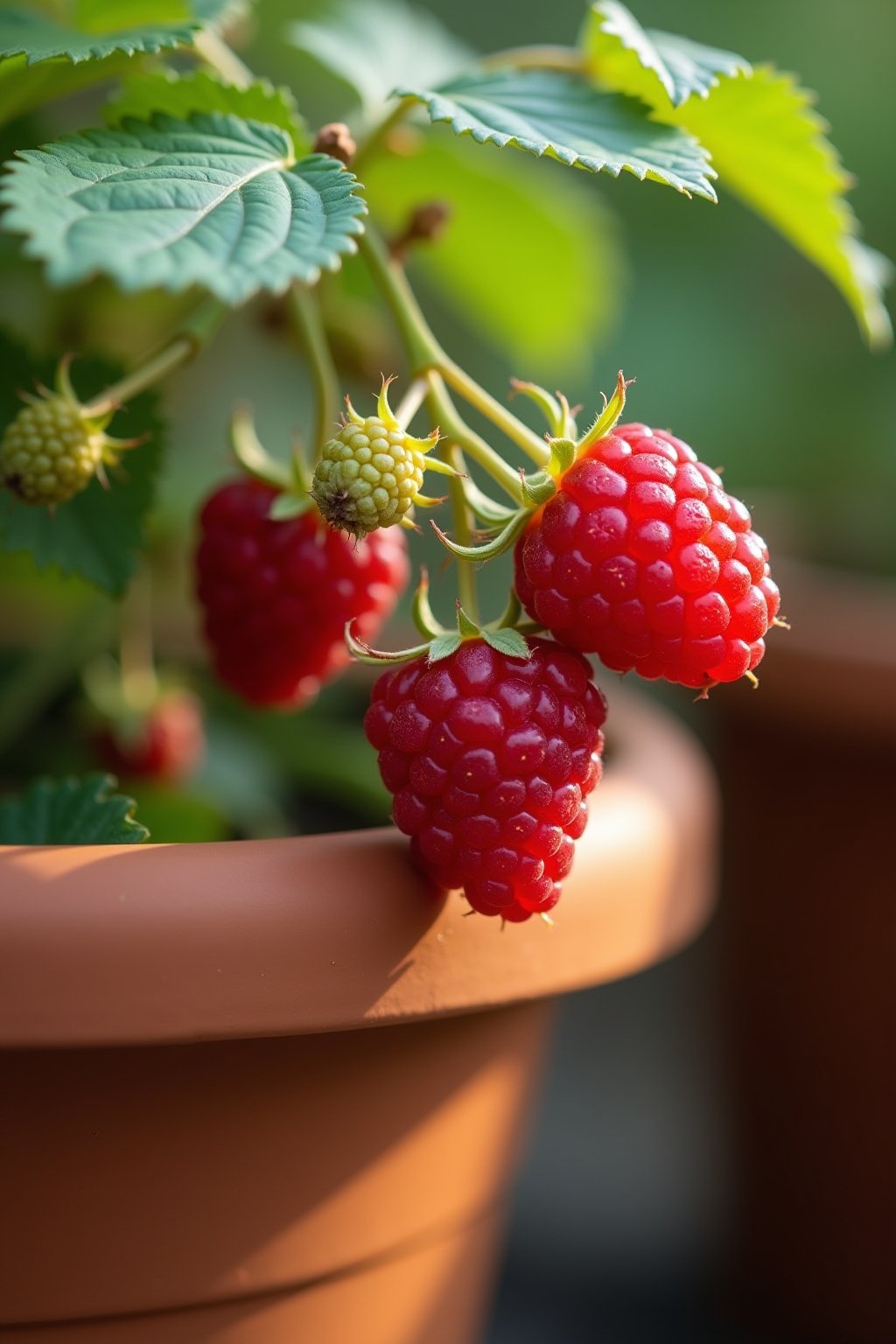
Variety choice is 80% of your success with small-space raspberries. Raspberry Shortcake (a true dwarf primocane variety released by Monrovia) tops out at 2-3 feet, has zero thorns, and is bred specifically for containers and patios. Heritage is a classic full-size primocane that works in 18-inch containers with a cage — gets to 4-5 feet but produces heavily. Fall Gold is a yellow-fruited primocane with intensely sweet flavor, excellent for small beds.
Floricane varieties (summer-fruiting) are harder for small spaces because they fruit on second-year canes, which means you need room for this year’s canes AND last year’s canes. Primocane (fall-fruiting) varieties fruit on first-year canes so you can cut the plant to the ground every winter and start fresh — much easier to manage in a container or narrow bed.
Step 1: Pick the Right Variety for Your Space
The biggest mistake small-space raspberry growers make is planting a standard variety like Latham or Willamette in a 10-inch pot and wondering why it sulks. Standard raspberries want 3-4 feet per plant and grow 5-6 feet tall. That does not fit on a patio.
For true patio containers (less than 16 inches), Raspberry Shortcake is the only variety I recommend. Dwarf, thornless, self-pollinating, stays under 3 feet. Released by Monrovia in 2010 and genuinely one of the most important small-space fruit introductions of the last twenty years. Expect 1-2 pints per plant in year two, more in year three.
For 18-24 inch containers or narrow beds, Heritage (classic red everbearing), Fall Gold (yellow sweet), and Caroline (large red fruit) all work well. These need a simple cage or stake because they grow to 4-5 feet. Primocane types fruit on first-year canes so pruning is simple — cut everything to the ground in late winter.
For narrow 2-foot wide raised beds, any primocane variety works. Plant canes 18-24 inches apart along the bed. A 6-foot-long bed holds 3-4 canes and produces 4-6 quarts of berries per year at maturity.
Step 2: Set Up the Container or Bed Properly
Raspberry roots are vigorous and shallow. They need room horizontally more than they need depth. A 16-inch container is fine for a dwarf variety. A 20-24 inch container works for a full-size primocane. Anything smaller than 14 inches will outgrow itself within a year.
Drainage matters. Add 2 inches of gravel at the bottom only if the container has no drainage holes (and really, use a container with holes). Fill with a quality potting mix, not garden soil. I mix 70% bagged potting mix, 20% compost, and 10% perlite for extra drainage.
For narrow raised beds, cedar is the best material. A 2×6 foot bed that is 12 inches deep holds 3 canes perfectly. Use the same soil mix as for vegetables: 40% topsoil, 40% compost, 20% sand or perlite. Raspberries prefer slightly acidic soil, pH 5.5-6.5. A layer of pine needle mulch on top gently maintains that acidity.
Step 3: Plant the Canes Correctly
Raspberry canes ship bare-root in early spring. They look like dead sticks. This is normal. The roots matter, not the cane. Soak the roots in water for 30 minutes before planting.
Plant with the root collar (where cane meets roots) 1-2 inches below soil level. This is slightly deeper than most plants — raspberries send up new canes from underground buds and the extra depth encourages more new shoots. Spread the roots out horizontally and backfill with your soil mix. Water thoroughly.
After planting, cut the existing cane down to 6 inches. Yes, this feels brutal. Do it anyway. It forces the plant to put energy into roots and new cane production rather than trying to fruit on a stressed cane. The first useful growth comes from underground shoots within 4-6 weeks.
Step 4: Support the Canes (Even Dwarf Varieties Need Some Help)
Raspberry Shortcake and similar true dwarfs can often go without support, though a simple tomato cage keeps them tidy and holds up fruit-laden canes in the second year. Standard primocanes in containers need support — loaded canes in fruit will flop and break without it.
For containers, a 3-foot circular tomato cage or three bamboo stakes in a tripod shape works perfectly. Tie canes loosely with garden twine. For narrow beds, a simple two-wire trellis along one side of the bed is the classic solution: two T-posts at the ends, two wires strung horizontally at 24 inches and 48 inches, with canes tied to the wires.
A proper trellis saves your back and doubles your harvest. Unsupported canes tangle, break, and shade each other. Supported canes get even light and stay upright when heavy with berries.
Step 5: Feed, Water, and Mulch
Container raspberries are hungrier than in-ground ones because potting mix nutrients run out fast. Apply a balanced organic fertilizer (5-5-5 or similar) in early spring when new growth starts, again after flowering, and a lighter dose in midsummer. A compost top-dress each spring replenishes organic matter.
Water consistently. Raspberries in containers often need daily watering in summer heat. Check by pushing a finger 2 inches into the soil — water when that depth feels dry. A soaker hose or drip ring in the container pays for itself.
Mulch the container or bed with 2 inches of straw, pine needles, or wood chips. This keeps moisture in, suppresses weeds, and buffers soil temperature. Never let mulch touch the cane directly — leave a 2-inch gap around each cane base to prevent rot.
Step 6: Prune at the Right Time (This Is Where Most People Fail)
Pruning is where small-space raspberry growers lose the plot. The rule depends on whether you have a primocane (fall-fruiting) or floricane (summer-fruiting) variety. For primocanes, the rule is gloriously simple: cut every cane to the ground in late winter or very early spring before buds swell. That is it. Fresh canes grow up, flower in summer, fruit in fall. Repeat next year.
For floricanes, the rule is trickier. Canes are biennial — they grow in year one and fruit in year two, then die. After the summer harvest, cut out the canes that just fruited (they have brown peeling bark) at ground level. Leave the green first-year canes — they will fruit next summer. Also thin crowded canes, keeping 4-5 strong canes per plant.
Raspberry Shortcake and similar primocane dwarfs make this easy: every winter, cut everything to 6 inches. New canes grow, fruit in late summer, repeat. There is no year-two-cane confusion.
If You’re Stuck
Canes growing but no fruit: Usually a pruning mistake. If you cut primocane canes too early in summer, you remove the year’s fruit-bearing wood. If you left all the old canes on a floricane variety, they produced nothing because they already fruited last year. Identify your variety type and time pruning accordingly.
Berries turning to dust or crumbling when picked: Raspberry crumble is usually a virus problem in older plants, though water stress can mimic the symptoms. If the plant has been productive for 3+ years and is suddenly crumbly, replace it — viruses do not heal. For younger plants, increase watering consistency and check for dry spots.
Gray mold on ripening fruit: Botrytis, almost always from overhead watering or poor airflow. Switch to a soaker hose, thin crowded canes, and pick ripe fruit every other day. Remove affected berries and discard — do not compost.
Yellow leaves with green veins: Iron chlorosis from high pH. Raspberries prefer 5.5-6.5. Test soil, apply elemental sulfur, switch to pine needle mulch, and use rainwater when possible.
Small bitter-tasting berries: Water stress during fruit formation. Raspberries need consistent moisture from flower through ripening. Set up drip irrigation or mulch heavily to stabilize moisture. Also check soil fertility — poor nutrition produces poor flavor.
A Seasonal Rhythm
Late winter (February-March): Prune primocane varieties to the ground before buds swell. On floricanes, thin to 4-5 strong canes per plant. Apply compost and organic fertilizer. Order new plants for March delivery if expanding.
Spring (April-May): New canes emerge. Water consistently. Fertilize lightly once new growth is 6 inches tall. Tie canes to trellis or cage as they grow. On floricanes, flowers form on last year’s canes — watch for the first green berries by late May.
Early summer (June-July): Floricane harvest begins. Pick every other day. On primocanes, canes keep growing and form flower buds at the tips. Water daily in heat waves. Net against birds as soon as fruit colors up.
Late summer to fall (August-October): Primocane harvest begins and runs until frost. This is the long harvest window that makes primocane varieties the winner for small spaces. Apply a light compost top-dress in September.
Winter (November-January): In cold zones, move containers to sheltered spots. Mulch heavily over the root zone. Prune dead canes but wait until late winter for full pruning.
Worth Mentioning Too
- Raspberry Shortcake is the small-space game changer — thornless, dwarf, self-pollinating, bred specifically for patios. Two plants in 16-inch pots easily produce enough berries for a family of four to snack on through fall.
- Choose primocane (fall-fruiting) over floricane (summer-fruiting) for containers — the pruning rule is simpler (cut everything to the ground in winter), plants are more forgiving, and canes stay more compact.
- Cut new canes to 6 inches after planting — feels brutal but forces the plant to focus on roots and underground shoots rather than fruiting on stressed cane. First real production comes 4-6 weeks later from brand-new canes.
- Use a tomato cage for containers — simple, cheap, and keeps loaded canes from flopping in the second year. A 3-foot cage is perfect for Raspberry Shortcake. A 4-foot cage handles Heritage and other compact primocanes.
- Water consistently or lose the harvest — container raspberries need daily watering in summer. Irregular watering creates tiny bitter berries and cane stress. A soaker hose or drip ring in the container is transformative.
- Net the plant when first fruit colors up — birds find raspberries faster than almost any other crop. Bird mesh draped over a cage or stakes saves the harvest. Without netting, expect to lose 30-50% to birds.
- Replace plants every 5-7 years — raspberries accumulate viruses over time. Productivity drops and flavor suffers. Replace with fresh certified virus-free plants from a reputable nursery to reset.
Keep Browsing
- How to Plant Blueberries in Containers (The pH Fix That Changes Everything)
- How to Grow Strawberries in a Vertical Tower (Massive Harvest, Tiny Footprint)
Frequently Asked Questions
What is the best raspberry variety for containers?
Raspberry Shortcake is the clear winner for small patios and containers. It is a true dwarf (2-3 feet tall), thornless, self-pollinating, and bred specifically for container growing. A single plant in a 16-inch pot produces 1-2 pints of sweet red berries per year once established. Heritage is the best full-size option for 18-24 inch containers with a cage — slightly more productive but needs more space.
Can I grow raspberries on a balcony or patio?
Yes, with the right variety. Raspberry Shortcake thrives on sunny balconies and patios in a 16-inch pot. Full-size varieties like Heritage need at least a 20-inch pot and a compact trellis or tomato cage. You need 6+ hours of direct sun for reliable fruiting. In very hot climates (zones 8-10), afternoon shade helps during peak summer.
Do I need two raspberry plants for pollination?
No. Nearly all raspberry varieties including Raspberry Shortcake, Heritage, and Fall Gold are self-pollinating. A single plant produces a full crop. Multiple plants give you more berries but are not required for pollination purposes. This is one of the things that makes raspberries ideal for small spaces compared to blueberries, which really do need two varieties.
When should I prune raspberries in a container?
For primocane (fall-fruiting) varieties like Raspberry Shortcake and Heritage, cut every cane to ground level in late winter or very early spring before buds swell. For floricane (summer-fruiting) varieties, remove only the brown canes that fruited last year right after summer harvest — leave the green first-year canes to fruit next year. Primocane pruning is simpler which is why I recommend primocanes for containers.
Why are my raspberry canes growing but not producing fruit?
Most common cause is pruning at the wrong time. If you cut primocane canes during summer, you removed the wood that was about to flower. If you cut off all canes on a floricane variety, you removed both first-year and second-year canes and there is nothing left to fruit. Identify your variety type first, then match pruning to it. Other causes include too little sun (need 6+ hours) and too much nitrogen fertilizer (pushes leaves over fruit).
How long does a raspberry plant produce in a container?
With good care, a container raspberry produces well for 5-7 years before virus accumulation and root crowding reduce yields. Year two and three are peak production. By year five, yields start declining. The best practice is to refresh with a new certified virus-free plant every 5-7 years. In a 20-inch container, you can also root-prune and refresh the soil every 3 years to extend productive life.