
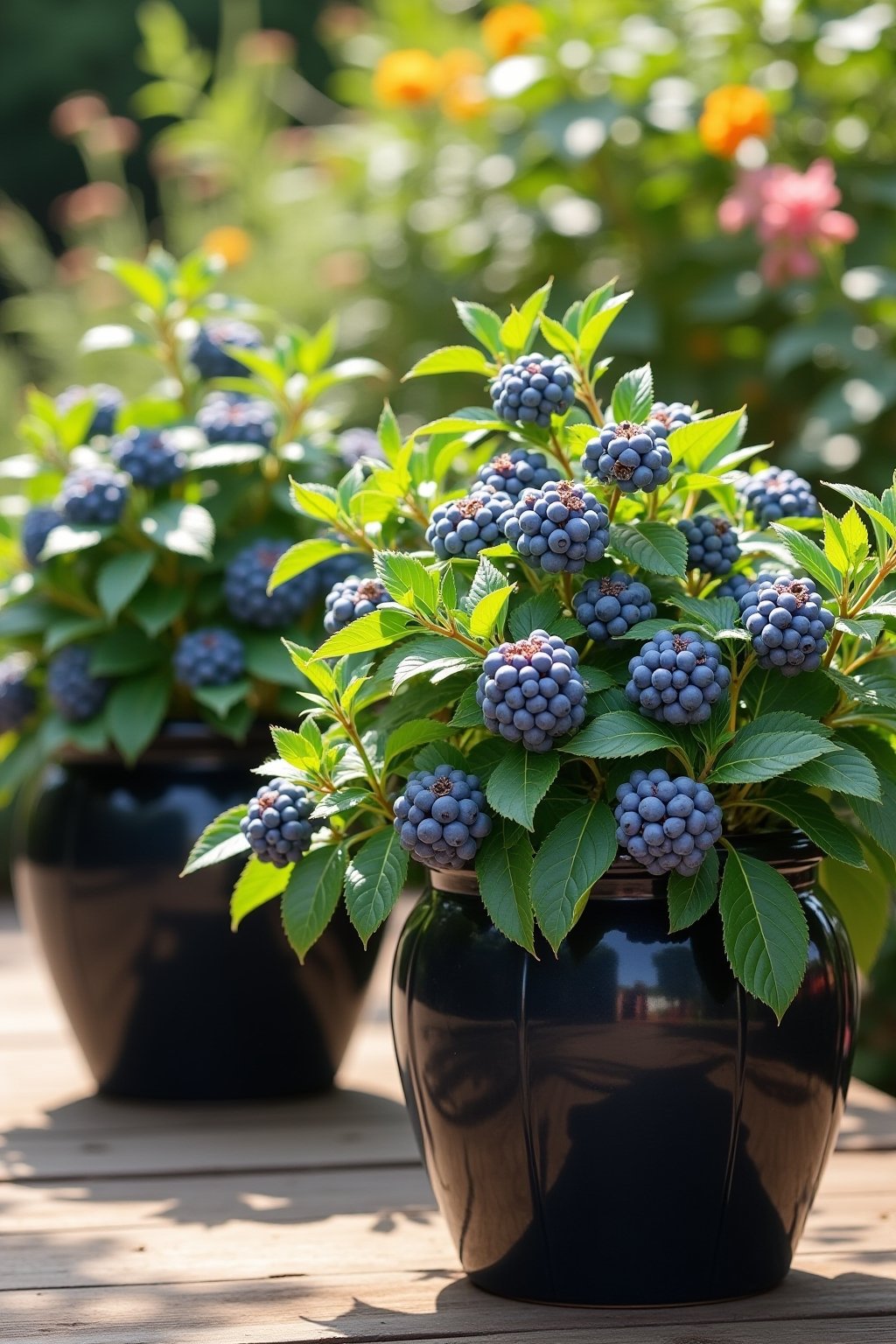
I killed my first blueberry bush in six weeks. I planted it in a big pretty pot on the back porch, filled it with bagged “tree and shrub” soil, watered it faithfully, and watched the leaves turn yellow and then brown until the entire plant gave up. I blamed the nursery. I blamed the weather. I blamed the pot.
It took me two seasons and one library book about soil chemistry to realize I had done everything right except the one thing that actually matters for blueberries: the pH was all wrong. Blueberries are acid-loving plants that refuse to absorb nutrients in neutral soil. That bagged mix was pH 6.8. Blueberries need 4.5 to 5.5. My plant was starving to death surrounded by food it could not eat. Since then I have grown containerized blueberries for six seasons on a patio that never gets more than six hours of sun, and I pick berries from May through September. This is exactly how.
Quick Facts
| Sun | Full Sun (6-8 hours preferred, tolerates 5+) |
| Difficulty | Easy once pH is correct |
| Season | Plant early spring or fall (March-May or September-October) |
| Zone | Container varieties work in zones 3-10 with winter protection |
| Time to Harvest | Small crop year one, full production by year three |
What You’ll Need
- Two compatible blueberry varieties (cross-pollination triples yields)
- 18-24 inch diameter containers with drainage holes (one per bush)
- Peat moss or coco coir for acidic potting mix base
- Pine bark fines (mini-nuggets work)
- Perlite (about 20% of mix volume)
- Elemental sulfur or aluminum sulfate (pH adjustment)
- pH meter or soil test strips (non-negotiable)
- Acid-loving plant fertilizer (Holly-Tone or similar)
- Pine needle or bark mulch
- Pot feet or risers (improve drainage, especially on wood decks)
You need two different blueberry varieties for real production. Blueberries are self-fertile in theory but yields triple with a pollination partner. Plant an early-season variety like Duke or Bluecrop with a mid-season variety like Bluejay or Patriot. Pink Lemonade is a stunning pink-fruited variety that cross-pollinates well and doubles as an edible landscape plant — the pink berries are genuinely delicious and Instagram gold. Sunshine Blue is the most compact option for small patios at only 3 feet tall.
The container matters more than you think. 18 inches is the absolute minimum for a half-high blueberry. For full-size highbush varieties, 20-24 inches is better. Plastic or resin containers hold moisture longer than terracotta or unsealed wood. Fabric grow bags work but dry out fast in full sun. Whatever you pick, drainage holes are mandatory. Blueberries die fast in standing water.
Step 1: Get the Right Variety Combination
Blueberries fall into three main categories based on zone. Northern highbush (zones 3-7) includes classics like Bluecrop, Duke, and Patriot — these are what most Americans picture when they think blueberries. Southern highbush (zones 7-10) includes O’Neal and Sunshine Blue, bred for mild winters and low chill-hour requirements. Rabbiteye (zones 7-9) like Climax and Tifblue are heat-loving southern varieties with excellent disease resistance.
Pick two varieties from the same category for cross-pollination. Mixing a highbush with a rabbiteye does not work — they bloom at different times. For a small patio I recommend a pair of half-high varieties like Northland (zone 3-7) and Chippewa. These top out at 4 feet, thrive in containers, and produce generous crops.
Pink Lemonade has become the containerized blueberry of the decade — pink fruit, beautiful foliage that goes scarlet in fall, and it pollinates with any rabbiteye variety. Pair it with Sunshine Blue if you want a gorgeous, compact, productive patio duo that looks good twelve months a year.
Step 2: Mix the Acidic Soil (This Step Is Everything)
Blueberries will not survive in standard bagged potting mix. They need soil in the pH 4.5-5.5 range — about the acidity of black coffee. Store-bought “acid-loving plant” mixes are okay but inconsistent. I make my own and it works every single time.
My reliable blueberry mix: 50% peat moss or coco coir (acidic, holds moisture), 30% pine bark fines (acidic, drainage, structure), 20% perlite (drainage, air pockets). Pre-wet the peat moss before mixing — dry peat repels water. Mix a handful of elemental sulfur per gallon of soil if you are starting with neutral ingredients. Let the mix rest for two weeks before planting so the sulfur can start converting.
Test pH before you plant. Cheap soil test strips work. A $15 probe meter works better. If your mix reads above 5.5, add more sulfur and wait another two weeks. Do not skip this. A blueberry in neutral soil is a blueberry on a slow path to death — it looks okay for 2-3 months and then declines in a way you cannot reverse by watering.
Step 3: Plant the Bushes Properly
Remove the bush from the nursery pot and gently loosen the root ball. Blueberries are shallow-rooted and their roots are delicate — do not rip at them. Soak the root ball in a bucket of water for 15 minutes before planting so it goes in hydrated.
Place the bush in the container so the top of the root ball sits an inch below the rim (leaves room for mulch and watering). Backfill around the roots with your acidic mix and gently firm the soil. Do not plant deep. Burying the crown suffocates the roots. The top of the root ball should be right at final soil level.
Water thoroughly after planting until water runs from the drainage holes. Top-dress with 2 inches of pine needle or pine bark mulch. Pine needles slowly release acid as they decompose and keep the soil surface moist.
Step 4: Water and Feed Like an Acid-Loving Plant
Blueberry roots are fine and shallow and hate drying out, but they also hate sitting in water. The rule is: water when the top inch of soil is dry. In spring that might be every 3 days. In summer it will be every day in full sun. Lift the pot occasionally — if it feels light, it needs water. If it feels heavy, wait.
Rainwater is better than tap water. Municipal water is usually treated to be slightly alkaline, and over months it raises the pH of your soil. If you have a rain barrel, use it for blueberries first. If you are stuck with tap water, add a tablespoon of white vinegar to each gallon once a month to offset the alkalinity.
Fertilize with Holly-Tone or another acid-specific organic fertilizer in early spring, again after flowering, and a light dose in midsummer. Skip fall feeding — it pushes new growth that gets killed by the first freeze. Never use regular all-purpose fertilizer. The nitrogen form matters: ammonium-based nitrogen works with blueberries, nitrate-based forms do not.
Step 5: Prune, Protect, and Wait for Year Three
Do not prune for the first two years beyond removing dead wood. In year three and beyond, prune in late winter before buds swell. Remove the oldest cane (darkest bark) each year and any weak, spindly, or crossing branches. Aim to keep 5-7 healthy canes of different ages.
Pick off all flowers during year one. Yes, all of them. This forces the plant to build roots and canes instead of fruit. I know it hurts. Do it anyway. Year two you can let half the flowers fruit. Year three and beyond you get the full harvest.
Birds are the single biggest threat to a ripening blueberry bush. Net the bush with 1-inch mesh once the first fruit turns blue. A simple fruit cage or bird mesh draped over stakes works. Without netting, a pair of robins can clean a container blueberry in one afternoon.
Step 6: Overwinter the Containers Correctly
Container blueberries need more winter protection than in-ground bushes because the roots are not insulated by surrounding earth. In zones 3-6, move pots into an unheated garage or sheltered north side of the house after leaf drop. Check monthly and water lightly if the soil dries out.
In zones 7-8, group containers together against a sheltered wall and wrap the pots with burlap or bubble wrap for the coldest weeks. Mulch the top of each pot with 3 inches of pine needles.
In zones 9-10, blueberries can stay outdoors year-round. Check the pH every spring — it tends to creep up over winter and may need a fresh dose of sulfur or aluminum sulfate to return to the 4.5-5.5 range.
Diagnosing the Issue
Yellow leaves with green veins (chlorosis): The classic sign of high pH. Your soil has drifted toward neutral and the plant cannot absorb iron. Test pH, apply elemental sulfur, switch to rainwater, and top-dress with a fresh layer of pine needle mulch. New leaves should green up within 4-6 weeks.
Leaves turning red or purple in summer: Phosphorus deficiency, often caused by cold soil or over-acidic conditions. Test pH — if it is below 4.5 you have overcorrected. Add a small amount of dolomitic limestone to nudge pH back up toward 5.0.
No flowers or fruit in year two or three: Three common causes: not enough sun (less than 5 hours), no pollination partner (need a second variety), or over-fertilized with nitrogen. Check your variety pairing, move the pot if possible, and cut back on high-nitrogen feeding.
Fruit turns blue but tastes sour or bland: Picked too early. Blueberries keep sweetening for 5-7 days after they look ripe. The real test is the gentle tug — a truly ripe berry drops into your hand with no resistance. If you have to pull, leave it.
Whole plant dying with wilted leaves despite watering: Root rot from poor drainage. Lift the plant out, check for black mushy roots, repot in fresh acidic mix with better drainage (more perlite), and add pot feet so water drains freely.
When to Do What
Early spring (March-April): Prime planting window. Bare-root plants and nursery potted plants establish best before the heat of summer. Apply Holly-Tone and a fresh pine needle mulch. Watch for late frost during bud swell — cover with frost cloth if temperatures drop below 28°F.
Late spring (May-June): Flowers appear followed by green berries. Water consistently to avoid berry splitting during ripening. Net bushes as soon as the first berry starts to color up.
Summer (July-August): Peak harvest. Pick every 3-4 days. Water daily in hot weather. Apply a light second dose of fertilizer after the main flush of fruit is finished to support next year’s flower buds, which form in late summer.
Fall (September-October): Leaves turn red or scarlet in highbush varieties. A second smaller crop in everbearing types. Great time to plant new bushes in zones 7-10. Do not fertilize — plants are heading into dormancy.
Winter (November-February): Move containers to sheltered spots in zones 3-6. Check pH and plan next year’s pruning. Order bare-root bushes in late winter for March delivery.
Fine-Tuning
- Always plant two different varieties — blueberries are self-fertile on paper but yields triple with a pollination partner. Pair early-season with mid-season bloomers from the same type (highbush with highbush, rabbiteye with rabbiteye).
- Test pH every spring and fall — pH drifts toward neutral over time as tap water and rain soak the pot. A $15 probe meter tells you exactly when to add sulfur. Do not skip this step.
- Use rainwater whenever possible — tap water is slightly alkaline in most cities and slowly raises soil pH. If you must use tap water, add one tablespoon of white vinegar per gallon monthly to counter the alkalinity.
- Pinch off all first-year flowers — feels brutal but forces the plant to build roots and cane structure. Year three harvest doubles compared to a bush allowed to fruit in year one.
- Pink Lemonade is the 2025 container star — pink fruit, scarlet fall foliage, and it tastes great. Pairs perfectly with Sunshine Blue for a small-patio duo that produces from May through August.
- Mulch with pine needles or pine bark fines — both slowly acidify the soil as they break down. Hardwood mulches do the opposite. A 2-3 inch pine mulch layer refreshed every spring keeps pH stable.
- Net the bush when the first berry colors up — birds find ripening fruit fast. One afternoon with unprotected berries can strip a container bush. A fruit cage or simple bird mesh over stakes saves the crop.
Adjacent Reading
Frequently Asked Questions
What size container do blueberries need?
Half-high and compact varieties like Sunshine Blue, Top Hat, and Northland need at least 18 inches in diameter and depth. Full-size highbush varieties like Duke and Bluecrop need 20-24 inches. Larger is always better because container blueberries are a long-term investment — a well-cared-for bush produces for 10-15 years. Always make sure the container has good drainage holes.
How do I lower the soil pH for blueberries?
Elemental sulfur is the safest long-term option — it works slowly over 2-3 months and provides sustained acidification. Aluminum sulfate works faster (within 2 weeks) but can cause aluminum toxicity if overused. For container growing, mix a handful of elemental sulfur per gallon of potting mix, wait 2 weeks, then test pH. For established containers, top-dress with a half-cup of sulfur annually in early spring.
Do I really need two different blueberry varieties?
Technically no, but practically yes. Most blueberry varieties are self-fertile but yields triple with cross-pollination. A bush with no partner might produce 2-3 pounds of berries per year. The same bush paired with a compatible variety produces 6-8 pounds. The extra pot and plant pay for themselves within one season. Make sure the two varieties bloom around the same time — pair early with mid-season, not early with late.
When can I start harvesting blueberries?
Plan on a small crop in year two and full production by year three. Blueberries are a patience game. If you pinch off all flowers in year one (the recommended approach), you get no berries year one but much larger harvests starting year three. A mature containerized blueberry produces 5-10 pounds of berries annually for 10-15 years before it needs major pruning renewal.
Why are my blueberry leaves turning yellow?
Almost always a pH problem. Yellow leaves with green veins is classic iron chlorosis — the pH has drifted above 5.5 and the plant cannot absorb iron even though it is present in the soil. Test your pH immediately. If it is above 5.5, apply elemental sulfur, switch to rainwater or vinegar-treated tap water, and refresh the pine needle mulch. The problem usually resolves within 4-6 weeks if caught early.
Can blueberries survive winter in containers?
Yes, with protection. Container roots are more exposed to cold than in-ground roots because the soil has no surrounding earth to insulate it. In zones 3-6, move containers into an unheated garage or shed after the first hard frost. In zones 7-8, group containers against a sheltered wall and wrap pots with burlap. In zones 9-10, containers can stay outside year-round with a 3-inch pine needle mulch layer.