
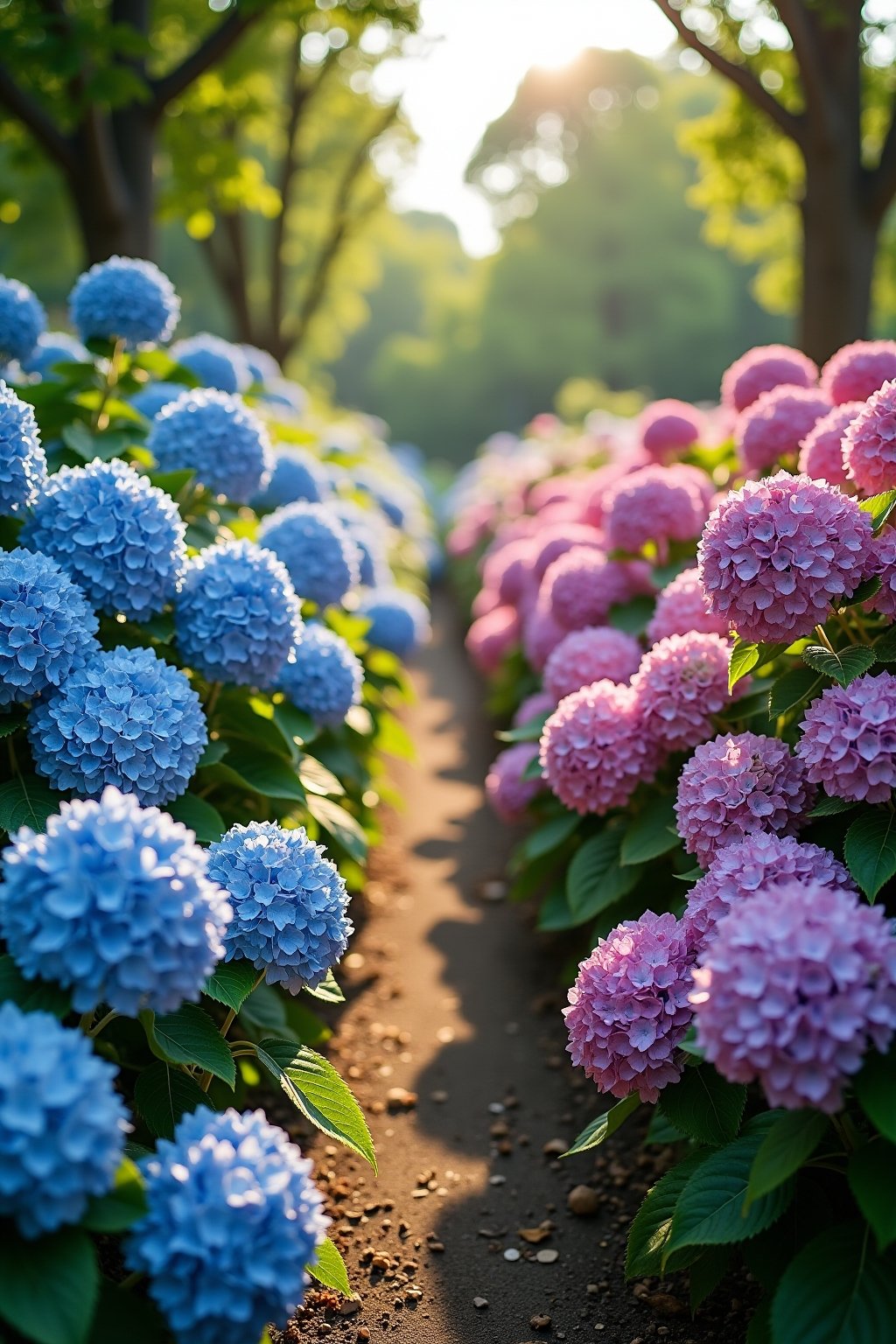
Hydrangeas are the only common garden plant that lets you play chemist — you can literally change the color of the flowers by adjusting the soil. Blue in acidic soil, pink in alkaline soil, and every shade of purple in between. It sounds like a gardening myth, but it is real science: soil pH controls aluminum availability, and aluminum is what makes hydrangea flowers blue.
But here is where most guides get it wrong: not all hydrangeas change color, the process takes months (not days), and you need to understand what you are actually changing in the soil to get reliable results. This guide cuts through the confusion and gives you a clear, science-based approach to growing hydrangeas in the exact color you want — and keeping them that way year after year.
Quick Facts
| Sun | Morning Sun + Afternoon Shade (ideal) or Filtered Shade |
| Difficulty | Beginner to Intermediate |
| Season | Plant in spring or fall; color treatment ongoing |
| Zone | USDA Zones 3-9 (varies by species) |
| Time to Harvest | Color changes take 2-4 months to fully appear |
On the Front End
- Bigleaf hydrangea (Hydrangea macrophylla) — the ONLY type that changes color
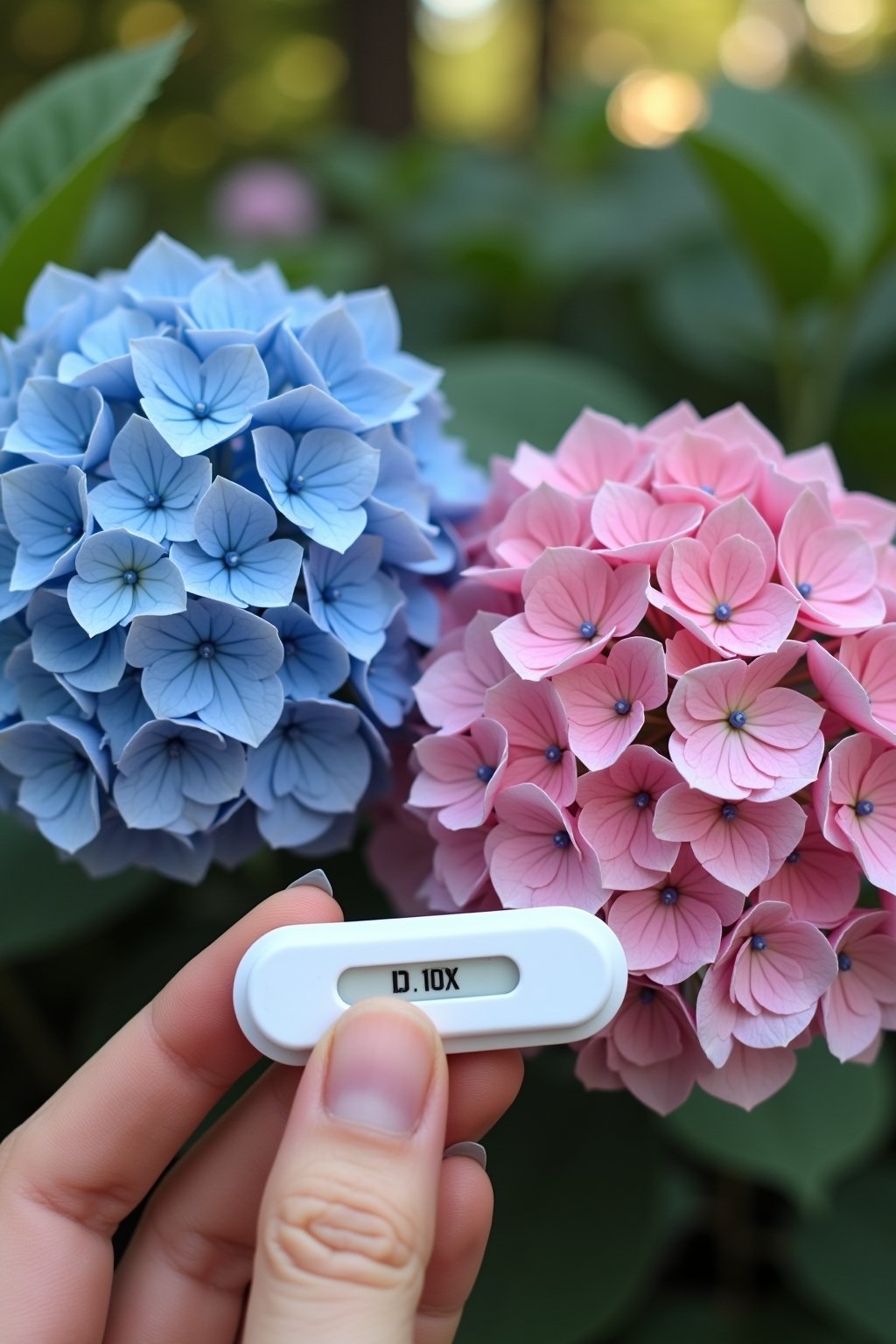
- Soil pH test kit (essential for knowing your starting point)
- Aluminum sulfate (to make soil acidic → blue flowers)
- Garden lime (to make soil alkaline → pink flowers)
- Sulfur (slow-acting soil acidifier for long-term blue)
- Acidic mulch (pine needles, oak leaves) for blue hydrangeas
- Compost for planting
- Watering can (for applying aluminum sulfate solution)
- Garden bed with morning sun and afternoon shade
Only bigleaf hydrangeas change color: Hydrangea macrophylla (mophead and lacecap varieties) are the only hydrangeas that shift between blue and pink based on soil pH. Oakleaf hydrangeas (H. quercifolia), panicle hydrangeas (H. paniculata like Limelight), and smooth hydrangeas (H. arborescens like Annabelle) do NOT change color regardless of soil treatment.
The science: Hydrangea flower color is determined by aluminum uptake. In acidic soil (pH below 5.5), aluminum is soluble and the plant absorbs it → blue flowers. In alkaline soil (pH above 6.5), aluminum is locked in the soil and unavailable → pink flowers. Between pH 5.5-6.5, you get purple.
White hydrangeas stay white: White-flowered bigleaf hydrangea varieties do not respond to pH changes. They lack the pigment (delphinidin) that shifts with aluminum. Stick with pink, blue, or purple varieties if you want to play with color.
Step 1: Test Your Soil pH (This is Non-Negotiable)
Before doing anything else, test your soil pH. You cannot change what you don’t measure. Buy an inexpensive soil pH test kit from any garden center or send a sample to your local extension service for a professional test.
Your starting pH determines your strategy:
• pH below 5.5: Your soil is already acidic — hydrangeas will bloom blue naturally. To make them pink, you need to raise pH significantly (harder to do).
• pH 5.5-6.5: Neutral zone — you can push in either direction.
• pH above 6.5: Your soil is alkaline — hydrangeas will bloom pink naturally. To make them blue, you need to lower pH and add aluminum.
Step 2: Plant in the Right Location
Hydrangeas prefer morning sun with afternoon shade — typically the east side of a building or under the dappled canopy of tall trees. Full sun in hot climates scorches the large leaves and fades flower color. Full shade produces weak plants with few flowers.
Plant in rich, well-drained soil amended with compost. Dig the hole twice as wide as the root ball but only as deep — planting too deep causes crown rot. Space plants 4-6 feet apart; hydrangeas grow large and need good air circulation. Water deeply after planting and mulch with 2-3 inches of organic material.
Step 3: For Blue Flowers — Make the Soil Acidic
To get blue hydrangeas, you need acidic soil (pH 5.0-5.5) with available aluminum. There are two approaches:
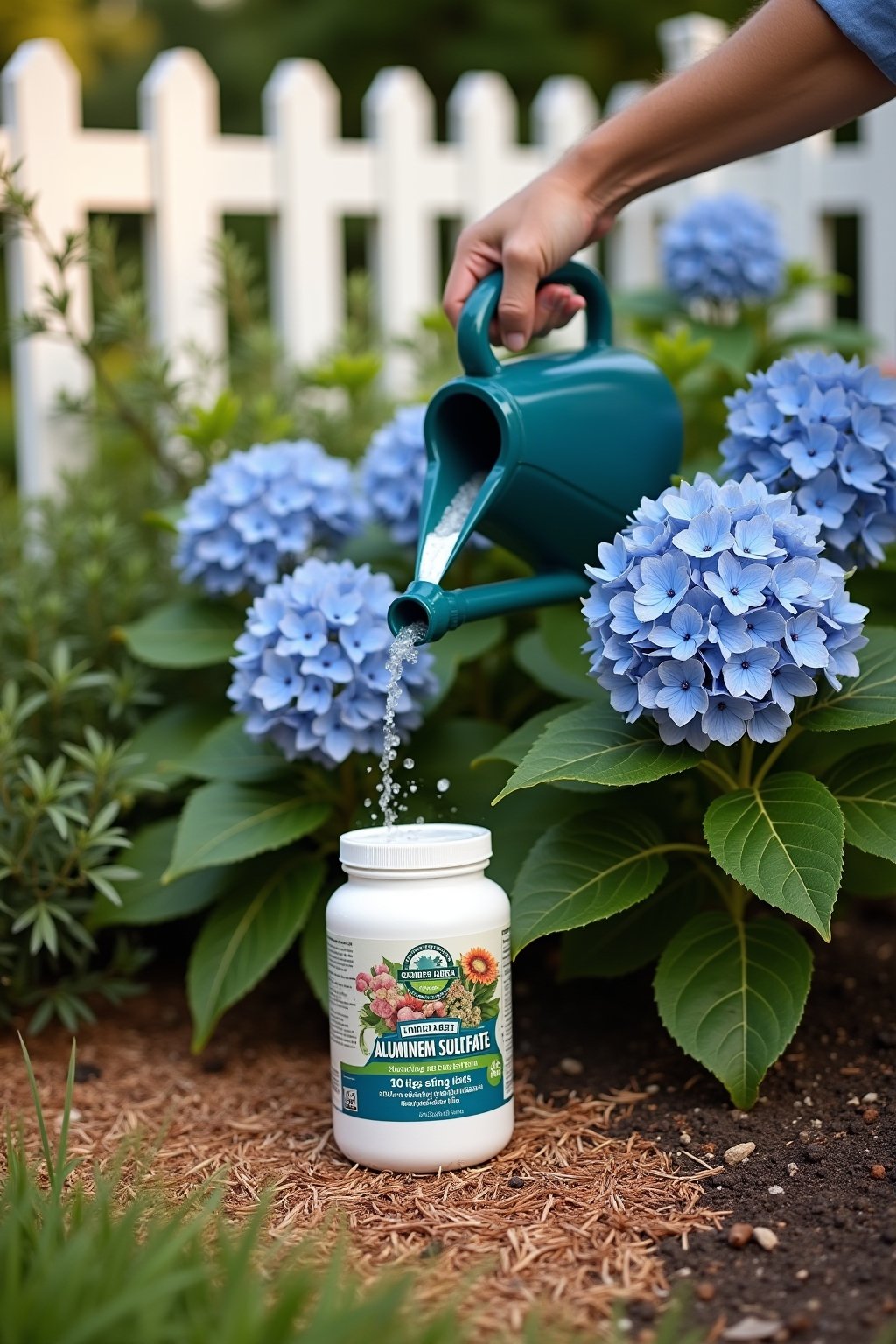
Quick method: Dissolve 1 tablespoon of aluminum sulfate in 1 gallon of water and drench the soil around the plant once a month during the growing season (March-September). This both lowers pH and adds aluminum directly. Results appear in 2-4 months.
Long-term method: Work elemental sulfur into the soil around the plant (1/4 cup per plant). Sulfur slowly acidifies soil over months as soil bacteria convert it to sulfuric acid. Mulch with pine needles or oak leaves which decompose into acidic material. This method takes 6-12 months but maintains blue color long-term with less ongoing effort.
Step 4: For Pink Flowers — Make the Soil Alkaline
To get pink hydrangeas, you need alkaline soil (pH 6.5-7.0) where aluminum is locked up and unavailable to the plant. Add garden lime (calcium carbonate) to raise soil pH. Apply according to package directions — typically 1-2 cups per plant worked into the top few inches of soil.
Pink is actually the natural color of hydrangeas when aluminum is absent — you are not adding a pink pigment, you are removing the blue. Lime takes 2-4 months to shift pH noticeably. Reapply in spring each year if your soil naturally trends acidic (common in areas with heavy rainfall). Avoid using acidic mulches (pine needles) around pink hydrangeas — use neutral hardwood mulch instead.
Step 5: For Purple — Find the Sweet Spot
Purple hydrangeas occur in the transition zone between pH 5.5 and 6.5 where some but not all aluminum is available. If you love purple, this is actually the easiest color to maintain because it is the natural middle ground for many soils.
To fine-tune purple shades, start with your current pH and make small adjustments. Add a small amount of aluminum sulfate for bluer purple, or a small amount of lime for pinker purple. The key is making gradual changes and testing pH regularly. Big swings in pH stress the plant and can produce uneven coloring (pink and blue on the same bush — which some gardeners actually love).
Step 6: Maintain Color Year After Year
Soil pH naturally drifts over time due to rainfall, decomposing mulch, and mineral leaching. To maintain your desired color, test soil pH annually in early spring and reapply treatments as needed.
For blue: apply aluminum sulfate in spring and again in mid-summer. Mulch with pine needles or oak leaves. Avoid lime-containing fertilizers. For pink: apply lime in early spring. Use neutral mulch. Avoid acidic fertilizers and amendments. For both colors: feed with a balanced fertilizer (10-10-10) in spring. Prune in late summer only — hydrangeas bloom on old wood, and pruning at the wrong time removes next year’s flower buds.
What to Check
Flowers are muddy/dull instead of bright blue or pink: You are in the transition zone (pH 5.5-6.5). Push harder in your desired direction — more aluminum sulfate for blue, more lime for pink. It takes several months for the full color to develop.
Different colored flowers on the same plant: This is normal during the transition period when you are changing soil pH. Different parts of the root system may be absorbing different amounts of aluminum. With consistent treatment, the color will even out over 1-2 seasons.
Hydrangea not blooming at all: Most likely improper pruning. Bigleaf hydrangeas bloom on old wood — if you pruned in spring, you removed the flower buds. Prune only in late summer immediately after flowering. Extreme cold can also kill flower buds; choose a variety rated for your zone.
Leaves yellowing between veins: Chlorosis — usually caused by iron deficiency in highly alkaline soil. If you are trying to grow pink hydrangeas in naturally acidic soil, the added lime may lock up iron. Apply chelated iron as a foliar spray or soil drench.
When to Do What
Early Spring: Test soil pH. Apply aluminum sulfate (for blue) or lime (for pink). Feed with balanced fertilizer. Mulch with your chosen material (pine needles for blue, hardwood for pink). Do NOT prune — you will remove flower buds.
Summer: Flowers develop color. Reapply aluminum sulfate monthly for blue. Water consistently — hydrangeas are heavy drinkers and wilt dramatically in heat. Deadhead spent blooms to encourage reblooming on remontant (reblooming) varieties.
Late Summer: The only safe time to prune bigleaf hydrangeas — immediately after flowering. Remove dead wood and shape as desired. New buds for next year form in fall on old wood.
Fall: Add a layer of mulch for winter protection. In zones 5 and colder, protect plants with burlap wraps or leaf mulch to prevent flower bud damage from harsh cold.
Add-Ons That Matter
- Only bigleaf hydrangeas change color — Limelight, Annabelle, and oakleaf types are unaffected by soil pH. If your hydrangea is not a macrophylla variety, color-changing treatments won’t work.
- Test soil pH before making changes — this is the most important step. Without knowing your starting point, you are guessing. A $10 pH test kit saves months of frustration.
- Aluminum sulfate works faster than sulfur — for visible results in the same growing season, use aluminum sulfate dissolved in water as a soil drench. Sulfur is slower but longer-lasting.
- Never prune bigleaf hydrangeas in spring — they bloom on old wood. Spring pruning removes flower buds. Only prune immediately after flowering in late summer, and only remove what is necessary.
- Accept that color changes take time — a full shift from pink to blue (or vice versa) takes 2-4 months. Be patient and consistent with applications rather than dumping massive amounts at once.
- Mixed colors on one bush can be beautiful — if your soil is in the transition zone, you may get pink and blue flowers on the same plant. Many gardeners consider this the most striking look of all.
FAQ
Can all hydrangeas change color?
No — only bigleaf hydrangeas (Hydrangea macrophylla) change color based on soil pH. This includes mophead and lacecap varieties. Panicle hydrangeas (Limelight), smooth hydrangeas (Annabelle), and oakleaf hydrangeas do NOT change color. White-flowered bigleaf varieties also stay white.
How do I make my hydrangeas blue?
Lower the soil pH to 5.0-5.5 and ensure aluminum is available. The fastest method: dissolve 1 tablespoon of aluminum sulfate in 1 gallon of water and drench the soil monthly during the growing season. Mulch with pine needles. Results appear in 2-4 months.
How do I make my hydrangeas pink?
Raise the soil pH to 6.5-7.0 so aluminum is locked up in the soil. Apply garden lime to raise pH, use neutral mulch (not pine needles), and avoid acidic fertilizers. Pink is actually the default color when aluminum is absent — you are removing blue, not adding pink.
How long does it take for hydrangeas to change color?
A noticeable color shift takes 2-4 months of consistent soil treatment. A complete change from one color to the other may take a full growing season. New flowers that develop after treatment show the new color; existing flowers do not change on the plant.
Why are my hydrangeas not blooming?
The most common cause is improper pruning — bigleaf hydrangeas bloom on old wood, so pruning in spring or fall removes the flower buds. Only prune in late summer right after blooming. Other causes: too much shade, too much nitrogen fertilizer, or winter cold damage to flower buds in northern zones.
Can I grow hydrangeas in full sun?
In cool northern climates (zones 4-6), bigleaf hydrangeas can handle full sun. In hot southern climates (zones 7-9), they need afternoon shade or the leaves scorch and flowers fade. The ideal for all zones is morning sun with afternoon shade — east-facing exposure is perfect.