
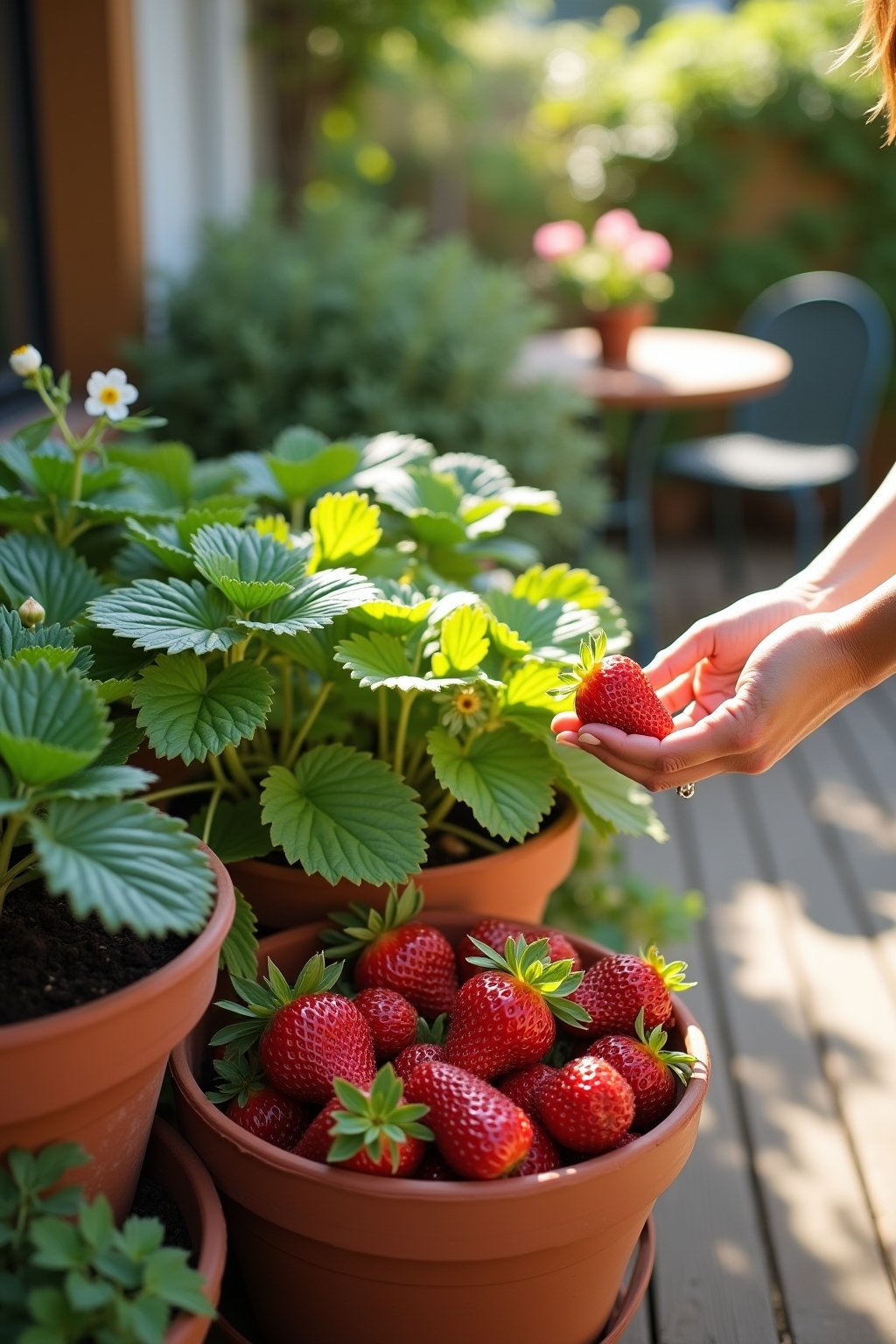
The strawberries you buy at the grocery store were picked before they were ripe, shipped for days, and taste like water compared to a strawberry you grew yourself. A single pot of strawberries on a sunny patio or balcony can produce handfuls of berries every week from late spring through fall — berries so sweet and fragrant you will never buy grocery store strawberries again.
I started with four strawberry plants in a 15-dollar hanging basket on my apartment balcony. By mid-June I was picking 10-15 berries every other day. By fall I had runners rooting in jars of water, giving me free plants for the next year. Growing strawberries in containers is easier than most people think, and you do not need a yard, a garden bed, or any previous experience.
Quick Facts
| Sun | Full Sun (6-8 hours minimum for sweetest berries) |
| Difficulty | Beginner |
| Season | Plant in early spring (or fall in zones 8-9) |
| Zone | Zones 5-9 (containers are portable for winter protection) |
| Time to Harvest | 4-6 weeks from planting to first berries (everbearing types) |
What You’ll Need
- Strawberry plants (everbearing or day-neutral varieties for pots)
- Container: 12-inch wide minimum, strawberry pot, hanging basket, or window box
- Quality potting mix formulated for fruiting plants
- Compost to blend with potting mix
- Slow-release fertilizer (balanced or high potassium)
- Liquid fertilizer for biweekly feeding during fruiting
- Straw or pine needle mulch for the pot surface
- Watering can or drip system
- Scissors or pruners for runner management
- Netting to protect from birds (optional)
Choose everbearing or day-neutral varieties for pots: These types fruit in their first year, producing berries from late spring through fall with multiple flushes. Best container varieties: Albion (excellent flavor, day-neutral), Seascape (high yield, day-neutral), Quinault (classic everbearing), and Mara des Bois (gourmet flavor, day-neutral). Avoid June-bearing varieties in pots — they only fruit once per season and send out too many runners.
Hanging baskets and strawberry pots maximize space: Strawberries trail beautifully over pot edges, making them perfect for hanging baskets or tower-style strawberry pots with pockets. A single 12-inch hanging basket holds 3-4 plants. A strawberry tower with 12 pockets can produce berries from every level.
Step 1: Choose the Right Container
Strawberries have shallow roots and do not need deep pots. A container that is 12 inches wide and at least 8 inches deep works perfectly. You can fit 3-4 plants in a 12-inch pot, spaced about 8 inches apart.
Container options that work great: Standard pots (12-16 inches), hanging baskets (ideal for small spaces), window boxes (beautiful and productive), strawberry towers and jars (maximize vertical space), and even recycled items like colanders and gutters mounted on walls. The only requirement is drainage holes — strawberries rot quickly in waterlogged soil.
Step 2: Use the Right Soil Mix
Strawberries need lightweight, well-draining soil that stays evenly moist. Use a blend of 2/3 quality potting mix and 1/3 compost. Add a handful of perlite per pot for extra drainage. Do not use garden soil — it compacts in containers and holds too much water.
Strawberries prefer slightly acidic soil with a pH of 5.5 to 6.8. Most potting mixes fall in this range naturally. If your berries are small and leaves are yellowing, the pH may be too high — adding a bit of peat moss or coffee grounds lowers pH gently. Mix in a slow-release fertilizer at planting time to feed plants for the first 3 months.
Step 3: Plant at Exactly the Right Depth
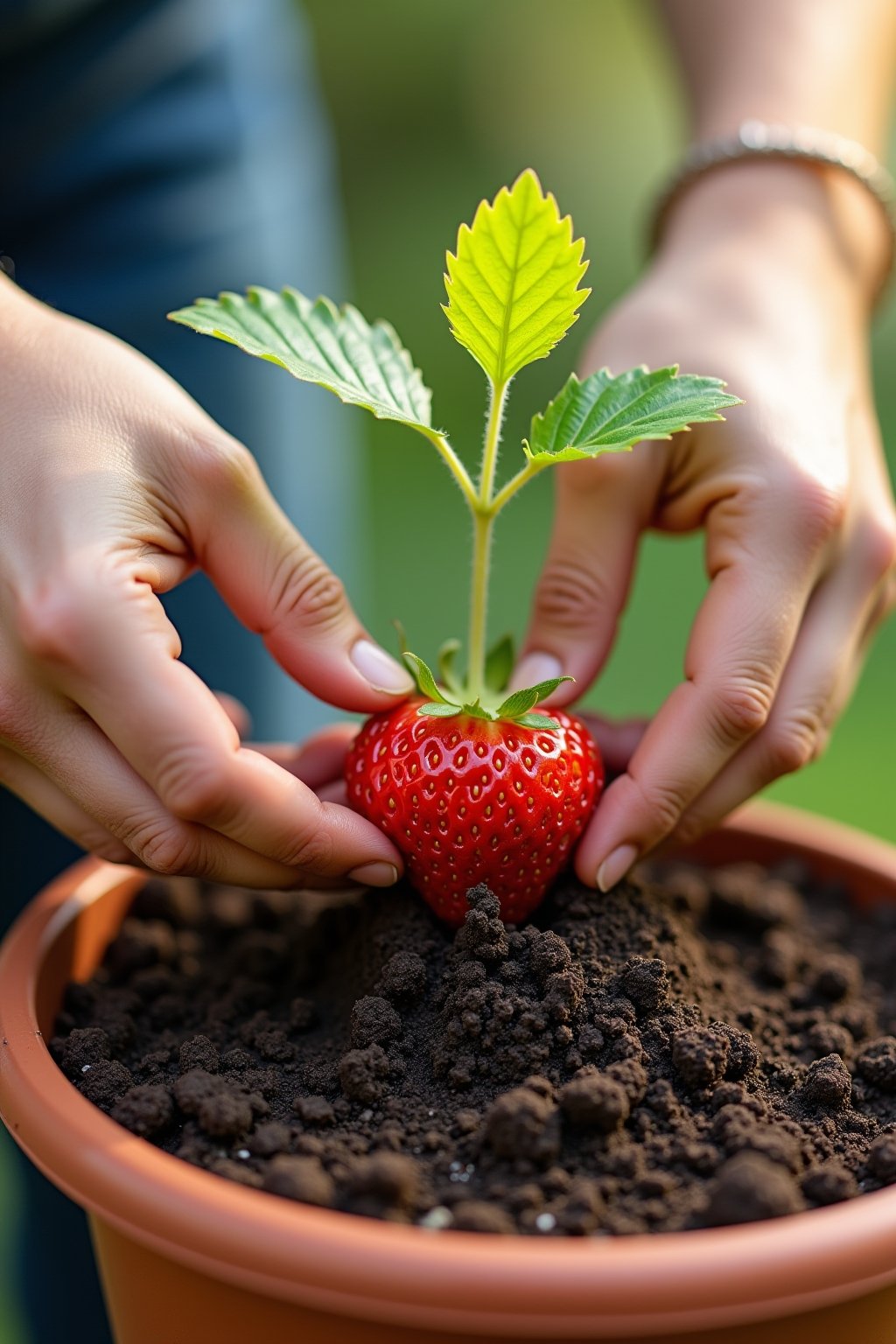
Planting depth is critical for strawberries and where most beginners make their biggest mistake. The crown (the thick area where roots meet leaves) must sit exactly at soil level. Bury the crown and it rots. Leave it too high and roots dry out.
Fill the pot to within 1 inch of the rim. Make a small mound in the center for each plant. Spread the roots over the mound and cover with soil so the crown sits right at the surface — not above, not below. Water gently to settle soil around the roots. If the crown sinks below soil level after watering, gently lift the plant until the crown is exposed.
Step 4: Water Consistently (The Secret to Sweet Berries)
Inconsistent watering is the number one cause of small, bland strawberries. Container strawberries need consistent moisture — not soggy, not dry, just evenly damp. Check soil daily by touching the surface. If the top half-inch feels dry, water until it drains from the bottom.
During fruiting and hot weather, you may need to water twice daily — morning and evening. Strawberry roots are shallow and dry out fast in containers. A drip system or self-watering pot takes the stress out of daily watering. Avoid wetting the leaves and fruit when watering — water at the base of the plant. Wet fruit develops gray mold (botrytis) which ruins berries.
Step 5: Feed for Maximum Berry Production
Strawberries are heavy feeders, especially in containers where nutrients wash out with every watering. Mix slow-release fertilizer into the soil at planting. Once flowering begins, feed every 2 weeks with a liquid fertilizer high in potassium (potassium drives fruit production).
Avoid high-nitrogen fertilizers which produce lush green leaves but few berries. Tomato fertilizer (5-10-10 or similar) works well for strawberries too. Organic options include compost tea, fish emulsion (for early growth), and kelp extract (for fruiting). Stop feeding in late fall when plants go dormant.
Step 6: Manage Runners and Overwinter Your Plants
Runners are long stems that grow baby plants at their tips. During the first year, snip off all runners to direct energy into fruit production instead of making new plants. In year two, you can let a few runners root in small pots of soil to create free new plants for expanding your collection or replacing older plants.
Overwintering: In zones 5-7, move pots to an unheated garage or against a house wall and cover with straw. The container should not freeze solid. In zones 8-9, strawberries may produce berries nearly year-round with minimal winter protection. Replace plants every 3 years — strawberry production declines sharply after the third season. Use runners to create replacement plants for free.
Troubleshooting
Flowers but no fruit: Lack of pollination. Outdoor pots usually get enough bee visits, but if your balcony is high up or enclosed, hand-pollinate by gently brushing a cotton swab across each flower center. Also check that you did not accidentally buy June-bearing varieties that only fruit once.
Small, bland berries: Inconsistent watering is the most common cause. Strawberries need steady moisture. Also ensure full sun (6-8 hours) and adequate fertilizer. Overcrowded pots produce smaller berries — space plants 8 inches apart.
Gray mold (fuzzy gray coating on berries): Caused by wetting fruit when watering or poor air circulation. Water at the base of plants only, remove any berries that touch the soil, and improve airflow around plants.
Leaves turning red or purple: This can indicate phosphorus deficiency (common in cool soil early in the season) or cold stress. Feed with a balanced fertilizer and ensure soil temperature is above 50°F. The condition usually resolves as weather warms.
What Each Season Brings
Early Spring (March-April): Plant strawberries in containers as soon as soil temperature reaches 50°F. In zones 5-6, this is April. In zones 7-9, this is March or even late February. Pinch off the first round of flowers on everbearing types to let plants establish roots (this increases total yield).
Late Spring / Summer: Berries begin ripening. Water consistently, feed biweekly, and harvest every 2-3 days when berries are fully red. Snip runners to keep energy focused on fruit. Protect from birds with netting if needed.
Fall: Everbearing and day-neutral varieties produce a strong fall crop as temperatures cool. Some of the sweetest berries come in September and October. Reduce watering as growth slows.
Winter: Move pots to a sheltered location in zones 5-7. Reduce watering to monthly moistening. Plants go dormant and return in spring.
Useful Adjustments
- Everbearing varieties are essential for pots — they fruit from late spring through fall instead of just once. Albion, Seascape, and Quinault are the best container performers across zones 5-9.
- The crown must sit at exactly soil level — this is the most critical planting detail. Too deep and it rots. Too high and roots dry out. Check crown level after every watering for the first week.
- Snip all runners in year one for maximum fruit — runners steal energy from berry production. Let runners root in year two when you want to create free replacement plants.
- Straw mulch on the pot surface prevents dirty berries — fruit touching bare soil gets muddy and develops gray mold. A thin layer of straw or pine needles keeps berries clean and dry.
- Pick berries every 2-3 days when they are fully red — overripe berries attract pests and reduce the plant’s energy for making new fruit. Regular harvesting stimulates more flower and fruit production.
- Replace plants every 3 years — strawberry production declines sharply after the third season. Root runners from your best producers in years 2-3 to create free replacement plants.
Side Readings
- How to Grow Strawberries in Containers (Patio, Balcony, or Porch)
- How to Grow Strawberries in Containers (Even on a Balcony or Tiny Porch)
- Container Gardening for Beginners: Everything You Need to Know
Quick Answers
What are the best strawberry varieties for pots?
Everbearing and day-neutral varieties are best for containers because they fruit in their first year and produce berries from late spring through fall. Top choices are Albion (excellent flavor), Seascape (high yield), Quinault (classic everbearing), and Mara des Bois (gourmet flavor). Avoid June-bearing varieties in pots.
How many strawberry plants fit in one pot?
A 12-inch diameter pot holds 3-4 plants spaced about 8 inches apart. A 16-inch pot holds 5-6 plants. Hanging baskets hold 3-4 plants. Strawberry towers with 12 pockets hold 12 or more plants. Do not overcrowd — too many plants per pot produces smaller berries.
How often should I water strawberries in pots?
Check soil daily. Water when the top half-inch feels dry. During hot weather and fruiting, this may mean watering once or twice a day. Consistency is key — inconsistent moisture produces small, bland berries. A drip system or self-watering pot makes this much easier.
Why are my container strawberries not producing fruit?
The most common reasons are lack of sunlight (need 6-8 hours), too much nitrogen fertilizer (produces leaves not fruit), wrong variety (June-bearers only fruit once after the first year), or lack of pollination. Try hand-pollinating with a cotton swab if you are on a high or enclosed balcony.
Can I grow strawberries indoors?
Yes, if you have a very sunny south-facing window or grow lights providing 12-14 hours of light daily. You will need to hand-pollinate flowers since there are no bees indoors. Indoor strawberries typically produce less fruit than outdoor plants but the flavor is still far superior to store-bought.
How long do container strawberry plants last?
Strawberry plants produce best for 2-3 years, then production declines sharply. Plan to replace plants every 3 years. The cheapest way is to root runners from your best-producing plants in years 2-3, giving you free replacements. Each runner roots easily in a small pot of moist soil.