
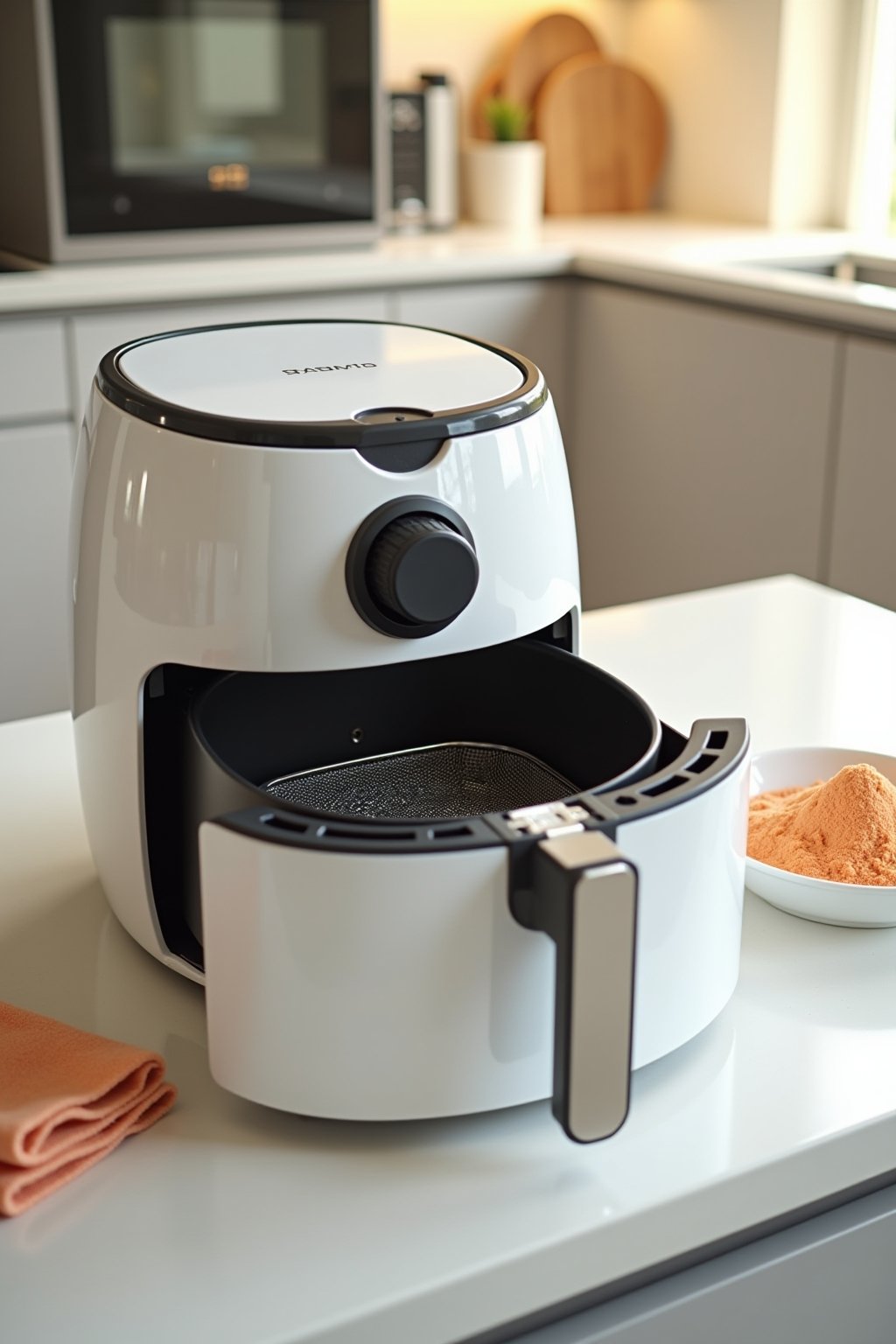
I love my air fryer. I use it almost every single day — chicken wings, roasted vegetables, frozen fries, even reheating leftover pizza. But about three months into daily use, something started happening. Every time I turned it on, my kitchen filled with a burnt, greasy smell that clung to everything. The food started tasting slightly off. And when I actually looked inside the basket, I saw baked-on grease that had turned into a dark, sticky crust I could not wipe off with a sponge.
That was the day I learned that rinsing the basket under hot water after each use is not the same as actually cleaning it. Air fryers need a real deep clean on a regular schedule, and the process includes parts most people never think to clean — like the heating element above the basket and the exterior vents where grease-laden steam escapes. Here is the complete step-by-step deep clean, including the parts the manual does not mention.
| ⏱ Time Required: | 40-50 minutes |
| 📈 Difficulty: | Easy |
| 💰 Supplies Cost: | $8-15 |
| 🔄 How Often: | Whenever it comes up |
What I Like About It
- Eliminates the burnt smell — baked-on grease on the heating element and basket coating is what creates that acrid smoke every time you preheat
- Improves food flavor — old grease residue from previous meals transfers stale flavors to fresh food, which is why your air-fried chicken sometimes tastes like last week’s fish sticks
- Extends the life of your air fryer — grease buildup forces the heating element to work harder, which increases wear and can eventually cause it to burn out
- Prevents grease fires — accumulated grease near a 400-degree heating element is a genuine fire hazard. Regular deep cleaning eliminates this risk
- Restores non-stick coating performance — baked-on residue covers the non-stick surface, causing food to stick and tear apart. Removing the buildup lets the coating work again
- Takes only about 20 minutes of active work — most of the time is hands-off soaking while you do other things
What to Have Ready
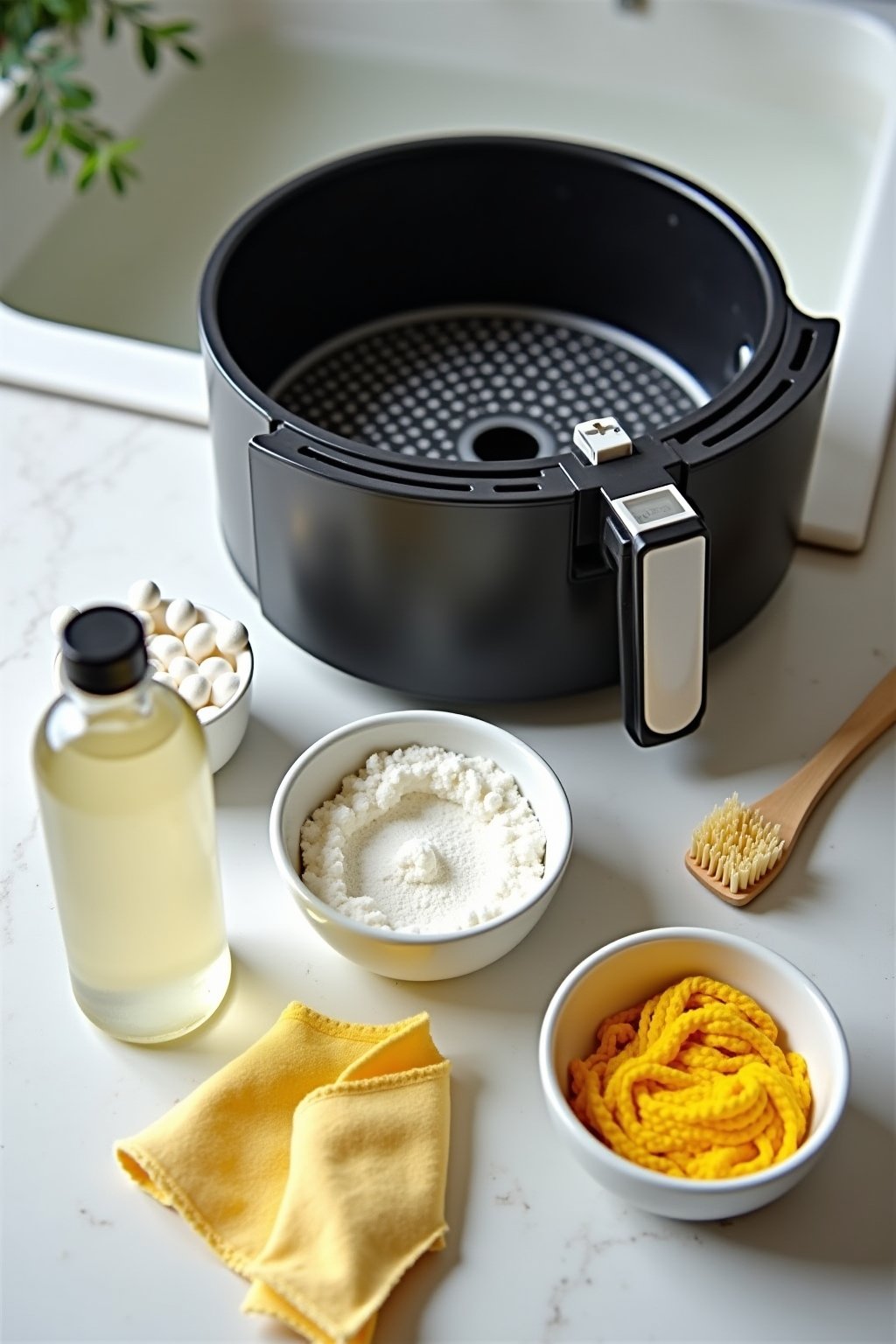
Everything you need for a complete air fryer deep clean:
- Dish soap — the primary degreasing agent for the basket and removable parts
- Baking soda — makes a paste for scrubbing stubborn baked-on grease without scratching non-stick coating
- White vinegar — cuts through grease film and deodorizes
- Non-abrasive sponge or soft brush — critical to avoid damaging the non-stick coating on the basket and tray
- Old toothbrush — for scrubbing the heating element coil and hard-to-reach crevices
- Microfiber cloth — for wiping down the exterior and interior walls
- Cotton swabs — for cleaning inside small vents and around buttons
- A large basin or plugged sink — for soaking the basket and tray
The Steps
Step 1: Unplug and Disassemble (2 Minutes)
Unplug the air fryer and let it cool completely. Never clean a warm air fryer — hot non-stick coating is more vulnerable to scratching, and you risk burns from the heating element. Once cool, remove the basket and any removable trays, racks, or dividers. Most air fryers have a basket that slides out and a tray or drip pan underneath. Remove every piece that comes apart.
Place the main unit upside down (heating element facing up) on a towel so you can access the heating element later. Check your manual for any parts that are dishwasher-safe — many baskets and trays are, but the main unit with the electrical components should never be submerged. Pro tip: take a photo of how everything fits together before disassembling. Some air fryer models have tricky reassembly, and a reference photo saves frustration.
Step 2: Soak the Basket and Removable Parts (15–20 Minutes Soak Time)
Fill a sink or large basin with hot water, add a generous squirt of dish soap, and submerge the basket, tray, and any racks completely. Let them soak for 15 to 20 minutes. The hot soapy water softens baked-on grease so it comes off with minimal scrubbing, which protects the non-stick coating. For extremely heavy buildup, add two tablespoons of baking soda to the soaking water — it boosts the degreasing power significantly.
While the parts soak, move on to cleaning the main unit (steps 3 and 4). This overlap is where you save time. Pro tip: if the non-stick coating on your basket has visible scratches or peeling, the basket needs to be replaced rather than scrubbed harder. Damaged non-stick coating releases particles into your food. Check the manufacturer’s website for replacement baskets.
Step 3: Clean the Heating Element (5 Minutes)
This is the step most people skip, and it is the main reason air fryers start smoking. With the unit upside down, look at the heating element coil. You will likely see brown or black grease buildup baked onto the coils and the surrounding surface. Dip an old toothbrush in a paste of baking soda and a few drops of water. Gently scrub the heating element coils, working in short strokes. Do not use metal brushes, steel wool, or anything abrasive that could damage the element.
Wipe away the loosened residue with a damp cloth. For stubborn spots, spray a small amount of vinegar onto the baking soda paste — the fizzing helps lift the grease. Wipe again with a clean, damp cloth and make sure no baking soda residue remains on the element. Let it dry completely before reassembling. Pro tip: the heating element is delicate. Use gentle pressure — you are scrubbing off surface grease, not scouring metal. If a spot will not come off with gentle pressure, soak the toothbrush in vinegar and try again rather than pressing harder.
Step 4: Wipe Down the Interior and Exterior (5 Minutes)
Dampen a microfiber cloth with a mixture of equal parts water and vinegar. Wipe the entire interior chamber where the basket sits. Grease splatter coats these walls over time and contributes to the burnt smell. Pay special attention to the back wall and the area directly below the heating element where drips accumulate. For stubborn grease on interior walls, apply a thin layer of baking soda paste, let it sit for five minutes, then wipe clean.
Wipe the exterior of the air fryer with the same vinegar solution. Clean the control panel with a barely damp cloth (do not spray liquid directly onto buttons or a digital screen). Use cotton swabs to clean inside the air vents on the back of the unit — grease and dust collect here and restrict airflow, which affects cooking performance. Pro tip: never submerge the main unit in water or spray liquid inside the vent openings. Moisture in the electrical components will damage the unit. A damp cloth and cotton swabs are all you need.
Step 5: Scrub the Soaked Basket and Parts (5–10 Minutes)
After soaking for 15 to 20 minutes, most of the baked-on grease should be softened. Use a non-abrasive sponge (the soft side, not the scrub side) or a soft-bristle brush to scrub the basket, tray, and racks. Work in circular motions, paying extra attention to the corners, edges, and the wire mesh areas where grease accumulates in the crosshatch pattern. For stubborn spots, make a paste of two tablespoons of baking soda and one teaspoon of dish soap, apply it to the spot, and scrub gently.
Rinse every part thoroughly under running water to remove all soap residue. Hold the basket up to the light and check for any remaining grease spots — they will appear as dark, shiny patches. Re-scrub any missed spots. Pro tip: never use metal scouring pads, steel wool, or abrasive cleanser on the basket. These scratch and destroy the non-stick coating permanently. If baked-on grease will not come off with baking soda paste and a soft sponge, re-soak for another 20 minutes and try again.
Step 6: Dry, Reassemble, and Maintain (5 Minutes)
Dry every part completely with a clean towel before reassembling. Moisture trapped inside the air fryer causes musty odors and can promote mold growth. Let the parts air-dry for an additional 10 minutes if possible. Reassemble the basket, tray, and any racks, making sure everything clicks securely into place. Plug in the unit and run it empty at 400 degrees for 3 minutes to burn off any remaining moisture or baking soda residue.
To keep your air fryer clean between deep cleans, wash the basket with soap and water after every use (not just a rinse). Wipe the interior with a damp cloth after every three or four uses. Schedule a deep clean every two to four weeks depending on how often you use it. Pro tip: line the bottom of the basket with a perforated parchment liner designed for air fryers. These catch drips and prevent grease from baking onto the basket surface, making cleanup dramatically easier between deep cleans.
Reading the Signs
- Using steel wool or abrasive scrubbers on the basket — this scratches and destroys the non-stick coating, causing food to stick and non-stick particles to flake into your meals. Always use non-abrasive sponges and baking soda paste
- Never cleaning the heating element — the element collects baked-on grease that smokes every time you cook. It is the single biggest cause of that unpleasant burnt smell and is easy to clean with a toothbrush and baking soda
- Submerging the main unit in water — the base contains electrical components, a motor, and a heating element. Water damage is permanent and creates a serious safety hazard
- Cleaning the basket while it is still hot — thermal shock from cold water on a hot non-stick basket can warp the basket and damage the coating. Always let it cool to room temperature first
- Only rinsing without using soap — hot water alone does not cut grease. Every wash needs dish soap to actually dissolve the oil residue. A quick rinse under the faucet after each use is not sufficient cleaning
Where This Shines
Daily After-Use Cleaning (2 Minutes)
After every use, let the air fryer cool, remove the basket, and wash it with dish soap and a soft sponge. Rinse, dry, and replace. This two-minute habit prevents grease from baking on and dramatically extends the time between deep cleans. If you only adopt one habit from this guide, make it this one.
Weekly Quick Wipe (5 Minutes)
Once a week, wipe the interior chamber and check the heating element for visible grease spots. A damp cloth with a drop of dish soap handles light residue. Clean the exterior and control panel. This weekly pass prevents the gradual buildup that leads to smoking and off-flavors.
Monthly Deep Clean (20–30 Minutes)
Follow the full six-step deep clean in this guide once a month if you use your air fryer daily, or every two months for occasional use. This is the full basket soak, heating element scrub, and interior wipe-down that restores your air fryer to like-new condition and performance.
FAQ
How often should I deep clean my air fryer?
Deep clean every two to four weeks if you use it daily. For occasional use (two to three times per week), a monthly deep clean is sufficient. The key indicator that you need a deep clean is a burnt smell when preheating or visible grease buildup on the heating element.
Can I put my air fryer basket in the dishwasher?
Check your model’s manual. Many air fryer baskets are labeled dishwasher-safe, but hand washing is gentler on the non-stick coating and extends its life. If you do use the dishwasher, place the basket on the top rack and avoid dishwasher pods that contain harsh abrasives.
Why does my air fryer smoke even after cleaning?
Residual grease on the heating element is the most common cause. Clean the heating element with a toothbrush and baking soda paste. If smoking persists, check the drip tray below the basket for accumulated grease that has pooled and is burning.
Is it safe to use oven cleaner on an air fryer?
No. Commercial oven cleaners contain harsh chemicals like sodium hydroxide that can damage non-stick coatings, plastic components, and leave toxic residue in a closed cooking chamber. Stick with dish soap, baking soda, and vinegar, which are effective and food-safe.
How do I remove a burnt smell from my air fryer?
Clean the heating element thoroughly (this is almost always the source), then place a small ramekin of white vinegar inside the empty air fryer, close it, and run it at 350 degrees for 3 minutes. The vinegar steam neutralizes lingering odors. Repeat if needed.
Can baking soda scratch the non-stick coating?
Baking soda is extremely fine and is classified as a gentle, non-abrasive cleaner. When mixed into a paste with water or dish soap, it will not scratch non-stick, ceramic, or glass surfaces. It is significantly softer than commercial scouring powders and is safe for daily use on coated cookware.