
Last spring, I decided to actually time myself doing a full spring clean of my entire house. Not the rushed version where you shove things in closets and call it done — the real one. Every baseboard wiped, every window washed, every drawer emptied and reorganized. Total time: 14 hours spread across one weekend. And honestly? It was the most satisfying weekend I’ve had in years.
The problem with most spring cleaning checklists is that they’re either so vague they’re useless (“clean the kitchen” — thanks, very helpful) or so overwhelming you give up before you start. This checklist is different. I’ve broken every single task into specific, timed actions organized by room and priority level. Whether you have one free afternoon or an entire weekend, you can pick exactly where to start and know exactly what “done” looks like.
| ⏱ Time Required: | 2-3 days |
| 📈 Difficulty: | Medium |
| 💰 Supplies Cost: | $20-40 |
| 🔄 How Often: | Annually |
Why I Settled on This
- Room-by-room organization eliminates decision fatigue — you never have to wonder what to clean next because every task is listed in order of priority
- Time estimates keep you on track — each task includes a realistic time range so you can plan your day and avoid the endless “just one more thing” spiral
- Priority levels let you customize — essential tasks are marked separately from deep-clean extras, so you can do a quick spring refresh or go all-out
- Covers tasks most checklists forget — from vent covers and light switches to mattress flipping and behind-appliance cleaning, nothing is overlooked
- Repeatable year after year — save this checklist and use it every spring; the tasks don’t change, and your house will be cleaner each year as you build the habit
- Works for any home size — apartment, townhouse, or full house, every room section applies; just skip the rooms you don’t have
Stock Up On
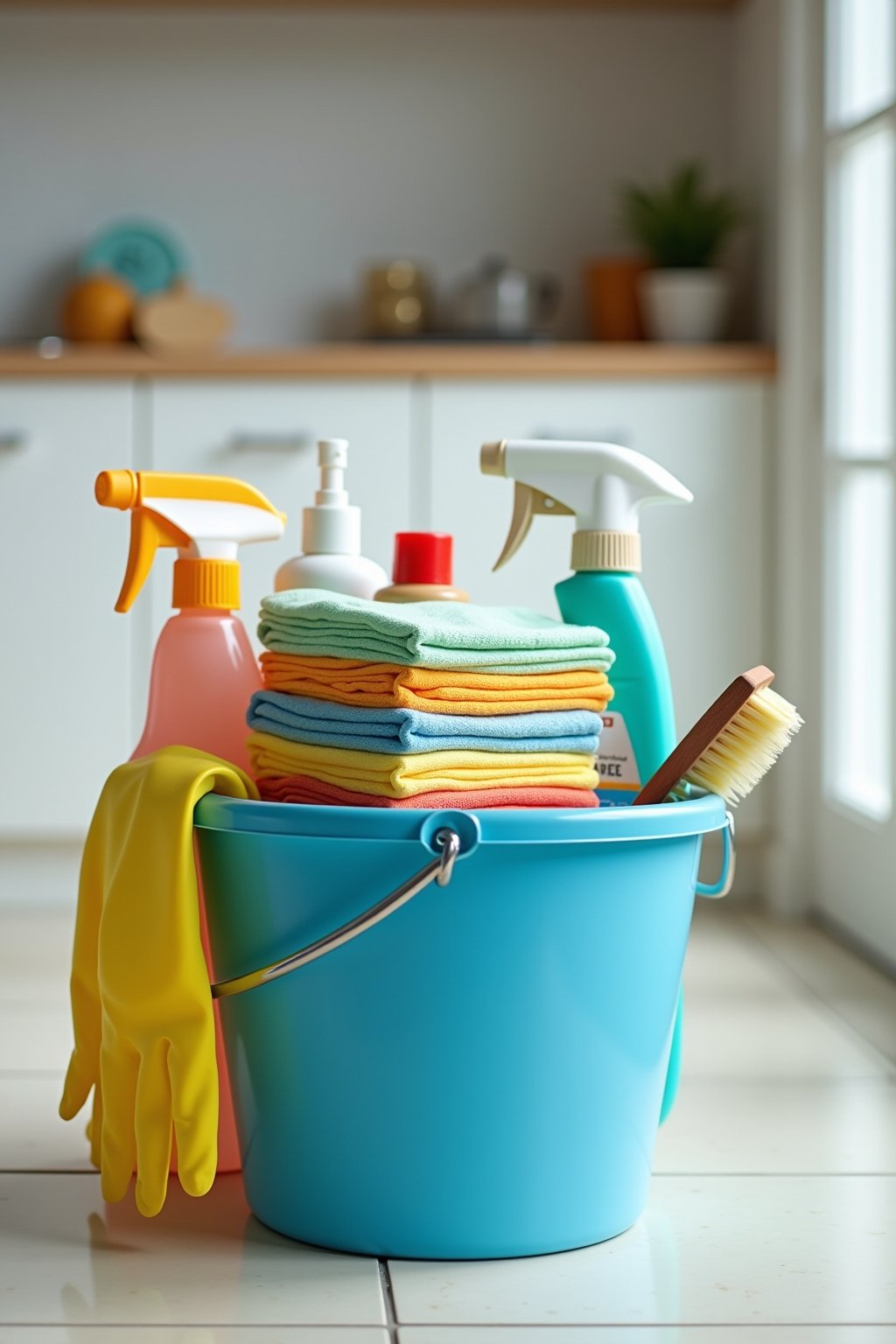
Stock up on these before you start so you don’t waste time running to the store mid-clean:
- All-purpose cleaner — for counters, surfaces, and general wiping; one large bottle covers the whole house
- Glass cleaner — for windows, mirrors, and glass surfaces; a vinegar-water spray works just as well
- Microfiber cloths (at least 10) — you’ll go through more than you think; have extras so you’re not reusing dirty ones
- Vacuum with attachments — the crevice tool and upholstery brush are essential for baseboards, furniture, and vents
- Bucket and mop — for hard floors in kitchen, bathroom, and entryway
- Baking soda and white vinegar — for drains, garbage disposal, oven, and deodorizing tasks
- Trash bags (large and small) — you’ll be decluttering as you go; have donation bags ready too
- Step stool — for reaching ceiling fans, top shelves, and light fixtures safely
The Method in Order
Kitchen Deep Clean (2-3 Hours)
Start with the kitchen because it’s usually the most time-intensive room and you’ll want your energy fresh. Begin by emptying the refrigerator completely, wiping every shelf and drawer with a baking soda solution (one tablespoon per quart of warm water), and checking expiration dates as you reload. Pull the refrigerator away from the wall and vacuum the coils and the floor beneath it — dust buildup on coils forces the fridge to work harder and increases your energy bill.
Next, tackle the oven. If you haven’t cleaned it recently, apply a baking soda paste to the interior, let it sit for 30 minutes, then wipe clean. Clean the stovetop including burner grates (soak them in hot soapy water while you work on other tasks). Empty every cabinet and drawer, wipe the interior surfaces, check for expired spices and food items, and reorganize as you reload. Wipe down the fronts of all cabinets, the backsplash, countertops, and small appliances. Finish by mopping the floor, including under the table and behind the trash can. Total estimated time: 2 to 3 hours depending on kitchen size.
Bathrooms Deep Clean (1-1.5 Hours Each)
For each bathroom, start at the top and work down. Dust the exhaust fan cover (remove it if possible and wash in the sink), light fixtures, and the top of the medicine cabinet. Clean the mirror with glass cleaner, then move to the countertop, sink, and faucet. Use an old toothbrush around the faucet base where buildup collects. Clean the toilet completely — lid, seat, base, and behind the bowl where dust accumulates.
Scrub the shower or tub with a bathroom cleaner, paying special attention to grout lines and the caulk edges where mold tends to start. If your grout is discolored, apply a baking soda and hydrogen peroxide paste, let it sit for 15 minutes, then scrub with a stiff brush. Empty the vanity drawers and cabinets, toss expired medications and products, wipe the interiors, and reorganize. Check your bath towels and washcloths — if they smell musty even after washing, they need to be replaced. Finish by mopping the floor, including behind the toilet and around the base of the vanity.
Bedrooms and Closets (1-2 Hours Each)
Strip all bedding including mattress protectors and pillow covers — wash everything on the hottest setting the fabric allows. While bedding is washing, sprinkle baking soda over the bare mattress, let it sit for 30 minutes, then vacuum it thoroughly with the upholstery attachment. Flip or rotate the mattress if the manufacturer recommends it. Dust all furniture surfaces, nightstands, lamps, and headboard. Wipe down light switches, door handles, and baseboards.
Closets are where the real transformation happens. Pull everything out. Sort into keep, donate, and trash piles. Be ruthless — if you haven’t worn something in a year, it goes. Vacuum the closet floor and wipe the shelves. Reorganize by category: everyday items at eye level, seasonal items up high, shoes on the floor or in a rack. This is also the time to swap seasonal wardrobes if you store off-season clothing separately. While you have momentum, vacuum under the bed and behind furniture — this is dust bunny territory that only gets attention during spring cleaning.
Living Room and Common Areas (1-2 Hours)
Dust ceiling fans (use a pillowcase slipped over each blade to catch the dust instead of sending it into the air), light fixtures, and the tops of tall furniture. Work your way down — dust shelves, entertainment centers, picture frames, and lampshades. Use a lint roller on fabric lampshades and a damp microfiber cloth on everything else. Remove couch cushions and vacuum the frame underneath, then vacuum the cushions themselves with the upholstery attachment.
Clean all glass surfaces: TV screen (dry microfiber only, no spray), mirrors, glass tabletops, and picture frame glass. Wipe down remotes, game controllers, and other frequently touched items with a disinfecting wipe. Check for cobwebs in ceiling corners and around windows. Wash or vacuum curtains and blinds — most fabric curtains can go in the washing machine on a gentle cycle. If you have area rugs, vacuum both sides and air them outside in direct sunlight for a few hours if possible. Sunlight naturally kills dust mites and freshens fibers. Finish by vacuuming or mopping the floor, moving furniture to reach hidden areas.
Laundry Room, Entryway, and Utility Spaces (1 Hour)
The laundry room is often the most neglected space during spring cleaning. Run an empty hot wash cycle with two cups of white vinegar to clean the washing machine drum and eliminate odor-causing bacteria. Wipe the rubber door gasket on front-loaders — this is a common mold spot. Clean the dryer lint trap housing with a long brush (not just the screen) to prevent fire hazards. Pull the dryer away from the wall and vacuum the vent hose connection.
For the entryway, wipe down the front door (inside and out), clean the doormat, and organize shoe storage. Wipe baseboards, light switches, and the coat closet interior. If you have a utility closet, pantry, or mudroom, empty it completely, wipe the shelves, and reorganize. These smaller spaces take 15 to 20 minutes each but make a disproportionate impact on how clean your home feels overall. Finish the day by taking out all trash and recycling, running your donate pile to the car, and doing a final walk-through to admire your work.
Windows, Walls, and Overlooked Details (1-2 Hours)
This is the section that separates a basic clean from a true spring clean. Wash all windows inside and out — use a squeegee for streak-free results, working from top to bottom. Clean the window tracks with an old toothbrush and soapy water (or the baking soda method detailed later in this article). Wipe all window sills and check for peeling paint or moisture damage while you’re at it.
For walls, do a spot-clean of scuff marks and fingerprints with a Magic Eraser or damp cloth with baking soda. Pay extra attention to walls around light switches, door frames, and hallways where hands naturally touch. Clean all vent covers — remove them, soak in soapy water for 10 minutes, scrub, dry, and replace. Dust or wipe the tops of door frames and crown molding. Replace HVAC filters if it’s been more than three months. Finally, check and replace batteries in smoke detectors and carbon monoxide detectors. Spring cleaning is the perfect annual reminder for these life-safety essentials.
If Yours Doesn’t Look Right
- Trying to do everything in one day — a thorough spring clean of a full house takes 10-15 hours; spreading it across two or three sessions prevents burnout and produces better results
- Cleaning in random order instead of room-by-room — jumping between rooms wastes time on setup and cleanup; finish one room completely before moving to the next
- Skipping the declutter step — cleaning around clutter is like mowing around weeds; you must remove things before you can properly clean the surfaces beneath them
- Forgetting to clean your cleaning tools — dirty microfiber cloths, clogged vacuum filters, and sour mop heads spread more dirt than they remove; start with clean tools
- Not opening windows during the process — fresh air circulation helps surfaces dry faster, reduces chemical fumes, and immediately makes your home smell fresher
Where This Shines
Small Apartment (4-6 Hours Total)
If you live in a studio or one-bedroom apartment, you can complete a thorough spring clean in a single day. Prioritize the kitchen, bathroom, and bedroom, then spend remaining time on windows and closet organization. Skip the “pull appliances from the wall” step if your layout doesn’t allow it — focus on the surfaces you can reach.
Family Home (10-15 Hours Total)
Spread the work across a full weekend. Saturday: kitchen, bathrooms, and laundry room. Sunday: bedrooms, living areas, and windows. Assign age-appropriate tasks to family members — kids can dust baseboards, sort closets, and wipe light switches. Making it a family effort cuts time dramatically and teaches valuable habits.
Prioritize If You’re Short on Time
If you only have three to four hours, focus on the highest-impact tasks: deep clean the kitchen (especially the fridge), one bathroom scrub-down, wash all bedding, and vacuum every room. These four tasks alone will make your entire home feel noticeably cleaner and fresher without requiring a full weekend commitment.
Common Questions
When is the best time to start spring cleaning?
Most people tackle spring cleaning in March or April, but the best time is whenever you have a free weekend and the motivation. If you wait for the “perfect” weekend, it never happens. Pick a date, block it on your calendar, and commit. The weather doesn’t matter as long as you can open a few windows for ventilation.
How long does a thorough spring clean take?
For a typical three-bedroom home, plan for 10 to 15 hours of active cleaning time. A one-bedroom apartment takes 4 to 6 hours. These estimates include decluttering, deep cleaning, and reorganizing. You can spread it across multiple days — there’s no rule that says spring cleaning has to happen all at once.
What should I do with things I declutter during spring cleaning?
Sort into three categories: trash, donate, and relocate. Bag donations immediately and put them in your car so they leave the house that day. Trash goes out the same day. Items that belong in a different room get relocated last, after all cleaning is done, so you’re not walking back and forth constantly.
Do I need to move furniture when spring cleaning?
For a thorough spring clean, yes — at minimum, vacuum behind and under sofas, beds, and dressers. You don’t need to move heavy pieces far; even shifting them a foot lets you reach the dust buildup behind them. For appliances like the fridge, pulling it out once a year to vacuum the coils makes a real difference in performance.
Should I clean room by room or task by task?
Room by room is significantly more efficient and satisfying. When you clean task-by-task (all dusting, then all vacuuming), you walk through the entire house multiple times. Room by room lets you fully complete a space, see the result, get the dopamine hit, and move to the next one with fresh motivation.
What is the most commonly skipped spring cleaning task?
Cleaning vent covers and replacing HVAC filters. Most people forget these exist between annual cleans. Dusty vent covers blow dust back into your rooms every time the system runs, and a clogged filter reduces air quality and forces your HVAC to work harder. Pop off the covers, wash them in soapy water, and swap the filter. It takes 15 minutes and improves your air quality immediately.