
My dog decided to make the guest bedroom carpet his personal bathroom while we were at work one Tuesday. I didn’t find it until that evening — the stain had already dried, and the smell hit me the second I opened the door. I panicked and grabbed whatever cleaning products were under the sink. Big mistake. The stain lightened slightly but the odor actually got worse over the next few days.
What I learned from that experience (and from far too much research afterward) is that pet urine requires a very specific removal approach. Regular carpet cleaners just mask the smell temporarily. The uric acid crystals in pet urine are incredibly stubborn, and unless you neutralize them properly, they reactivate every time humidity rises — which is why that “clean” spot starts smelling again on rainy days. Here’s the method that actually works, for both fresh and dried stains.
| ⏱ Time Required: | About an hour |
| 📈 Difficulty: | Medium |
| 💰 Supplies Cost: | $8-15 |
| 🔄 How Often: | Once a year |
Why This Order Matters
- Targets uric acid crystals specifically — unlike general carpet cleaners, enzyme-based solutions break down the uric acid that causes lingering odor
- Works on both fresh and dried stains — the approach differs depending on timing, and this guide covers both scenarios completely
- Prevents your pet from re-marking — if any trace of scent remains, pets will return to the same spot. Proper enzyme treatment eliminates the scent at the molecular level
- Saves your carpet from permanent damage — acting quickly and correctly prevents the urine from bleaching carpet dye or degrading the backing
- Uses affordable, accessible supplies — enzyme cleaners, white vinegar, and baking soda are all you need for most situations
- Tells you when to call a professional — some situations genuinely require pro equipment, and knowing the difference saves money and frustration
What to Have Ready
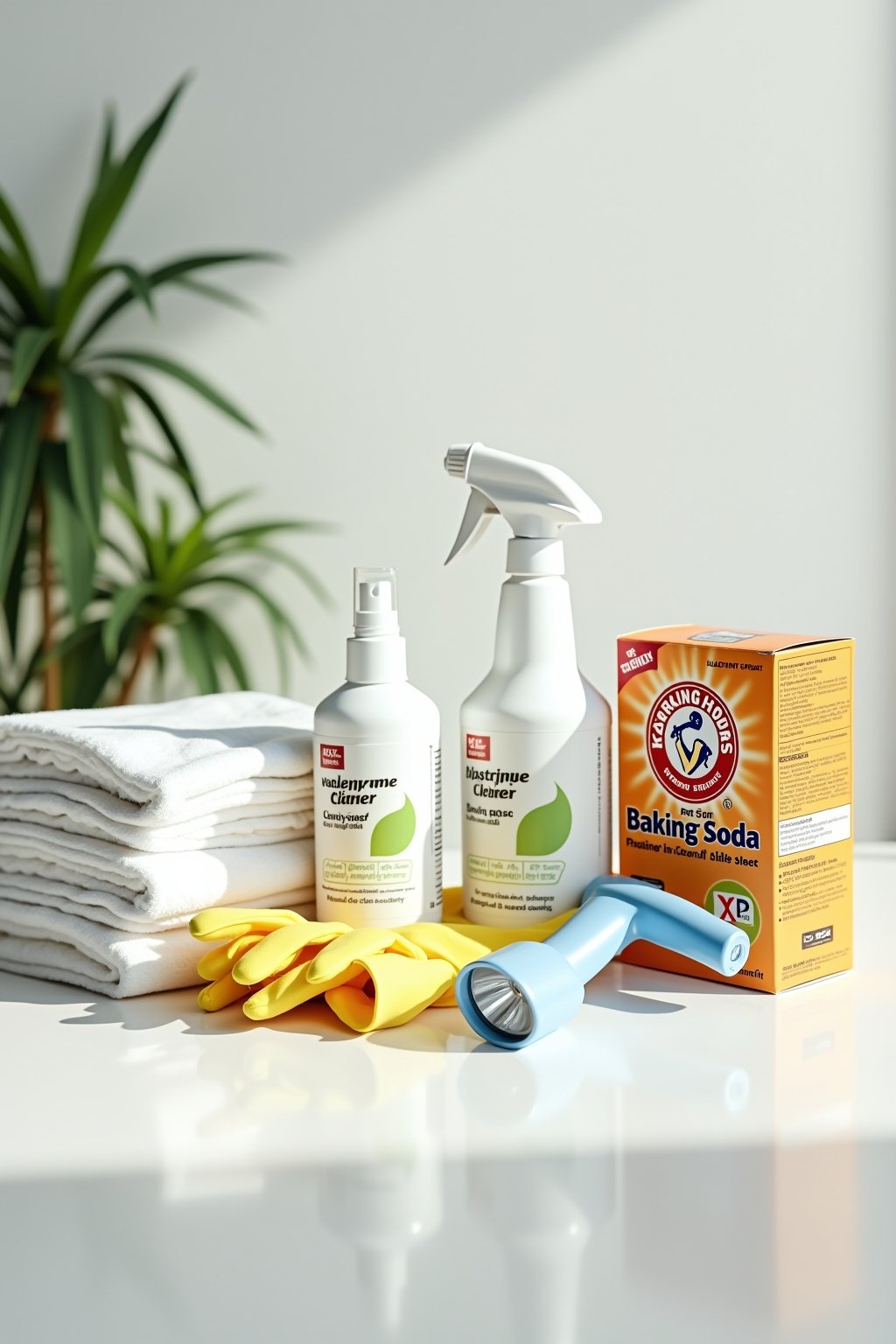
These supplies handle everything from fresh accidents to old dried stains. Enzyme cleaner is the critical one — do not skip it:
- Enzyme-based pet stain cleaner — the enzymes literally digest the uric acid crystals that cause permanent odor. This is not optional for pet urine
- White distilled vinegar — neutralizes the ammonia in fresh urine and helps lift stains from carpet fibers
- Baking soda — absorbs moisture and odor from carpet padding below the surface
- Clean white cloths or paper towels — white prevents dye transfer onto wet carpet. You will need a lot of them for blotting
- Hydrogen peroxide (3%) — for stubborn yellow staining after the initial cleaning. Test on a hidden area first as it can lighten some carpet dyes
- UV black light flashlight — pet urine fluoresces under UV light, revealing hidden old stains you might have missed
- Heavy books or a weighted object — for pressing cloths into the carpet during the blotting stage to reach deep into the padding
Stepping Through
For Fresh Stains: Blot Immediately and Thoroughly
Speed matters enormously with fresh pet urine. The faster you blot, the less urine soaks into the carpet padding — and the padding is where the worst smells live. Stack several layers of clean white paper towels or cloths over the wet spot and press down firmly with your foot or a heavy book. Do not rub or scrub. Rubbing pushes urine deeper into the fibers and spreads the stain outward.
Replace the towels as they absorb moisture and repeat until almost no dampness transfers to fresh towels. This may take 5-10 rounds of blotting for a large accident. The goal is to remove as much liquid as physically possible before applying any cleaning solution. Every bit of urine you blot up now is urine that won’t soak into the padding and cause long-term odor problems.
Apply the Vinegar Solution
Mix one part white vinegar with one part cool water in a spray bottle. Saturate the stained area generously — you want the solution to reach the same depth the urine did, which means the carpet padding needs to be reached too. The vinegar neutralizes the ammonia in the urine and begins breaking down the stain. Let it sit for 5-10 minutes.
Blot the area again with fresh white towels, pressing firmly to draw the vinegar solution (and dissolved urine) back up from the padding. Sprinkle a generous layer of baking soda over the damp area — about a quarter inch thick. The baking soda absorbs remaining moisture and odor while also creating a slightly alkaline environment that helps deodorize. Leave the baking soda undisturbed for at least 8 hours, ideally overnight. Vacuum it up thoroughly the next day.
Apply Enzyme Cleaner (The Critical Step)
This is the step that separates temporary fixes from permanent solutions. After vacuuming up the baking soda, saturate the area with enzyme-based pet stain cleaner according to the product directions. Enzyme cleaners contain specific bacteria that produce enzymes which literally digest uric acid crystals — the component of pet urine that causes lingering odor and staining that other cleaners cannot touch.
Soak the spot thoroughly. The enzyme solution needs to reach everywhere the urine went, including deep into the carpet padding. Cover the treated area with a damp towel or plastic wrap to keep the enzyme solution moist — the enzymes only work while wet. Leave it covered for the time specified on your product (usually 12-24 hours). Do not rush this step. The enzymes need extended contact time to fully break down the uric acid. After treatment, blot up excess moisture and allow the area to air dry completely.
For Dried or Old Stains: Find Them First
If you can smell pet urine but can’t see a stain, grab a UV black light flashlight. Turn off all the lights and slowly scan the carpet with the UV light held about 1-2 feet above the surface. Pet urine fluoresces a pale yellow-green under UV light and is unmistakable once you see it. Mark the boundaries of each stain with painter’s tape so you can find them again with the lights on.
Dried stains require a more aggressive approach than fresh ones. First, re-wet the stain with cool water to rehydrate the dried urine crystals. Blot up the water, then apply your vinegar solution and follow the same steps as above. You may need to repeat the enzyme cleaner application two or even three times for very old stains. Between each application, let the area dry completely and then smell it. If any odor remains, apply another round. Patience is more effective than using stronger chemicals, which can damage carpet fibers.
Address Stubborn Yellow Staining
After the odor is gone, you may still have a yellowish discoloration on light-colored carpet. Mix one part 3% hydrogen peroxide with a tiny drop of dish soap. Before applying to the stain, test this mixture on a hidden area of carpet (inside a closet or behind furniture) and wait 30 minutes to ensure it doesn’t lighten the carpet dye.
If the test spot looks fine, apply the peroxide mixture to the yellow stain, let it sit for 30 minutes, then blot and rinse with cool water. For particularly stubborn staining, sprinkle baking soda over the peroxide solution and let the combination fizz and work for an hour before blotting. This is usually enough to remove visible yellow discoloration from the carpet fibers without professional intervention.
Know When to Call a Professional
There are situations where DIY methods won’t be enough. If the urine has soaked through the carpet backing and into the subfloor (common with repeated accidents in the same spot), you may need professional hot water extraction or even carpet padding replacement. Signs you need professional help include: the smell returns after multiple enzyme treatments, the carpet feels stiff or crunchy in the area, there is visible damage to the carpet backing when you pull it up, or the stain covers a very large area.
Professional carpet cleaners have truck-mounted extraction equipment that can pull moisture and contaminants from much deeper in the carpet system than any home method can reach. For severe cases, they may treat the subfloor with an enzyme or sealant before re-laying the carpet. This typically costs $100-$250 per room but saves a carpet that would otherwise need full replacement. Honest pros will tell you when replacement is genuinely the only option.
Working Backwards From a Problem
- Using a steam cleaner on fresh urine — the heat from a steam cleaner permanently bonds urine proteins to carpet fibers, making the stain nearly impossible to remove and locking in the odor for good
- Rubbing instead of blotting — rubbing spreads the urine outward, pushes it deeper into the padding, and damages carpet fibers. Always press straight down and lift straight up
- Using ammonia-based cleaners — ammonia smells similar to urine to animals, which actually encourages your pet to mark the same spot again. Vinegar is a much better first-response product
- Skipping the enzyme cleaner — vinegar and baking soda reduce the smell temporarily but only enzyme cleaners destroy the uric acid crystals that cause permanent odor. This step is not optional
- Not treating the carpet padding — most pet urine soaks through the carpet into the padding underneath. If you only treat the carpet surface, the padding continues to smell and the odor wicks back up
Times This Earns Its Place
Living Room and High-Traffic Carpet
Accidents on living room carpet are the most urgent because they are the most visible and the hardest to hide. Treat immediately with the blot-vinegar-enzyme sequence. Keep a small enzyme cleaner spray bottle in the room if accidents are frequent. For homes with pets and light-colored carpet, consider placing a washable area rug over the most accident-prone spots to protect the carpet underneath.
Bedroom Carpet
Bedroom urine stains are often discovered late because the room may not be occupied during the day. Use the UV black light to do a full scan of bedroom carpet if you notice an unexplained odor. Old stains in bedrooms often require two or three rounds of enzyme treatment because the urine has had time to fully crystallize in the fibers and padding.
Carpet on Stairs
Stair carpet is difficult to treat because you cannot saturate it as heavily — gravity pulls liquid through to the stair treads below. Use a more targeted approach: apply enzyme cleaner sparingly with a cloth rather than soaking, and place weighted towels on each treated step. Blot from below the stair nose where possible. If stair carpet repeatedly gets soiled, consider replacing it with a washable stair runner.
Frequently Asked Questions
How long does pet urine smell last in carpet?
Without proper treatment, pet urine odor can last years. The uric acid crystals that cause the smell are extremely stable and reactivate with humidity, which is why old stains seem to smell worse on rainy days. Proper enzyme treatment fully eliminates the odor within 24-48 hours.
Does vinegar remove pet urine smell from carpet?
Vinegar neutralizes the ammonia component of pet urine and reduces the initial smell, but it does not break down uric acid crystals. You need an enzyme cleaner in addition to vinegar for a permanent fix. Vinegar is an excellent first step but should not be your only step.
Can old dried pet urine stains be removed from carpet?
Yes, in most cases. Re-wet the dried stain with cool water to rehydrate the crystals, then follow the full cleaning process. You may need to repeat the enzyme treatment 2-3 times for very old stains. If the urine has damaged the carpet backing or subfloor, you may need professional help or partial carpet replacement.
Why does my carpet still smell after cleaning pet urine?
The most common reason is that the cleaning solution did not reach the carpet padding, where most of the urine has soaked. Another reason is using non-enzyme cleaners that mask odor without destroying uric acid. Apply enzyme cleaner generously enough to saturate through to the padding, cover to keep moist, and allow full contact time.
Will professional carpet cleaning remove pet urine odor?
Professional hot water extraction can remove pet urine from carpet fibers and padding effectively. However, if urine has reached the subfloor, even professional cleaning may not be enough. Good professionals will be honest about whether treatment or replacement is the better option for your situation.
How do I prevent my pet from urinating on the carpet?
After cleaning, the area must be completely scent-free (to the pet, not just to you) to prevent re-marking. Enzyme cleaners are essential for this. Beyond cleaning, address the root cause: medical issues, incomplete house training, stress, or insufficient access to outdoor areas. A vet visit is warranted if accidents suddenly increase.