
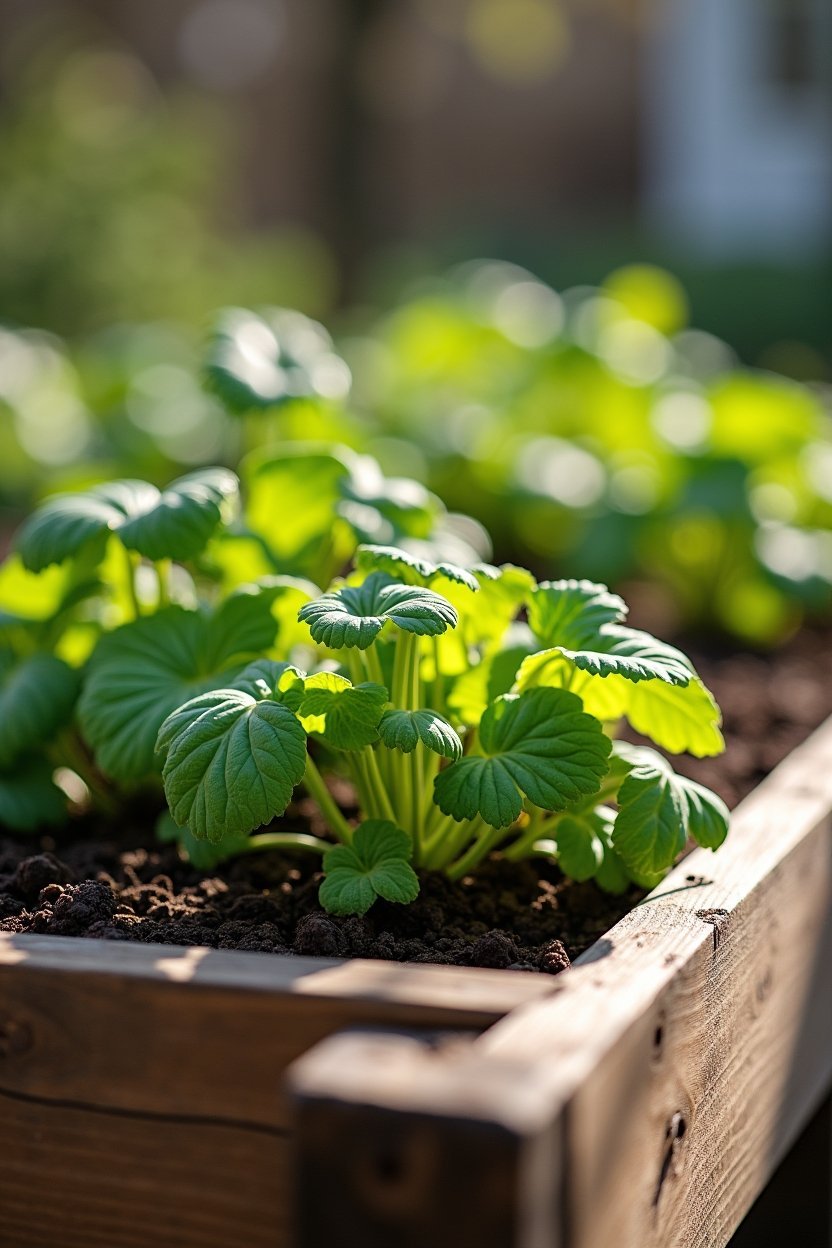
A complete guide to raised bed gardening start a vegetable garden from scratch is the fastest path from “I want to grow food” to actually growing food. It sidesteps most of the problems that stop people from gardening — poor native soil, drainage issues, persistent weeds, and the overwhelming scale of a traditional in-ground garden. And contrary to what garden center pricing might suggest, you do not need to spend a fortune to build one that lasts for years and produces abundantly.
Why a 4×8 Raised Bed Is the Perfect Starting Size
The 4×8 format gives you 32 square feet of growing space — enough for a meaningful harvest — while keeping every inch of the bed reachable from the sides without stepping in. At 8 feet long, the bed is long enough to grow dedicated rows of different crops and organize by harvest timing. It is also small enough that filling it with quality soil does not cost a fortune.
Choosing Your Materials: What Wood to Use
Cedar is the classic raised bed material. It contains natural oils that resist rot and insects without any chemical treatment, making it completely safe for beginner’s guide to vegetable gardenings. A cedar bed built with 2×8 boards can last 10 to 20 years. If you prefer a no-cut option, a cedar raised bed kit, 4×8 ft comes pre-cut with interlocking corners, requires no tools beyond a rubber mallet, and can be assembled in under 20 minutes for around $60 to $80.
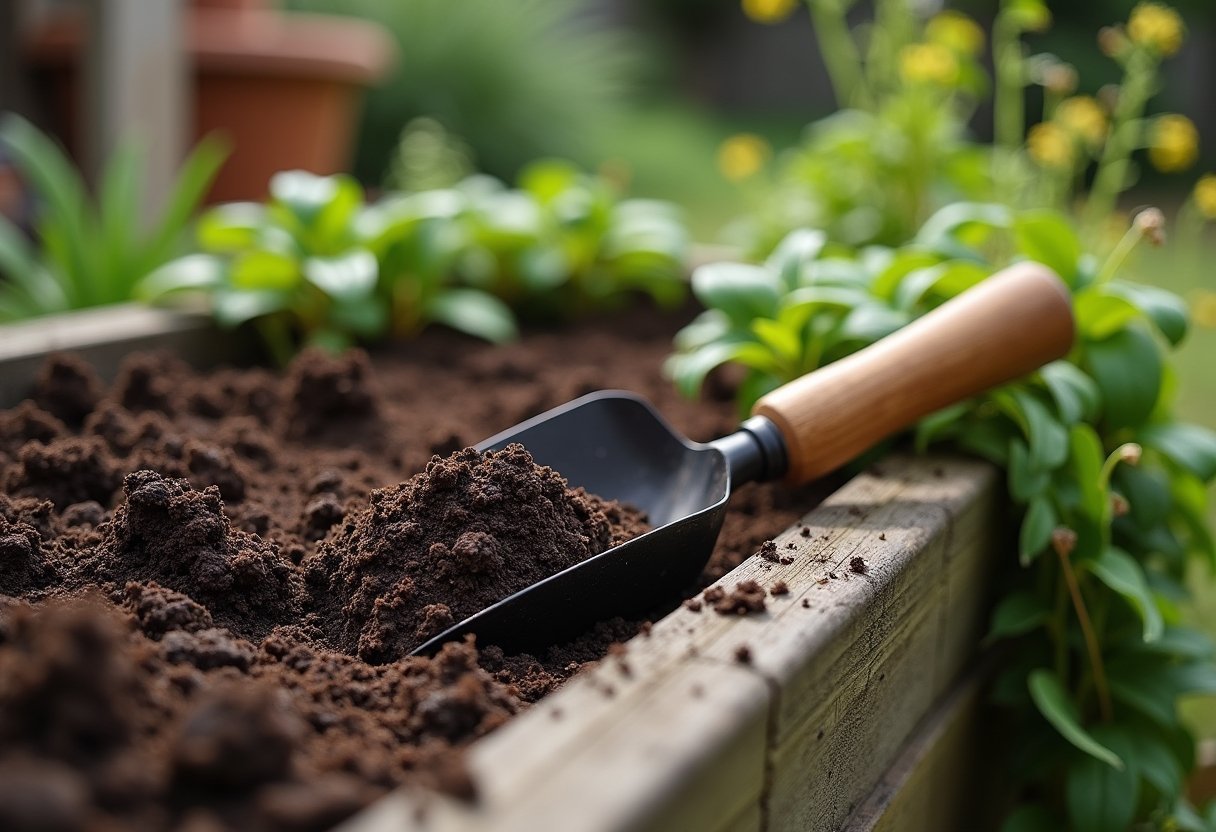
Douglas fir is a more affordable alternative with decent rot resistance, lasting 5 to 8 years. Avoid pressure-treated lumber in food beds, and never use railroad ties or old utility poles — they leach creosote into the soil.
Step-by-Step: Building a 4×8 Raised Bed
Step 1: Choose a location with at least 6 hours of direct sunlight daily. Orient the long side east to west so taller plants on the north end do not shade shorter ones. Step 2: Lay down a layer of cardboard over grass or weeds where the bed will sit to smother existing vegetation. Wet the cardboard thoroughly. Step 3: Assemble the frame. Stand boards on their edges and screw short ends to inside faces of long boards. Pre-drill holes to prevent splitting. Step 4: Set the frame over your cardboard and check that it is reasonably level. The weight of the filled soil holds it in place without anchoring.
The Soil Mix: The Most Important Investment
The native soil underneath your bed does not matter — your plants grow entirely in what you put inside the frame. The classic recipe is one-third start composting at home, one-third peat moss or coconut coir, and one-third coarse vermiculite. For many beginners, a quality organic vegetable garden soil blended with a bag of compost is the simpler path. Plan for roughly 6 to 8 cubic feet for a 4×8 bed that is 8 inches deep. Never use straight topsoil or garden soil — both compact when watered repeatedly.
Watering Your Raised Bed Efficiently
A flat soaker hose snaked in an S-pattern through a 4×8 bed covers the entire planting area. Connect it to a simple timer on your create an outdoor living space spigot and set it to water for 30 to 45 minutes in the early morning. This consistent schedule dramatically improves yields and reduces the inconsistency that causes blossom drop in tomatoes.
Layout Planning: The Square Foot Method
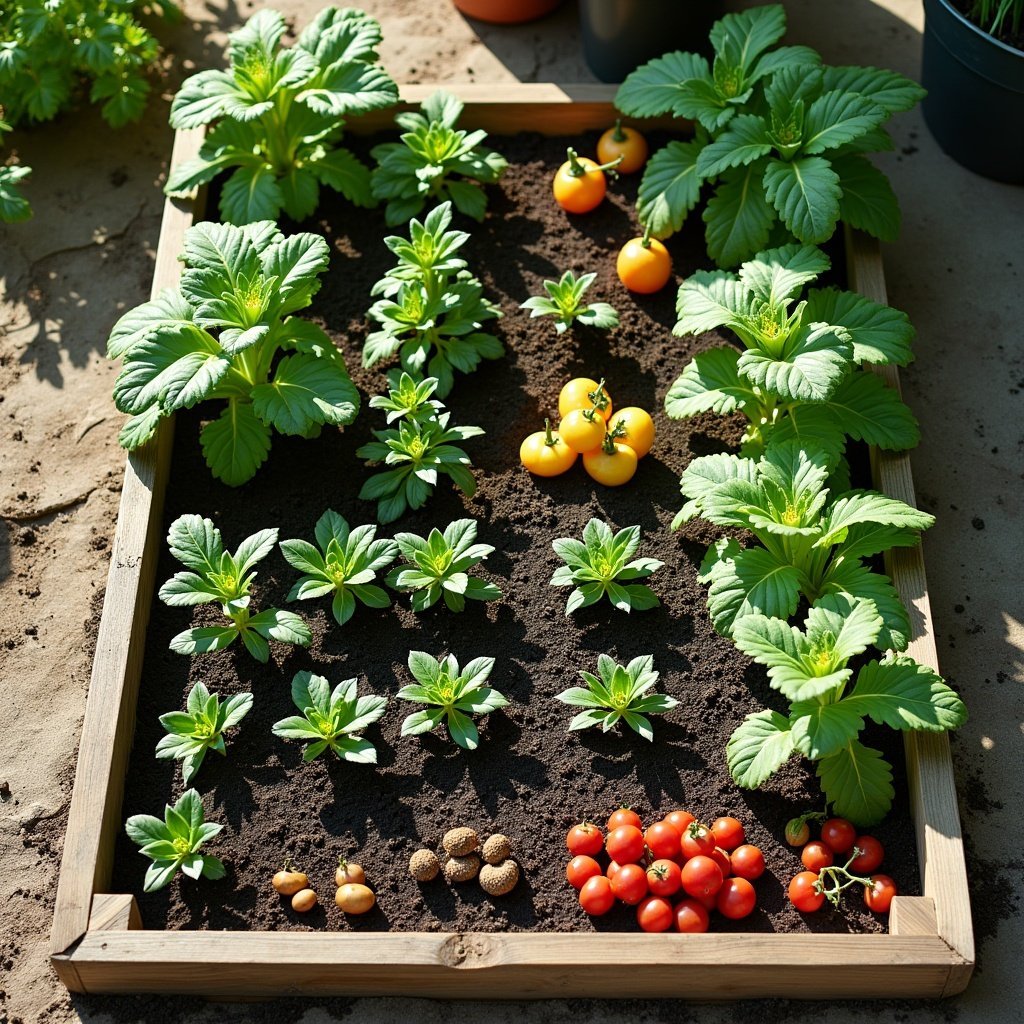
Divide your 4×8 bed into 32 one-foot squares. Each square gets a certain number of plants: 1 per square for tomatoes, peppers, eggplant, broccoli; 4 per square for lettuces, Swiss chard, basil; 8 per square for green onions, beets, spinach; 16 per square for carrots and radishes. Plant the tallest crops on the north end of the bed.
Companion Planting Basics
Tomatoes + Basil: basil is widely believed to repel aphids and whiteflies. Carrots + Onions: onions repel carrot fly; carrots repel onion fly. Marigolds throughout: French marigolds at the corners deter nematodes and many pest insects while attracting pollinators that benefit everything in the bed.
Seeds vs. Transplants
Direct sow seeds for: carrots, radishes, green beans, beets, spinach, and lettuce. Use transplants for: tomatoes, peppers, eggplant, and broccoli. A vegetable garden seed collection is a practical starting point that includes most essentials in one purchase. You do not need many tools — a hand trowel, a cultivator, and a transplanting spade cover all the bases. A quality garden hand tool set, 3-piece keeps the total project budget firmly under $100. For more ideas, explore our gardening tips.
Products Featured in This Article
- Greenes Fence Premium Cedar Raised Garden Bed Kit, 4×8 ft
- Miracle-Gro Organic Choice Vegetable and Herb Garden Soil
- Gilmour Flat Soaker Hose, 25 ft
- Burpee Vegetable Garden Seed Collection, 12-pack
- Fiskars Ergo Garden Hand Tool Set, 3-piece