
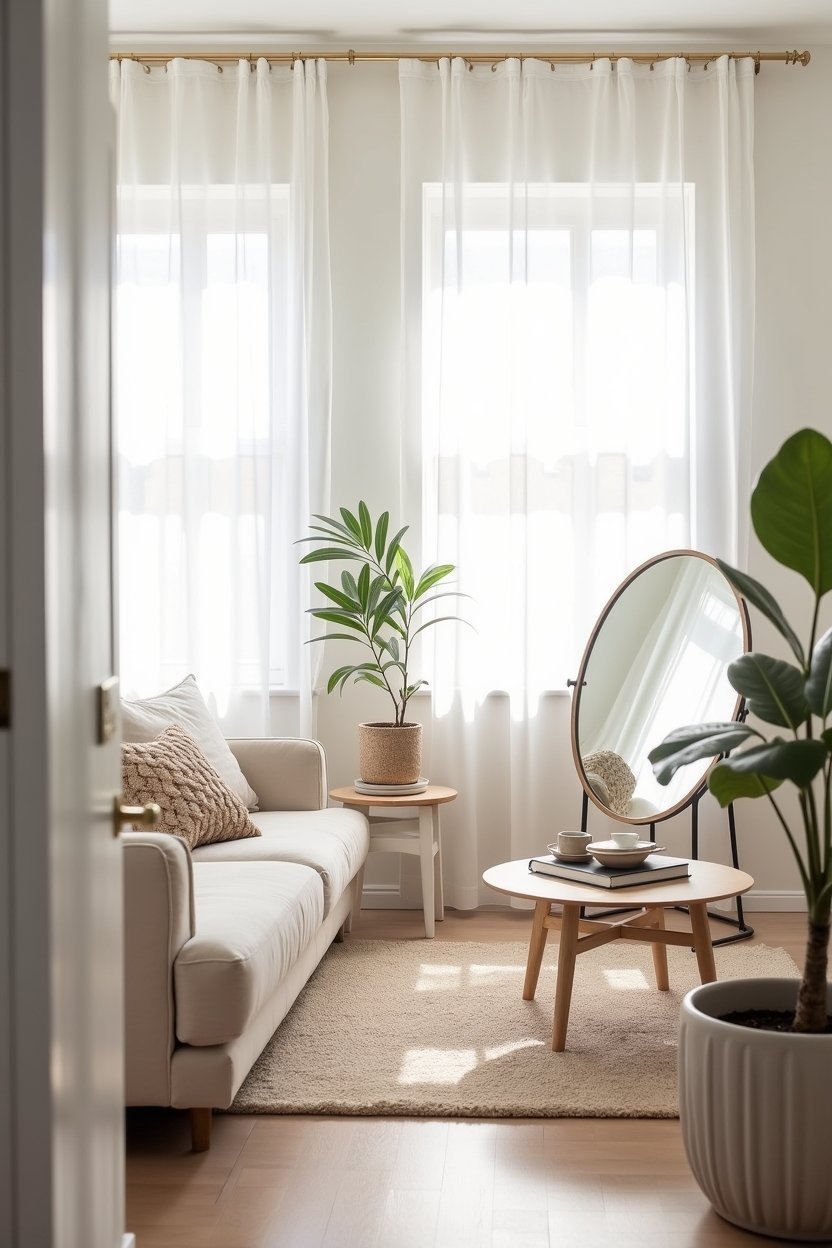
A small cozy living room decor ideas is not a design problem. It is a design challenge — and one that, when handled well, produces some of the most intentional and beautifully composed spaces imaginable. The difference between a small living room that feels cramped and one that feels cozy and considered comes down almost entirely to the choices you make: what you put in, what you leave out, and how you use light, proportion, and visual tricks to redefine the space.
1. Hang a Large Round Mirror
A mirror is the single most effective tool for making a small $100 living room refresh feel larger, and its effectiveness scales with its size. A large one — ideally at least 30 to 36 inches in diameter — creates a genuine sense of expanded space by reflecting light and the rest of the room back at you. Hang a large round mirror with a minimal or natural wood frame on the wall directly opposite your largest window to double the natural light in the room.
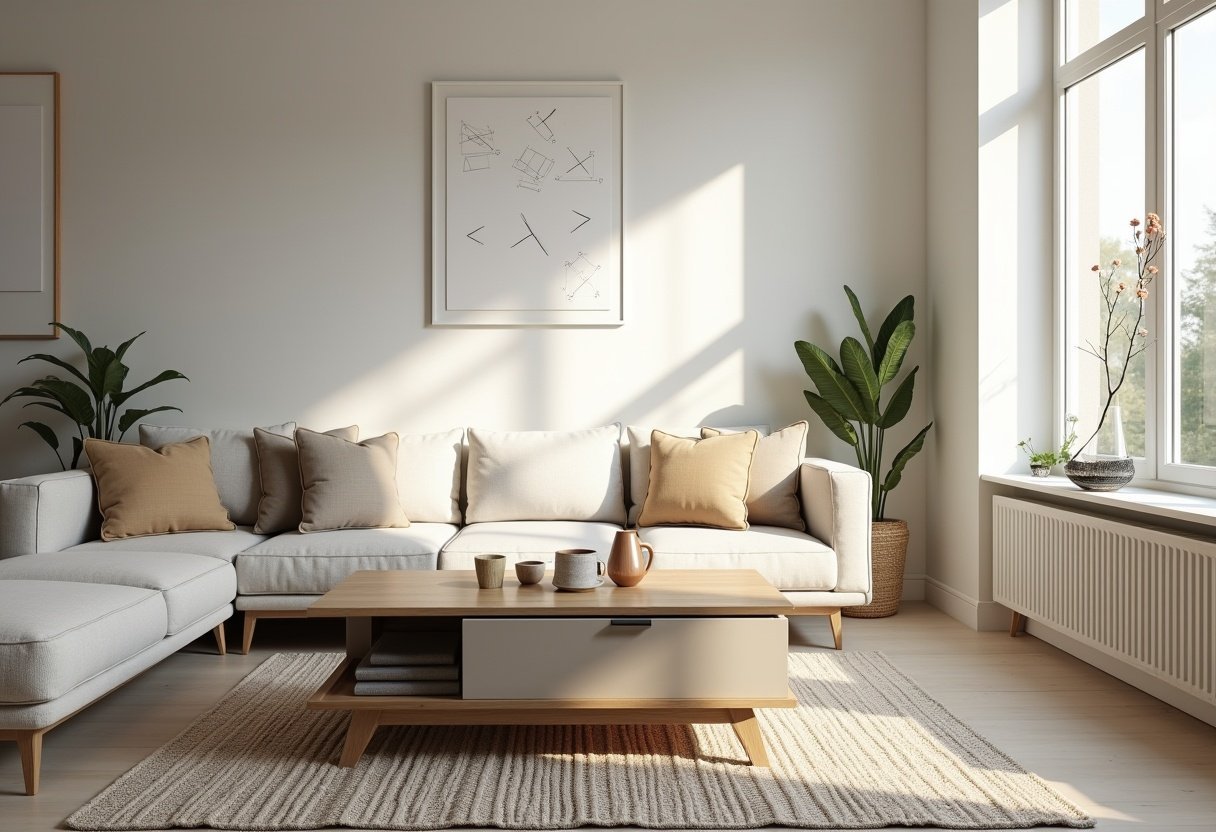
2. Choose a Convertible Coffee Table
In a small living room, every piece of furniture must earn its how to clean every type of floor space by doing more than one job. A convertible coffee table that lifts to dining height or extends into a work surface gives you a dining table, a desk, and a coffee table in the footprint of one small piece of furniture.
3. Install Floating Shelves Instead of Bookcases
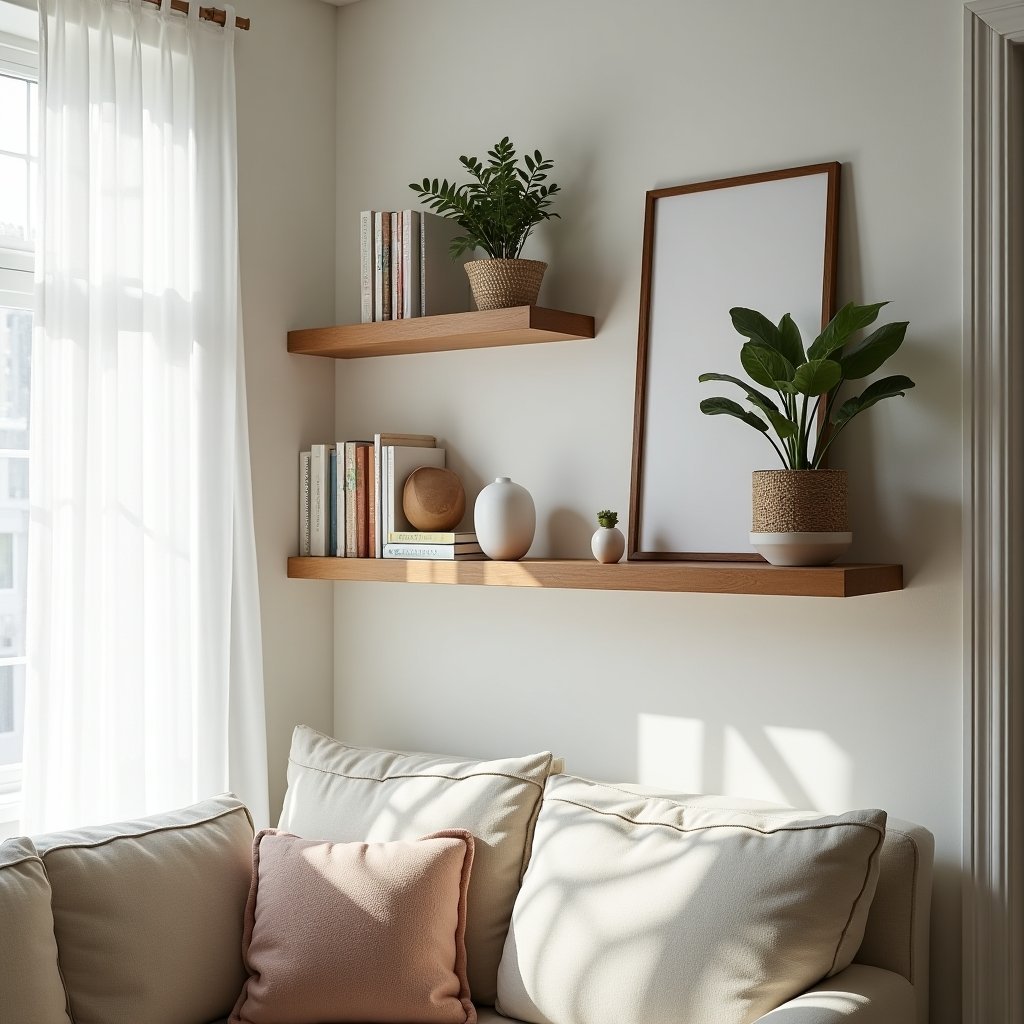
Freestanding bookcases take up floor space that a small living room cannot spare. Floating shelves mounted directly to the wall give you the same storage and display capacity while leaving the floor completely clear. Install them in a vertical arrangement to draw the eye upward and emphasize ceiling height.
4. Use Sheer Curtains at Full Ceiling Height
Install sheer curtains mounted as close to the ceiling as possible, letting them fall all the way to the floor. This makes the ceiling appear higher and allows maximum natural light to filter through. Sheer white or ivory linen curtains in a small living room are transformative.
5. Ground the Space With a Correctly Sized Accent Rug
A small rug in a small room actually makes the room feel smaller. A properly sized rug — large enough that the front legs of all your major seating pieces rest on it — unifies the seating area and makes the room read as larger. A low-pile accent rug in a light neutral or subtle geometric pattern keeps the floor visually open while adding warmth.
6. Embrace a Consistent Light Color Palette
When walls, large furniture pieces, and window treatments share a similar light, warm tone — creamy white, warm greige, pale sage, soft linen — the room’s boundaries blur slightly and the space feels more expansive. Layer warm whites with natural textures: a linen sofa, rattan side table, cotton throw, jute rug.
7. Choose Furniture With Visible Legs
Furniture that sits directly on the floor visually cuts the room off at the piece’s height. Furniture with visible legs allows light and sight lines to pass underneath, which keeps the visual field open. Prioritize sofas on raised legs, side tables with slender frames, and armchairs with visible feet.
8. Use Vertical Storage to Draw the Eye Up
Using vertical storage — tall floating shelf arrangements, a floor-to-ceiling plant in a corner, or a large piece of vertical art — trains the eye to travel upward, which makes ceilings feel higher and rooms feel larger. A single tall, dramatic plant like a fiddle leaf fig or monstera in a corner takes up minimal floor space while filling vertical space with organic texture.
9. Arrange Furniture Away From the Walls
The instinct in a small living room is to push all the furniture against the walls. In practice, this makes a room feel smaller and less cohesive. Instead, pull the sofa and chairs a few inches away from the walls and position them in a conversation-focused cluster. This paradoxically makes the room feel larger by making it feel more intentionally designed.
10. Edit Ruthlessly and Rotate Regularly
No amount of mirror placement or curtain height will compensate for a small living room that is overfilled. Keep the pieces you love most, store or donate the rest, and resist the urge to fill every surface. Leave some surfaces completely empty. The negative space is not a gap to be filled — it is part of the design. For more inspiration, browse our home decor tips. For more ideas, explore our home decor ideas.
Products Featured in This Article
- Large Round Mirror, 32–36 Inch, with Natural Wood or Minimal Metal Frame
- Convertible Lift-Top Coffee Table with Storage
- Floating Wall Shelves Set, White or Natural Wood, Set of 3
- Sheer White or Ivory Linen Curtains, Floor-Length, Set of 2 Panels
- Light Neutral Area Rug in Cream or Warm Beige, 8×10 or 5×8