
I have a confession: I avoided cleaning my baseboards for an embarrassingly long time because the thought of crawling around on my hands and knees through every room in my house made me want to pretend baseboards didn’t exist. I’d clean the floors, wipe the counters, scrub the bathrooms — and completely ignore the inch-thick layer of dust collecting on those trim boards running along every wall.
Then a friend showed me her dryer sheet method and everything changed. She literally wiped her baseboards while standing up, chatting with me, not even really paying attention — and they looked perfect. That moment sent me down a rabbit hole of no-bend baseboard cleaning methods, and I can now confirm that there are at least five excellent ways to clean baseboards without ever touching the floor. Here are all of them.
| ⏱ Time Required: | 20-30 minutes |
| 📈 Difficulty: | Easy |
| 💰 Supplies Cost: | $0-5 |
| 🔄 How Often: | Monthly |
Why It Stays Together
- Eliminates the biggest barrier to baseboard cleaning — the physical discomfort of bending, kneeling, and crawling is the reason most people never clean their baseboards. Removing that barrier means the job actually gets done
- Five different methods for different situations — some methods are better for dust, some for scuffs, and some for sticky grime. Having options means you can choose the right one for your baseboards’ current condition
- Each method takes 10-15 minutes for a full house — standing up and moving through rooms is dramatically faster than crawling from room to room on your knees
- Works on all baseboard materials — painted wood, MDF, vinyl, and stained wood baseboards all respond well to these methods
- Prevents dust and allergen buildup — baseboards are a major dust collector and cleaning them regularly improves indoor air quality, especially for allergy sufferers
- Uses items you already own — dryer sheets, old socks, a Swiffer, your vacuum, and a magic eraser are common household items that double as baseboard tools
What You’ll Need
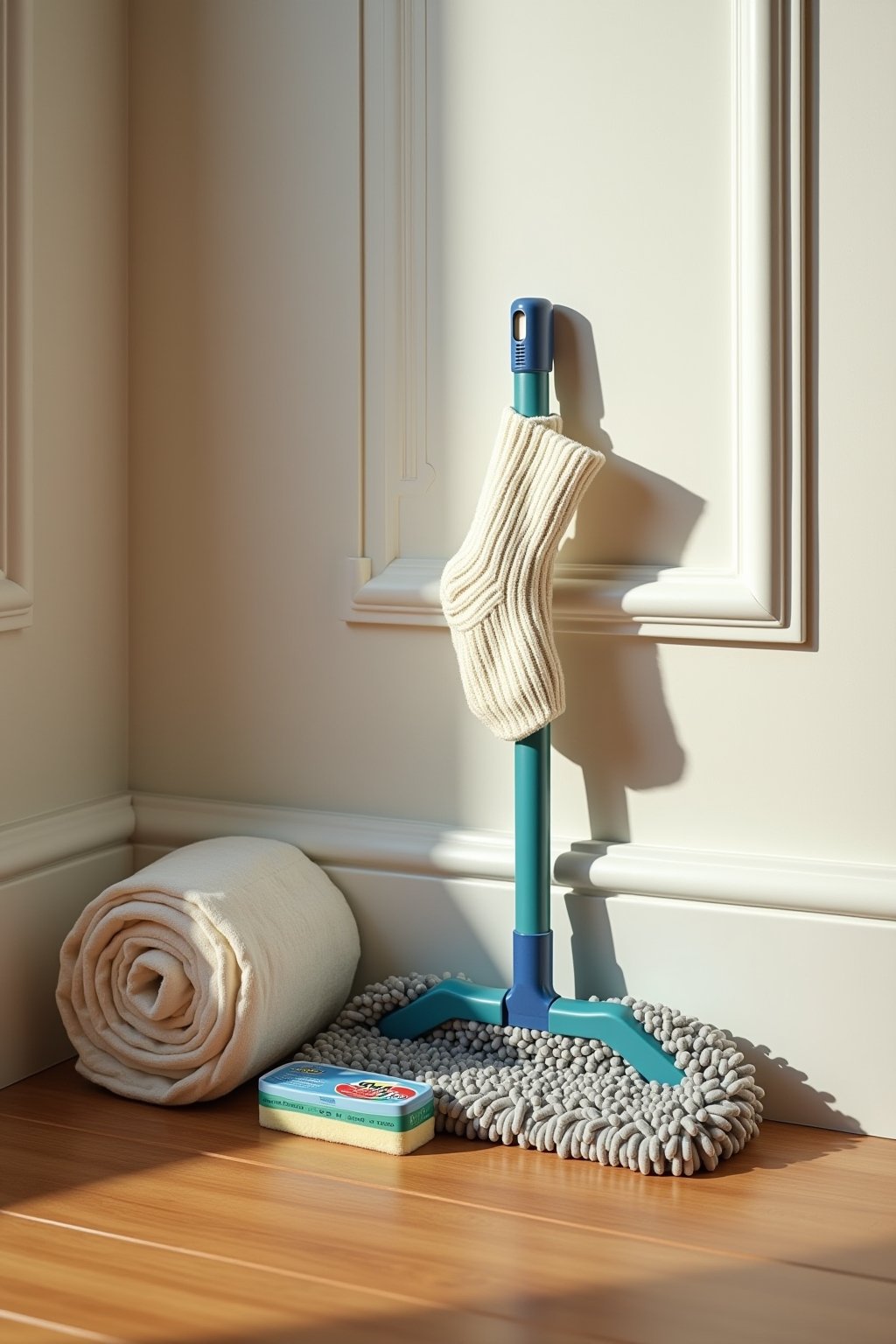
You do not need all of these — choose the method that appeals to you and grab the supplies for that one. Here are the items for all five methods:
- Dryer sheets (used or new) — for the dryer sheet dust-and-repel method
- An old tube sock and a yardstick or paint stirrer — for the DIY baseboard wand method
- A flat-head mop or Swiffer with dry cloths — for the stand-up mop method
- Vacuum with a crevice or brush attachment — for the quickest dust removal
- Magic eraser on a stick or extension handle — for scuff marks and sticky spots without bending
- Rubber band or hair tie — for securing a sock or cloth to the yardstick
Phase by Phase
Method 1: The Dryer Sheet Slide
This is the method that converted me. Take a dryer sheet (used ones work just as well as fresh) and wrap it around the end of a flat-head mop, Swiffer, or even a yardstick. Secure it with a rubber band. Now simply glide the dryer sheet along the baseboard while standing upright. The dryer sheet picks up dust, hair, and light cobwebs in one pass.
Here is the real magic: dryer sheets contain anti-static agents that leave an invisible coating on the baseboard after wiping. This coating repels dust, meaning your baseboards stay cleaner longer after each wipe. Fresh dryer sheets work slightly better for this anti-static effect, but used ones are perfectly fine for the actual cleaning. One dryer sheet can handle 2-3 rooms before it needs replacing. Do this once a week while you are already sweeping or mopping and your baseboards will never accumulate visible dust.
Method 2: The Sock-on-a-Stick Wand
This DIY approach is surprisingly effective and costs nothing. Pull an old tube sock over the end of a yardstick, broom handle, or paint stirrer. Secure it at the top with a rubber band. For dry dusting, use the sock as-is. For a deeper clean, lightly dampen the sock with warm water and a drop of all-purpose cleaner before attaching it to the stick.
Slide the sock along the top edge of the baseboard first (where the most dust accumulates), then wipe the face of the baseboard. The soft cotton texture of the sock is gentle enough for painted surfaces but textured enough to grab dust and light grime. When one side of the sock gets dirty, rotate it to a clean area. When the whole sock is dirty, toss it in the wash and grab another. This method gives you more control than a mop-based approach because the narrow stick can get into corners and behind furniture easily.
Method 3: The Flat Mop or Swiffer Method
If you already own a Swiffer or any flat-head mop, you already have a baseboard cleaning tool. Attach a dry Swiffer cloth or a microfiber mop pad and tilt the mop head sideways so it runs along the baseboard while you walk. The flat profile of these mop heads means they make full contact with the baseboard surface and pick up dust efficiently.
For a deeper clean, switch to a damp Swiffer cloth or lightly spray your microfiber pad with a 50/50 vinegar-water solution. The slight moisture picks up sticky dust and light scuffs that a dry cloth misses. This method is fastest for long, straight hallways and rooms without much furniture against the walls. In rooms with furniture against every wall, Method 2 or Method 5 may work better for accessing the baseboards behind couches and beds without moving anything.
Method 4: The Vacuum Attachment Express
This is the fastest method by far, and perfect for regular maintenance. Use your vacuum’s brush attachment or crevice tool. The brush attachment is ideal because the soft bristles dislodge dust from the baseboard while the suction removes it immediately. Simply walk along each wall, holding the vacuum wand at baseboard height. No wiping, no cloths, no solution — just vacuum and move on.
The crevice tool is particularly useful for the gap between the baseboard and the floor, where dust bunnies and pet hair tend to accumulate. Angle it into that crevice and run it along the length of each wall. If you are already vacuuming the floor, adding the baseboard pass to your routine adds only 5 minutes to the total job. Robot vacuums with edge-cleaning modes can also maintain baseboards surprisingly well between manual deep cleans, though they will not match the thoroughness of a manual pass with a brush attachment.
Method 5: The Magic Eraser on a Handle
For baseboards with scuff marks, sticky residue, or grime that the other methods won’t remove, a magic eraser (melamine sponge) is the answer. The trick to using it without bending over: attach a damp magic eraser to the end of a Swiffer handle, mop stick, or any extension handle using a large binder clip or rubber bands. Now you can spot-treat scuffs and stains while standing up.
Wet the magic eraser lightly before attaching (it needs moisture to activate). Press it against the scuff mark and rub gently. Melamine foam is a very mild abrasive that lifts scuffs and marks from painted surfaces without damaging the finish when used with light pressure. Do not press hard or scrub aggressively — the foam works through its micro-abrasive texture, not through force. This method is not for full-baseboard cleaning (it would use too many erasers) but is perfect for targeting the specific scuff marks and stains that the dryer sheet and vacuum methods leave behind.
Build a Monthly Baseboard Routine
The key to baseboards that always look good is a quick, regular maintenance schedule rather than annual deep cleans. Here is the simplest approach: once a week, add a baseboard pass to your regular vacuuming routine using Method 4 (the vacuum brush attachment). This takes 5 extra minutes and prevents visible dust accumulation. Once a month, do a full wipe-down using Method 1 (dryer sheet) or Method 3 (damp Swiffer) for a slightly deeper clean that removes any sticky dust the vacuum missed.
Address scuff marks as they appear using Method 5 (magic eraser on a handle) rather than letting them accumulate. Twice a year (spring and fall), do a full baseboard deep clean: vacuum first, then wipe with a damp cloth and mild cleaner on a stick, then finish with a dryer sheet for the anti-static protection. This twice-yearly deep clean takes about 30 minutes for an average house and keeps your baseboards in genuinely good shape year-round. The days of hands-and-knees baseboard scrubbing are over.
Where Things Tend to Slip
- Using too much water on painted MDF baseboards — MDF (medium density fiberboard) swells when it absorbs water. Use only a lightly damp cloth, never a wet one. If water pools along MDF baseboards, wipe it up immediately
- Pressing too hard with a magic eraser — melamine foam is mildly abrasive and can dull or thin paint if you scrub aggressively. Use light pressure and let the foam’s texture do the work. Test on a hidden area first, especially on semi-gloss or satin finishes
- Ignoring the top edge of the baseboard — the horizontal ledge on top of the baseboard collects more dust than the face. Make sure your cleaning method addresses this edge, not just the flat front surface
- Only cleaning visible baseboards — baseboards behind furniture, under beds, and in closets accumulate dust and allergens just as much as exposed ones. Use the sock-on-a-stick method to reach these hidden areas without moving heavy furniture
- Waiting until baseboards are visibly dirty — by the time you can see dust on baseboards, there is a significant layer built up. A quick weekly vacuum pass prevents this and keeps the job in the 5-minute category instead of the 30-minute deep-scrub category
Best Situations for This Fix
Hallways and Entryways
These high-traffic areas accumulate scuff marks from shoes, luggage, pet paws, and anything else that comes through your front door. The vacuum brush method handles routine dust, and the magic eraser on a handle targets scuff marks as they appear. Hallway baseboards benefit the most from the dryer sheet’s anti-static coating because they are narrow spaces where dust tends to swirl and settle.
Bedrooms
Bedroom baseboards collect dust, hair, and lint. The sock-on-a-stick method is ideal here because it can reach behind nightstands and dressers without moving them. Pay special attention to baseboards near the bed, where dust accumulation is highest due to bedding lint and dead skin cells. A weekly vacuum pass along bedroom baseboards significantly reduces allergens for better sleep.
Kitchen and Bathroom
Kitchen baseboards deal with grease splatter and food crumbs in addition to dust. The damp Swiffer or sock method works best here because moisture is needed to cut through the light grease film. Bathroom baseboards get damp and may develop mildew in the corners — a 50/50 vinegar spray on your wand tool handles this. Clean kitchen and bathroom baseboards monthly for best results.
Frequently Asked Questions
How often should I clean my baseboards?
A quick vacuum or dryer sheet pass once a week prevents visible dust buildup. A deeper wipe-down once a month keeps them looking good. A full deep clean twice a year (spring and fall) maintains them in excellent condition. Adjust frequency based on whether you have pets (more fur) or allergies (more frequent is better).
What is the fastest way to clean baseboards?
The vacuum brush attachment method is the fastest by far. It takes about 5 minutes for an entire house and removes dust without any cloths, solutions, or wiping. Add it to your regular vacuuming routine and baseboards become a non-issue.
Do dryer sheets actually repel dust from baseboards?
Yes. Dryer sheets contain anti-static agents (often a type of fabric softener compound) that leave an invisible residue on surfaces. This residue reduces the static charge that attracts dust, meaning baseboards stay cleaner longer after wiping with a dryer sheet compared to wiping with a cloth alone.
How do I clean really dirty baseboards without bending over?
For baseboards with heavy grime buildup, use a damp microfiber cloth on a flat mop handle with a spray of all-purpose cleaner or 50/50 vinegar-water. Make two passes: first a wet cleaning pass, then a dry pass to remove moisture. For stubborn scuffs, follow up with the magic eraser on a handle method.
Can I use a robot mop to clean baseboards?
Some robot mops with edge-cleaning modes can lightly maintain baseboards by running along wall edges, but they cannot apply enough pressure to remove scuffs or sticky grime. They are useful as a supplement between manual cleaning sessions but should not be your only baseboard cleaning method.
How do I prevent baseboards from getting dirty so fast?
Three things help the most: using a dryer sheet for its anti-static coating after each clean, running an air purifier to reduce airborne dust that settles on baseboards, and keeping your floors cleaner (less floor dust means less dust migrating to baseboards). Homes with pets may also benefit from more frequent vacuuming near baseboards.