
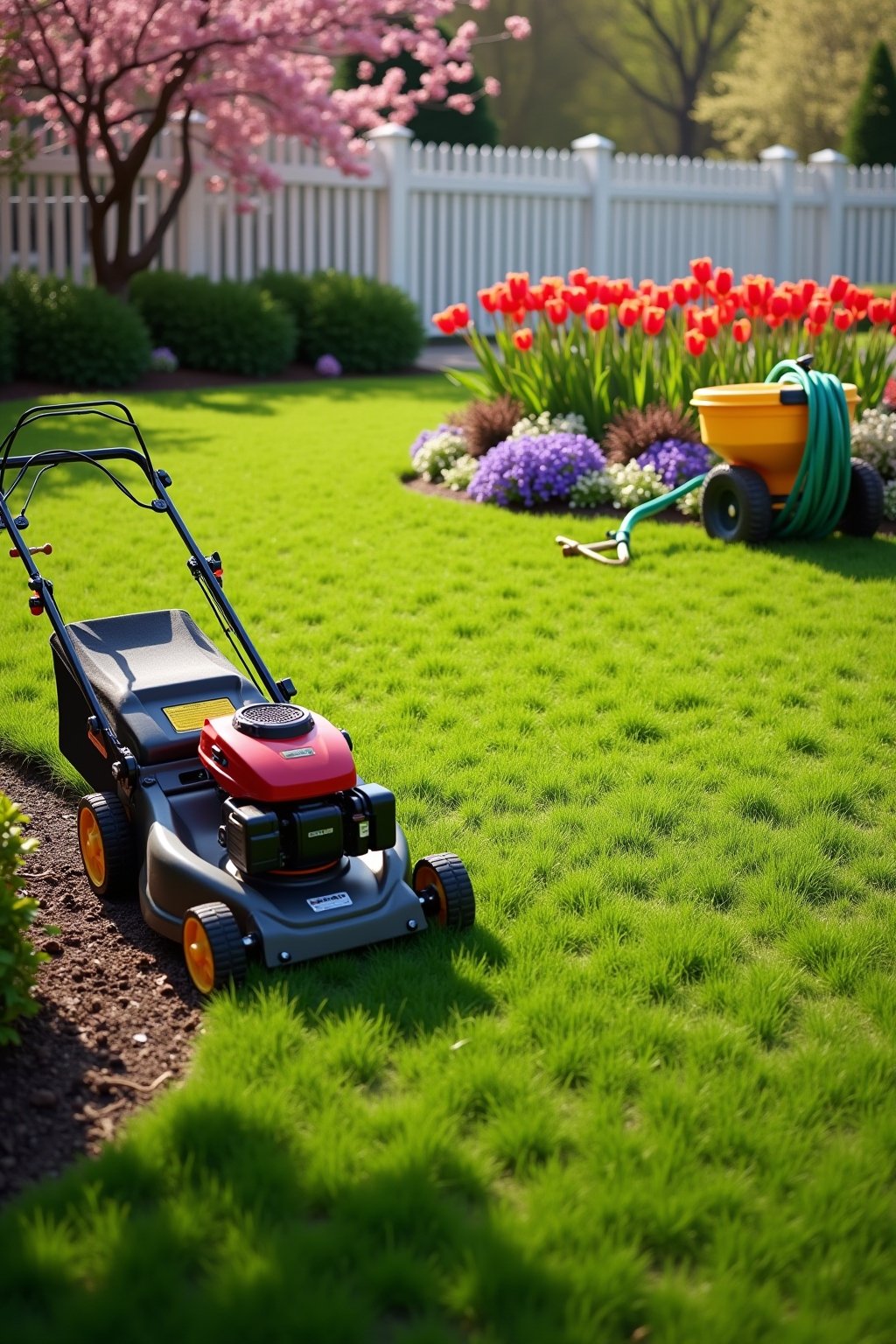
After a long winter of looking at brown, matted grass, there is nothing more satisfying than watching your lawn come back to life in spring. But here is the thing most beginners do not realize — what you do (and do not do) in March, April, and May sets the tone for your entire lawn for the rest of the year. A little effort now prevents a whole lot of problems later.
I used to think lawn care meant mowing and hoping for the best. Then I started following a simple seasonal routine, and the difference was dramatic — thicker grass, fewer weeds, and a lawn that actually looked intentional. This month-by-month checklist breaks spring lawn care into manageable steps that anyone can follow, whether you have a tiny patch of grass or a sprawling backyard.
Quick Facts
| Sun | Full Sun to Partial Shade (varies by grass type) |
| Difficulty | Beginner |
| Season | Spring (March through May) |
| Zone | USDA Zones 3-10 (timing varies by region) |
| Time to Harvest | N/A (lawn maintenance) |
Stock Up On
- Lawn mower (with sharpened blade)
- Garden rake or dethatching rake
- Core aerator (manual or rental)
- Grass seed appropriate for your region
- Lawn fertilizer (slow-release, spring formula)
- Pre-emergent herbicide (optional, for weed prevention)
- Broadcast spreader or hand spreader
- Garden hose with sprinkler attachment
- Soil test kit
- Lime or sulfur (if pH adjustment needed)
- Topsoil or compost for overseeding
- Edging tool
The single most important piece of equipment is a lawn mower with a sharp blade. A dull blade tears grass instead of cutting it cleanly, which stresses the plant and creates brown, ragged tips that invite disease. Sharpen or replace your blade at the start of every season.
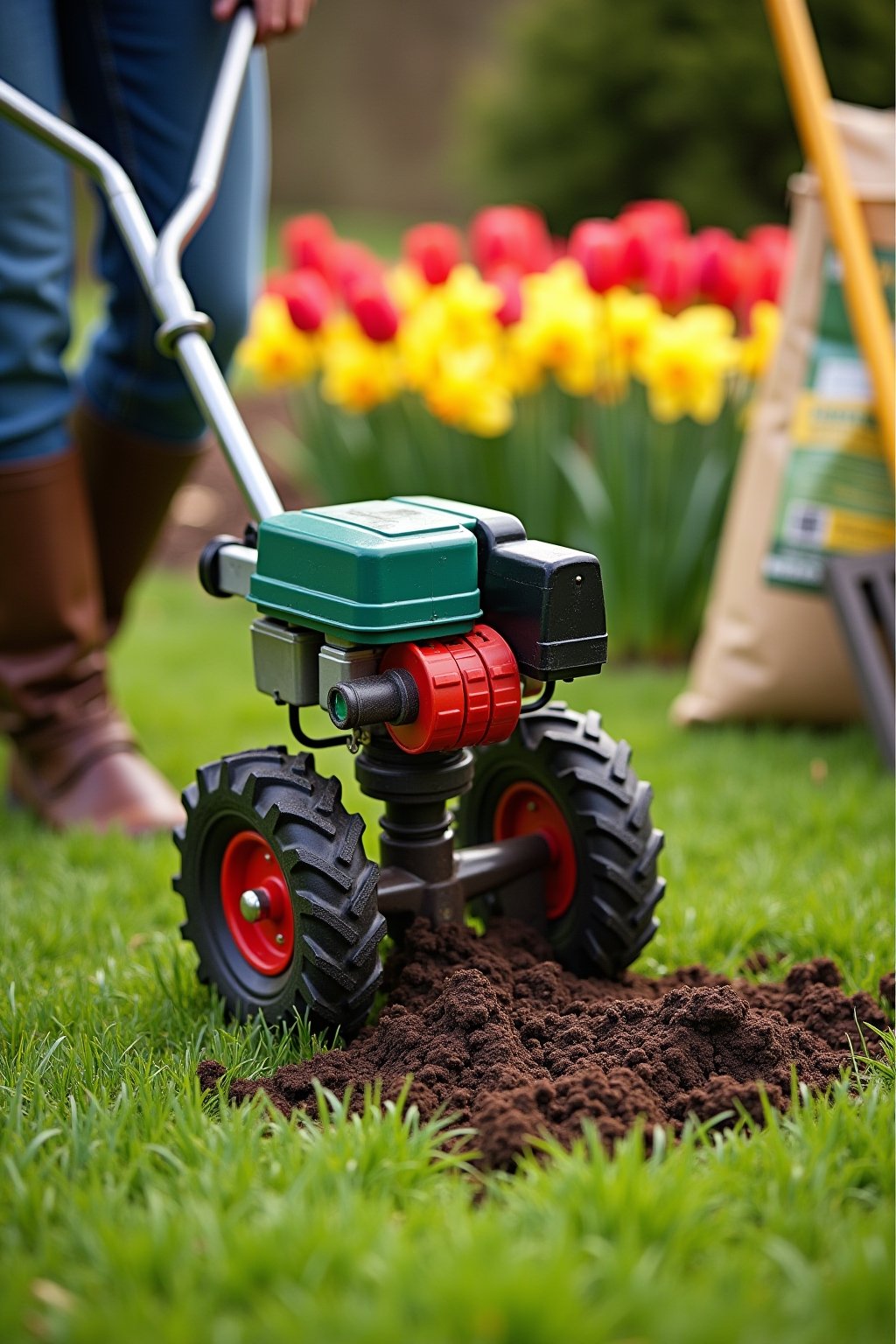
A core aerator is essential if your lawn gets heavy foot traffic or has compacted clay soil. You can rent one from a home improvement store for about 50 to 75 dollars per day — it is well worth it and you only need to aerate once or twice a year. For fertilizer, choose a slow-release granular formula designed for spring application. Slow-release feeds your lawn steadily over 6 to 8 weeks instead of causing a quick surge of growth that burns out fast. If you are unsure which grass type you have, your local cooperative extension can help identify it.
Step 1: March — Clean Up Winter Debris
As soon as the snow melts and the ground firms up enough to walk on without sinking, it is time for spring cleanup. Rake up fallen branches, leaves, and any debris that accumulated over winter. This is not just cosmetic — matted leaves and debris smother the grass underneath, block sunlight, and create moist conditions that breed snow mold (those gray or pink fuzzy patches you might see in early spring).
Use a lightweight leaf rake, not a heavy garden rake that can tear up grass crowns. Rake gently in different directions to lift matted grass blades. If you see snow mold spots, do not panic — raking the affected area to improve air circulation is usually all the treatment needed. Most snow mold resolves on its own as temperatures warm up and the grass starts growing.
Step 2: March — Test Your Soil
Just like a vegetable garden, your lawn performs best when the soil is balanced. A soil test tells you the pH, nutrient levels, and organic matter content of your lawn’s soil. Most lawn grasses prefer a pH between 6.0 and 7.0. If your soil is too acidic, you will need to apply lime. If it is too alkaline, sulfur brings the pH down.
Collect samples from several spots across your lawn, mix them together, and send them to your local cooperative extension or use a home test kit. The results tell you exactly what your lawn needs so you do not waste money on products you do not need. This one step saves countless homeowners from the frustrating cycle of fertilizing and still having a struggling lawn.
Step 3: March/April — Dethatch if Needed
Thatch is a layer of dead grass stems, roots, and debris that accumulates between the green grass blades and the soil surface. A thin layer (under half an inch) is actually beneficial — it insulates roots and retains moisture. But when thatch builds up past three-quarters of an inch, it prevents water, air, and nutrients from reaching the soil.
Check thatch depth by cutting a small wedge from your lawn with a knife and measuring the spongy brown layer. If dethatching is needed, use a dethatching rake for small lawns or rent a power dethatcher for larger areas. Do this when grass is just beginning to green up and actively growing so it can recover quickly. Dethatching is tough on the lawn, so only do it when the thatch layer is genuinely too thick.
Step 4: April — Aerate Compacted Soil
Core aeration is one of the most beneficial things you can do for a struggling lawn. An aerator pulls small plugs of soil out of the ground, creating channels that allow air, water, and nutrients to penetrate deep into the root zone. If your lawn gets heavy foot traffic, sits on clay soil, or feels spongy and waterlogged after rain, it needs aeration.
Rent a core aerator (not a spike aerator, which actually increases compaction) and make two passes over the entire lawn in perpendicular directions. Leave the soil plugs on the surface — they break down within a week or two and return nutrients to the lawn. The best time to aerate is when the grass is actively growing so it fills in the holes quickly. For cool-season grasses, early to mid-April is ideal.
Step 5: April — Overseed Thin or Bare Spots
If your lawn has thin patches, bare spots, or areas damaged by winter, spring is a good time to overseed — especially right after aerating, when seed can fall into the aeration holes and make direct contact with soil. Choose a grass seed blend appropriate for your region and sun conditions.
Spread seed with a broadcast spreader at the rate recommended on the package. Lightly rake seed into the soil or cover with a thin layer (one-eighth inch) of compost or topsoil. Keep the seeded areas consistently moist — this means light watering 2 to 3 times daily for the first 2 to 3 weeks until germination. New grass seedlings are fragile, so avoid heavy foot traffic on overseeded areas for at least 6 weeks.
Important note: If you plan to use pre-emergent herbicide for weed prevention, you cannot overseed at the same time. Pre-emergent kills all germinating seeds, including grass. Choose one or the other for each area.
Step 6: April — Apply Pre-Emergent Weed Control (Optional)
Pre-emergent herbicide prevents weed seeds from germinating — it creates an invisible barrier in the top layer of soil. The key is timing: you need to apply it before weed seeds sprout, which happens when soil temperature reaches about 55°F for several consecutive days. A classic timing trick is to apply when forsythia bushes are in full bloom.
Use a broadcast spreader for even coverage and water it in lightly after application. Pre-emergent is most effective against crabgrass, foxtail, and annual weeds. It does not kill existing weeds — for those, you will need spot treatment with a targeted herbicide or good old-fashioned hand pulling. Remember, pre-emergent and overseeding cannot happen in the same area at the same time.
Step 7: April/May — Apply Spring Fertilizer
Once your lawn is actively growing (you have mowed it at least once or twice), it is time for the first spring fertilizer application. Choose a slow-release granular fertilizer formulated for spring — these typically have a higher nitrogen ratio to promote green, leafy growth.
Apply with a broadcast spreader following the package rate — more is not better with fertilizer. Over-fertilizing burns grass, creates excessive thatch, and can leach into waterways. For cool-season grasses (fescue, bluegrass, ryegrass), apply in mid to late April. For warm-season grasses (bermuda, zoysia, St. Augustine), wait until May or when the grass has fully greened up. Water thoroughly after applying to wash granules off the blades and into the soil.
Step 8: May — Establish Your Mowing Routine
By May, your lawn is in full growth mode and regular mowing is essential. The single most important mowing rule is this: never remove more than one-third of the grass blade height in a single mowing. Cutting too short stresses the grass, weakens roots, and creates openings for weeds.
Set your mower height to 3 to 4 inches for most cool-season grasses and 1.5 to 2.5 inches for warm-season grasses. Taller grass shades the soil, which suppresses weeds, retains moisture, and keeps roots cooler. Leave grass clippings on the lawn — they decompose quickly and return valuable nitrogen to the soil (this is called grasscycling). Mow when the grass is dry for a cleaner cut, and vary your mowing pattern each time to prevent ruts and soil compaction.
Step 9: May — Establish a Watering Schedule
As temperatures rise in May, your lawn needs a consistent watering routine. The golden rule is to water deeply and infrequently — about 1 to 1.5 inches of water per week, including rainfall. This encourages roots to grow deep into the soil where moisture is more consistent, creating a drought-resistant lawn.
Water early in the morning (between 6 and 10 AM) so blades dry before nightfall — wet grass overnight promotes fungal disease. Place a few empty tuna cans around your sprinkler zone to measure output: when they are full (about 1 inch), you have watered enough. Most lawns do best with 2 to 3 deep watering sessions per week rather than daily light sprinkling.
Step 10: May — Edge and Define Your Lawn’s Borders
Nothing makes a lawn look more polished than clean, sharp edges along garden beds, walkways, and driveways. Use a half-moon edging tool or a power edger to cut crisp lines along all borders. This prevents grass from creeping into flower beds and gives your lawn a manicured, intentional look.
In May, also check for lawn weeds that slipped past pre-emergent. Hand-pull dandelions, clover, and broadleaf weeds while they are young and before they set seed. A simple weed popper tool makes this quick and easy. Getting weeds out before they flower prevents thousands of new seeds from spreading across your lawn. With all these spring tasks done, your lawn will be thick, green, and healthy heading into summer.
If the Texture Is Off
Lawn still brown in late spring: If your lawn is not greening up by mid-spring, check for grub damage. Pull back a section of brown turf — if it lifts up like a carpet and you see white C-shaped grubs underneath, you have a grub infestation. Treat with beneficial nematodes or a grub control product. If grubs are not the issue, the grass may be dormant from drought stress or may have winter-killed — overseed those areas.
Weeds taking over despite treatment: Pre-emergent only prevents new seeds from sprouting — it does not kill established weeds. For existing weeds, use a post-emergent herbicide targeted to the specific weed type, or hand-pull them. Crabgrass that breaks through pre-emergent was likely germinating before you applied the product — timing is critical.
Yellow or pale green patches: This often indicates nitrogen deficiency. Apply a light dose of quick-release fertilizer to affected areas. Yellow patches can also be caused by pet urine — flush those spots with deep watering and reseed. If patches appear in a ring pattern, you may have a fungal disease that needs targeted treatment.
Lawn feels spongy and waterlogged: This is a sign of heavy thatch buildup or poor drainage. Dethatch if the layer exceeds three-quarters of an inch, aerate to improve water penetration, and consider adding a thin layer of compost top-dressing to improve soil structure over time. If drainage is a chronic problem, a French drain or re-grading may be needed.
Year-Round Care
Here is your complete spring lawn care checklist organized by month:
| Month | Task | Priority |
|---|---|---|
| March | Rake up winter debris and matted leaves | High |
| Send in soil test | High | |
| Sharpen mower blade, tune up equipment | Medium | |
| April | Dethatch if thatch exceeds 3/4 inch | As needed |
| Core aerate compacted areas | High | |
| Overseed thin/bare spots OR apply pre-emergent | High | |
| Apply lime/sulfur based on soil test | As needed | |
| May | Apply slow-release spring fertilizer | High |
| Begin regular mowing (3-4 inch height) | High | |
| Establish deep watering schedule (1-1.5 inches/week) | High | |
| Edge borders and hand-pull weeds | Medium |
Regional adjustment: In Zones 7-10 with warm-season grasses, shift this entire schedule 2 to 4 weeks earlier. In Zones 3-4, shift everything 2 to 3 weeks later, as the ground thaws later and grass breaks dormancy later in spring.
Add-Ons That Matter
- Sharpen your mower blade every spring without fail — A sharp blade cuts grass cleanly, which heals fast and stays green. A dull blade tears and shreds grass tips, leaving brown ragged edges that invite disease. One sharpening per season makes a visible difference within one mowing.
- Mow high and mow often — Keeping grass at 3 to 4 inches shades the soil, suppresses weed germination, and encourages deeper root growth. Short-cropped lawns look neat briefly but are far more vulnerable to drought, heat, and weed invasion.
- Leave grass clippings on the lawn — Clippings decompose within days and return up to 25 percent of your lawn’s nitrogen needs back to the soil for free. This is called grasscycling and it saves money on fertilizer while reducing yard waste.
- Water deeply 2-3 times per week, not daily — Light daily watering trains roots to stay shallow near the surface, making your lawn dependent on constant irrigation. Deep watering forces roots to grow down where soil stays moist, building a naturally drought-tolerant lawn.
- Use the tuna can trick to measure sprinkler output — Place empty cans around your sprinkler zone and run it until they collect about 1 inch of water. Now you know exactly how long to water each zone. Most sprinklers take 30 to 60 minutes to deliver 1 inch.
- Never apply pre-emergent and grass seed at the same time — Pre-emergent herbicide stops all seeds from germinating, including your grass seed. If you need to overseed bare patches and also prevent weeds, do them in separate areas or apply pre-emergent first and overseed in fall instead.
Quick Answers
When should I start spring lawn care?
Start as soon as the ground has thawed and is firm enough to walk on without leaving deep footprints — usually mid-March in most regions. Begin with raking debris and testing soil. Avoid walking on soggy or frozen lawn, as this causes compaction that takes months to repair.
Should I aerate my lawn every spring?
Not necessarily every spring. Aerate if your lawn has heavy clay soil, gets significant foot traffic, or feels spongy when you walk on it. For most lawns, aerating once a year (spring or fall) is sufficient. Sandy or loamy soils that drain well may only need aeration every 2 to 3 years.
What is the best height to mow my lawn in spring?
For cool-season grasses like fescue, bluegrass, and ryegrass, mow at 3 to 4 inches. For warm-season grasses like bermuda and zoysia, mow at 1.5 to 2.5 inches. The key rule is never to remove more than one-third of the blade height in a single mowing to avoid stressing the grass.
When should I fertilize my lawn in spring?
Fertilize cool-season lawns in mid to late April once the grass is actively growing and you have mowed at least once or twice. For warm-season lawns, wait until May or when the grass has fully greened up. Applying fertilizer too early on dormant grass wastes product and can feed weeds instead.
How do I get rid of dandelions in my lawn?
The most effective approach is hand-pulling with a weed popper tool while dandelions are young and before they produce seed heads. For heavy infestations, a selective broadleaf herbicide targets dandelions without harming grass. A thick, healthy lawn is the best long-term defense — dense grass naturally crowds out weeds.
Can I overseed and apply pre-emergent herbicide at the same time?
No. Pre-emergent herbicide prevents all seeds from germinating, including grass seed. If you need both, apply pre-emergent to weed-prone areas and overseed bare patches separately without pre-emergent. Alternatively, apply pre-emergent in spring and save overseeding for early fall, which is actually the ideal time to seed cool-season grasses.