
Chicken satay was my gateway drug to Thai cooking. Those little skewers of coconut-and-curry-soaked chicken, charred over flames and served with the most addictive peanut sauce on the planet — they’re basically the perfect food. Small enough to pick up with your fingers, packed with flavor, and endlessly dippable.
The first time I tried to make these at home, I made a classic mistake: I didn’t marinate long enough. The chicken came out bland, and I was disappointed. Turns out the secret is full-fat coconut milk and at least four hours in the marinade — the coconut fat carries the turmeric, lemongrass, and fish sauce deep into the chicken, so every bite has real flavor, not just surface seasoning.
The other non-negotiable is the peanut sauce. Don’t buy the bottled stuff — it takes five minutes to blend together, and homemade tastes a hundred times better. Creamy, savory, just a little sweet, with a backbone of lime and a whisper of heat. Dip the grilled skewers in, top with crushed peanuts and a squeeze of lime, and try not to eat the whole platter yourself. I’m telling you — these disappear.
Why This One Lands
- Restaurant-quality satay at home — the coconut-turmeric marinade gives authentic Thai street food flavor
- The peanut sauce is everything — homemade takes 5 minutes and crushes any bottled version
- Fast to grill — thin chicken strips cook in just 6-8 minutes total
- Appetizer or main — serve as party bites or pair with rice for a full meal
- Crowd-pleasing — satay is universally loved, even by picky eaters
- Meal prep gold — grilled satay keeps beautifully for lunches all week
Your Shopping List
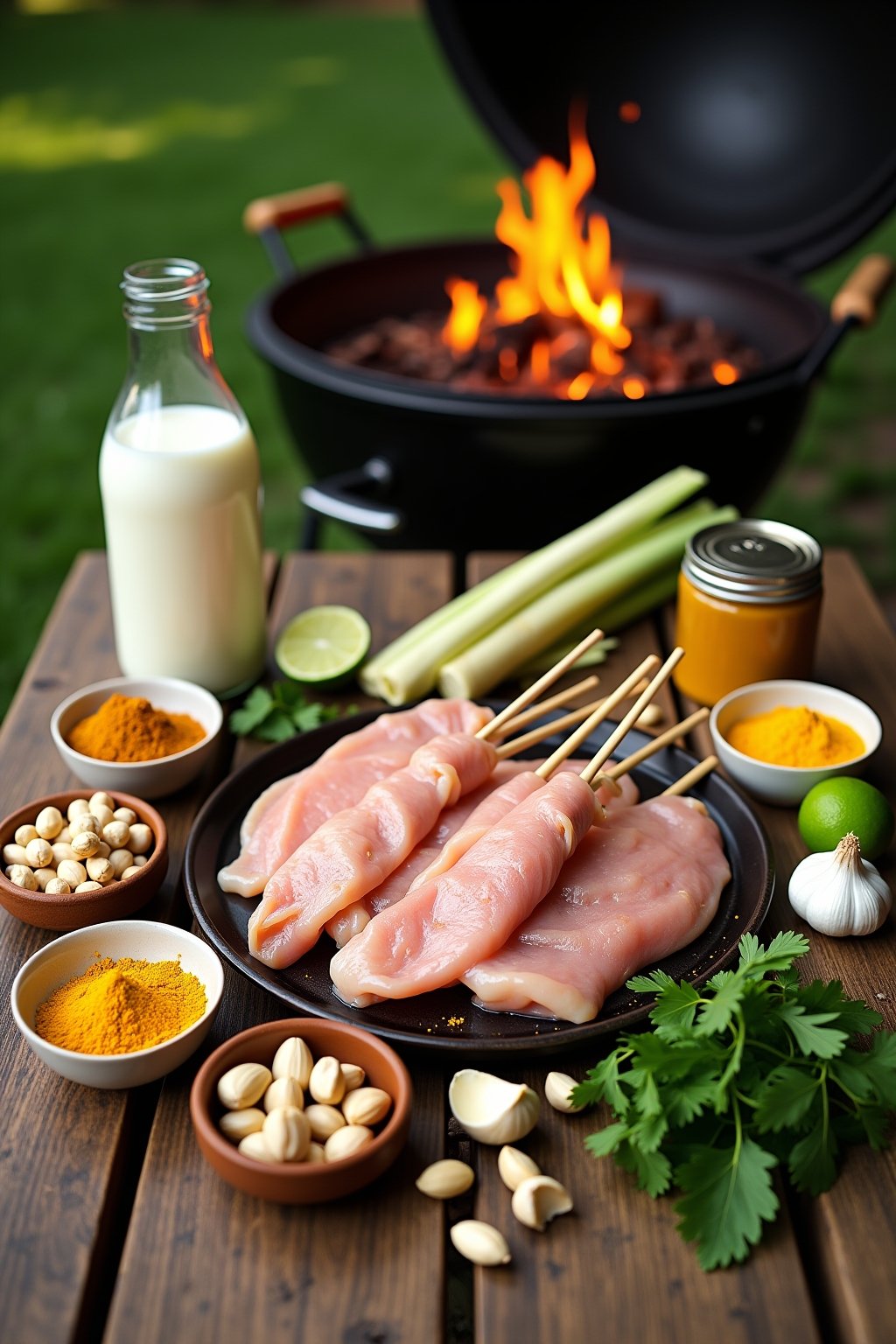
Chicken thighs — dark meat stays juicy on high heat. Breasts work but dry out faster. Cut strips with the grain so they hold together on the skewer.
Full-fat coconut milk — not light coconut milk, not coconut cream. The fat is what carries flavor into the chicken. Shake the can well before opening — it separates when it sits.
Fish sauce — critical for real Thai flavor. It smells strong in the bottle but mellows into deep umami. Red Boat and Three Crabs are great brands. No substitute gives the same result.
Lemongrass — fresh is best (found in the produce section or Asian markets). Use only the tender pale bottom 4 inches, finely minced. Frozen minced lemongrass works. Dried is a distant third but acceptable.
Natural peanut butter — the simple kind with just peanuts and salt. Sweetened commercial peanut butter (like Jif or Skippy) works but you’ll need to reduce the brown sugar.
Thai Peanut Chicken Satay
Ingredients
Equipment
Method
-
Cut the chicken thighs into 3/4-inch wide strips, about 4-5 inches long. This gives you the classic satay shape.
-
Whisk all the marinade ingredients in a large bowl until smooth. Add the chicken, toss to coat, cover, and refrigerate for at least 4 hours, ideally overnight (up to 24 hours).
-
Soak wooden skewers in water for at least 30 minutes before grilling.
-
Make the peanut sauce: whisk the peanut butter, coconut milk, soy sauce, lime juice, brown sugar, curry paste, ginger, and garlic until smooth. Thin with hot water until pourable but still thick enough to cling. Taste and adjust — more lime for brightness, more curry paste for heat, more sugar for sweetness.
-
Thread each chicken strip onto a skewer in an accordion pattern (not bunched). This maximizes surface area for char.
-
Preheat your grill to medium-high (around 425°F). Oil the grates well.
-
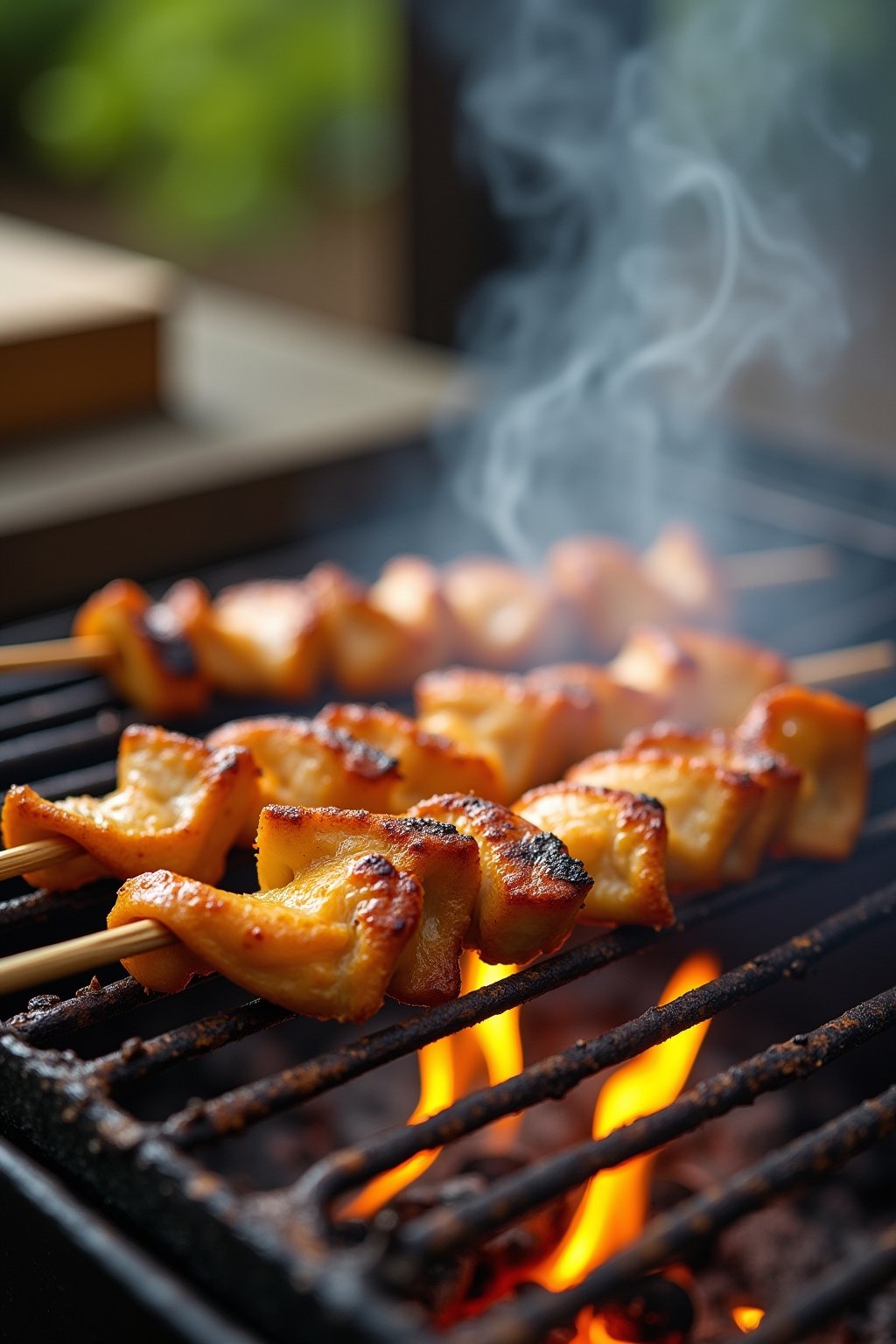
Grill the skewers for 3-4 minutes per side, rotating once, until deeply charred and cooked through (internal temp 165°F). Total cook time is 6-8 minutes.
-
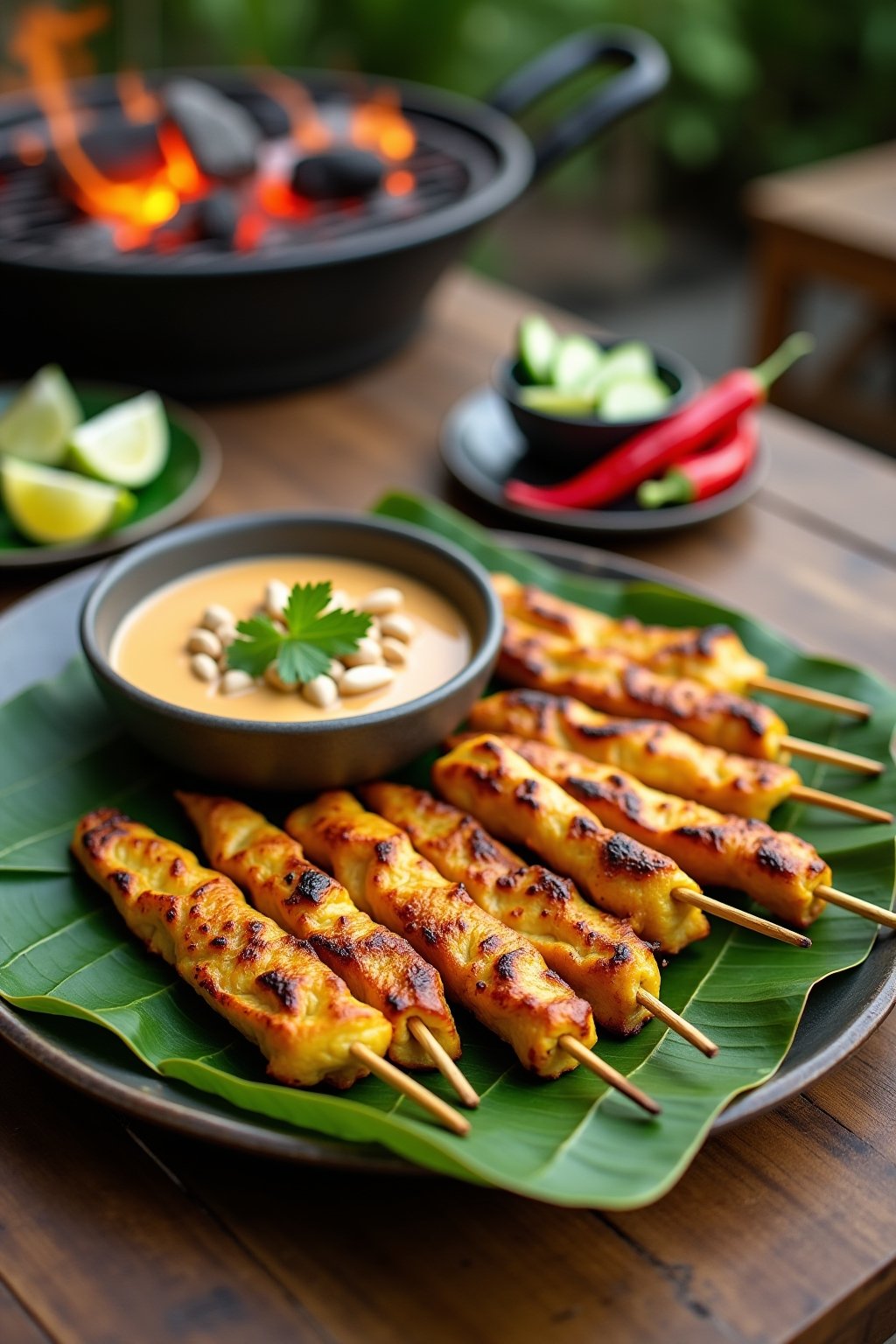
Transfer to a platter, let rest 2 minutes. Sprinkle with crushed peanuts and fresh cilantro. Serve with peanut sauce, lime wedges, and sliced chilies on the side.
Notes
Nutrition Facts
Per serving
| Calories | 420 |
| Total Fat | 26g |
| Saturated Fat | 10g |
| Carbohydrates | 14g |
| Fiber | 2g |
| Sugar | 10g |
| Protein | 34g |
| Sodium | 820mg |
| Potassium | 550mg |
| Vitamin A | 8% |
| Vitamin C | 12% |
| Calcium | 5% |
| Iron | 15% |
* Percent Daily Values are based on a 2,000 calorie diet.
Once It’s Off the Heat
Refrigerator: Cooked satay keeps for up to 4 days. Peanut sauce lasts 5 days refrigerated (thickens when cold — thin with a splash of hot water when reheating).
Freezer (cooked): Freeze chicken off the skewers for up to 3 months. Perfect for Thai stir-fries and lettuce wraps later.
Freezer (raw marinated): Combine chicken and marinade in a freezer bag. Freeze flat up to 3 months. Thaw overnight in fridge.
Reheating: A flash in a hot skillet or 30 seconds in the microwave. The grill marks get softer, but the flavor stays.
Leftover magic: Shred cold satay onto a Thai-inspired rice bowl with peanut sauce drizzle, cucumber, carrots, and herbs. One of the best desk lunches on earth.
Take It in Other Directions
- Beef Satay — swap chicken for thin-sliced sirloin or flank steak; marinate 4-6 hours max
- Pork Satay — use thin-sliced pork shoulder or tenderloin; traditional in Thailand and Indonesia
- Shrimp Satay — marinate shrimp for just 30 minutes and grill for 2-3 minutes per side
- Tofu Satay — use extra-firm tofu, pressed and cubed; marinate overnight for deep flavor
- Extra Spicy — double the red curry paste and add sliced Thai bird chilies to the marinade
- Massaman Style — swap yellow curry for massaman curry paste for a sweeter, more complex flavor
- Peanut-Free — use sunflower seed butter or tahini in the dipping sauce for allergies
Real-World Adjustments
- Accordion-fold the chicken — weave strips onto skewers flat and wide, not bunched. Maximizes char and cooks evenly
- Full-fat coconut milk only — the fat carries the flavor. Light coconut milk or water dilutes everything
- Marinate overnight — 4 hours minimum for real flavor, 12-24 hours ideal for deep penetration
- Taste peanut sauce after thinning — the hot water softens the flavors. Adjust salt, lime, and sweetness after mixing
- Medium-high heat — 425°F gives char without burning the sugars. Higher scorches the curry and garlic
- Don’t skip the crushed peanuts — the textural crunch on top is what elevates street-food satay to restaurant level
On Either Side of It
- Coconut rice — creamy, slightly sweet, and soaks up the peanut sauce perfectly
- Cucumber salad (ajad) — cold, vinegary, refreshing contrast to the rich chicken
- Thai papaya salad (som tum) — spicy, funky, the classic Thai pairing
- Sticky rice — the traditional Thai side for grilled meats
- Spring rolls — fresh rice paper rolls with herbs for a complete Thai spread
- Thai iced tea — creamy, sweet, and cooling alongside the spiced chicken
- Cold Singha or Chang beer — the classic Thai lager pairing
Get-Ahead Notes
Marinate a full day ahead: Combine chicken and marinade 24 hours in advance. The flavor gets deeper by the hour.
Peanut sauce ahead: The sauce actually improves after 24 hours as flavors meld. Make a double batch — it keeps a week in the fridge and makes a great dip for raw veggies, drizzle for noodles, or sauce for stir-fries.
Pre-thread skewers: Thread in the morning, cover, refrigerate. Grill-ready when guests arrive.
Party strategy: Set up a satay platter with warm skewers, peanut sauce, crushed peanuts, lime wedges, and fresh cilantro. Serve with jasmine rice and cucumber salad for a complete Thai-inspired spread that takes minimal effort at the actual party.
Quick Answers
Can I use chicken breast instead of thighs?
Yes, but cut the strips slightly thicker and pull them off the grill at 160°F (carryover heat brings them to 165°F). Breasts are less forgiving — 30 seconds too long and they dry out. Thighs are nearly impossible to overcook.
Where can I find lemongrass?
Asian grocery stores always have fresh lemongrass. Larger US supermarkets (Whole Foods, Kroger) often carry it in the produce section. Frozen minced lemongrass in jars is a great shortcut — available in Asian markets and online. Dried lemongrass is the weakest option but works in a pinch.
Can I make this without fish sauce?
Fish sauce is what makes this taste Thai, but you can substitute with 2 tablespoons soy sauce + 1 tablespoon white miso paste for similar umami. The flavor will be different but still delicious.
My peanut sauce is too thick — how do I fix it?
Add hot water 1 tablespoon at a time and whisk. The sauce should coat the back of a spoon but drizzle easily. It thickens as it sits and when cold — always thin just before serving if it’s been in the fridge.
Can I bake or air fry these?
Absolutely. Oven: 425°F on a wire rack for 12-14 minutes, broiling the last 2 minutes for char. Air fryer: 400°F for 10 minutes, turning once. You lose the smoky grill flavor but the marinade still delivers.
Is it okay to let the chicken marinate more than 24 hours?
Not recommended — the acid in the lime juice and fish sauce starts to break down the chicken texture beyond 24 hours, making it slightly mealy. 4-24 hours is the sweet spot for flavor without texture issues.