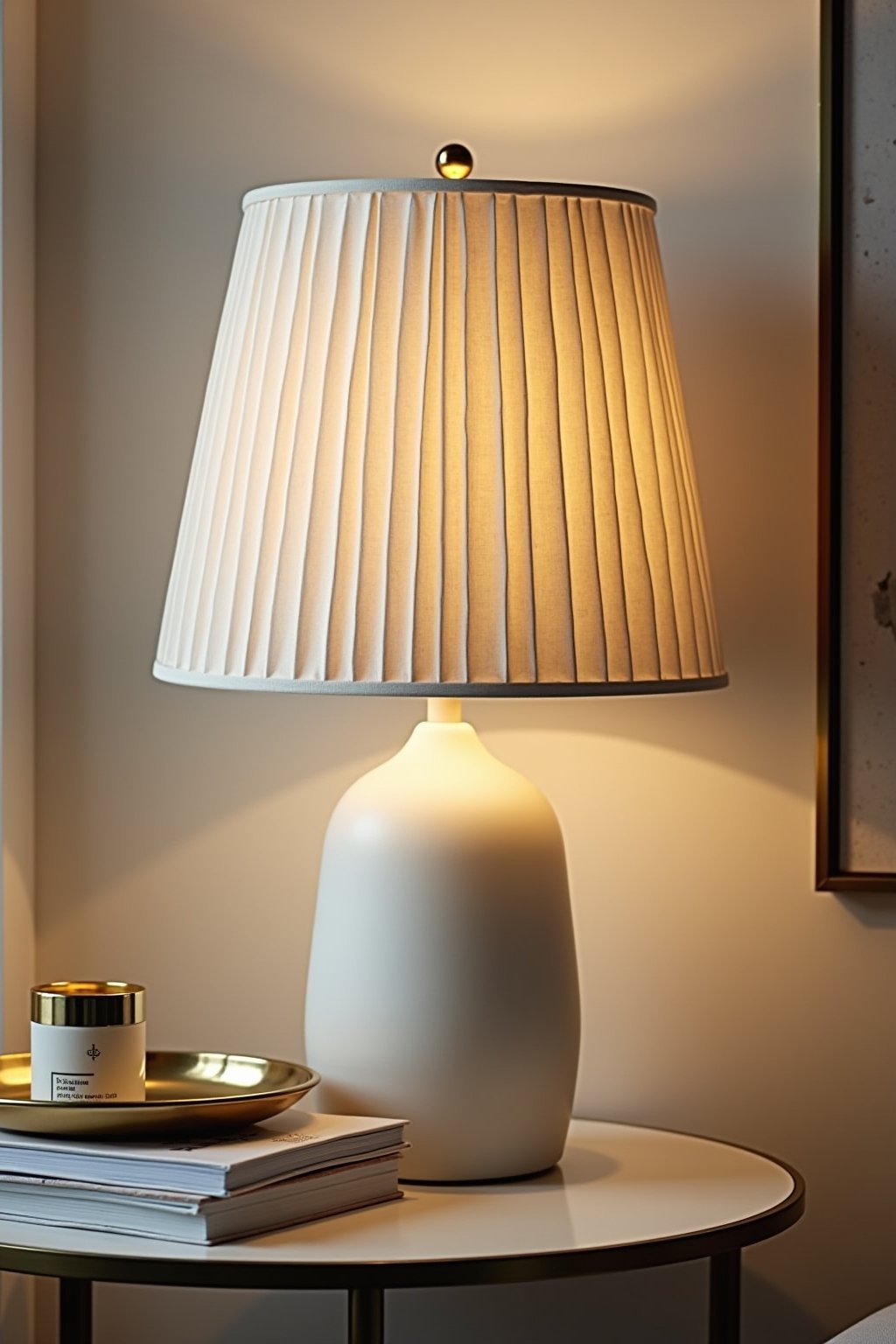
The pleated lampshade trend is real, and the supply situation is messy. The good ones sell out the day they restock; the cheap ones look exactly like cheap ones; and there’s a wide middle range where you genuinely cannot tell from the photo whether you’re getting hand-pleated silk or a machine-printed paper imposter for double the price.
I’ve ordered from eight sources over the past eighteen months — some on purpose, some by accident when the first one I wanted was sold out. Here’s what I’ve actually received, with notes on what each source is good for. No affiliate-padded list here; just where I’d send a friend who asked.
1. Etsy (For Custom Sizing)
Best for: hand-pleated, made-to-order, custom diameters. Worst for: shipping speed and consistency between sellers.
I’ve ordered from three different Etsy shops. The quality range is enormous — from genuinely beautiful hand-pleated silk in a fabric you specify, to printed cotton on cardboard frames that look fine in photos and disappointing in person. My rule: only buy from sellers with 200+ sales and at least one customer photo of the lampshade lit. Listing photos lie; lit photos don’t. Expect 2–4 weeks for production plus shipping.
2. Pooky (UK, Worth the Shipping)
Best for: traditional pleated shades in good fabrics. The shipping to the US is real, but the shades arrive properly packed and the colors match the website. Their gathered (not knife-pleated) shades are particularly good. If you want the look without ordering custom, this is where I’d start. The price point is mid-range — not cheap, not Lalu-Carrier-level expensive.
3. Anthropologie (When They Restock)
Best for: trend-forward styles you want to live with for a year or two. Their pleated shades are good quality for the price, but the popular ones sell out in days and don’t always come back. I keep one tab open to their lighting page and check on Tuesdays, which is when most retailers restock. Set a price-drop alert if you have flexibility on color.
4. Vintage Shops and Estate Sales
Best for: the genuinely old, hand-pleated shades that started this whole trend. The look you can’t replicate with new production. The hard part: most are sized for tiny vintage sockets and lamp bases, and the silk is often sun-rotted on the side that faced a window for forty years. Inspect under bright light before buying.
I bought my favorite shade ($14, ivory silk knife-pleat from the 1970s) at a Saturday morning estate sale in Vermont. The harp didn’t fit my modern lamp; I had a local lamp shop swap the harp for $12. Worth every dollar.
5. Schoolhouse
Best for: their own-brand pleated shades on their own-brand lamp bases. They sell as a set, which sidesteps the “does this shade fit this harp” headache that derails most lamp shopping. Quality is consistently good, design is restrained, prices reflect both. If you want one nice lamp you don’t have to think about, this is the easiest path.
6. Lalu-Carrier and the Higher End
Best for: when you have a specific room and a budget that allows for one statement piece. These are the shades you see in shelter magazines. Hand-pleated, custom fabrics, made by people who do this for a living. Prices reflect that — expect $300+ for a single shade. I have one. It’s in my bedroom and it’s genuinely the prettiest object in the room. Worth it if budget allows; not worth stretching for.
7. Amazon (Yes, Really, With Caveats)
Best for: budget shades for low-stakes rooms (guest rooms, hallways, kids’ rooms). The quality varies wildly, but I’ve found a couple of brands that consistently deliver okay shades for under $40. Sort by reviews descending, filter for 4+ stars, and read the 3-star reviews specifically — those are the most honest. Avoid anything described as “modern” or “Nordic” pleated; those are usually printed paper.
8. Local Lampshade Shops (Surprise Best)
Best for: getting an existing shade re-covered, or having one custom-made in fabric you bring in. These shops still exist in most cities — usually one per metro, run by someone in their sixties — and they will hand-pleat a shade in a fabric you supply for less than you’d expect. I had a silk dupioni shade made for $85, including the harp swap. It took three weeks and looks better than anything I’ve seen online.
Search “lampshade repair” or “lampshade custom” plus your city. Call before you go — many of these places don’t have great websites.
What I’d Avoid Entirely
Drop-shipped Instagram brands with vague company info, no return policy, and only product photos in stylized rooms. The shades almost always arrive lighter, smaller, and made of stiffer materials than the photos suggested. If you can’t find a real address or a phone number, don’t order.
A Quick Note on Sizing
Most online listings give the bottom diameter and the height, but not the harp size or the top diameter. Both matter. Take a photo of your existing harp with a ruler next to it before ordering, and message the seller if it’s not listed. A shade that’s perfect except for the harp size is just an expensive paperweight.
FAQ
Is the pleated lampshade trend going to stick around? The trend cycle for shades is slower than fashion — pleated shades had a long run in the 70s and another in the 90s. I’d expect this iteration to feel current through 2027–2028.
Can I make my own pleated shade? You can, and there are tutorials online, but it’s genuinely fussy. Unless you enjoy fabric craft for its own sake, your time is better spent ordering one and reading a book.
Silk vs cotton vs linen for pleated shades? Silk pleats most cleanly and lights most beautifully. Cotton is fine and more forgiving on price. Avoid linen pleated — the fabric is too stiff to hold a clean pleat and tends to flop.