
Mixing patterns is one of those things that looks effortless in magazine photos but feels terrifying in real life. You see a beautifully layered room with stripes, florals, and geometric prints all living together in perfect harmony and think — how did they do that without it looking like a fabric store exploded?
The truth is, there are actual rules behind the magic. Once you know them, mixing patterns goes from anxiety-inducing to genuinely fun. I used to play it safe with solid everything, and my rooms looked fine but flat. The moment I started layering a striped throw over a floral pillow and adding a geometric rug underneath, everything suddenly looked intentional, collected, and so much more interesting. Here is exactly how to do it.
What Makes It Stay
- Adds depth and personality — solid-colored rooms can feel flat and showroom-like. Patterns give a space visual texture that makes it feel lived-in and curated
- Makes budget pieces look expensive — a mix of patterned pillows on a basic sofa elevates the entire room more than a single expensive accessory ever could
- Creates visual interest without clutter — patterns add complexity to a room without needing more stuff on every surface
- Tells a story — a room with mixed patterns feels collected over time rather than bought in one shopping trip, which is the hallmark of great interior design
- Works at every budget level — you can mix patterns with throw pillows, curtains, and rugs from any price point and still get a designer result
- Pinterest’s top trend — pattern drenching and mixed motifs are one of the most-saved decor categories right now, with searches up significantly year over year
What You’ll Need
You do not need to redecorate an entire room. Start with these:
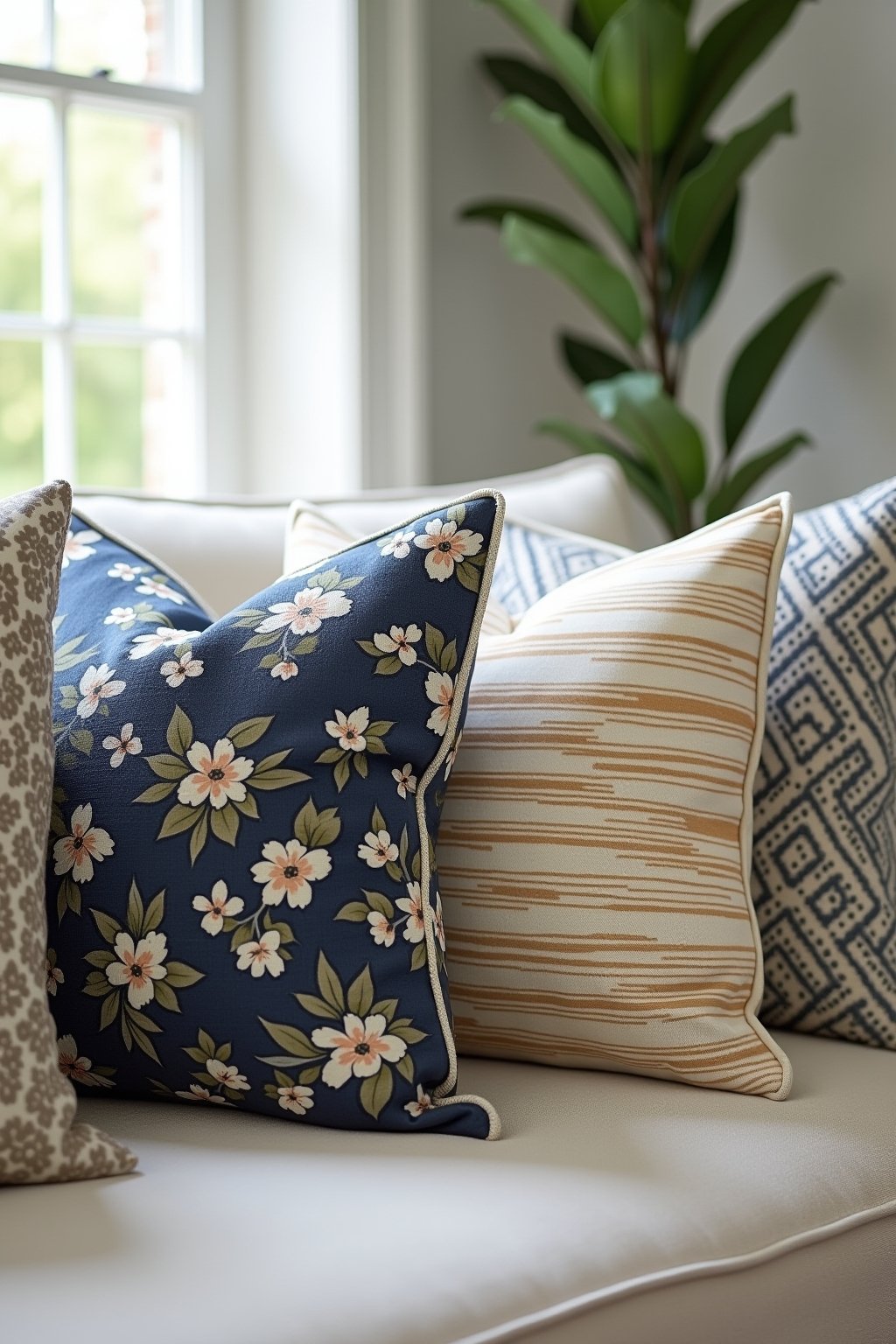
- 3-5 throw pillows in different patterns (one large-scale, one medium, one small/geometric)
- A patterned rug or runner to anchor the space
- Patterned curtains or a throw blanket for a larger surface of pattern
- A common color thread — choose 2-3 colors that appear across all your patterns
- At least one solid — a solid sofa, solid wall, or solid bedding gives the eye a place to rest
Walk-Through
Pick a Color Palette and Stick to It
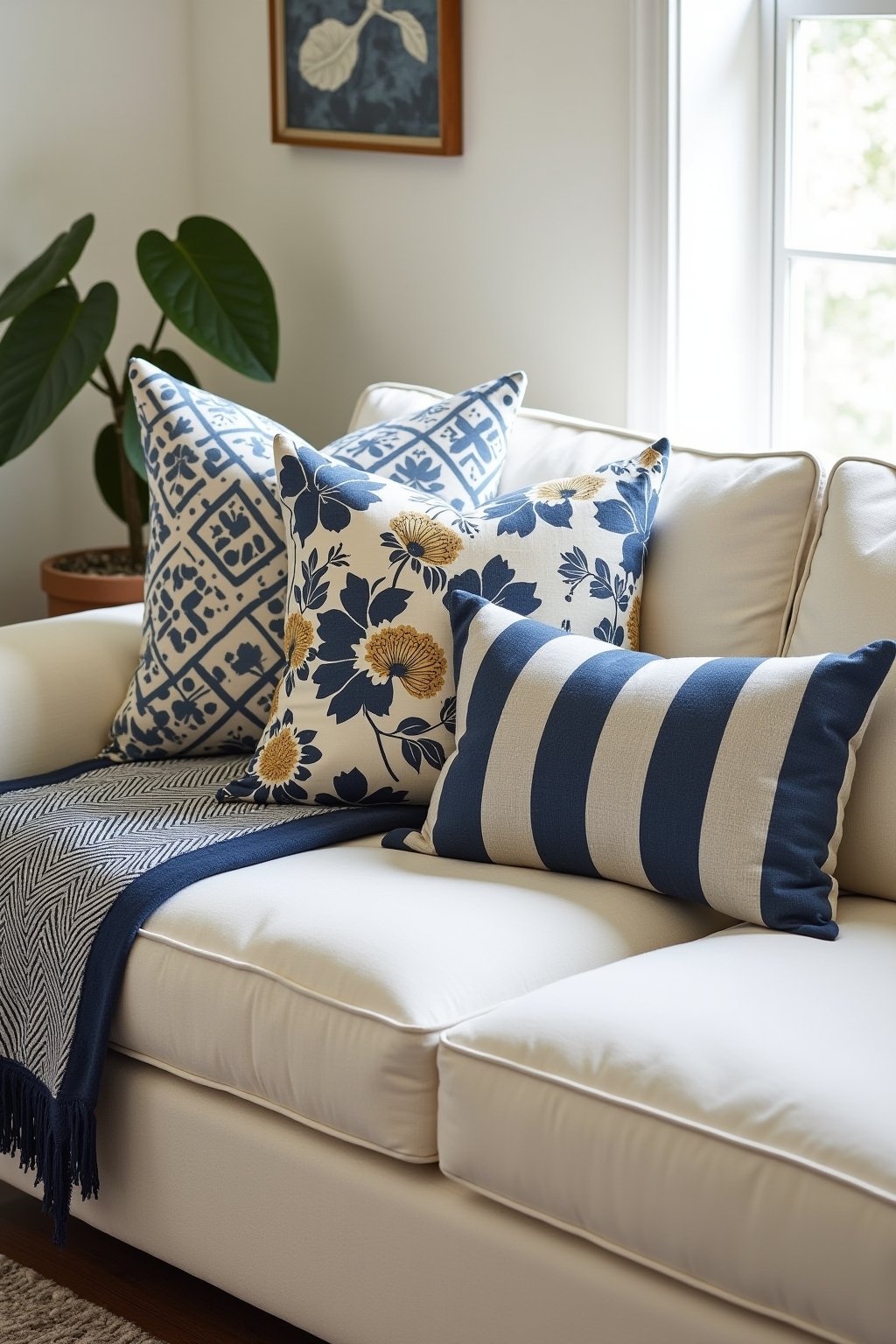
This is the single most important rule. Every pattern in your room should share at least two colors from the same palette. If your base is cream and navy, your floral should have cream and navy in it, your stripe should be navy and white, and your geometric can be cream and tan.
The colors are what create cohesion — even wildly different pattern types will look harmonious if they share the same tones. Pull your palette from a piece you already love, like an existing rug, a piece of artwork, or a favorite throw pillow.
Vary the Scale — Large, Medium, and Small
The secret professional designers use is mixing pattern scales. Use one large-scale pattern (like a big floral or bold stripe), one medium-scale (like a mid-size geometric or plaid), and one small-scale (like a tiny dot, thin pinstripe, or delicate botanical).
When patterns are different sizes, the eye can distinguish between them easily. When everything is the same scale, they compete and create visual chaos. Think of it like a conversation — you need a loud voice, a medium voice, and a quiet voice, not three people shouting at once.
Mix Pattern Types — Not Just Variations of One
Combine different types of patterns, not just different colorways of the same one. The classic formula is: one organic/floral, one geometric (stripes, chevron, grid), and one textural (herringbone, linen weave, subtle damask).
This variety prevents the room from looking like you bought a matching set. A blue floral pillow next to a navy stripe next to a cream herringbone throw reads as collected and interesting. Three different florals in different colors reads as confused.
Ground Everything With Solids
Patterns need breathing room. If your pillows are all patterned, keep your sofa solid. If your curtains have a bold print, keep the walls a solid color. If your rug is busy, keep the furniture above it calm.
A good ratio is 60% solid surfaces to 40% pattern. This gives the eye places to rest between the pattern action. The solids should be in your base palette colors — cream, white, gray, or whatever your neutral is — so they connect everything without adding visual noise.
Distribute Patterns Around the Room
Do not cluster all your patterns in one corner. Spread them around the space so the eye travels naturally. If you have patterned pillows on the sofa, add a patterned runner on the console table across the room and a patterned throw on the armchair in the opposite corner.
This distribution creates visual balance. The room should feel evenly weighted, not lopsided. Step back, squint at your room, and make sure no single area is pattern-heavy while another is completely bare.
Common Hiccups
- Matching everything — buying a pillow-curtain-rug set in the same exact pattern makes a room look like a catalog page, not a home
- Using the same scale for every pattern — three medium florals fight for attention. Vary the size: one big, one medium, one small
- No color connection — patterns that share zero colors look random, not curated. Every pattern should have at least one color in common with the others
- Skipping solids entirely — a room where every surface is patterned is exhausting. The eye needs solid surfaces to rest on
- Starting with the hardest piece — do not begin with patterned wallpaper. Start with pillows and a throw — the lowest-cost, lowest-risk way to experiment
Pinch-the-Pennies Tips
Pillow covers, not full pillows: Buy inserts once and swap pillow covers seasonally. Amazon, Etsy, and H&M Home have affordable patterned covers that let you experiment without committing.
Thrift store fabric finds: Vintage scarves, table runners, and fabric remnants can be turned into pillow covers or framed as textile art for almost nothing.
Mix high and low: Invest in one quality patterned piece (like a good rug) and fill in with budget pillows and throws. Nobody can tell the difference in the final mix.
DIY stenciled patterns: A stencil and a small pot of paint can add a geometric pattern to a plain IKEA dresser, plain curtains, or even a concrete planter.
Closing the Look
- Start with your largest patterned piece — usually a rug or curtains — and build the smaller patterns around it
- Use a solid in your dominant color as the sofa or bedding to anchor the room
- Odd numbers work best — three or five patterned elements looks more natural than two or four
- Texture counts as pattern — a chunky knit, a woven basket, or a ribbed ceramic vase adds visual variety without an actual print
- When in doubt, add a stripe — stripes are the most versatile pattern and play well with almost everything
- Take a step-back photo — photograph your room on your phone to see the pattern balance objectively. Zooming out reveals what feels heavy or light
Where It Reads Right
Living Room
Start with a solid cream or gray sofa. Add a large-scale floral pillow in navy and cream, a medium striped pillow in navy and white, and a small geometric in cream and tan. Layer a herringbone throw over one arm. Underneath, a patterned area rug with subtle botanical motifs ties everything together. The walls stay solid, and the curtains are a simple linen weave for texture.
Bedroom
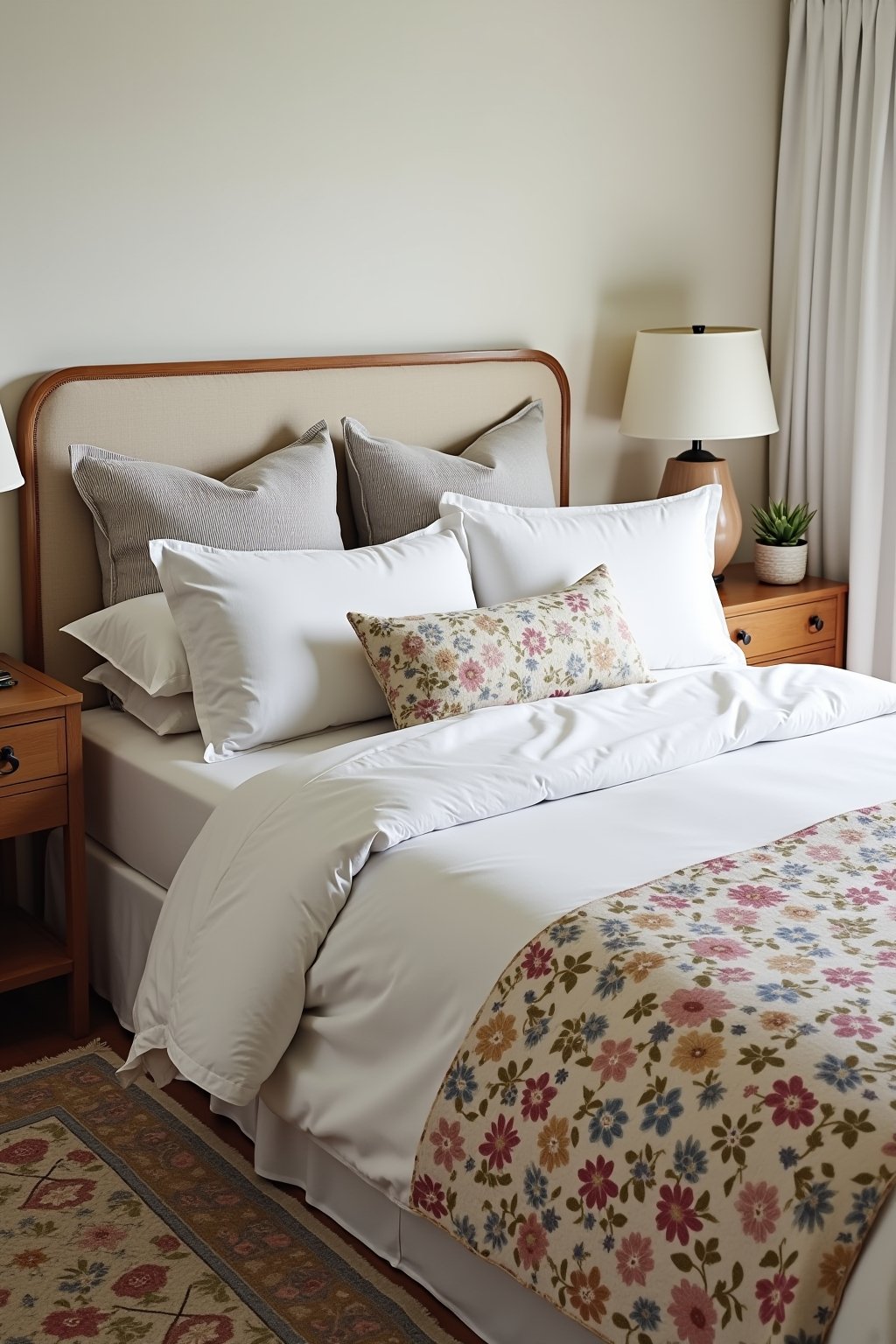
Solid white or cream bedding as your base. Add a large floral duvet cover or quilt at the foot of the bed, striped euro shams, and a small geometric lumbar pillow at the front. A patterned rug beside the bed adds warmth underfoot. Keep the nightstands and walls simple — the bed is the pattern showpiece here.
Dining Room
A patterned table runner down the center of a solid wood table, mixed-pattern seat cushions on dining chairs (same color palette, different prints), and a bold patterned curtain panel framing the window. Add a simple striped cloth napkin at each place setting. The walls and chandelier stay clean and simple.
Common Questions
How many patterns is too many in one room?
Three to five patterns is the sweet spot for most rooms. Beyond five, things can start to feel chaotic unless you are very experienced with color and scale. Start with three and add more only if the room still feels like it needs something.
Can I mix patterns if my furniture is already patterned?
Absolutely. A patterned sofa can work beautifully with patterned pillows as long as the pillow patterns are a different scale and type. A large floral sofa pairs well with small geometric pillows in coordinating colors.
What if I pick the wrong patterns and it looks bad?
Start with throw pillows and a blanket — the cheapest and easiest things to swap. If something feels off, remove one pattern at a time until it clicks. You cannot ruin a room with a pillow.
Do patterns work in small rooms?
Yes. Small-scale patterns can actually make a small room feel bigger by adding depth. Avoid very large bold prints in tiny rooms as they can feel overwhelming, but medium and small patterns work beautifully.
Should my curtains match my pillows?
They should coordinate, not match. If your pillows are a bold floral, choose curtains in a solid or subtle texture that picks up one color from the floral. Matching sets look dated.
What is the easiest pattern to start with?
Stripes. They are the most neutral pattern and pair well with florals, geometrics, and almost every other print. A simple navy and white stripe is a foolproof starting point.