
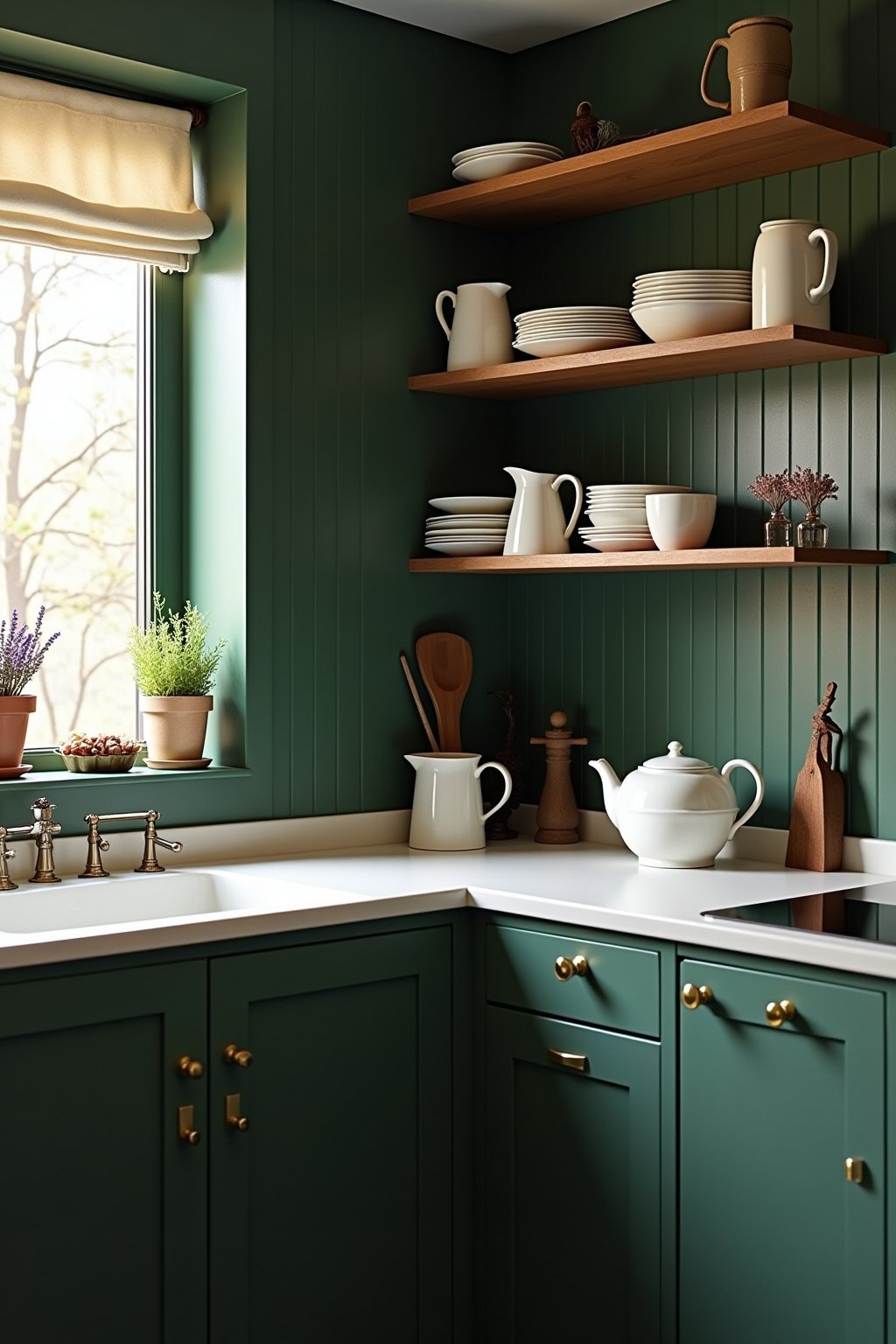
Light, airy cottagecore had its moment. Now its moodier, more dramatic sibling is having a massive surge. Dark cottagecore takes everything we love about cottage-style kitchens — the open shelving, the collected ceramics, the herb gardens — and wraps it in deep, moody colors that feel like a Jane Austen novel come to life.
With Pinterest searches up a staggering 915%, dark cottagecore kitchens are the single fastest-growing kitchen trend right now. And the best part? You can achieve this look without a renovation. It’s all about color, styling, and intentional vintage charm.
Why This Works
- Romantic and practical — combines the cozy charm of cottage style with the sophistication of dark, moody colors
- No renovation required — paint, styling, and vintage finds can create this look in any existing kitchen
- Instagram-worthy — the contrast between dark walls and styled vintage pieces photographs beautifully
- Uniquely personal — collecting vintage pieces means your kitchen will be one-of-a-kind
- Works with imperfections — unlike modern kitchens that demand perfection, cottagecore celebrates character and patina
What You’ll Need
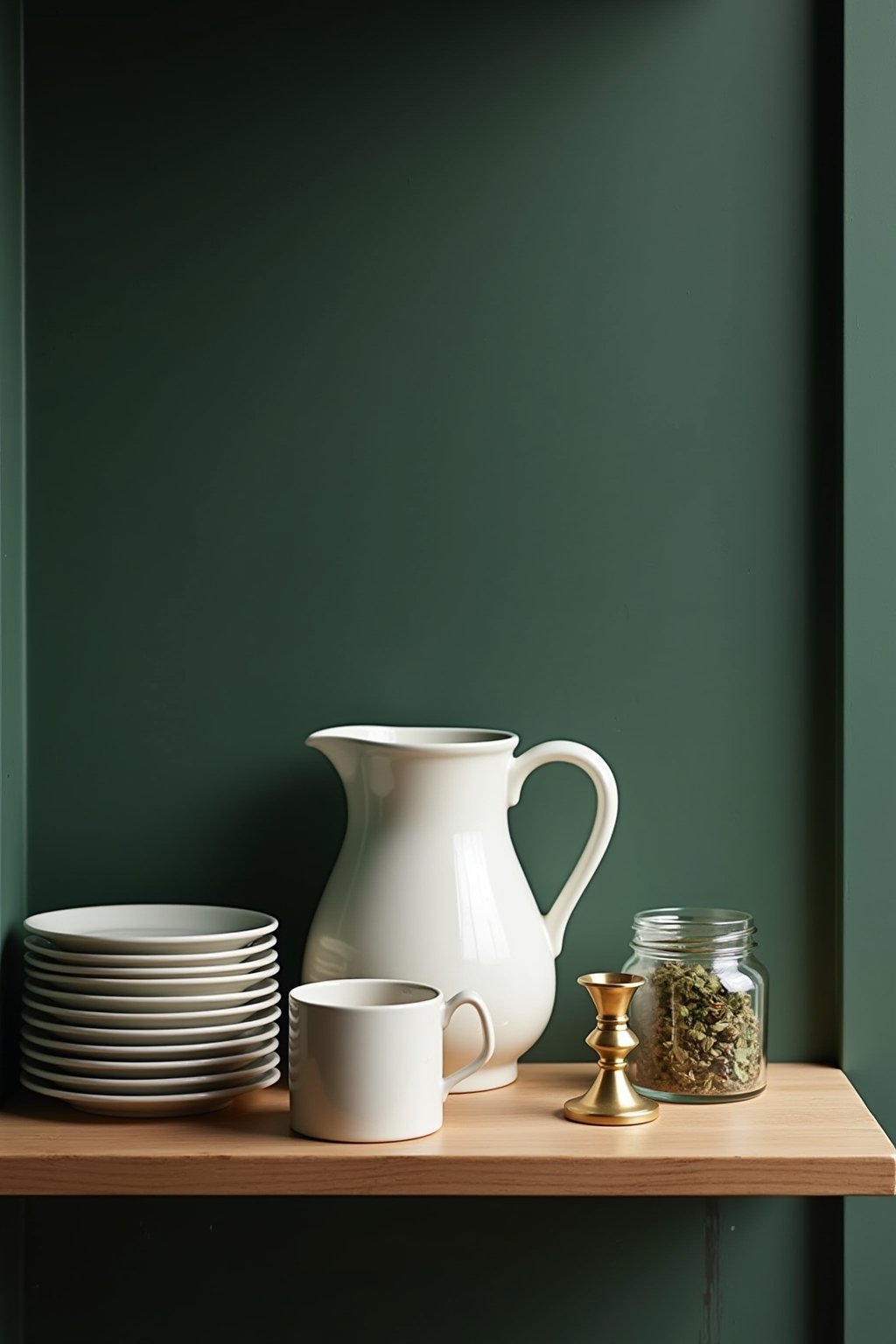
Build your dark cottagecore kitchen with these elements:
- Dark paint — deep green, navy, charcoal, or aubergine for walls or cabinets
- Open shelving — wood brackets and boards for displaying collected pieces
- Vintage or vintage-style ceramics — mismatched plates, bowls, pitchers
- Café curtains — linen or cotton in cream, gingham, or floral
- Brass or iron hardware — cup pulls, bin pulls, or simple knobs
- Fresh and dried flowers — wildflowers, dried lavender, herbs in jars
Step-by-Step Guide
Set the Mood with Dark Walls
The foundation of dark cottagecore is — surprise — dark walls. Deep hunter green, midnight blue, dark olive, or charcoal gray all work beautifully. Paint the walls and consider painting the cabinets to match or in a complementary dark shade.
Don’t be afraid to go dark. The vintage styling will add lightness and warmth. The dark backdrop is what makes everything else pop.
Install Open Shelving
Replace at least one section of upper cabinets with open wood shelving. Use reclaimed wood or simple boards on iron or wood brackets. This creates display space for your collected pieces — the heart of cottagecore styling.
Arrange shelves with a mix of dishes, vintage finds, cookbooks, and one or two plants. Not too perfect — slightly imperfect is the goal.
Collect Vintage Pieces
Hit thrift stores, estate sales, and antique malls for: ceramic pitchers, mismatched ironstone plates, vintage bread boards, copper pots, brass candlesticks, and old cookbooks. The beauty of cottagecore is that nothing needs to match.
Build your collection over time. The most charming cottagecore kitchens look collected, not purchased all at once.
Add Textile Warmth
Hang café curtains on the lower half of kitchen windows — linen in cream or a small floral print. Add a gathered sink skirt under an open sink. Layer linen towels over oven handles. These soft elements counter the dark walls beautifully.
A vintage-style runner rug in front of the sink adds both comfort and visual warmth underfoot.
Style with Nature
Fresh herbs in terracotta pots on the windowsill, a pitcher of wildflowers on the counter, dried lavender bundles hanging from hooks — nature is essential to the cottagecore aesthetic. Even in winter, dried flowers and potted herbs keep the kitchen feeling alive.
A small collection of vintage glass jars filled with pantry staples (dried pasta, rice, spices) adds both function and beauty.
Common Mistakes to Avoid
- Going too precious — cottagecore should feel lived-in, not like a museum. Use your vintage pieces daily
- Over-cluttering — there’s a fine line between curated and chaotic. Edit your display pieces regularly
- Choosing gray-dark instead of warm-dark — cool grays feel industrial, not cottage. Choose dark greens, warm charcoals, or deep blues with warm undertones
- Matching everything too perfectly — if all your ceramics match, it doesn’t look collected. Embrace the mix
- Forgetting lighting — dark walls need warm, layered lighting. Candles, warm bulbs, and under-shelf lights prevent the space from feeling gloomy
Budget Tips
Dark cottagecore is one of the most budget-friendly kitchen styles:
- Paint is your biggest transformation tool — one or two gallons of dark paint changes everything
- Thrift stores are goldmines for vintage ceramics, pitchers, and bread boards ($1-10 each)
- DIY open shelving costs under $30 in materials
- Sew simple café curtains from inexpensive linen or cotton fabric
- Dry your own flowers from grocery store bouquets — hang upside down for two weeks
- Estate sales often have brass and copper items for pennies compared to retail
Styling Tips
- Layer different whites and creams — ivory pitchers, cream plates, and off-white linens create subtle depth
- Use odd numbers when styling shelves — groups of 3 or 5 items look more natural than even numbers
- Mix materials on each shelf — wood, ceramic, glass, and brass on the same shelf adds visual interest
- Leave some shelf space empty — breathing room prevents the look from feeling cluttered
- Add one copper piece per vignette — a copper pot, kettle, or mug adds warmth against dark backgrounds
- Lean a wooden cutting board against the backsplash — this classic cottage touch adds instant charm
Room-by-Room Inspiration
Small Apartment Kitchen
Paint just the wall behind the sink in a deep green. Add one floating shelf with vintage plates and a pitcher. Hang a small linen café curtain. Even in a tiny kitchen, these touches create a charming cottagecore corner.
Farmhouse Kitchen
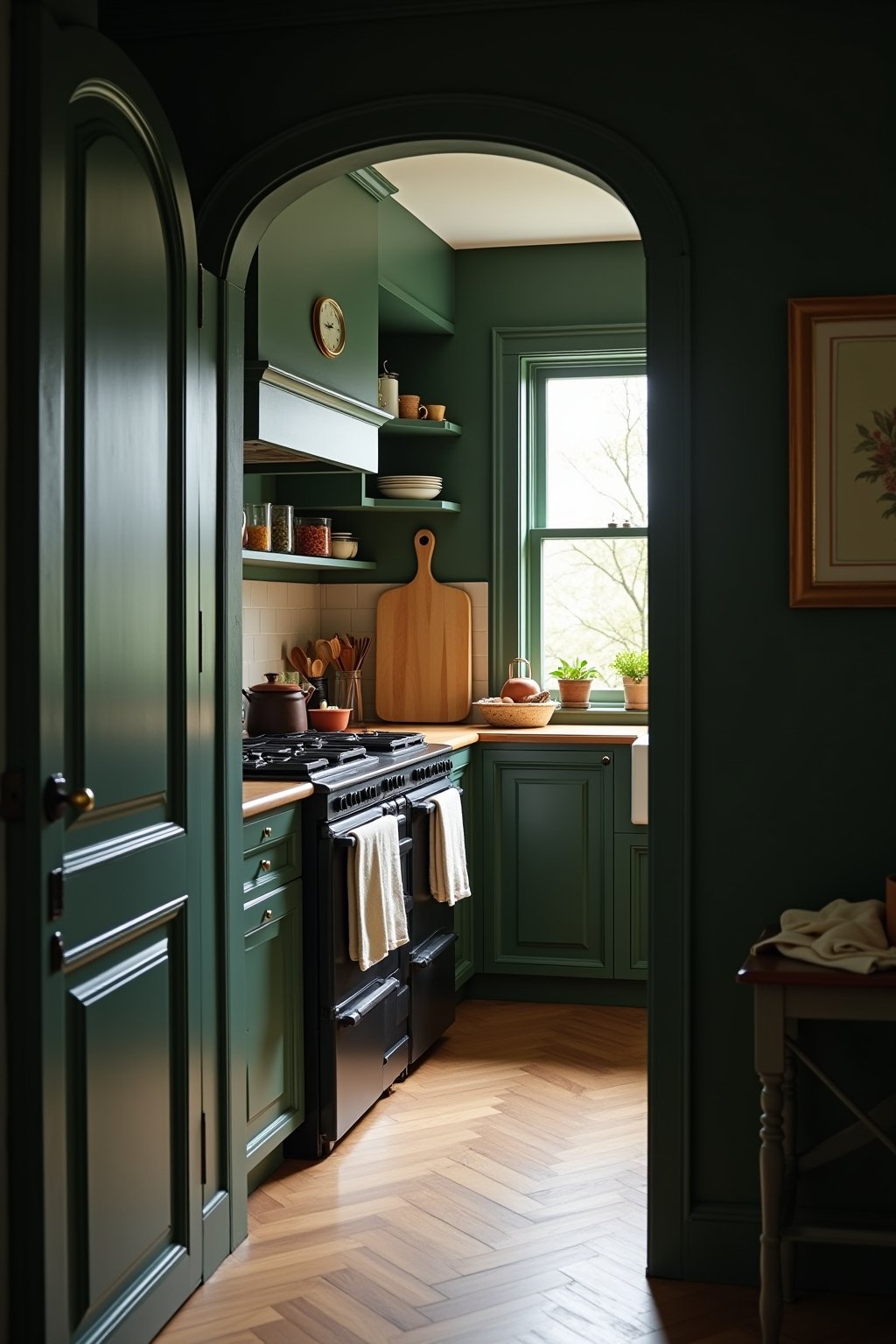
Go all-in: dark green cabinets, cream countertops, open shelving on every wall, vintage hardware, a farmhouse sink with a gathered skirt, dried herbs everywhere. This is full cottagecore immersion.
Modern Kitchen
Dark cottagecore can soften a modern kitchen. Keep your existing clean lines but paint one section of cabinets dark, add one open shelf, and style with a few vintage pieces. The contrast between modern structure and vintage warmth is stunning.
Frequently Asked Questions
What colors work for a dark cottagecore kitchen?
Deep hunter green, midnight navy, dark olive, charcoal gray, and aubergine all work beautifully. The key is choosing dark colors with warm undertones so the space feels cozy, not cold.
Where do I find vintage kitchen items for cottagecore styling?
Thrift stores, estate sales, flea markets, antique malls, and online marketplaces are all great sources. Look for ironstone dishes, ceramic pitchers, bread boards, copper pots, and brass candlesticks.
Can I create a dark cottagecore kitchen in a rental?
Absolutely. Focus on removable elements: command-strip floating shelves, peel-and-stick tile backsplash, café curtains (tension rod), vintage accessories, and paint if your lease allows it.
How do I keep a dark cottagecore kitchen from feeling too dark?
Layer warm lighting (under-shelf LEDs, warm bulbs, candles), use cream and white accessories for contrast, hang a mirror or place reflective brass pieces, and keep window treatments light and airy.
What’s the difference between regular cottagecore and dark cottagecore?
Traditional cottagecore uses light, airy colors (white, cream, pastel). Dark cottagecore uses the same styling principles — open shelving, vintage pieces, natural elements — but against moody, dark backgrounds for a more dramatic, sophisticated feel.
Is dark cottagecore going to be dated in a few years?
The elements of cottagecore — vintage pieces, open shelving, natural materials — are timeless. The dark color palette may shift, but the collected, personal styling approach has staying power that transcends trends.