
The most beautiful homes I have ever been in did not look like they were decorated in one shopping trip. They looked like they were collected — a vintage mirror picked up at a flea market, a modern sofa that was worth the investment, a painting from a trip abroad, and a grandmother’s side table that just happened to work perfectly.
That is the collected home look, and it is the opposite of walking into a furniture store and buying a matching set. It takes a little more intention but the result is a home that feels like you — not like a page from a catalog. Designers have been doing this for years, and the rules are simpler than you think. You do not need to be an antique expert or have a huge budget. You just need to know what to look for and how to make it all work together.
What’s Actually Doing the Work
- Tells your story — a collected home reflects your life, travels, and personality. It is unique to you in a way that matching sets from one store can never be
- Anti-trend by nature — because nothing matches a specific era or trend, a collected home never looks dated. It evolves with you instead of aging out
- Budget-friendly — mixing vintage finds and thrift store treasures with a few quality modern pieces costs less than buying everything new and looks infinitely better
- More interesting to look at — the contrast between old and new, rough and polished, simple and ornate creates visual tension that makes rooms feel dynamic and alive
- Sustainable — reusing vintage and secondhand furniture keeps beautiful pieces out of landfills and reduces the demand for new production
- Designer-approved — every major interior design publication is featuring collected, un-matched interiors as the dominant style direction right now
What You’ll Need
Building a collected home is an ongoing process, but here is how to start:
- One anchor piece of modern furniture — a sofa, a dining table, or a bed that is clean-lined and timeless
- 1-2 vintage or secondhand pieces — a side table, mirror, lamp, or accent chair with character
- A unifying color palette — 3-4 colors that tie your mixed pieces together
- Patience — the best collected homes are built over time, not in a weekend. Let pieces come to you
- Thrift store familiarity — know your local thrift shops, estate sales, flea markets, and Facebook Marketplace
The Method
Start With a Modern Foundation
Every collected home needs an anchor — one or two key pieces that are clean, modern, and timeless. This is usually your sofa, dining table, or bed. These pieces set the tone and provide a neutral canvas that vintage pieces can contrast against.
Choose modern pieces in simple silhouettes and neutral colors — a gray linen sofa, a warm wood dining table, a white upholstered bed. These are the straight man in the comedy duo. They let the vintage pieces get the laughs.
Add Vintage Pieces With Character
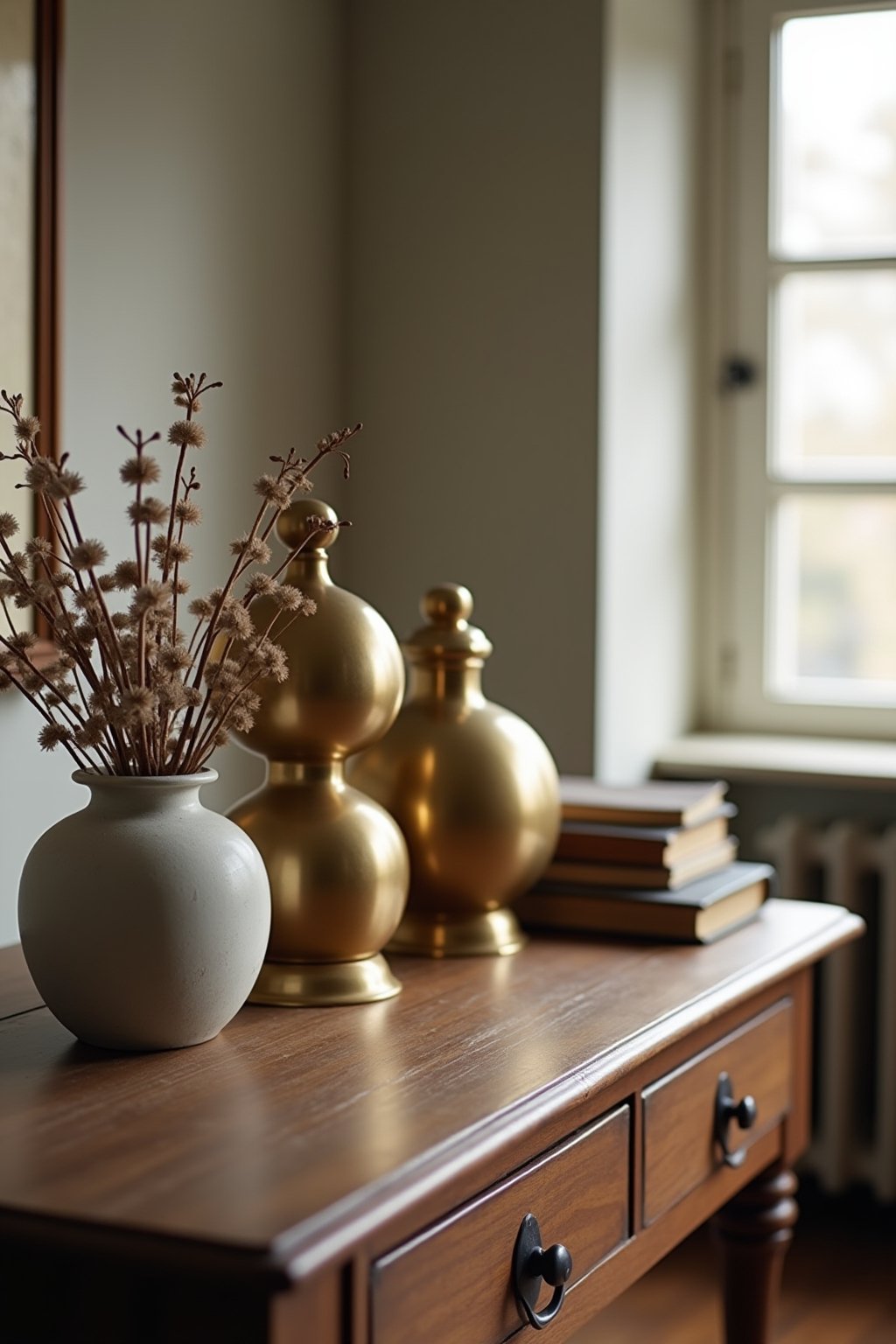
Now layer in pieces with history and personality. A vintage wooden side table with turned legs. A brass floor lamp from the 1970s. An antique mirror with a carved frame. A set of mismatched vintage dining chairs. These are the pieces that make people say, where did you find that?
Look for pieces with good bones and interesting details — unusual shapes, carved woodwork, interesting hardware, or a beautiful patina. Condition matters less than character. A scratched vintage table tells a story. A perfect replica from a factory does not.
Connect Everything With a Color Thread
The secret to making mismatched pieces look intentional is a shared color palette. If your vintage mirror has a gold frame, echo that gold in a modern lamp or picture frame. If your antique chair is upholstered in blue, add a modern blue throw pillow on the sofa.
You do not need everything to match — you need everything to relate. A warm wood vintage table next to a warm wood modern shelf reads as cohesive even though the pieces are from different decades. The shared warmth and material creates a visual connection.
Mix Materials and Eras Intentionally
The best collected rooms have a mix of materials — wood, metal, glass, fabric, ceramic — and a mix of eras — something from the mid-century, something traditional, something modern. This prevents the room from looking like a period piece or a showroom.
A concrete-and-steel modern coffee table next to a velvet mid-century armchair on top of a vintage Persian rug. The contrast is what makes it interesting. If everything was from the same era and material, it would be a themed room, not a collected home.
Edit and Let It Breathe
The biggest mistake in a collected home is collecting too much. Curation means choosing the best pieces and saying no to everything else. A room with five incredible vintage finds and lots of breathing space looks sophisticated. A room stuffed with thirty thrift store finds looks like a thrift store.
Step back regularly and ask: does this room feel edited or cluttered? Would removing one thing make the remaining pieces stronger? The answer is usually yes. A collected home is not about having the most things — it is about having the right things.
Where Things Tend to Slip
- Everything is vintage — a room where every piece is antique looks like a museum or a grandparent’s house. The modern pieces are what make the vintage ones pop
- No color connection — if your vintage and modern pieces share zero colors or materials, the room looks random. Find the color thread that ties them together
- Buying just because it is old — not every vintage find is a good find. Ask yourself: does this piece have a beautiful shape, interesting detail, or useful function? If not, leave it
- Overcrowding the room — every piece needs space to breathe and be noticed. A crowded collected home looks like hoarding. An edited one looks like a gallery
- Ignoring scale — a tiny delicate vintage table next to an oversized modern sectional looks unbalanced. Make sure your pieces are proportional to each other and to the room
Frugal Approach
Estate sales are goldmines: Estate sales offer high-quality vintage furniture at a fraction of antique store prices. Go on the last day for the biggest discounts.
Facebook Marketplace for big pieces: Solid wood vintage dressers, tables, and bookshelves are listed daily for very little. Filter by free and under certain amounts in your area for the best deals.
One vintage, one modern: You do not need an entire room of vintage finds. One standout vintage piece per room — a mirror, a lamp, or a chair — is enough to create the collected effect.
Paint unifies everything: Mismatched vintage frames, mismatched chairs, or mismatched shelving can be unified by painting them all the same color. Instant cohesion.
Bringing the Pieces Into Conversation
- Group vintage objects in threes — three different vintage vases, three old books, or three brass objects on a shelf creates a vignette, not a pile
- Put vintage pieces in unexpected places — a vintage wooden ladder as a blanket rack, an old crate as a side table, or a vintage mirror on the floor leaning against the wall
- Let patina show — do not refinish every vintage find to perfect condition. The scratches, wear marks, and aged finish are what give the piece character
- Mix high and low — a designer modern lamp on a thrift store vintage table is the essence of the collected look. The contrast is the whole point
- One statement, not seven — each room should have one standout vintage piece that draws the eye. The rest can be supporting players
- Rotate seasonally — swap vintage accessories between rooms or from storage to keep the space feeling fresh without buying anything new
Suiting Rooms
Living Room
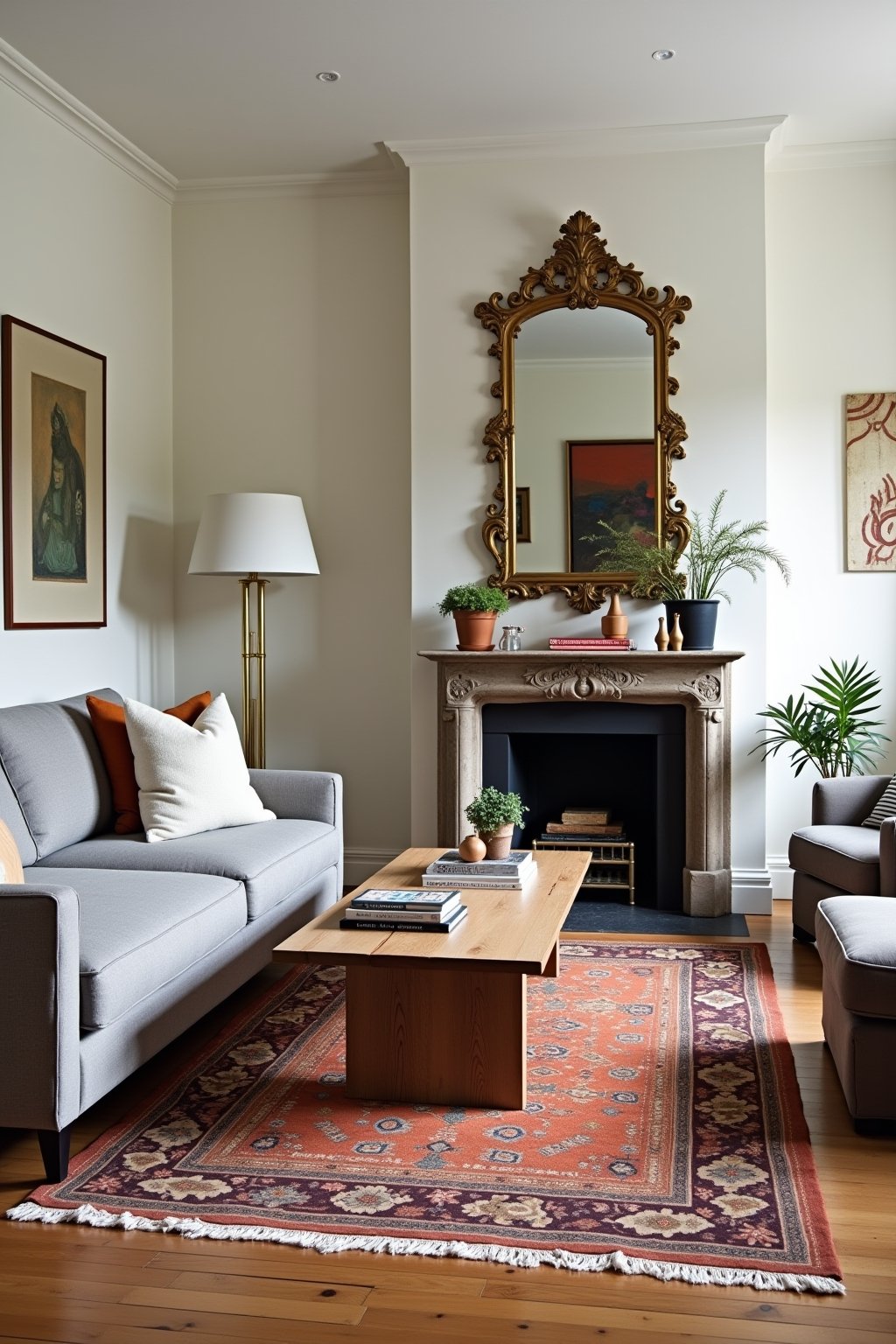
A modern gray linen sofa with a vintage Persian rug underneath, a mid-century brass floor lamp in the corner, a reclaimed wood coffee table, and an ornate vintage mirror above the fireplace. Modern art on the adjacent wall. The mix of modern comfort and vintage character feels effortlessly sophisticated.
Dining Room
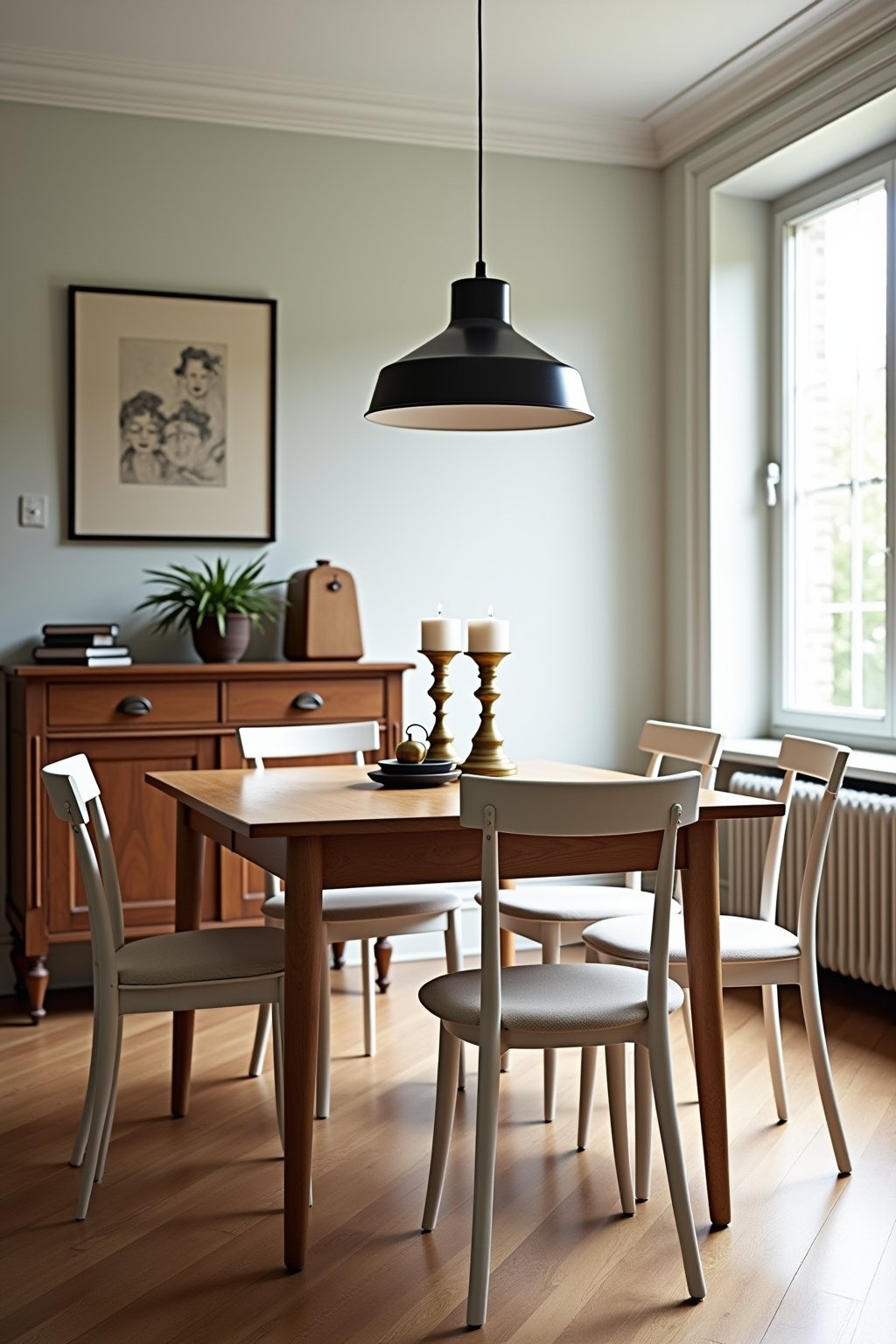
A simple modern wood dining table surrounded by four different vintage chairs — each different but tied together by being painted the same warm white. A modern pendant light overhead, vintage brass candlesticks on the table, and a large antique sideboard against the wall holding modern white dinnerware.
Bedroom
A modern upholstered bed in warm linen, flanked by two mismatched vintage nightstands (different styles, same warm wood tone). A vintage landscape painting above the bed, a modern ceramic table lamp on one side, and a vintage brass lamp on the other. A modern woven rug underneath. Effortlessly un-matched and beautiful.
Frequently Asked Questions
How do I know if a vintage piece is worth buying?
Look for solid construction (real wood, dovetail joints, quality hardware), an interesting shape or detail, and something that makes you stop and look twice. If it is well-made and beautiful, it is worth considering.
Can I mix different wood tones?
Absolutely — mixing wood tones is part of the collected look. The key is having at least two pieces that share a similar wood tone so there is some repetition. Warm woods mix well together and cool woods mix well together.
Where do I find vintage furniture?
Estate sales, thrift stores, flea markets, Facebook Marketplace, Craigslist, and antique malls are all great sources. Estate sales typically offer the best quality at the lowest prices.
How many vintage pieces per room?
One to three vintage pieces per room is the sweet spot. More than that and the room can start feeling cluttered or too themed. Let each vintage piece be a standout, not one of many.
What if my partner hates the vintage look?
Start small — one vintage vase, one antique mirror, one secondhand side table. Vintage pieces with cleaner lines and less ornate details tend to be easier sells. Show how they elevate the room before going bigger.
Should I refinish vintage finds?
It depends. Minor cleaning and tightening hardware is always a good idea. Full refinishing can strip the character. A general rule is to preserve original finishes when possible and only refinish if the piece is in truly bad condition.