
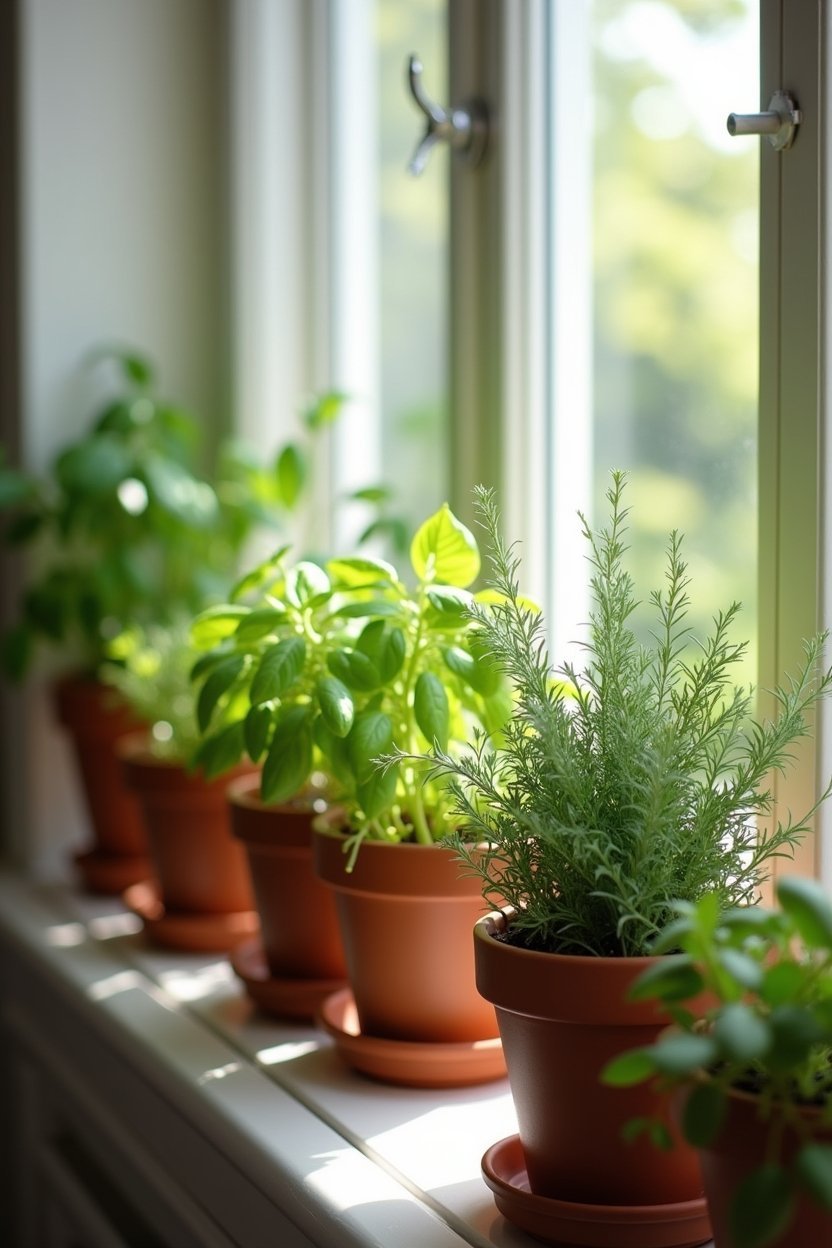
Most people have killed a basil plant from the grocery store. You bring it home, set it in a bright spot, water it faithfully, and within two weeks it is a brown, wilted disappointment. There is no secret skill you are missing — the grocery store basil died because it was never meant to survive. It was grown fast in a greenhouse under ideal conditions, roots crammed into a pot two sizes too small, stressed and root-bound before it even reached your refresh your kitchen without a renovation. Growing grow herbs indoors year-rounds from scratch, in the right containers with the right soil and light, is genuinely one of the easier things you can do in a garden — or on a kitchen counter.
Choosing the Right Location
Light is the non-negotiable factor. Most culinary grow herbs indoorss are Mediterranean in origin — they evolved in bright, dry, sunny conditions. A south or west-facing window gets enough direct sun to support basil, thyme, rosemary, and oregano. An east-facing window works well for parsley, mint, chives, and cilantro, which tolerate less intense light. A north-facing window is not enough — add a small LED grow light.
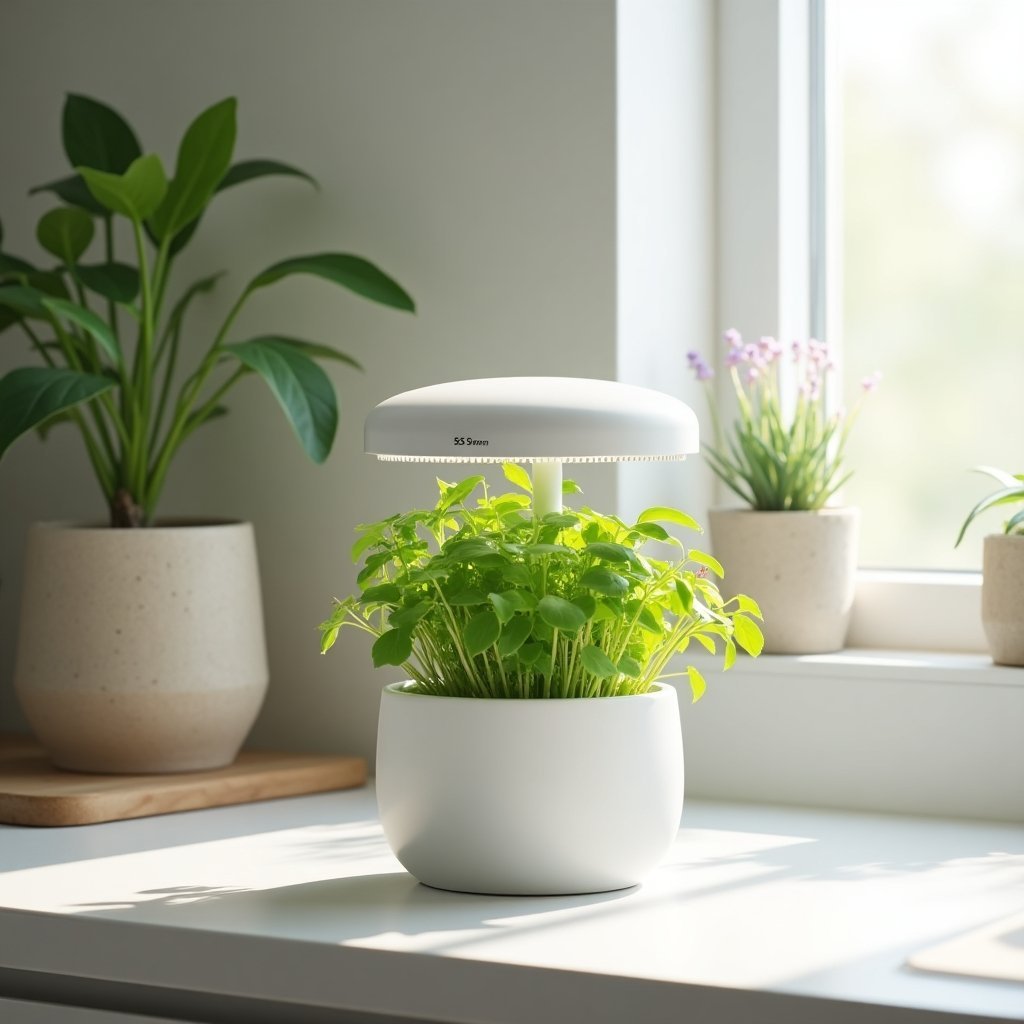
The Click and Grow Smart Garden 9 is the most polished counter option: nine planting pods, a built-in LED grow light on an adjustable arm, and a self-contained water reservoir. It handles the light and watering variables automatically — removing the two biggest failure points for beginners.
The Best Herbs to Grow in a Kitchen Garden
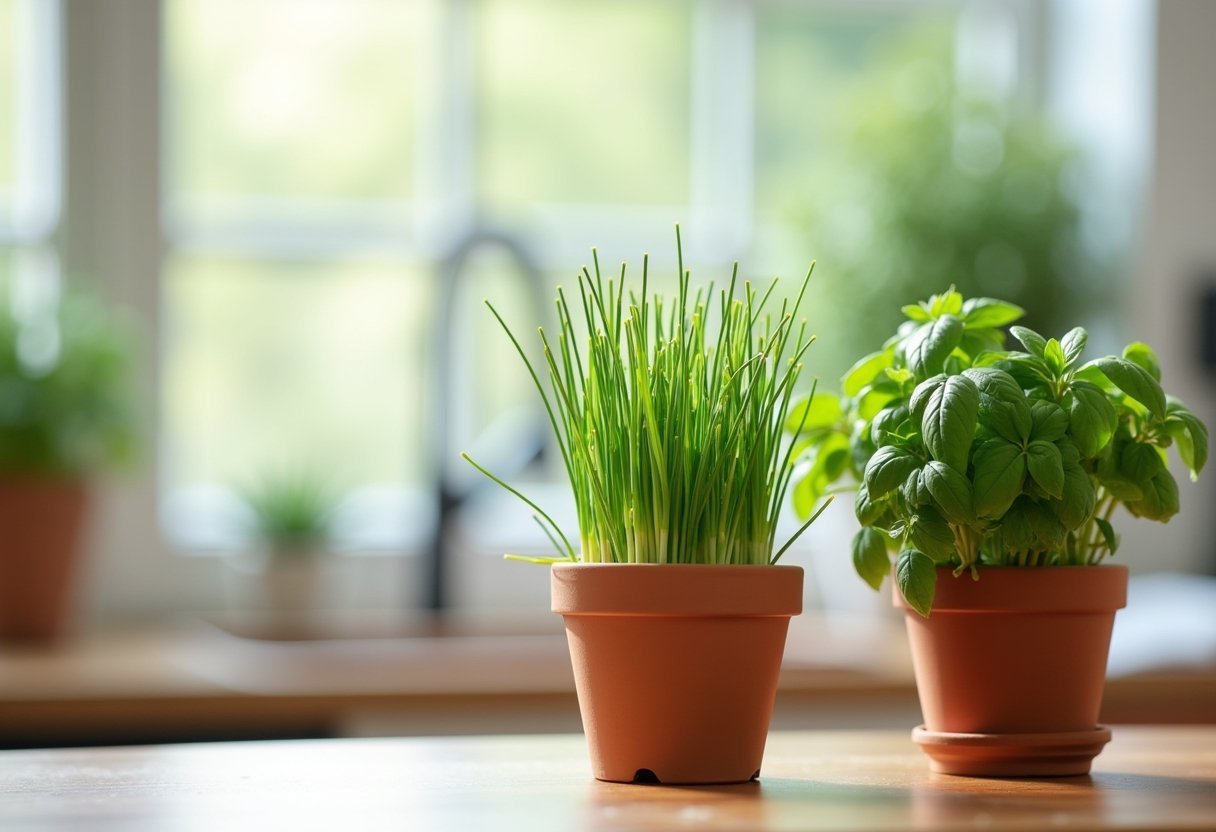
Basil (medium difficulty, high reward) — wants warmth and full sun; pinch flower buds as soon as they appear. Chives (easy, nearly foolproof) — grow in part shade, tolerate cooler temperatures. Mint (easy, but keep contained in its own pot or it will overwhelm neighbors). Parsley (easy but slow to germinate — 2 to 4 weeks). Thyme (easy, drought tolerant — prefers to dry out slightly between waterings). Cilantro (succession plant every 3 weeks — bolts quickly in warm temperatures).
Pots, Containers, and Drainage
Drainage is non-negotiable. Every herb pot must have at least one drainage hole — herbs sitting in waterlogged soil die from root rot within days. Terracotta (unglazed clay) is porous and allows water to evaporate through the walls, keeping roots from sitting in moisture too long. A terracotta herb pot set with drainage holes in graduated sizes works beautifully on a windowsill or counter.
Most culinary herbs need a pot at least 6 inches in diameter — 8 inches for basil and parsley. For a compact arrangement of multiple herbs, a self-watering window box planter fits multiple herbs in a compact linear space and waters from below via a reservoir — the most forgiving watering method for inconsistent schedules.
The Best Soil for Kitchen Herbs
Regular potting soil retains too much moisture for most herbs. Organic herb and vegetable potting mix formulated specifically for herbs blends start composting at home, peat, perlite, and limestone to create a light, well-draining mix. If you are using a standard potting mix, add 20 to 25 percent coarse perlite by volume to improve drainage.
Watering: The Schedule That Actually Works
Before watering, push your finger one inch into the soil. If it feels moist, wait. If it feels dry, water thoroughly until water runs freely from the drainage hole. Empty the saucer after 30 minutes. Approximate frequencies: basil every 5 to 7 days; mint and parsley every 4 to 6 days; thyme and rosemary every 10 to 14 days; chives every 7 to 10 days.
How to Harvest Without Killing Your Herbs
Never take more than one-third of the plant at any single harvest. Always cut just above a node — the point where leaves meet the stem. The plant will branch out from that point, producing two or more stems where there was one. Herb scissors with 5 blades make frequent, casual herb harvests easy — five parallel blades cut multiple stems simultaneously, which is especially useful for chives and fine herbs like dill and parsley.
The moment basil starts to form a flower stalk, pinch it off completely. Once basil bolts, leaf production slows dramatically and the flavor becomes more bitter. Consistent pinching of flower buds keeps basil in productive leaf mode for the entire growing season. For more inspiration, browse our gardening guides. For more ideas, explore our gardening tips.
Products Featured in This Article
- Mkono Terracotta Pots with Drainage Holes, Set of 5
- Espoma Organic Herb and Vegetable Potting Mix
- Click and Grow Smart Garden 9, Indoor Herb Growing System
- Kitchen Herb Scissors with 5 Blades and Cleaning Comb
- Lechuza Balconera Self-Watering Window Box Planter