
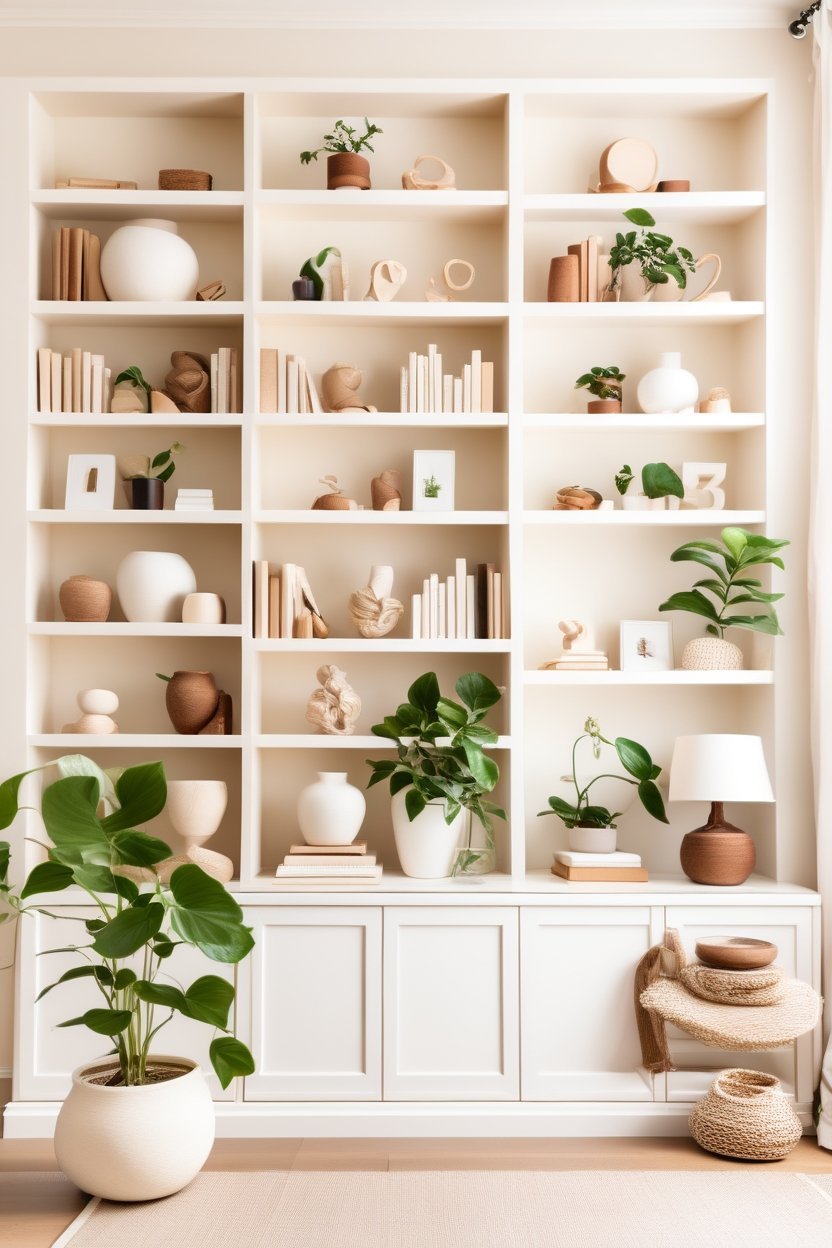
A how to style a bookshelf is one of the most personal and most visible surfaces in a home — and one of the hardest to style well. Most of us either overload it (every book we own, lined up spine-out like a library) or leave it bare because we don’t know where to start. Here’s how designers actually approach it.
Start by Taking Everything Off
Before you can style a shelf, you have to empty it completely. This feels counterintuitive but it’s essential — you need to see the shelf as a blank canvas, not a storage unit with things rearranged.
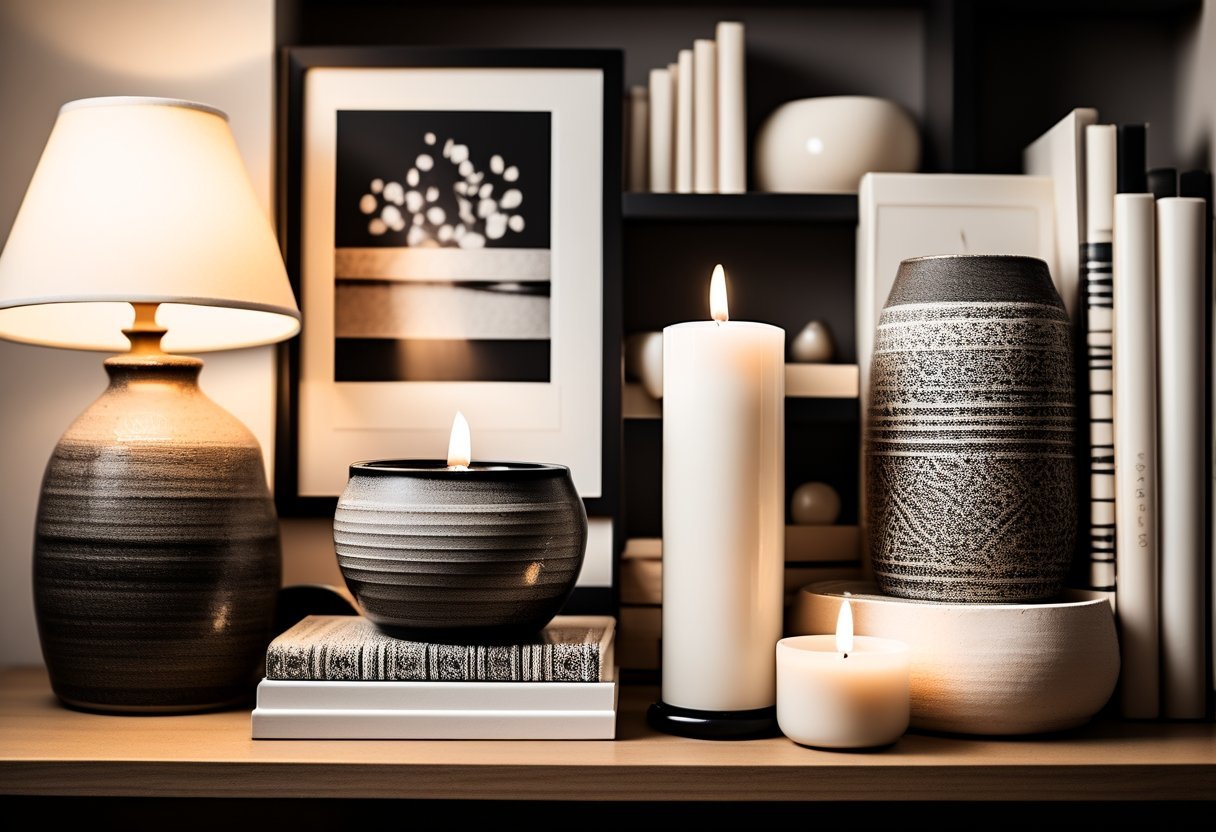
Curate What Goes Back
Not every book belongs on the shelf. Ask: does this add to the story of the room, or is it just here because I have it? Books with attractive spines (cloth-covered, neutral or earthy tones) earn a spot. Paperbacks with garish covers go in a closet or luxury hotel bedroom on a budget. It’s not about hiding that you read — it’s about curation.
Group Books Horizontally and Vertically
Line some books vertically (spines out, as normal) and stack others horizontally in small piles of 3–4. These horizontal stacks become platforms for small small home decor changesative objects — a candle, a small plant, a ceramic figure. Mixing orientations adds instant visual rhythm.
Vary the Height of Every Object
The eye moves through a shelf by following the silhouette. If everything is the same height, the eye has nowhere to go — it’s flat and boring. Use tall vases or sculptures, medium plants or candles, and small objects at different heights across every shelf.
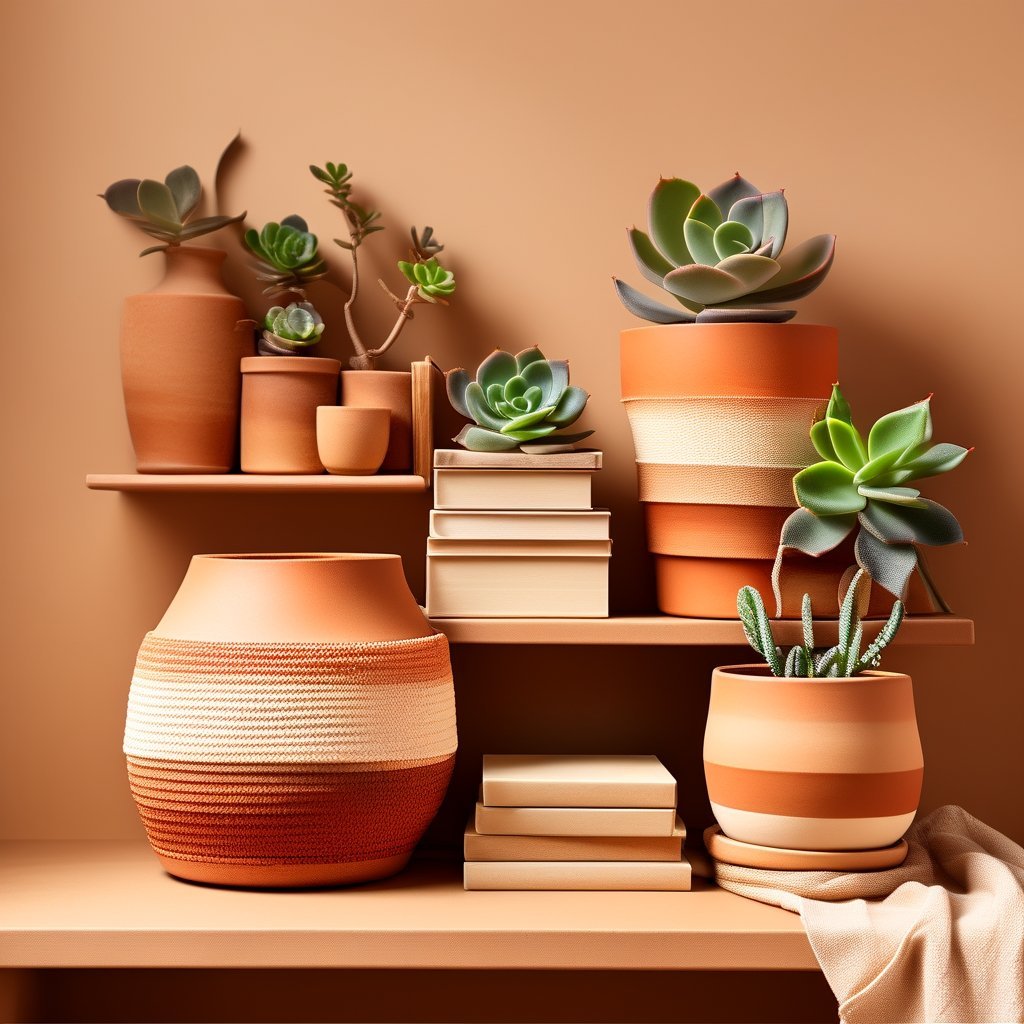
Use the Rule of Three (and Odd Numbers)
Group Afrohemian decor ideasative objects in threes or fives, never twos or fours. Two objects look like a pair — symmetrical and stiff. Three objects at varying heights look natural and curated. This applies to every shelf, every surface, every room.
Add Something Living
Every well-styled shelf has at least one plant or piece of greenery. A trailing pothos, a small succulent, a sprig of eucalyptus in a small vase. It breaks up the hard lines of books and objects and adds organic warmth that no decorative object can replicate.
Leave Breathing Room
This is the part most people skip. Empty space is not wasted space — it’s rest for the eye. Every shelf should have at least one section that’s only 60–70% full. Overcrowded shelves look chaotic no matter how carefully curated the individual pieces are.
Keep a Color Story
Choose two to three 2026 home color trendss and repeat them across the shelf. Cream, terracotta, and sage. Black, white, and natural wood. When color is repeated, the eye sees a composition rather than a collection of random objects. You can turn books spine-in (pages facing out, white/cream) if the covers clash with your palette.
Add Texture, Not Just Color
Smooth ceramics next to rough woven baskets next to the matte pages of a stack of books — texture is what makes a shelf feel rich and layered. Objects that are all smooth and shiny, or all matte, look flat. Mix materials deliberately.
Step Back and Edit
Style the shelf, then walk across the room and look at it from a distance. Things that looked fine up close often read as cluttered from across the room. Remove anything that doesn’t contribute. The shelf should look as good from the doorway as it does from two feet away.
The goal isn’t a shelf that looks like a showroom — it’s a shelf that looks like you, at your most intentional. A few well-chosen books, a plant, some objects you genuinely love, with room to breathe.