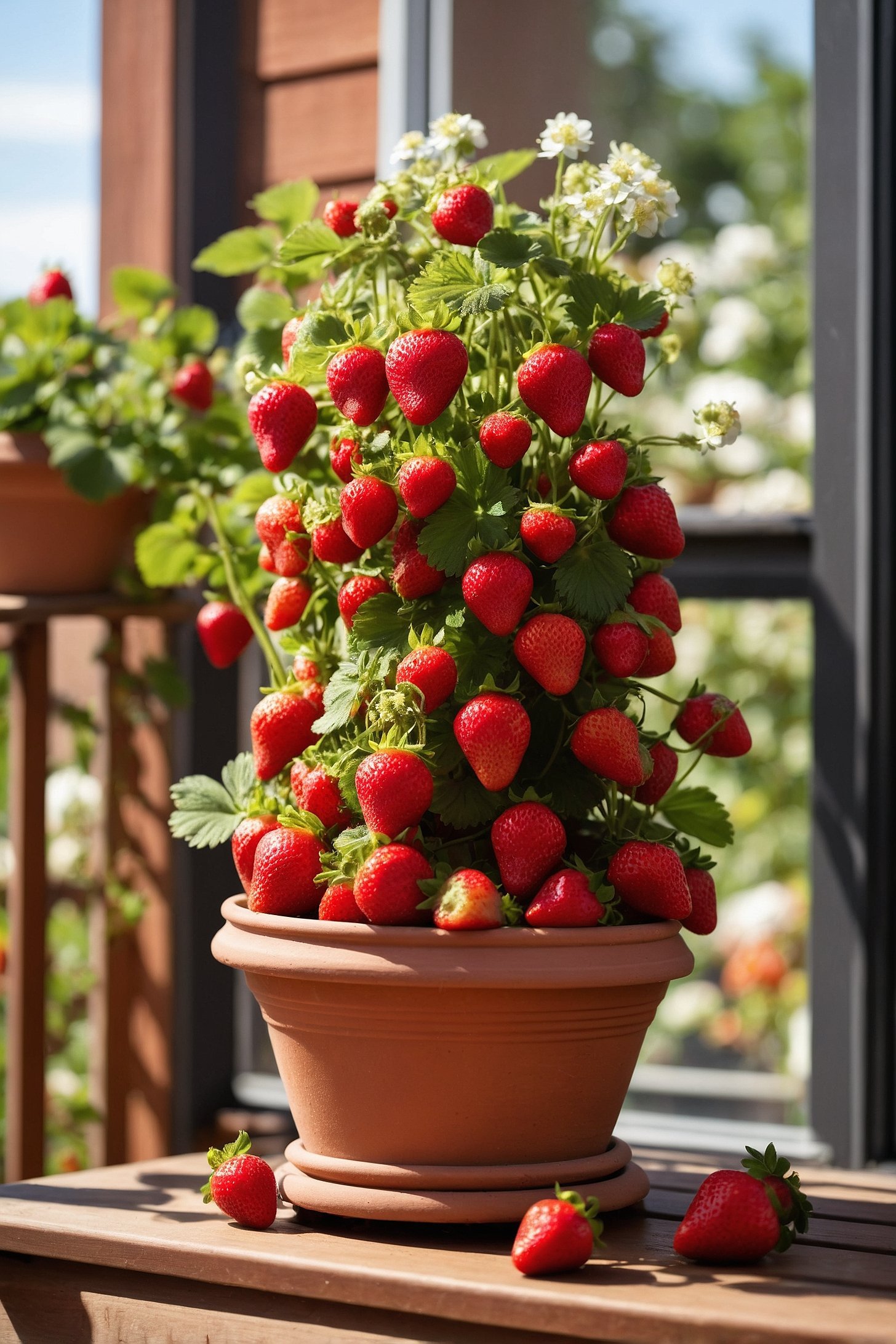
There is something genuinely satisfying about picking a warm, perfectly ripe strawberry and eating it on the spot — and you do not need a garden bed, a yard, or even much create an outdoor living space space to make it happen. Strawberries are one of the best fruits for container growing. Their compact root systems, natural trailing habit, and shallow growing requirements make them ideally suited to pots, towers, and hanging baskets. If you have a sunny balcony that gets at least six hours of sun, you have everything you need.
Why Containers Work So Well for Strawberries
In a traditional garden bed, strawberries can spread aggressively through runners and compete with weeds. In containers, you control the environment entirely. Pest and disease pressure is reduced — slugs and ground-level insects that devastate in-ground patches have a harder time reaching elevated pots and hanging baskets. Container strawberries also tend to produce earlier in the season because containers warm up faster than in-ground soil in spring.
Choosing the Right Container
Strawberry Tower Planters
These vertical planters allow you to grow six, eight, or even twelve plants in the footprint of a single large pot. The Mr. Stacky 5-Tier Strawberry Planter Tower is lightweight, made from food-safe plastic, and includes a built-in water reservoir at the top that trickles down through each tier — making watering significantly easier. Ideal for balconies where how to clean every type of floor space is limited.
Hanging Baskets
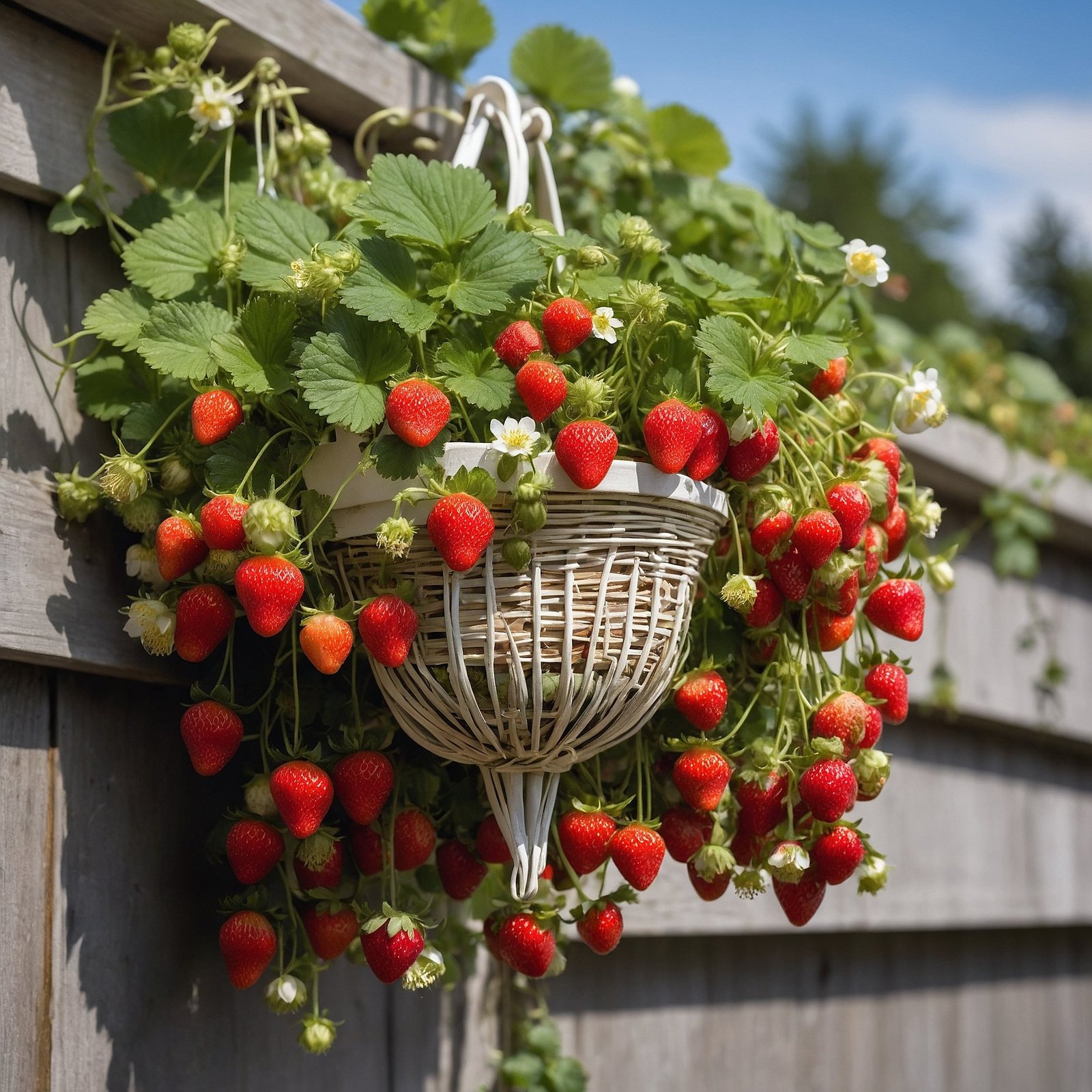
A good hanging basket filled with strawberries is one of the most charming things you can put on a porch. The Keter Easy Grow Hanging Planter Basket is deep enough to accommodate strawberry roots properly and includes a built-in water reservoir that extends the time between waterings — critical since hanging baskets dry out faster than ground-level pots.
Standard Containers with Drainage
A standard terracotta or glazed ceramic pot works perfectly well as long as it has adequate drainage holes and is at least 10–12 inches deep. Avoid pots without drainage entirely — waterlogged roots are the fastest way to kill strawberry plants.
June-Bearing vs. Everbearing: Which Variety Is Right for You?
June-bearing varieties produce one large, concentrated crop over two to three weeks in early summer — ideal for making jam or freezing. For container growers who want a steady supply of fresh berries throughout the season, everbearing is the more practical choice. The Quinault Everbearing Strawberry Plant Crowns (available as a set of 25) are vigorous, productive across multiple flushes, and particularly well-suited to pot culture. They establish quickly and begin producing their first season.
Soil Mix: What Goes in the Container Matters
Strawberries need light, well-draining soil with a slightly acidic pH between 5.5 and 6.5. Standard all-purpose potting mix is often too heavy and retains too much moisture. FoxFarm Happy Frog Potting Soil is pH-adjusted and works particularly well for acid-loving strawberries. Its large format bag is the most economical approach when filling a tower planter.
Watering: The Most Important Daily Task
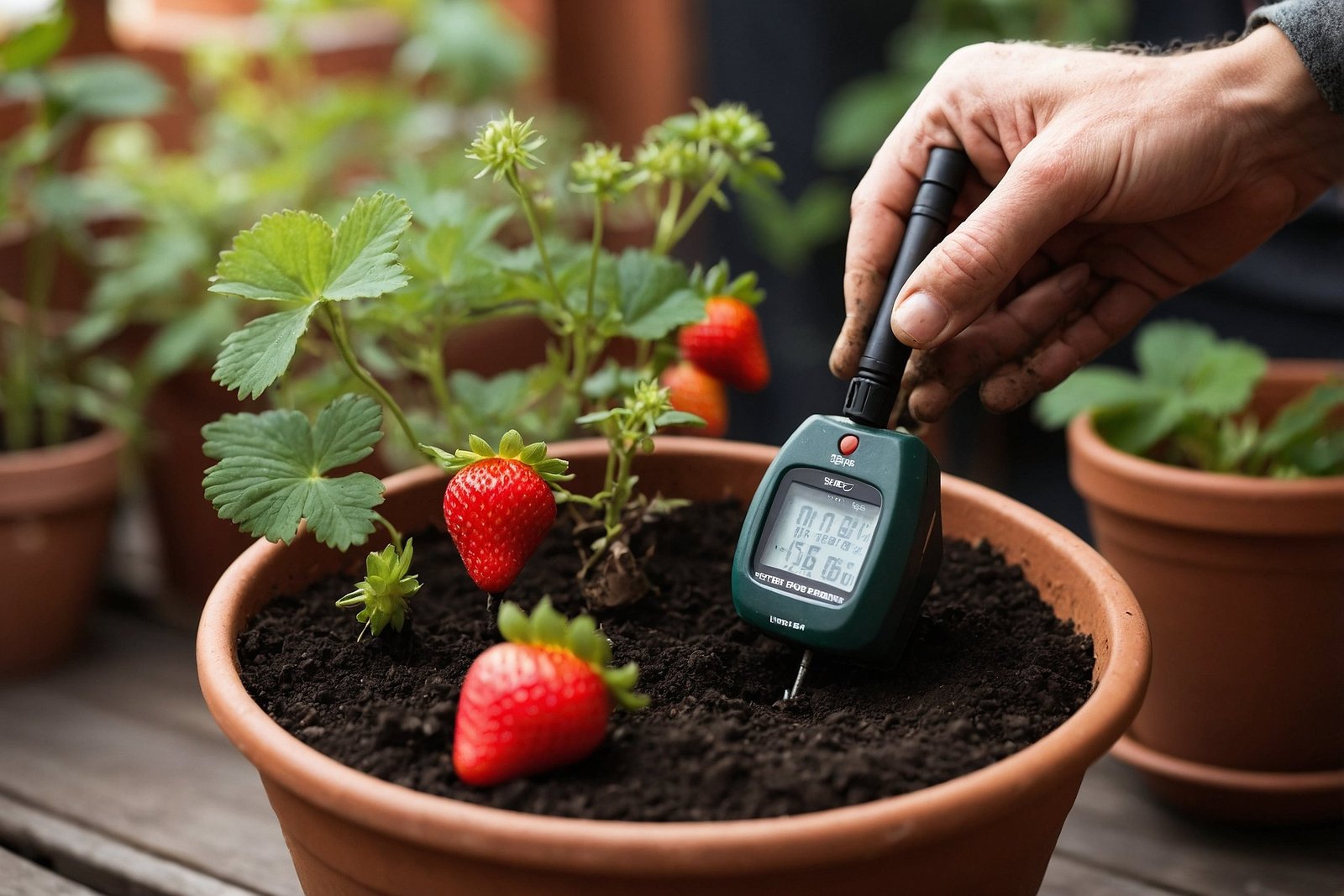
Strawberries in containers need consistent moisture but excellent drainage — soil should feel like a wrung-out sponge. During hot summer weather, containers may need watering once or twice daily. The XLUX Soil Moisture Meter eliminates guesswork completely — push the probe into the soil at root level and the reading tells you exactly whether to water or wait. It requires no batteries and prevents both overwatering and underwatering during heat waves.
Fertilizing for Fruit Production
Strawberries in containers deplete nutrients faster than in-ground plants because every watering session leaches some fertility from the pot. The Espoma Organic Berry-Tone Fertilizer is a slow-release granular formula specifically calibrated for berry production. Apply at planting time and then every four to six weeks through the growing season. During active fruiting flushes, a supplemental liquid feed every two weeks will push production noticeably higher.
Managing Runners
During the main growing and fruiting season, remove runners by cutting them off at the base — this redirects the plant’s energy into fruit production. In late summer, allow a few runners to root into small pots of soil to create new plants for the following season — a free way to refresh your strawberry patch every year.
Overwintering Container Strawberries
Most strawberry varieties are best low-maintenance perennials and will produce for three to five years with proper care. Move containers into an unheated garage, shed, or basement once temperatures consistently drop below freezing. The plants will go dormant and require almost no water. In early spring, move them back outside gradually and they will break dormancy within a few weeks.
The First Harvest and Beyond
Resist the urge to harvest too early. Leave a strawberry on the plant for two or three more days after it turns red — until it is deeply 2026 home color trendsed and yields to gentle pressure. After your first harvest, you will understand exactly why container-grown strawberries make every other option feel like a compromise. For more inspiration, browse our gardening guides. For more ideas, explore our gardening tips.