
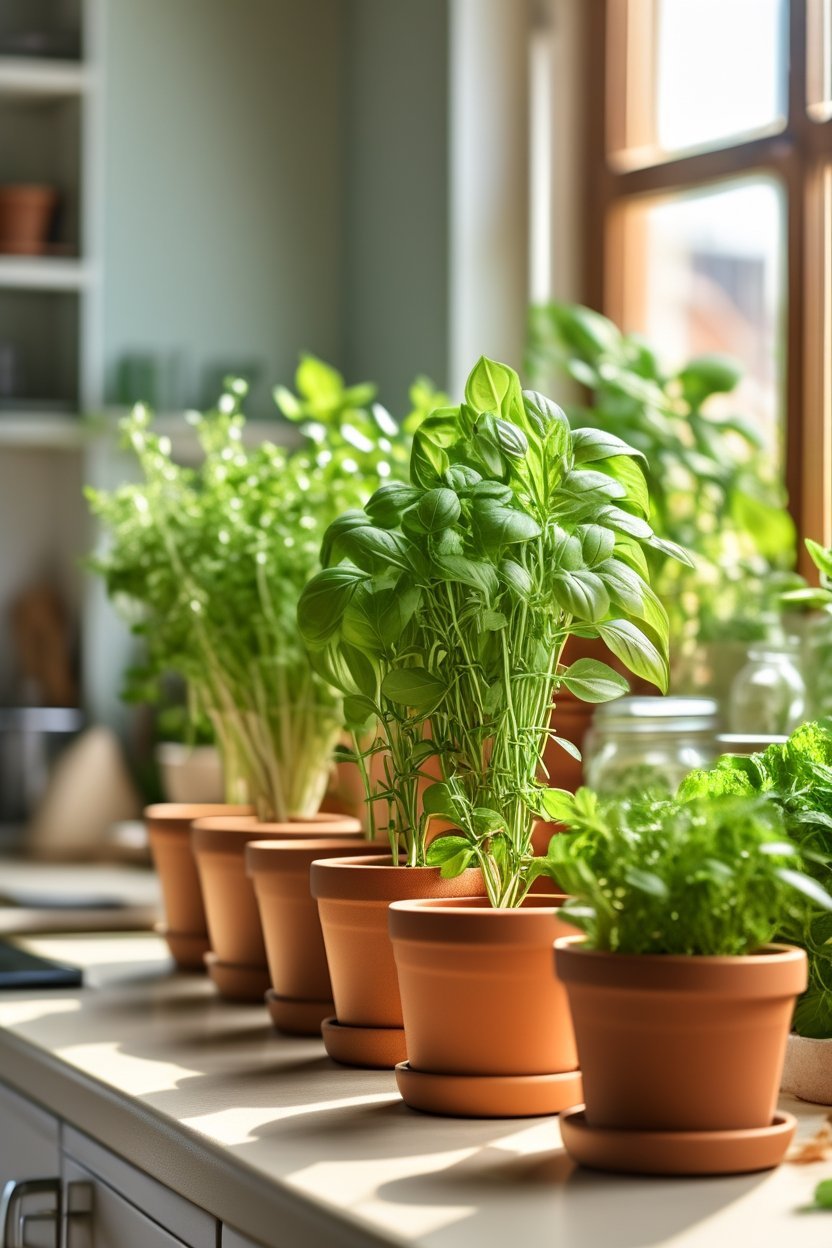
Fresh kitchen herb garden setups are one of those refresh your kitchen without a renovation luxuries that feel extravagant but are genuinely accessible to anyone with a windowsill and a little patience. Growing herbs indoors year-round means having fresh basil for summer pasta in December, fresh rosemary for roasted chicken in February, and fragrant mint for morning tea any morning you want it. Once you understand the small handful of things that make indoor herbs succeed, it becomes one of the most sustainable and rewarding habits in your home.
The Most Important Factor: Light
Light is the single most critical variable in indoor grow herbs indoors growing, and it is where most indoor herb gardens fail. Most herbs are Mediterranean in origin — they evolved in bright, sunny, dry climates — and they genuinely need significant light to thrive. A south-facing window that receives direct sun for at least 4-6 hours a day is ideal.
If you do not have adequate natural light, a grow light changes everything. The Barrina LED Grow Light Strip is an affordable and popular option that mounts easily under a cabinet or shelf and provides full-spectrum light exactly where your herbs need it.
Best Herbs to Grow Indoors
Basil
Basil is the most rewarding indoor herb for deep clean your kitchen gardeners, but it is also the most demanding of light. It needs at least 6 hours of bright direct sun or a good grow light. Keep it warm (never below 50F), water when the top inch of soil dries out, and harvest regularly by pinching the growing tips. Regular harvesting prevents the plant from flowering, which causes the leaves to become bitter and production to stop.
Mint
Mint is one of the easiest herbs to grow indoors and one of the most versatile. It tolerates lower light levels than most herbs, prefers consistently moist soil, and grows vigorously once established. Keep mint in its own container — it spreads aggressively and will crowd out other herbs if grown together. Spearmint, peppermint, and chocolate mint are all excellent indoor varieties.
Chives
Chives are among the most reliable and forgiving indoor herbs. They grow in moderate light, tolerate irregular watering better than most herbs, and produce continuously for months when harvested by snipping with scissors to about an inch from the soil. They also produce beautiful edible purple flowers.
Parsley
Flat-leaf (Italian) parsley grows well indoors with consistent moisture and 4-6 hours of light. Purchasing a small plant from the grocery store and transplanting it into a larger container is the faster path than growing from seed. Harvest outer stems first, leaving the center growth points intact for continued production.
Rosemary
Rosemary thrives in bright, dry conditions. It prefers to dry out slightly between waterings and is highly susceptible to root rot if overwatered. Terracotta pots are ideal for rosemary because they allow soil to dry more quickly than plastic. Once settled and growing, rosemary requires minimal attention beyond occasional harvesting.
Thyme
Thyme is drought-tolerant, relatively compact, and one of the easiest indoor herbs to maintain. Like rosemary, it prefers slightly dry conditions and dislikes sitting in wet soil. It grows slowly but steadily and provides a nearly continuous harvest for months.
Container Basics for Indoor Herbs
Drainage is non-negotiable for indoor herbs. Every container must have drainage holes. Container size matters too — most herbs prefer slightly snug conditions rather than oversized pots. A 4-6 inch diameter pot is appropriate for a single herb plant.
The D’vine Dev Terracotta Pots with Drainage on Amazon come in a set of multiple sizes, are appropriately sized for herbs, and look beautiful on a kitchen windowsill.
Watering Indoor Herbs Correctly
The general rule for most herbs is: water thoroughly, then allow the top inch of soil to dry out before watering again. Lift the pot after watering — feel how heavy it is. As it dries over the following days, it gets noticeably lighter. That weight difference is one of the most reliable indicators of when to water again. Avoid misting herbs — wet foliage promotes fungal disease without actually hydrating the roots.
How to Harvest for Maximum Production
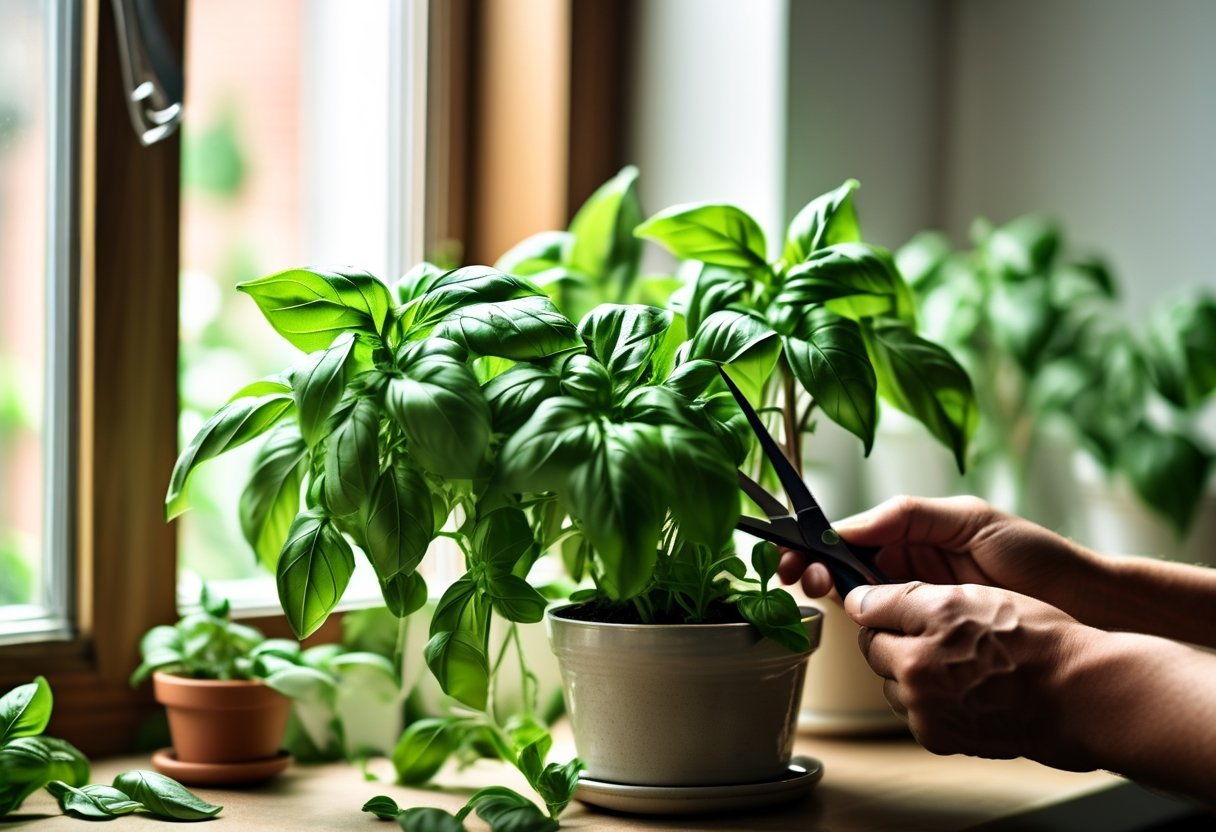
Regular harvesting stimulates more growth. When you pinch stems back, the plant responds by producing two or more new stems from the point where you cut. Over time, regular harvesting transforms a single-stemmed seedling into a full, bushy, prolific plant. Harvest no more than one-third of the plant at any one time, and harvest from the top rather than the bottom, always cutting just above a leaf node.
Dealing With Common Indoor Herb Problems
Leggy, stretched growth almost always means insufficient light. Move the plant to a brighter location or add a grow light. Yellowing lower leaves indicate either overwatering or nitrogen deficiency — check your watering habits first. Wilting despite moist soil is a classic sign of root rot — healthy roots are white and firm, while rotted roots are brown and mushy.
Start with just two or three herbs this season — mint, chives, and basil are a perfect first trio — and experience how quickly a few small pots of green on your windowsill become a genuinely meaningful part of your daily kitchen life. For more inspiration, browse our gardening guides. For more ideas, explore our gardening tips.