

Shiplap has earned its place as one of the most requested DIY accent wall projects — and for good reason. It adds architectural character, texture, and warmth to any room, works in virtually any style from farmhouse to modern, and is achievable as a weekend project for a confident beginner. The result looks custom and intentional in a way that paint alone simply cannot achieve.
Here’s everything you need to know to plan and execute a shiplap accent wall that looks professional, even if it’s your first time.
Plan and Calculate Materials
Measure your wall height and width and calculate the number of boards you’ll need. Standard shiplap uses 1×6 or 1×8 pine boards — the 1×6 provides a classic look with more board lines; the 1×8 is chunkier and more modern. Divide the wall height by the board width (minus the gap) to calculate the number of rows. Buy 10-15% extra for waste from cuts. Have the lumber yard rip boards to consistent widths if they vary, and ask them to cross-cut to your wall width if you don’t have a miter saw.
Find the Studs
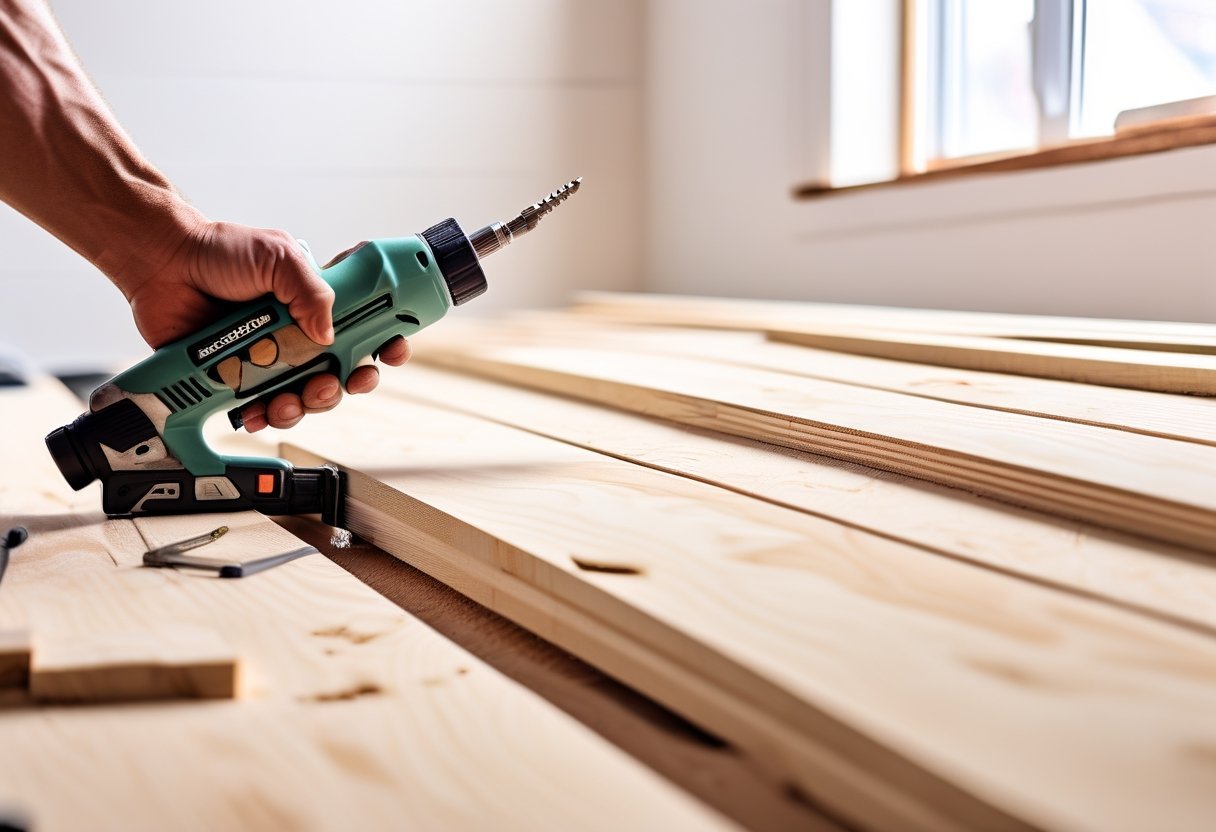
Every board must be nailed into a stud for the wall to be structurally sound and for boards not to bow over time. Use a stud finder before you begin and mark every stud location with painter’s tape from how to clean every type of floor to ceiling — this makes nailing fast and accurate. Standard stud spacing is 16 inches on center, though older homes sometimes vary. Double-check by probing with a small finish nail at your marked locations.
Install From the Bottom Up
Start at the floor and work up — this keeps the most visible boards at eye level consistent and hides any imperfect cuts behind baseboards and ceiling trim. Use a level to confirm your first board is perfectly horizontal before nailing (floors are rarely level). Nail into each stud with a finish nailer, placing two nails per stud per board. Countersink nails slightly so the surface is flush.

The Nickel Gap
The characteristic gap between shiplap boards is typically the width of a nickel — about 1/16 inch. Use an actual nickel as your spacer: rest it on the top edge of the installed board and lay the next board on top of it. This ensures perfectly consistent spacing across the entire wall. After nailing the new board, slide the nickel along to the next nail location. This simple trick produces results that look precisely measured.
Fill, Sand, Prime, and Paint
Fill all nail holes with wood filler, allow to dry fully, then sand smooth with 120-grit sandpaper. Prime the entire wall — including the gaps — with a quality interior primer. This step is non-negotiable for a smooth, professional paint finish. Apply two coats of interior paint in your chosen finish (satin is most popular for walls — it’s cleanable but not too shiny). Paint into the gaps with a small brush before rolling the face of the boards.
Finish the Edges
Apply a thin bead of paintable caulk where the top board meets the ceiling, where the bottom board meets the baseboard, and at the vertical edges where the shiplap meets adjacent walls. Smooth with a damp finger and let dry before the final coat of paint. This caulking step is what separates a DIY shiplap wall that looks homemade from one that looks professionally installed.
Best Rooms for Shiplap
Shiplap works beautifully as a luxury hotel bedroom on a budget headboard wall, a cozy living room decor ideas focal point behind a sofa, a dining room feature wall, or a refresh your bathroom without renovating accent (use moisture-resistant primer and paint in bathrooms). entryway decor ideass and mudrooms are especially well-suited — the horizontal lines add character to narrow spaces and the surface is easy to mount coat hooks and shelves on. Pick one wall per room — shiplap on all four walls becomes overwhelming.
The weekend investment of a shiplap accent wall pays off for years. It’s one of those projects that guests notice and comment on every time — and that makes you happy every time you walk into the room. For more ideas, explore our home decor ideas.