
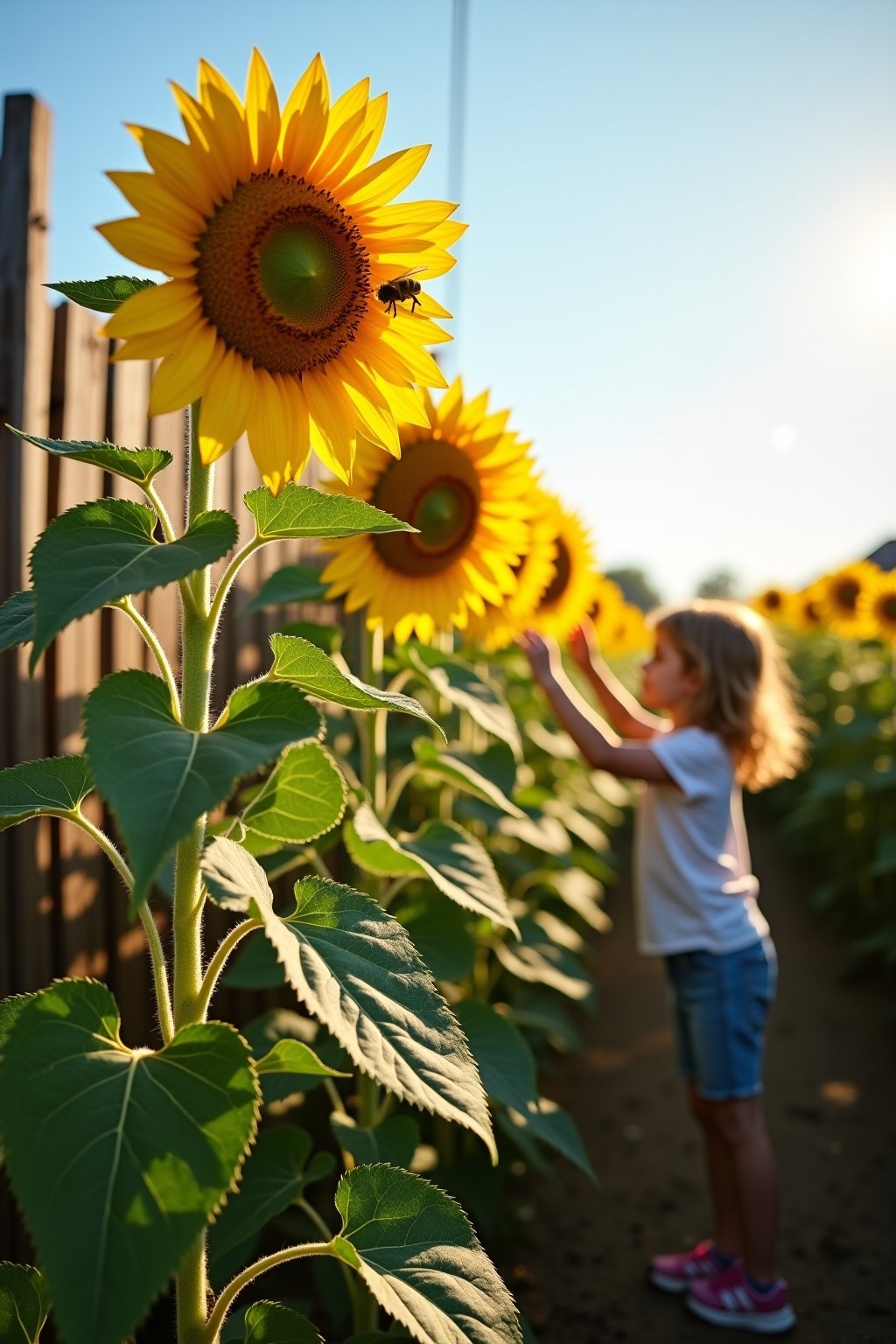
Sunflowers are pure garden joy. They grow fast, they are almost impossible to kill, and there is nothing quite like watching a tiny seed transform into a towering plant with a dinner-plate-sized flower that literally follows the sun across the sky. If you have never grown anything before, start with sunflowers — they will make you feel like a gardening genius.
Beyond looking spectacular, sunflowers are magnets for pollinators, they produce edible seeds, and their deep taproots break up compacted soil and pull nutrients from deep underground. They grow in almost any soil, tolerate drought once established, and go from seed to bloom in just 70-100 days. Whether you want a privacy screen, a kids’ garden project, or a cut-flower supply, sunflowers deliver.
Quick Facts
| Sun | Full Sun (6-8 hours minimum, the more the better) |
| Difficulty | Beginner (one of the easiest plants to grow) |
| Season | Direct sow after last frost (April-June depending on zone) |
| Zone | All USDA Zones (annual — completes life cycle in one season) |
| Time to Harvest | 70-100 days from seed to bloom depending on variety |
What to Have Sorted
- Sunflower seeds (choose your variety: giant, branching, dwarf, or multi-headed)
- Garden bed or large container (5+ gallon for dwarf varieties)
- Garden soil amended with compost
- Watering can or hose
- Stake or bamboo pole (for tall varieties over 6 feet)
- Mulch (straw or shredded leaves)
- Bird netting (optional — to protect seedlings from birds)
Choosing varieties: Sunflowers come in an incredible range. Mammoth/Russian Giant grow 10-14 feet tall with huge seed heads — perfect for a wow factor and edible seeds. Branching types like Autumn Beauty and Lemon Queen produce multiple flowers per plant — great for cut flowers. Dwarf varieties like Teddy Bear and Sunspot stay under 3 feet and grow well in containers.
Direct sow only: Sunflowers develop a long taproot and do not transplant well. Always sow seeds directly in the garden rather than starting indoors. The seeds are large and easy to handle — even young kids can plant them successfully.
Bird protection: Birds love sunflower seeds — both in the ground and on mature flower heads. Cover newly planted areas with bird netting or row cover until seedlings are 6 inches tall. Protect mature seed heads with cheesecloth bags if you want to harvest seeds before the birds get them.
Step 1: Choose Your Variety and Location
Pick a spot with full sun — sunflowers need at least 6 hours of direct sunlight, but they thrive with 8-10 hours. They grow best in well-drained soil but are incredibly adaptable and tolerate poor soil better than most plants. Avoid soggy areas where water pools after rain.
Consider the mature height when choosing your spot. Giant varieties (10-14 feet) can shade nearby plants and may need staking in windy areas. Plant them on the north side of the garden so they don’t cast shadows on shorter crops. For a dramatic sunflower wall, plant a row along a fence or property line.
Step 2: Prepare the Soil and Sow Seeds
Loosen the top 6 inches of soil and mix in a few inches of compost if available. Sunflowers are not fussy about soil, but compost gives them a strong start. Don’t add too much nitrogen-heavy fertilizer — it promotes leafy growth at the expense of flowers.
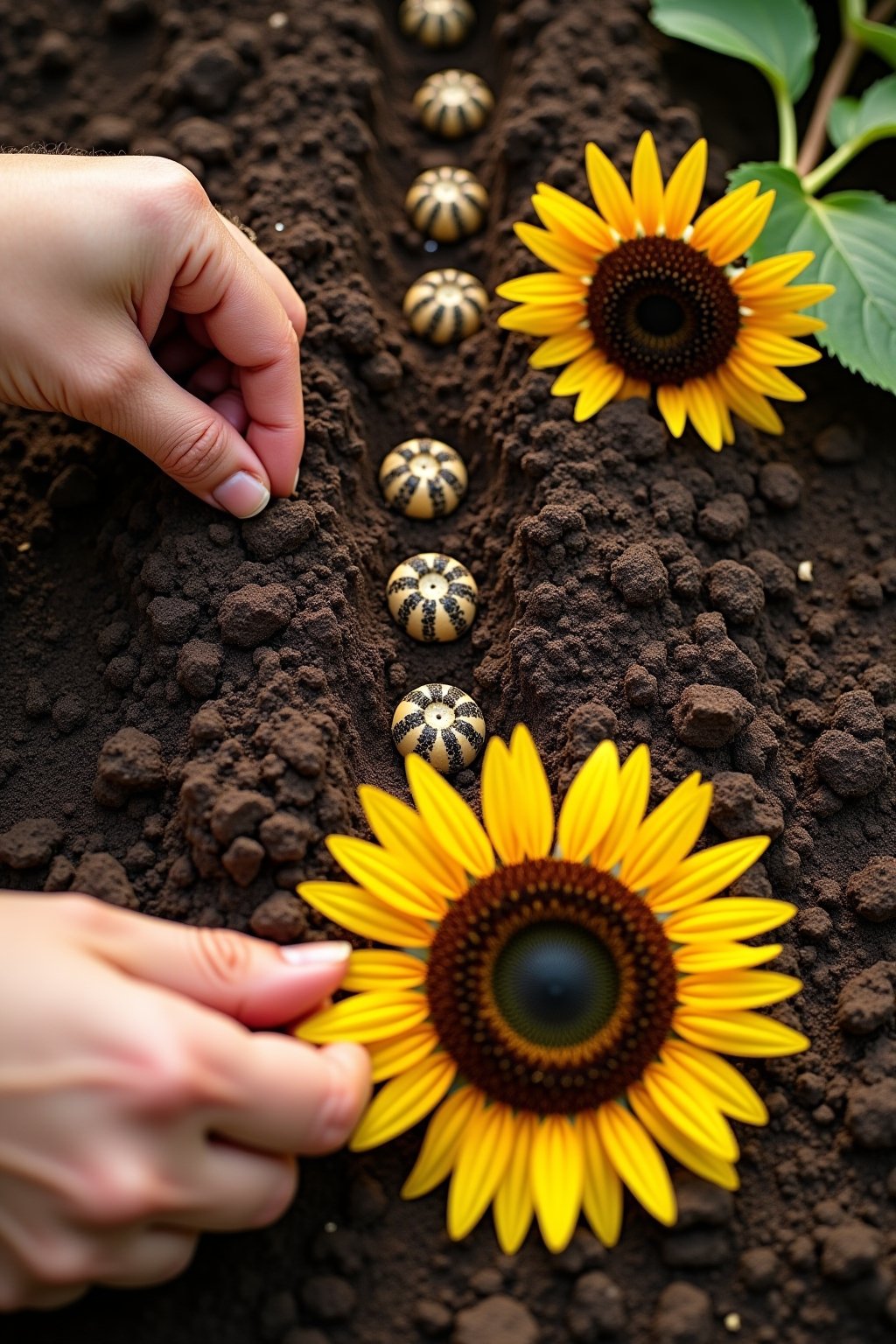
Sow seeds 1 inch deep and 6 inches apart for standard varieties, or 12-18 inches apart for giant types. You can also scatter seeds in a patch for a natural meadow look. Water the area gently after sowing. Seeds germinate in 7-14 days — you’ll see the familiar two-leaf seedlings pushing up through the soil.
Step 3: Thin Seedlings and Protect From Birds
When seedlings are 3-4 inches tall, thin to final spacing: 12-18 inches apart for standard varieties, 24-36 inches for giant types. Snip extras at soil level rather than pulling them — pulling disturbs the roots of the keepers.
Birds (especially sparrows and jays) love to eat sunflower seedlings. If bird pressure is heavy, cover the planting area with lightweight row cover or bird netting until plants are 6 inches tall. At that point they are too large and tough for birds to bother. Some gardeners press old CDs or reflective tape nearby to scare birds away.
Step 4: Water Consistently During Growth
Sunflowers are surprisingly drought-tolerant once established, but consistent watering during the first 3-4 weeks helps them develop deep roots that sustain them all summer. Water deeply once or twice per week rather than shallow daily watering — this encourages roots to grow deep and makes the plant more self-sufficient.
During flowering, water more consistently — drought stress during bloom produces smaller flowers and fewer seeds. Water at the base of the plant rather than from overhead to prevent fungal issues on the broad leaves. A layer of mulch around the base retains moisture and suppresses weeds.
Step 5: Support Tall Varieties
Giant sunflowers (over 6 feet) may need staking in windy areas. Push a bamboo stake or wooden pole into the ground next to the stem when the plant is 2-3 feet tall (before the heavy flower head develops). Tie the stem loosely to the stake with soft cloth or twine in a figure-eight pattern — tight ties can damage the growing stem.
In sheltered gardens with calm conditions, sunflowers usually support themselves. Their stems are incredibly strong — a 10-foot sunflower has a stem as thick as a broom handle. Staking is only needed in exposed, windy locations or if the soil is very loose and sandy.
Step 6: Enjoy the Blooms and Harvest Seeds
Sunflowers bloom 70-100 days after planting depending on the variety. The flowers open over several days, and the classic heliotropism (following the sun) stops once the flower fully opens — mature sunflower heads face east permanently to warm themselves in the morning sun.
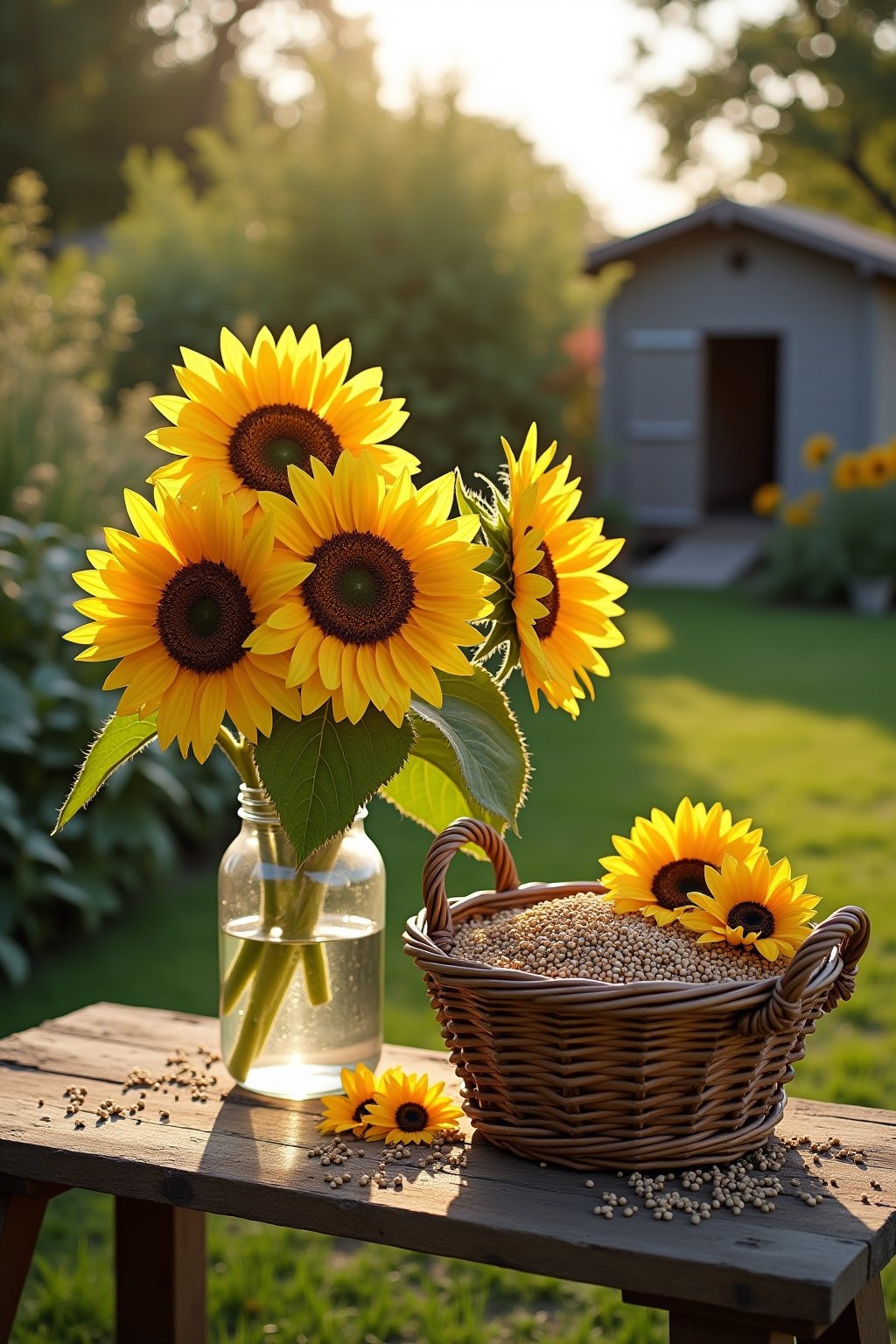
For cut flowers, harvest when petals have just opened but the center is still tight. Cut in the early morning and place immediately in water. For edible seeds, leave the flower on the plant until the back of the head turns brown and dry, the petals have fallen off, and the seeds look plump and striped. Cut the head with a foot of stem, hang upside down in a dry area for a week, then rub the seeds out by hand.
The First Things to Check
Sunflower seedlings disappearing overnight: Birds, slugs, or cutworms. Birds pull up entire seedlings — use netting. Slugs chew leaves at ground level — use iron phosphate bait. Cutworms sever stems at the soil line — wrap a cardboard collar around each seedling base.
Tall plants falling over: Stake immediately. Sunflowers that fall can sometimes be propped back up, but a severely kinked stem will not recover. Prevent this by staking at 2-3 feet tall before the heavy flower head develops.
Flowers are small despite tall plants: Too much nitrogen fertilizer pushes leaf and stem growth at the expense of flowers. Next time, use balanced fertilizer or just compost. Also, overcrowding causes small flowers — thin to proper spacing.
Leaves with gray or white powdery coating: Powdery mildew — common in humid areas with poor air circulation. Improve spacing, water at the base (not overhead), and remove affected leaves. It rarely kills sunflowers but it looks unsightly.
The Yearly Cycle
Spring (After Last Frost): Sow seeds directly outdoors after the last frost date when soil temperature reaches 50°F. This is mid-April in warm climates and late May-June in northern zones.
Summer: Sunflowers are growing rapidly. Water consistently, stake tall varieties, and thin seedlings. For continuous blooms, do succession plantings every 2-3 weeks through mid-June.
Late Summer-Fall: Blooming season. Enjoy the flowers, cut some for vases, and watch the pollinators feast. Leave some heads on the plant for birds, or harvest seeds when the backs turn brown.
Winter: Sunflowers are annuals and die after frost. Add spent stalks to the compost pile (chop them first — they are woody). Save seeds for planting next year or roasting.
The Detail Worth Knowing
- Sow every 2-3 weeks for continuous blooms — succession planting from April through June gives you sunflowers from July through the first frost instead of one concentrated flush.
- Direct sow, never transplant — sunflowers develop a deep taproot that does not survive transplanting. Always sow seeds right where they will grow. This is also way easier than indoor starting.
- Plant on the north side of the garden — tall sunflowers cast long shadows. Putting them on the north edge ensures they don’t shade out shorter vegetables and flowers.
- Let some heads dry on the plant for birds — goldfinches, chickadees, and many other birds flock to dried sunflower heads. It is one of the best things you can do for backyard wildlife.
- Save seeds for next year — sunflower seeds store well for 2-3 years in a cool, dry place. One large flower head produces enough seeds to plant an entire garden next season.
- Try a sunflower house for kids — plant giant sunflowers in a circle or square with an opening for a door. By mid-summer, kids have a living playhouse made of sunflower walls.
Continued Reading
Common Questions
How tall do sunflowers grow?
It depends entirely on the variety. Dwarf types like Teddy Bear stay under 3 feet. Standard varieties grow 5-8 feet. Giant types like Mammoth and Russian Giant reach 10-14 feet — sometimes over 15 feet in ideal conditions. Choose your variety based on the space you have and the look you want.
Do sunflowers really follow the sun?
Young sunflowers do — their stems grow faster on the shaded side, causing the head to face the sun and track it across the sky. This is called heliotropism. Once the flower fully opens, it stops moving and faces east permanently. The eastward orientation warms the flower in the morning, which attracts more pollinators.
Can I grow sunflowers in pots?
Dwarf varieties (under 3 feet) grow well in containers of 5 gallons or larger. Giant varieties need too much root space for containers. Choose varieties specifically bred for pots: Teddy Bear, Sunspot, Little Becka, or Music Box. Use good potting mix and water daily — containers dry out fast.
When should I plant sunflower seeds?
Directly after the last spring frost, when soil temperature is at least 50°F. For most areas, this means mid-April through late May. You can succession-plant every 2-3 weeks until mid-June for continuous blooms throughout summer.
How do I harvest sunflower seeds for eating?
Leave the flower on the plant until the back of the head turns brown and dry, petals have fallen off, and seeds look plump. Cut the head with a foot of stem, hang upside down in a dry, well-ventilated area for 1-2 weeks, then rub the seeds out by hand. Soak in salted water overnight and roast at 300°F for 30-40 minutes.
Do sunflowers come back every year?
Most sunflowers are annuals — they complete their life cycle in one season and die after frost. However, they self-seed prolifically. If you leave a few heads on the plant, seeds will drop and new sunflowers will pop up next spring. Perennial sunflower species exist but are less common in home gardens.