
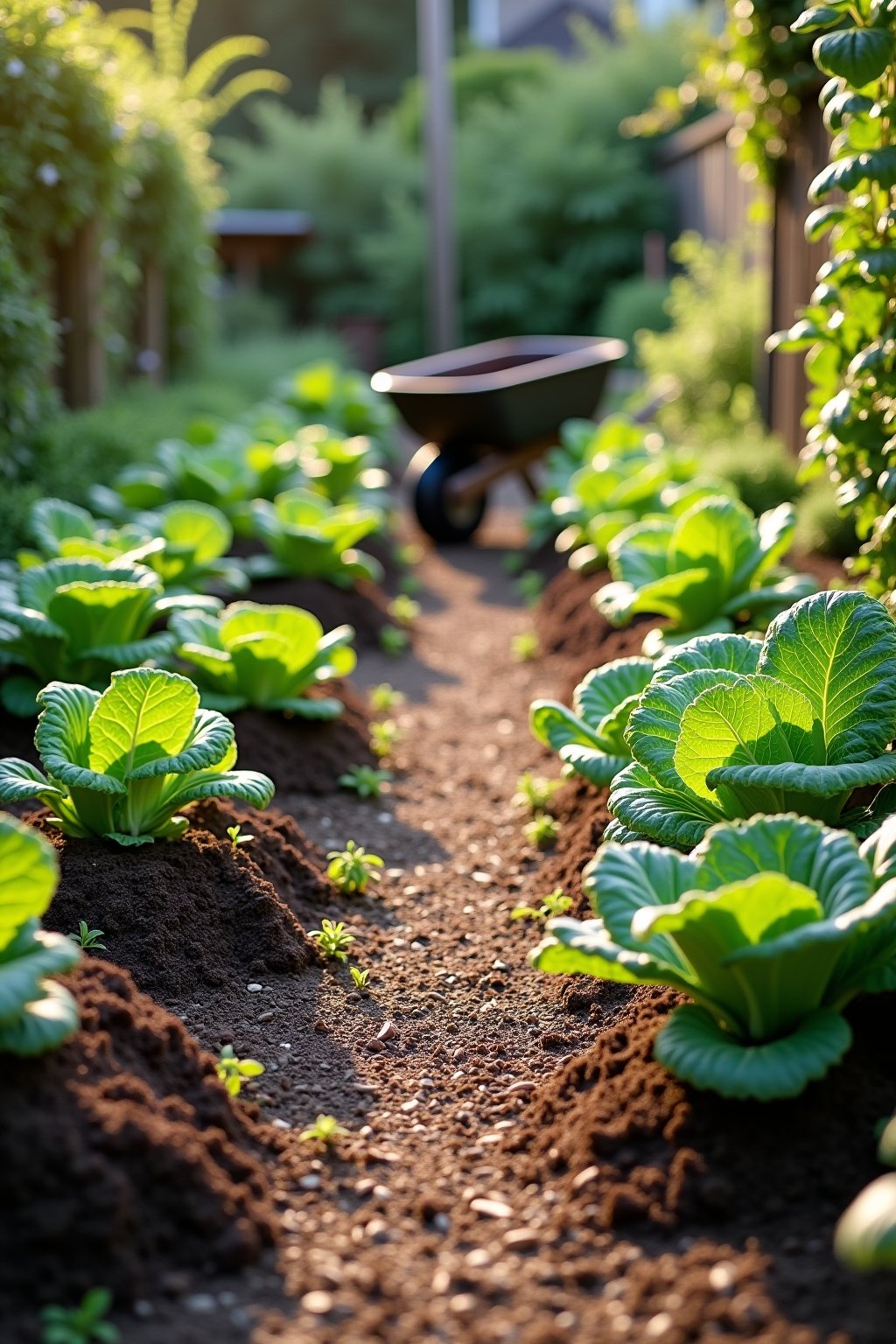
No-dig gardening is exactly what it sounds like — you build a garden without ever turning the soil. No tilling, no double-digging, no back-breaking spade work. You simply layer compost on top of the ground and plant directly into it. And here is the part that surprises most people: no-dig gardens consistently outperform tilled gardens in both yield and soil health.
The science is simple. When you dig and till, you destroy the delicate fungal networks and soil structure that plants depend on. You bring buried weed seeds to the surface where they germinate by the thousands. You accelerate the loss of organic matter and create a cycle where you need to add more and more amendments just to maintain fertility. No-dig reverses all of this — it builds soil from the top down, exactly the way nature does it, and the results speak for themselves.
Quick Facts
| Sun | Full Sun (6+ hours for vegetables) |
| Difficulty | Beginner |
| Season | Start any time (fall is ideal for spring planting) |
| Zone | All USDA Zones |
| Time to Harvest | Plant immediately — soil improves annually |
First Things First
- Compost (the most important input — 4-6 inches for new beds)
- Cardboard (large pieces, no tape or staples, for smothering grass/weeds)
- Mulch (straw, wood chips, or shredded leaves for top layer)
- Garden rake for spreading compost
- Wheelbarrow for moving materials
- Hose or watering can
- Seeds or transplants
- String and stakes for marking bed edges (optional)
- Weed-free compost is critical — cheap compost full of weed seeds defeats the purpose
Compost quality is everything: In a no-dig system, compost IS your growing medium. Buy the best compost you can afford or make your own. Avoid cheap bulk compost that is full of weed seeds or uncomposted wood chips. The compost should be dark, crumbly, and smell earthy — not sour or ammonia-like.
How much compost: For a new bed on top of lawn or weeds, you need 4-6 inches of compost on top of cardboard. That is roughly 1 cubic yard per 50 square feet. After the first year, you only top-dress with 1-2 inches annually — much less than the initial build.
Cardboard layer: Use plain brown cardboard with tape and staples removed. This smothers existing grass and weeds underneath while decomposing into the soil within a few months. Newspaper (8-10 layers) works as an alternative.
Step 1: Choose Your Location and Mark the Bed
Pick a spot with at least 6 hours of direct sunlight for vegetables, or partial shade if you are growing lettuce, herbs, or shade-tolerant plants. The beauty of no-dig is that you can build a bed on top of literally anything — lawn, weeds, gravel, even compacted clay.
Mark out your bed dimensions using string and stakes. Standard bed width is 4 feet (you can reach the center from either side without stepping on the bed). Length can be anything. Never walk on a no-dig bed — foot traffic compresses the soil structure you are building. Plan permanent paths between beds from the start.
Step 2: Lay Cardboard Over Existing Vegetation
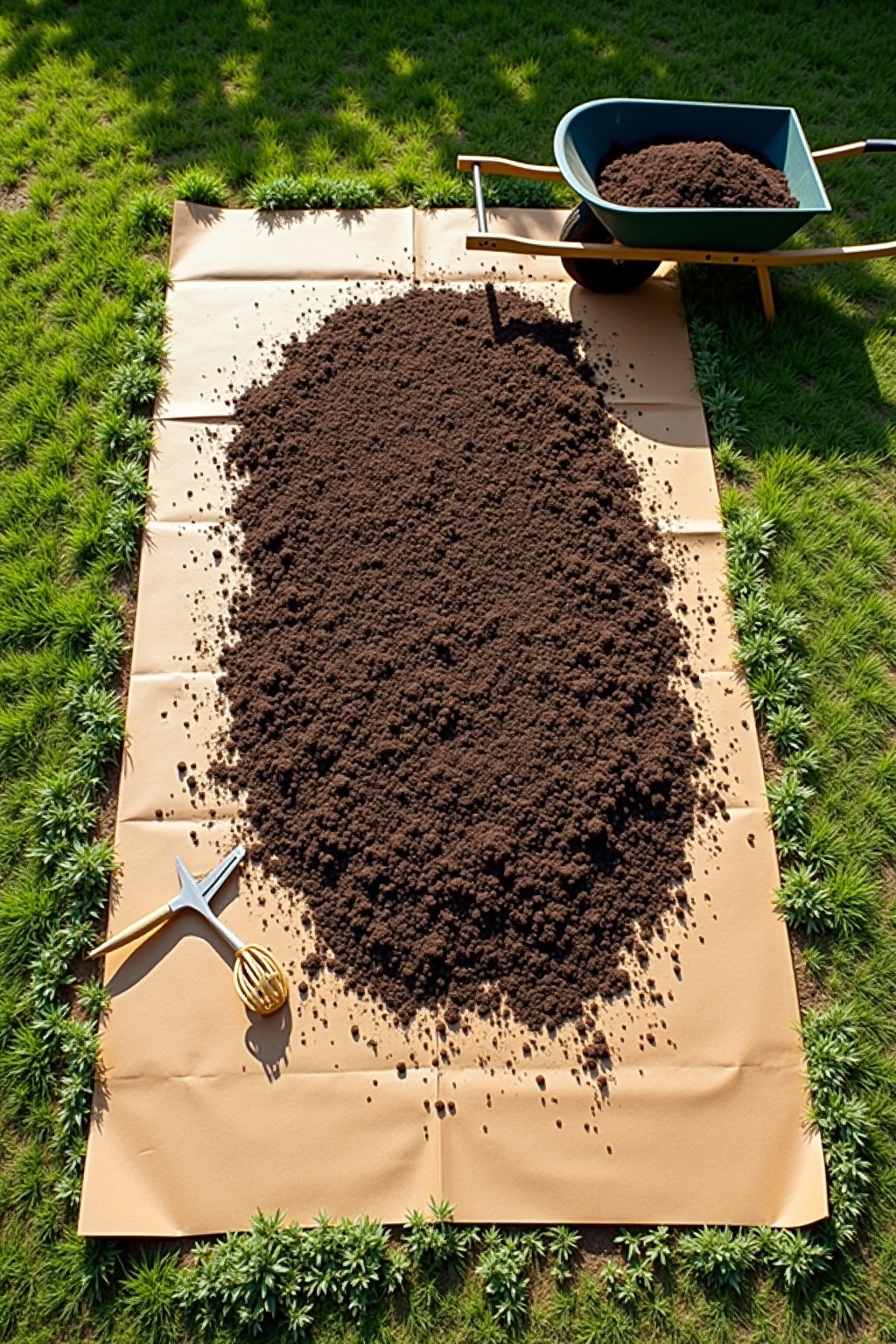
Do not remove existing grass, weeds, or vegetation — that is the whole point. Simply lay large pieces of cardboard directly on top of whatever is growing. Overlap pieces by at least 6 inches so nothing can push through the gaps. Wet the cardboard thoroughly with a hose so it lays flat and stays in place.
If building on bare soil that is already weed-free, you can skip the cardboard. But for converting lawn or weedy areas, the cardboard layer is essential. It smothers everything underneath within 4-8 weeks while worms and microbes break it down into the soil. By the time plant roots reach the bottom, the cardboard is gone and the former lawn is rich, soft earth.
Step 3: Add 4-6 Inches of Quality Compost
This is the heart of a no-dig garden. Spread 4-6 inches of quality compost evenly over the cardboard layer. Use a garden rake to level it out. This compost is where you will plant — it serves as both growing medium and soil builder.
Do not mix the compost into the existing soil. The entire philosophy of no-dig is letting nature do the mixing. Worms and soil organisms will pull the compost down into the soil over time, creating perfect tilth without any digging. Top-dress with another 1-2 inches of compost each fall or spring — this annual feeding is all the maintenance a no-dig bed needs.
Step 4: Plant Directly Into the Compost
You can plant immediately after building. For transplants, simply push them into the compost at the appropriate spacing. For seeds, sow directly into the compost surface and cover lightly. Water gently after planting.
In the first season, avoid deep-rooted crops like carrots and parsnips if you built on top of thick grass — the cardboard layer may still be intact below the compost. Shallow-rooted crops (lettuce, spinach, herbs, onions) and transplants (tomatoes, peppers, squash) do perfectly in 4-6 inches of compost right away. By the second season, the cardboard will be fully decomposed and roots can penetrate deeply into the improved soil below.
Step 5: Mulch Paths and Maintain Bed Edges
Cover pathways between beds with thick wood chip mulch (4-6 inches) to suppress weeds and create clean, dry walking surfaces. Straw or cardboard works for temporary paths. Defined paths prevent foot traffic from compressing your growing beds.
Bed edges can be maintained with simple boards laid on the ground, or you can just keep the compost edges neat with a rake. Permanent raised-bed frames are fine but unnecessary — many successful no-dig gardeners use no edging at all and simply mound compost where the bed is.
Step 6: Annual Top-Dressing (The Only Ongoing Work)
Each fall or early spring, spread 1-2 inches of fresh compost on top of your beds. Do not dig it in. Just spread it on the surface and let worms and rain integrate it naturally. This annual top-dressing is the entire maintenance requirement for a no-dig bed.
Over years, the soil under your beds transforms dramatically. Worm populations explode, fungal networks establish, and the soil becomes dark, loose, and incredibly fertile. Many no-dig gardeners report that after 3-5 years, they can push their hand into the soil up to the wrist with zero resistance — try doing that in a tilled garden.
The First Things to Check
Weeds pushing through cardboard: The cardboard gaps are too wide — weeds find every opening. Overlap cardboard pieces by at least 6 inches and add an extra layer where persistent weeds like bindweed or quack grass are present. More compost on top also helps.
Slugs in the compost: Fresh compost can attract slugs, especially in wet climates. Use iron phosphate slug bait (organic and pet-safe), encourage slug predators (frogs, ground beetles), and avoid over-watering. Slug problems usually decrease after the first year as the ecosystem balances.
Compost settling and thinning: Compost compresses over time. If your beds look thin by mid-summer, add a 1-inch top-up of compost. This is normal and not a sign of a problem.
Grass growing at bed edges: Keep paths mulched with wood chips and use a half-moon edger twice a year to cut a clean line between lawn and bed. This takes 5 minutes per bed and keeps things tidy.
What Each Season Brings
Fall (Ideal Building Time): Build new beds in October-November. The cardboard decomposes over winter, worms colonize the compost, and the bed is perfectly settled and ready for spring planting with no waiting.
Early Spring: Top-dress existing beds with 1-2 inches of compost. Build new beds — they can be planted immediately with transplants. Direct-sow seeds after the last frost date.
Summer: Mulch beds with straw to retain moisture. Keep harvesting and succession-planting. No-dig beds retain moisture better than tilled beds, so you will water less.
Late Fall: After final harvest, clean up plant debris, add compost top-dressing, and optionally cover with a thick layer of leaves or straw as winter mulch. The bed continues improving underground all winter.
After Many Tries
- Never step on the beds — foot traffic compresses the loose, airy soil structure that makes no-dig so productive. Design permanent paths and always work from the edges.
- Invest in quality compost — cheap compost full of weed seeds creates more work than it saves. Spend more on weed-free compost or make your own from kitchen scraps, leaves, and grass clippings.
- Build beds in fall for best spring results — winter rain, frost, and worm activity perfectly prepare fall-built beds for spring planting. You save months of waiting.
- Top-dress annually with 1-2 inches of compost — this is the only maintenance no-dig beds need. Do it in fall or early spring. No digging, no tilling, no turning.
- Start small — one or two beds — you can always add more. A single 4×8 foot no-dig bed produces an astonishing amount of food and takes 30 minutes to build.
- Use wood chips on paths, not on beds — wood chips are perfect for suppressing weeds in walkways. On beds, stick with compost and straw mulch — wood chips can tie up nitrogen in the growing area.
Carry On Reading
- Natural Weed Control Methods That Actually Work
- How to Prepare Your Garden Soil for Spring Planting (Step-by-Step)
Quick Answers
Does no-dig gardening really produce more than tilling?
Yes — research at multiple institutions shows no-dig beds match or outperform tilled beds in yield, with dramatically less work. The key is the undisturbed soil biology: fungal networks deliver nutrients directly to plant roots, worms create perfect drainage channels, and the soil structure allows deeper root penetration than compacted tilled soil.
How long does the cardboard take to decompose?
Plain brown cardboard decomposes in 4-8 weeks during the growing season, faster in warm and wet conditions. Over winter, it may take 3-4 months. By the time plant roots need to penetrate deeper than 6 inches, the cardboard is completely gone.
Can I start a no-dig garden on top of grass?
Yes — this is one of the best uses for no-dig. Lay cardboard directly on top of the grass (don’t mow it short first), overlap generously, wet it down, and add 4-6 inches of compost on top. The grass dies and decomposes under the cardboard, adding organic matter to the soil.
How much compost do I need for a no-dig bed?
For a new bed, you need 4-6 inches of compost on top of the cardboard layer. That’s about 1 cubic yard of compost per 50 square feet of bed space. After the first year, you only need 1-2 inches of annual top-dressing — much less material going forward.
Is no-dig gardening the same as lasagna gardening?
They’re closely related but not identical. Lasagna gardening involves layering multiple types of organic material (green and brown layers). No-dig is simpler — cardboard plus compost, that’s it. Both avoid tilling and both work well. No-dig is faster to set up and easier for beginners.
Do I need raised bed frames for no-dig?
No — many successful no-dig gardeners use no frames at all. Simply mound compost on the ground. Frames look neater and contain the compost, but they are entirely optional and add cost. If you want frames, simple untreated boards work perfectly.