
I knew something was wrong when I started noticing a faint sour smell every time I ran the kitchen faucet. At first I blamed the sponge. Then the trash can. I cleaned both and the smell persisted. Finally, I leaned down and took a cautious sniff directly at the drain while the disposal was off. The smell hit me like a wall. My garbage disposal — the appliance I’d been casually rinsing with water and assuming was self-cleaning — was the culprit.
Here’s what most people don’t realize: a garbage disposal grinds food but doesn’t clean itself. Tiny food particles coat the grinding chamber walls, lodge under the splash guard, and build up on the impeller blades where running water can’t reach them. Over time, this residue becomes a breeding ground for bacteria that produces that signature rotten-egg-meets-old-food smell. The good news is that cleaning a garbage disposal takes less than five minutes, and once you add it to your routine, the smell never comes back.
| ⏱ Time Required: | 10 minutes |
| 📈 Difficulty: | Easy |
| 💰 Supplies Cost: | $0-3 |
| 🔄 How Often: | Weekly |
What I Changed and Why
- Targets the actual smell source — most people try to deodorize the drain, but the smell comes from food residue on the grinding walls and under the splash guard
- Uses the ice-and-salt abrasion method — a proven technique that physically scrapes buildup off the blades and chamber walls using natural friction
- Prevents future odor buildup — the weekly maintenance routine takes under two minutes and stops bacteria from establishing in the first place
- Costs essentially nothing — ice, salt, baking soda, vinegar, and lemons are all you need; no specialty disposal cleaners required
- Addresses the hidden splash guard — the rubber splash guard at the top of the disposal is the most overlooked odor source and the easiest to clean once you know how
- Safe for all disposal brands — these methods work on InSinkErator, Waste King, Moen, and every other brand without voiding warranties
Setting the Stage
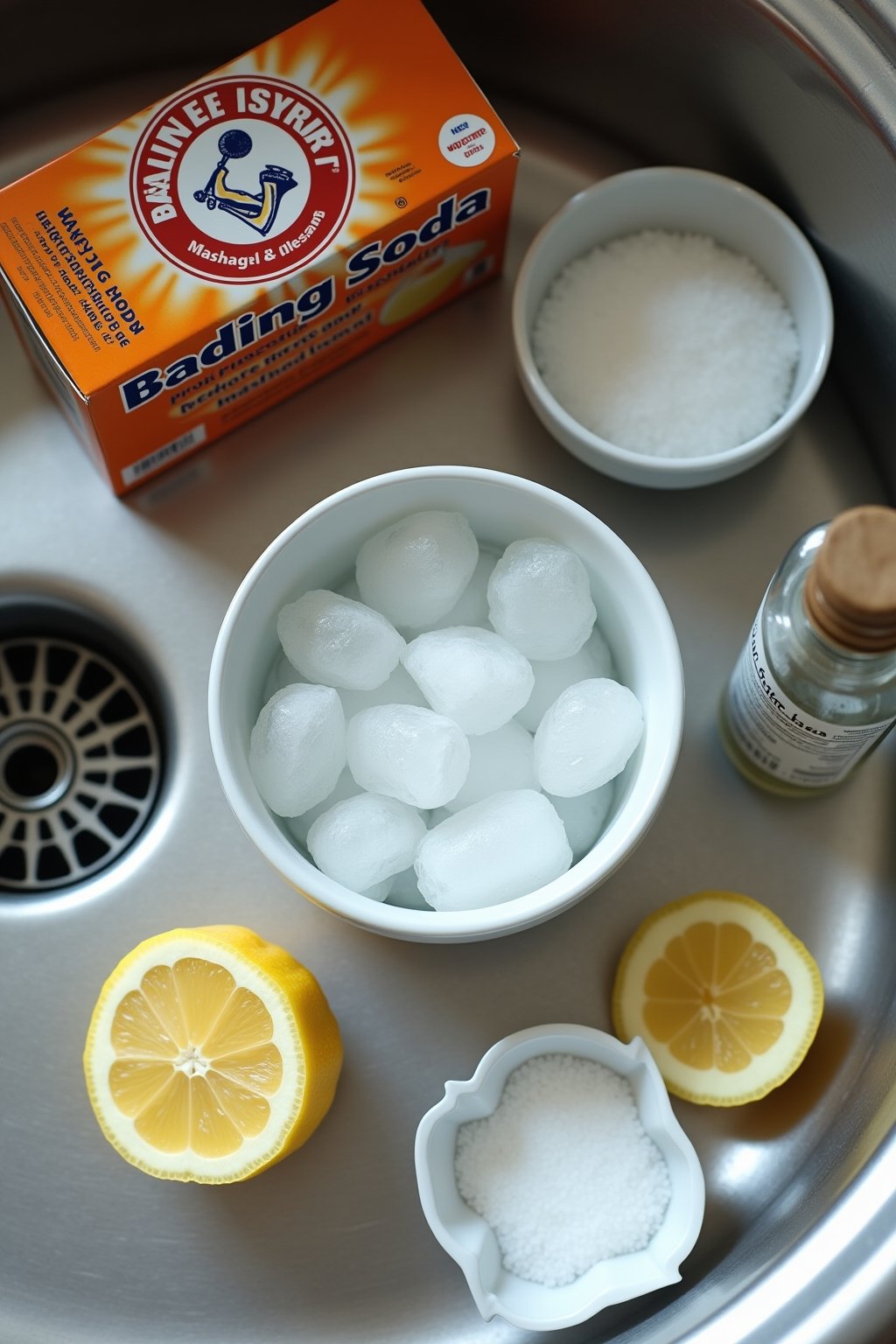
Everything you need is probably already in your kitchen right now:
- Ice cubes — about two cups; they freeze and harden food residue on the blades so the grinding action scrapes it off
- Coarse salt (kosher or rock salt) — half a cup; acts as a natural abrasive that enhances the ice’s scrubbing effect
- Baking soda — half a cup; deodorizes the grinding chamber and drain pipe
- White distilled vinegar — one cup; the fizzing reaction with baking soda loosens stuck-on residue
- Lemons or limes — one or two, cut into quarters; the citric acid cuts grease and leaves a fresh scent
- Dish soap — a squirt for cleaning the splash guard manually
- Old toothbrush — for scrubbing the underside of the splash guard where gunk hides
One Thing After Another
Clean the Splash Guard First (The Hidden Culprit)
Before touching the disposal itself, address the splash guard — the black rubber flap at the top of the drain opening. Lift each flap and look underneath. What you see will probably shock you: a layer of brownish-black slime coating the underside of every flap. This is decomposing food residue mixed with bacteria, and it’s often the primary source of disposal odor.
Squirt dish soap onto an old toothbrush and scrub the underside of each rubber flap thoroughly. Flip them up one at a time and scrub both the top and bottom surfaces, including the rim where the guard meets the sink opening. Rinse with hot running water as you scrub. This step alone can eliminate the smell entirely for some people. If the splash guard is heavily gunked or deteriorating, you can remove it entirely (they pull out with a firm tug) for easier cleaning. Some people keep the guard out — it’s mostly there to prevent splashing during grinding, not for safety.
The Ice and Salt Deep Clean
With the disposal OFF and no water running, dump two cups of ice cubes into the disposal followed by half a cup of coarse salt. Turn on the cold water to a medium stream, then turn on the disposal. The ice freezes and hardens any stuck-on food residue while the salt acts as an abrasive scrubbing agent. The grinding action breaks the ice into smaller and smaller pieces that scour the chamber walls, blades, and impeller plate.
Run the disposal until all the ice is ground up — usually about 30 seconds. You’ll hear the grinding get louder and then return to a normal hum as the ice clears. This method is recommended by most disposal manufacturers and is the most effective way to remove the film of food residue that coats the grinding chamber. The cold water is important — hot water melts the ice too quickly and can also liquefy grease, which then re-coats the blades as it cools. Always use cold water when running the disposal.
The Baking Soda and Vinegar Deodorize
After the ice-and-salt scrub, pour half a cup of baking soda directly into the disposal. Let it sit for 10 minutes so it can absorb odors from the grinding chamber and the drain pipe below. Then slowly pour one cup of white vinegar into the disposal. The mixture will foam aggressively — this is normal and desirable. The expanding foam reaches into crevices the ice couldn’t, loosening any remaining residue.
Let the foam work for 10 to 15 minutes without running water or the disposal. The foam subsides on its own as the reaction completes. After waiting, turn on hot water (this is one of the few times hot water is appropriate — after the grinding is done, hot water helps flush away loosened residue) and let it run for two minutes to flush everything through the drain pipe. The combination of the ice scrub followed by the baking soda deodorize handles both the physical residue and the bacterial odor in a one-two punch that’s more effective than either method alone.
The Citrus Finish for Fresh Scent
Cut one or two lemons (or limes, or even oranges) into quarters. Turn on the cold water and the disposal, then feed the citrus quarters one at a time into the running disposal. The citric acid cuts through any remaining grease film on the grinding surfaces while the oils in the peel release a bright, clean fragrance that lingers in the disposal and drain for hours.
This step is the finishing touch, not a substitute for the deep clean. Citrus alone won’t remove the bacterial biofilm that causes odor, but after the ice scrub and baking soda treatment have done the heavy lifting, the citrus seals the deal with a fresh scent and a final acid wash. Pro tip: keep a small container of lemon and lime peels in the freezer specifically for this purpose. When you use citrus in cooking, toss the peels in the container instead of the compost. Pull them out whenever you clean the disposal — frozen citrus peels work even better because they act like mini ice cubes during grinding.
Establish a Weekly Maintenance Routine
A full deep clean (ice, baking soda, vinegar, citrus) only needs to happen once a month. But a quick weekly maintenance routine prevents odor from ever building up between deep cleans. Every week — I do mine on Sunday evenings while cleaning the kitchen after dinner — toss a handful of ice cubes and a few citrus peels into the running disposal. This 30-second habit keeps the grinding surfaces clean and the drain smelling fresh.
Beyond the weekly ice treatment, there are daily habits that prevent disposal problems entirely. Always run cold water for 15 seconds before and after using the disposal. Never pour grease or oil down the disposal — it solidifies on the grinding surfaces and traps food particles. Avoid fibrous foods like celery, corn husks, and artichoke leaves that wrap around the blades. Never put expandable foods like pasta and rice down the disposal in large quantities — they swell with water and can clog the drain pipe. And always run the disposal long enough to fully grind everything — turning it off too early leaves partially ground food in the chamber.
If Yours Doesn’t Look Right
- Using hot water while grinding food — hot water liquefies grease, which re-solidifies further down the pipe and creates clogs; always use cold water when running the disposal
- Putting the wrong foods down the disposal — coffee grounds, eggshells, pasta, rice, fibrous vegetables, and grease all cause problems; when in doubt, compost it instead
- Never cleaning the splash guard — the rubber flaps at the drain opening harbor more bacteria than the disposal itself; scrub them monthly at minimum
- Using chemical drain cleaners in the disposal — harsh chemicals like Drano can corrode the metal grinding components and damage the drain pipe seals; stick to natural methods
- Assuming running water is enough to clean the disposal — water flushes loose debris but doesn’t remove the biofilm of food residue that coats the grinding chamber walls and causes odor
When I Pull This Out
Main Kitchen Sink
This is where your disposal gets the most use and needs the most attention. Do the full deep clean monthly and the weekly ice-and-citrus maintenance consistently. Keep a small container of frozen citrus peels in the freezer door for easy access. Run the disposal every time you use it, even for small amounts of food — letting food sit in an inactive disposal is worse than grinding it immediately.
Secondary Prep Sink or Island Disposal
If your kitchen has a second disposal in a prep sink or island, it often gets less frequent use, which can actually cause more odor problems. Food residue sitting in an unused disposal breaks down faster without the flushing action of daily use. Run water through it for 30 seconds daily even if you haven’t used it, and add it to your monthly deep-clean rotation.
Wet Bar or Basement Sink Disposal
These seldom-used disposals are the worst offenders for surprise smells. The combination of infrequent use and forgotten food residue creates intense odor when the disposal finally runs. If you have a disposal you rarely use, run cold water through it weekly and do the ice treatment monthly to prevent stagnant buildup from developing.
Quick Answers
Why does my garbage disposal smell even after I clean it?
The most likely culprit is the splash guard. Even after cleaning the disposal itself, the rubber flaps at the top trap food residue on their underside. Lift each flap and scrub with a soapy toothbrush. If the smell persists after cleaning both the disposal and the splash guard, the odor may be coming from the drain pipe below the disposal — the baking soda and vinegar treatment followed by hot water flushing addresses this.
Can I use bleach to clean my garbage disposal?
A small amount of diluted bleach (one tablespoon in a gallon of water) can be used occasionally for sanitizing, but regular bleach use corrodes the metal components and damages the drain seals. The baking soda and vinegar method is equally effective at killing bacteria without the corrosion risk. For heavy-duty sanitizing, use the bleach solution no more than once every few months.
Are garbage disposal cleaning pods worth buying?
They work, but they’re overpriced for what they contain. Most pods are some combination of baking soda, citric acid, and fragrance — ingredients you already have. A pack of 24 pods costs $8-12, while the homemade ice-and-baking-soda method does the same job for pennies. Save your money and use the manual method.
How often should I deep clean my garbage disposal?
Once a month is ideal for a disposal used daily. If you use it less frequently, every two to three weeks is better because food residue in an inactive disposal decomposes faster. The weekly ice-and-citrus maintenance between deep cleans prevents buildup from reaching the point where it causes noticeable odor.
Is it safe to put my hand in the garbage disposal to clean it?
Only with the disposal completely off and unplugged or with the circuit breaker switched off. Modern disposals use impeller plates rather than sharp blades, so you won’t encounter sharp edges, but the risk of accidental activation makes it dangerous. For splash guard cleaning, an old toothbrush keeps your fingers above the disposal opening entirely.
Can ice damage my garbage disposal?
No. Garbage disposals are designed to grind hard foods, and ice is softer than most of what they process. In fact, major disposal manufacturers specifically recommend the ice method for cleaning. The ice grinds down quickly and causes no wear on the components. Use regular ice cubes from your freezer — crushed ice works too but breaks down faster.