
I still remember the day my two-year-old nephew decided to finger-paint on my brand new linen sofa with a cup of chocolate pudding. My sister looked at me like she expected tears. Instead, I grabbed a butter knife, a microfiber cloth, and a bottle of dish soap and had the entire stain out in under ten minutes. The trick wasn’t magic — it was knowing that linen is a W-code fabric and exactly which method to use before the stain set.
Your couch is probably the most-used piece of furniture in your home and yet most people have never properly cleaned it — not even once. They spot-treat obvious stains and hope for the best. But body oils, sweat, pet dander, dust mites, and food residue build up in the fabric fibers every single day, creating odor, discoloration, and allergens you can’t see. Whether your couch is fabric, leather, or microfiber, this guide covers exactly how to deep clean it at home without damaging the material or voiding the warranty.
| ⏱ Time Required: | 1-3 hours |
| 📈 Difficulty: | Medium |
| 💰 Supplies Cost: | $5-20 |
| 🔄 How Often: | Every 3-6 months |
Why It Sticks Around
- Covers every common upholstery type — fabric, leather, faux leather, and microfiber each require different cleaning approaches; using the wrong one causes permanent damage
- Starts with the care tag decode — the letters on your couch’s care tag (W, S, WS, X) tell you exactly which cleaning solutions are safe, and most people have never read theirs
- Addresses deep cleaning, not just spot treatment — removing embedded odor, dust mites, and body oil buildup requires a different approach than just cleaning visible stains
- Uses affordable household products — dish soap, baking soda, rubbing alcohol, and distilled water handle nearly every couch cleaning scenario
- Prevents future stains and wear — the maintenance routine extends the life of your couch by years and keeps it looking and smelling fresh between deep cleans
- Safe enough to DIY confidently — every method includes a spot-test step so you never risk damaging visible areas of your couch
Quick Setup
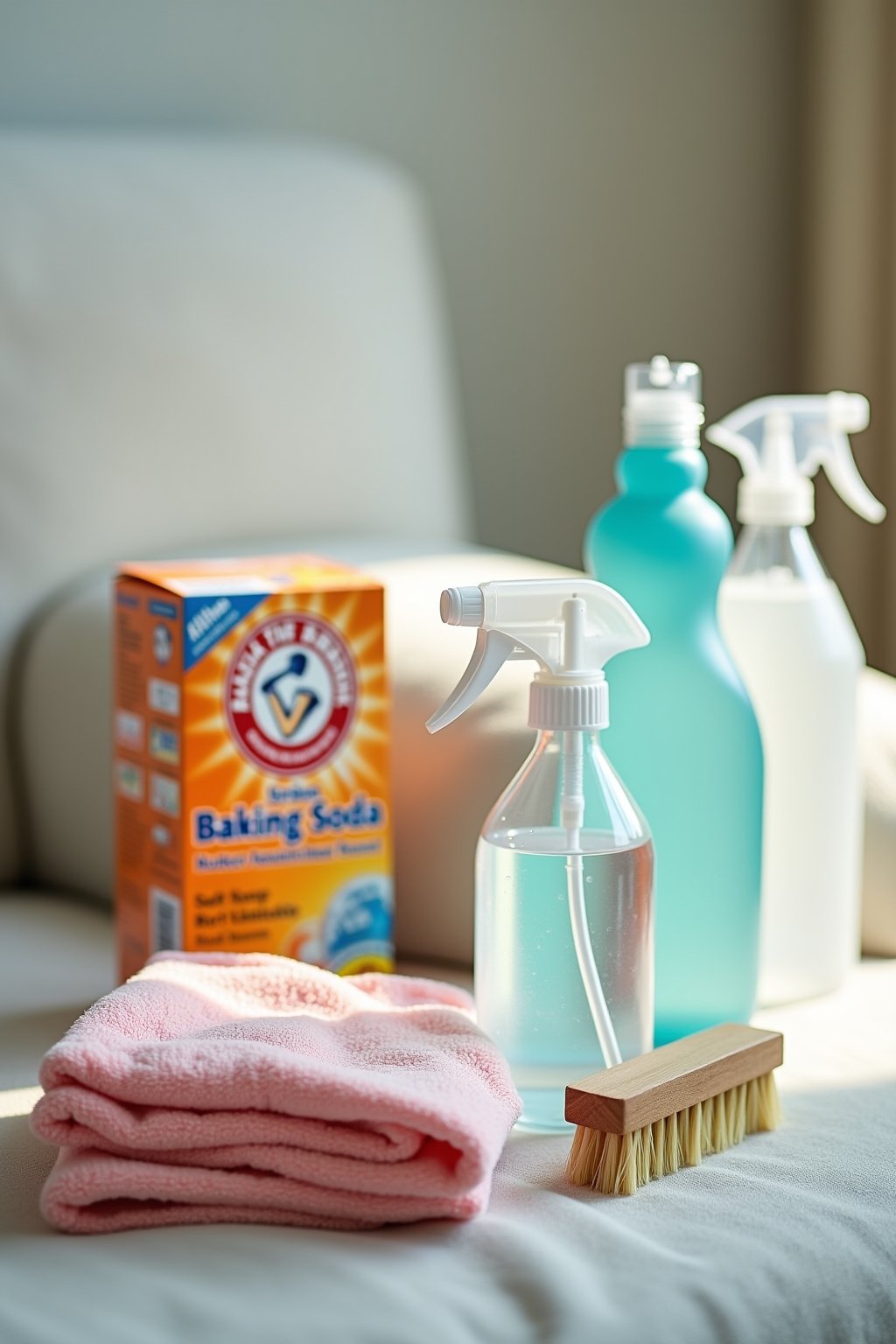
The supplies depend on your couch material, but here’s the comprehensive list covering all types:
- Vacuum with upholstery attachment — the first and most important step for every couch type; removes loose debris before wet cleaning
- Microfiber cloths (white or light-colored) — use white cloths to avoid dye transfer; you’ll need at least four
- Baking soda — a universal deodorizer that pulls odors and moisture from upholstery fibers
- Dish soap — a few drops mixed with water creates a safe suds solution for W-code fabrics
- Rubbing alcohol (isopropyl 70%) — the primary cleaner for S-code fabrics and microfiber
- Distilled water — prevents mineral spots and rings that tap water can leave on sensitive fabrics
- Leather conditioner — essential after cleaning leather to restore moisture and prevent cracking
- Soft-bristle brush or clean sponge — for gentle agitation without damaging fibers
Phase by Phase
Decode Your Couch’s Care Tag First
Before you touch any cleaning product, find the care tag on your couch. It’s usually under a cushion, on the platform beneath the cushions, or on the underside of the frame. The tag will have one of four cleaning codes: W means water-based cleaners are safe. S means solvent-based cleaners only (no water). WS means either water or solvent is fine. X means vacuum only — no liquid cleaners at all. Using water on an S-code couch can cause permanent water rings and fabric damage.
If your tag is missing or unreadable, err on the side of caution and start with the S-code method (rubbing alcohol) in a hidden area. Most microfiber couches are S-code. Most cotton, linen, and polyester blends are W-code. Leather has its own cleaning requirements regardless of the tag. Once you’ve identified your code, you’ll know exactly which section of this guide applies to your couch. This 30-second step prevents the most common and expensive couch-cleaning mistakes.
Vacuum Thoroughly (Every Couch Type)
Remove all cushions and set them aside. Using the upholstery attachment on your vacuum, go over the entire couch frame — the seat platform, the arms, the back, and especially the crevices where the back meets the seat. This is where crumbs, pet hair, coins, and an alarming amount of debris accumulate. Switch to the crevice tool for the seams and tufting where dirt gets pushed deep into the fabric.
Vacuum both sides of every removable cushion. If your cushions have zippers, unzip them and vacuum inside the cover as well — dust mites and allergens collect between the cover and the foam insert. This step alone makes a noticeable difference in how your couch looks and smells. For pet owners, run a lint roller or rubber glove over the fabric before vacuuming to loosen embedded hair that the vacuum might miss. Spend at least 5 to 10 minutes on this step; rushing the vacuum means pushing dirt into the fabric during wet cleaning rather than removing it.
Clean Fabric Couches (W-Code and WS-Code)
Mix a solution of one teaspoon of dish soap in one cup of warm distilled water. Whip it with a whisk or your hand until suds form on top. You’ll use only the suds, not the liquid — this is key. Dip a white microfiber cloth into the suds (not the water beneath) and gently blot stained areas. Work from the outside of the stain inward to prevent spreading. For overall deep cleaning, work in sections across the entire couch, rinsing your cloth frequently.
After cleaning, dampen a fresh cloth with plain distilled water and blot the area to remove soap residue. Then press a dry cloth firmly against the fabric to absorb excess moisture. Open windows or point a fan at the couch to speed drying — moisture left in upholstery can cause mildew and musty odor. For stubborn stains, make a paste of baking soda and water, apply it to the stain, let it dry completely (2-3 hours), then vacuum off the residue. The baking soda draws the stain out as it dries. Always spot-test in a hidden area first — the back bottom corner is ideal.
Clean Microfiber and S-Code Couches
S-code fabrics and most microfiber couches must be cleaned with solvent-based solutions — water leaves permanent water marks and rings. Fill a spray bottle with rubbing alcohol (isopropyl 70%). Spray a light, even mist onto the stained section — don’t soak it. Immediately blot and gently rub with a white microfiber cloth. The alcohol dissolves body oils, food stains, and general grime while evaporating quickly without leaving water damage.
Work in small sections and use a clean area of the cloth for each pass to avoid redistributing dirt. The alcohol will evaporate within minutes. Once dry, the microfiber may feel stiff or matted. This is normal and temporary — take a soft-bristle brush (a clean shoe brush or vegetable brush works) and brush the fabric in circular motions to restore the soft, plush texture. This brushing step is what makes microfiber feel brand new after cleaning. For deodorizing, sprinkle baking soda over the entire couch after cleaning, let it sit for 30 minutes, then vacuum thoroughly. The combination of alcohol cleaning and baking soda deodorizing produces professional-level results.
Clean Leather and Faux Leather Couches
Leather requires the gentlest approach. Mix a solution of equal parts distilled water and white vinegar, or use a few drops of mild dish soap in distilled water. Dampen (not wet) a microfiber cloth with the solution and wipe the leather surface using gentle circular motions. Work in sections, wiping the entire surface rather than just stained spots — this ensures even color and prevents watermark outlines. Follow immediately with a dry cloth to remove all moisture.
The critical step most people skip is conditioning. Cleaning strips natural oils from leather, and without replacing them, the leather dries out and cracks over time. After cleaning and once the leather is fully dry, apply a leather conditioner in thin, even coats using a clean cloth. Let it absorb for 10 to 15 minutes, then buff gently with a dry cloth. Condition your leather couch every three to six months, even between deep cleans. Never use baby wipes, all-purpose cleaners, or bleach on leather — they contain chemicals that dry out and discolor the hide. For faux leather, the same cleaning method applies but skip the conditioner — faux leather is plastic-based and doesn’t need moisturizing.
Deodorize and Protect for Long-Term Freshness
After cleaning any couch type, the final step is deodorizing. Sprinkle a generous layer of baking soda over the entire surface — cushions, arms, back, everything. Let it sit for at least one hour, ideally overnight. The baking soda absorbs residual moisture, body odor, pet smell, and any lingering cleaning solution scent. Vacuum it all up with the upholstery attachment the next morning.
For ongoing protection, vacuum your couch weekly (a quick two-minute pass with the upholstery attachment). Blot spills immediately — the first 30 seconds after a spill is when you have the best chance of complete removal. Rotate and flip reversible cushions monthly to distribute wear evenly. If your couch sits in direct sunlight, the UV will fade the fabric over time; close blinds during peak sun hours or consider a furniture throw for the most exposed areas. These small habits extend your couch’s life by years and keep it looking and smelling like it did the day you brought it home.
Diagnosing the Issue
- Rubbing stains instead of blotting — rubbing pushes the stain deeper into the fibers and spreads it outward; always blot by pressing straight down and lifting
- Using water on S-code or microfiber couches — water creates permanent rings and watermarks on solvent-only fabrics; use rubbing alcohol instead
- Skipping the spot test — even the gentlest cleaner can discolor or damage certain fabrics; always test in a hidden area and wait until it dries before proceeding
- Over-wetting the fabric — using too much liquid pushes moisture into the cushion foam where it can develop mildew; use minimal liquid and focus on extracting moisture quickly
- Forgetting to condition leather after cleaning — cleaning strips natural oils and without conditioning, leather dries out, cracks, and ages prematurely; always condition after every deep clean
Best Situations for This Fix
Living Room Sofas and Sectionals
These get the most use and need monthly attention. Vacuum weekly, do a full baking soda deodorize monthly, and deep clean every three to six months. Pay extra attention to armrests and seat cushions where body oil accumulates most heavily. If you have pets, add a lint roller pass to your weekly vacuum routine.
Bedroom Upholstered Headboards and Benches
These are often forgotten but collect sweat, hair product, and skin oils nightly. Check the care tag and clean using the appropriate method every two to three months. The baking soda deodorize is especially effective on headboards since they absorb sweat while you sleep.
Dining Room Upholstered Chairs
Food stains are the primary concern here. Treat spills immediately — keep a small spray bottle of rubbing alcohol or soapy water near the dining area for quick blotting. Vacuum the seats weekly and do a full clean monthly if you eat at the table regularly. Consider fabric protector spray on dining chairs to make future spills bead up instead of soaking in.
Common Questions
How do I find my couch’s cleaning code?
Look for a tag sewn to the underside of a cushion, the platform beneath the cushions, or the bottom of the frame near the legs. It will say W (water-safe), S (solvent-only), WS (either), or X (vacuum only). If the tag is missing, test rubbing alcohol on a hidden area first, as it’s the safest starting point for unknown fabrics.
Can I steam clean my couch?
Only if the care tag says W or WS. Steam is water-based and will damage S-code fabrics the same way liquid water does. For W and WS fabrics, steam cleaning is actually excellent — it kills dust mites, sanitizes without chemicals, and refreshes fibers. Just don’t over-saturate and ensure thorough drying afterward.
How do I get pet odor out of my couch?
The baking soda method is the most effective home remedy. Sprinkle a heavy layer over the entire couch, let it sit overnight, and vacuum thoroughly in the morning. For severe odor, repeat the process two or three times. Enzyme-based pet odor removers are also effective on fabric couches — they break down the organic compounds causing the smell.
Why does my couch smell worse after cleaning?
This usually means too much moisture got trapped in the foam and is developing mildew. Strip the cushion covers, air out the foam inserts in a well-ventilated area or direct sunlight, and run a fan over them for several hours. In the future, use less liquid and focus on drying the couch thoroughly after cleaning.
How often should I deep clean my couch?
For a couch used daily by a household with kids or pets, deep clean every three months. For a couch used by one or two adults, every six months is sufficient. Weekly vacuuming and monthly baking soda deodorizing between deep cleans keeps things fresh and extends the time between full cleanings.
Can I remove couch cushion covers and put them in the washing machine?
Only if the care tag specifically says machine washable. Many cushion covers with zippers are dry-clean only — the zipper is for replacing foam, not for washing. If the tag allows machine washing, use cold water on a gentle cycle and air dry (never machine dry, as heat causes shrinkage that makes the covers impossible to put back on).