
I washed a memory foam pillow in my washing machine once. Once. It came out looking like a lumpy, misshapen sponge that had gone through a car wash. That $60 pillow was ruined because I treated it the same way I’d wash a regular cotton pillow. And I know I’m not the only person who has made that mistake.
The truth is, pillows are one of the most neglected items in the bedroom. Most people wash their sheets weekly but never think about the pillow underneath, which absorbs sweat, skin oils, drool, and dust mites every single night. Washing pillows regularly makes a genuine difference for allergies, skin health, and sleep quality — but different pillow types need completely different washing methods. Here is how to clean every type of pillow safely.
| ⏱ Time Required: | 2-3 hours (incl. drying) |
| 📈 Difficulty: | Easy |
| 💰 Supplies Cost: | $0-5 |
| 🔄 How Often: | Every 3-6 months |
Why I Keep Coming Back to This
- Extends pillow lifespan by years — regular cleaning prevents the buildup of oils and moisture that break down pillow fill and cause clumping, sagging, and loss of support
- Reduces allergens significantly — dust mites, their waste, dead skin cells, and mold spores accumulate in unwashed pillows and are a major trigger for allergies and asthma
- Improves sleep quality — a clean, fresh-smelling pillow with proper loft provides better support and comfort than a flat, oil-saturated one
- Covers every pillow type — down, synthetic polyester, memory foam, buckwheat, and decorative throw pillows each need different handling, and this guide covers all of them
- Uses supplies you already have — mild detergent, baking soda, and a few tennis balls for the dryer are all most pillow types require
- Clear frequency guidelines — knowing how often each pillow type needs washing takes the guesswork out of the process
What to Have Ready
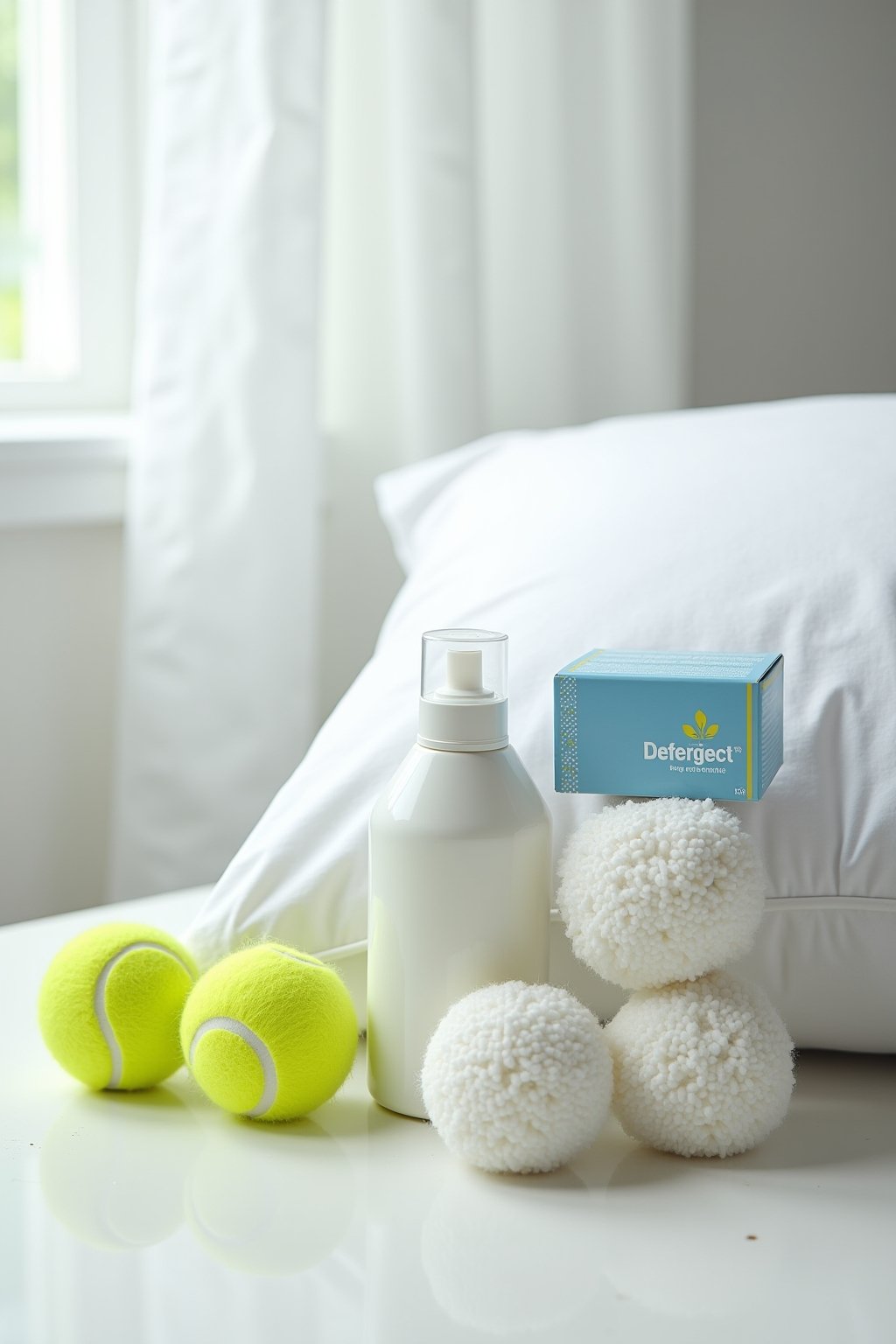
The specific supplies depend on your pillow type, but here is the complete toolkit for all types covered in this guide:
- Mild liquid detergent — avoid heavy or fragranced detergents that can leave residue in pillow fill. A gentle or free-and-clear formula is ideal
- Baking soda — for deodorizing and freshening pillow fills and foam before or during washing
- White distilled vinegar — added to the rinse cycle to remove detergent residue and deodorize
- Tennis balls or dryer balls — essential for re-fluffing down and synthetic fill pillows during the dry cycle
- Vacuum with upholstery attachment — for spot-cleaning memory foam and decorative pillows that cannot be submerged
- Enzyme-based stain remover — for treating yellow sweat stains on pillow covers and fill
- Clean bathtub or large basin — for hand-washing memory foam and delicate pillow types
The Steps
Down and Feather Pillows: Machine Wash Gently
Down and feather pillows are more durable than most people think and can go right in the washing machine. Use a front-loading or top-loading machine without a center agitator (the agitator can tear the pillow shell). Wash two pillows at a time to keep the machine balanced. Use a small amount of mild liquid detergent — about half what you would use for a regular load. Set the machine to a gentle or delicate cycle with warm water.
The critical step is the rinse cycle: run an extra rinse to ensure all detergent is removed from the down clusters. Detergent residue clumps down feathers together and reduces loft. For drying, tumble dry on low heat with 2-3 clean tennis balls. The tennis balls physically break up clumps of wet down as they bounce around in the dryer. This process takes a long time — 2-3 dryer cycles or up to 3 hours on low heat. The pillow must be completely dry before use. Any remaining moisture inside will cause mildew and a terrible smell within days. Check by squeezing the center of the pillow firmly — if it feels cool or damp at all, keep drying.
Synthetic Polyester Fill Pillows: Machine Wash on Gentle
Synthetic fill pillows (polyester fiberfill, microfiber, etc.) are the easiest to wash. Machine wash on a gentle cycle with warm water and a small amount of mild detergent. Like down pillows, wash two at a time for balance. Add ½ cup of baking soda to the wash cycle for extra deodorizing power, especially if the pillows have developed a yellow tinge or stale smell.
Dry on low to medium heat with tennis balls or dryer balls to prevent the fill from clumping. Synthetic fill dries faster than down — usually 1-2 dryer cycles. However, synthetic pillows have a shorter overall lifespan than down. If a synthetic pillow does not spring back when you fold it in half (the fold test), it has lost its resilience and should be replaced rather than washed. Washing cannot restore dead polyester fill — it will just come out flat and lumpy. Most synthetic pillows last 1-2 years before they need replacement.
Memory Foam Pillows: Hand Wash Only, Never Machine
This is the critical rule: never put memory foam in a washing machine or dryer. The agitation will tear the foam apart, and dryer heat will melt or deform it. Instead, remove the cover (most memory foam pillows have a washable zippered cover) and machine wash the cover separately on a gentle cycle.
For the foam itself, fill a bathtub or large basin with lukewarm water and a small amount of mild liquid detergent. Submerge the foam pillow and gently press and squeeze it repeatedly to work the soapy water through the foam. Do not twist or wring. Drain the soapy water, refill with clean water, and gently press the pillow to rinse. Repeat until the water runs clear and no suds remain. Gently press the pillow between two towels to remove excess water (do not wring). Air dry the pillow flat in a well-ventilated area, out of direct sunlight, for 24-48 hours. Flip it every few hours to ensure even drying. Memory foam must be bone dry before re-covering and using.
Decorative and Throw Pillows: Check the Label First
Decorative pillows vary widely in materials and construction, so always check the care label first. Many have removable covers that can be machine washed separately from the insert. Remove the cover, wash it according to the label (usually gentle cycle, cold water), and address the insert separately based on its fill type (polyester, down, or foam — see the relevant steps above).
For decorative pillows without removable covers, spot cleaning is usually the safest approach. Mix a few drops of mild detergent in warm water, dip a clean white cloth, and blot stains gently. Do not saturate the pillow. Sprinkle baking soda over the surface, let it sit for 30 minutes to absorb odors, then vacuum it off with an upholstery attachment. For silk, velvet, or beaded decorative pillows, professional dry cleaning is the safest choice. The cost is typically $5-15 per pillow and is worth it to avoid ruining an expensive decorative piece.
Buckwheat and Specialty Fill Pillows
Buckwheat hull pillows cannot be washed in the traditional sense because the hulls will absorb water and not dry properly. Instead, remove the buckwheat hulls from the pillow (pour them into a large bowl or container), wash the cotton pillow shell in the washing machine on gentle, and let it dry completely. Spread the buckwheat hulls on a clean baking sheet and place them in direct sunlight for 2-3 hours to kill bacteria and freshen them. Replace the hulls and close the pillow.
For latex pillows, use the same hand-wash method as memory foam — gentle pressing in lukewarm soapy water, thorough rinsing, and air drying flat. Latex is more resilient than memory foam and dries somewhat faster, but still should never see a washing machine or dryer. Microbead pillows (the small polystyrene bead-filled type) can be spot cleaned only — submerging them risks bursting the shell and creating an enormous mess of tiny beads. Wipe the exterior with a damp soapy cloth and air dry.
What to Check
- Putting memory foam in the washing machine — the agitation shreds the foam internally, causing it to lose its shape and support permanently. Hand wash memory foam only, always
- Using too much detergent — pillow fills are dense and trap detergent residue easily. Excess soap leaves a stiff, crunchy texture and creates a breeding ground for bacteria. Use half the detergent you normally would
- Not drying pillows completely — the inside of a pillow can stay damp even when the outside feels dry. Damp fill grows mildew rapidly and produces a terrible musty smell. For machine-dried pillows, run an extra cycle. For air-dried foam, wait the full 24-48 hours
- Washing pillows in hot water — hot water can damage down clusters, shrink cotton shells, and deform foam. Warm water is sufficient for cleaning and is safe for all pillow types
- Skipping the tennis balls in the dryer — without them, down and synthetic fill clumps into dense balls during drying and never fully recovers its original loft. This single step makes the difference between a pillow that comes out fluffy and one that comes out flat
Where This Shines
Master Bedroom
Your main sleeping pillows get the heaviest use and need the most frequent care. Wash them every 3-4 months and use pillow protectors under your pillowcases. Having two sets of pillows (one for sleeping, one drying after washing) ensures you always have fresh pillows available. Down pillows can last 10+ years with proper washing; synthetic ones should be replaced every 1-2 years.
Guest Bedroom
Guest pillows sit unused for long periods, which allows dust mites and stale odors to accumulate. Wash guest pillows at least twice a year, even if they have not been used, and always wash them after a guest has slept on them. Fresh pillows are a small touch that makes guests feel genuinely welcome.
Living Room Decorative Pillows
Throw pillows on sofas accumulate dust, pet hair, and body oils from daily use. Vacuum them monthly with an upholstery attachment and wash or spot-clean quarterly. If your throw pillows have removable covers, washing just the covers is the fastest and safest approach. Toss the inserts in the dryer on no-heat with a dryer sheet for a quick freshen-up.
Frequently Asked Questions
How often should I wash my pillows?
Every 3-6 months for sleeping pillows, depending on how much you sweat and whether you use pillow protectors. Decorative pillows can be cleaned every 3-6 months as well. If you have allergies or asthma, every 2-3 months is recommended for sleeping pillows.
How do I know when to replace a pillow instead of washing it?
Fold the pillow in half and release it. If it springs back to flat, it still has life. If it stays folded or barely opens, the fill is dead and no amount of washing will restore it. Also replace any pillow with permanent stains, persistent odors after washing, or visible mold.
Can I wash pillows with regular detergent?
Yes, but use a mild liquid formula and half the normal amount. Heavy, fragranced detergents leave residue in the dense fill that causes stiffness and odor over time. A free-and-clear or gentle formula is the safest bet for all pillow types.
Why do my pillows turn yellow?
Yellow staining is caused by sweat, body oils, and drool that soak through the pillowcase into the pillow cover and fill over time. A pillow protector is the best prevention. To treat existing yellowing, pre-treat with enzyme stain remover or a paste of baking soda and hydrogen peroxide before washing.
Is it safe to put pillows in the dryer?
Down and synthetic fill pillows are safe for the dryer on low to medium heat. Memory foam, latex, and buckwheat hulls must never go in the dryer. Always check the care label. Use tennis balls or dryer balls with down and synthetic pillows to prevent clumping and restore loft.
Can I wash a silk pillowcase with the pillow?
No. Wash silk pillowcases separately by hand or on a delicate cold cycle in a mesh laundry bag. Silk is too delicate for the warm water and tumbling that pillow washing requires. Air dry silk flat — never put it in the dryer.