
I ignored the mold in my shower for way too long. It started as a few tiny black dots along the grout lines near the floor — barely noticeable. Within a couple of months, it had spread across the caulk around the bathtub, stained the bottom of the shower curtain, and crept into the corners where the tile met the ceiling. Every time I showered, I told myself I’d deal with it this weekend. Spoiler: I didn’t.
When I finally tackled it, I was shocked at how quickly everything came clean with the right approach. The problem wasn’t that mold is hard to remove — it’s that most people use the wrong products in the wrong places. Grout needs a different treatment than silicone caulk, and your shower curtain has its own rules entirely. Here’s the complete system I now use to keep my shower mold-free year round.
| ⏱ Time Required: | 30-60 minutes |
| 📈 Difficulty: | Medium |
| 💰 Supplies Cost: | $3-8 |
| 🔄 How Often: | Monthly (prevent weekly) |
What’s Worth It
- Targets each surface separately — grout, silicone caulk, glass, and fabric all respond to different cleaning agents, and treating them correctly saves time and prevents damage
- Uses products you already own — white vinegar, baking soda, and hydrogen peroxide handle 90% of shower mold without expensive specialty cleaners
- Prevents regrowth at the source — killing mold spores and reducing moisture stops the cycle instead of just bleaching the surface
- Safe for most bathroom materials — the methods avoid harsh acids that can etch natural stone or degrade rubber gaskets
- Takes under an hour for a full shower — even badly moldy showers can be restored in a single cleaning session
- Backed by actual science — hydrogen peroxide and white vinegar are both proven fungicides that kill mold at the root level, not just cosmetically
Two Things Before You Begin
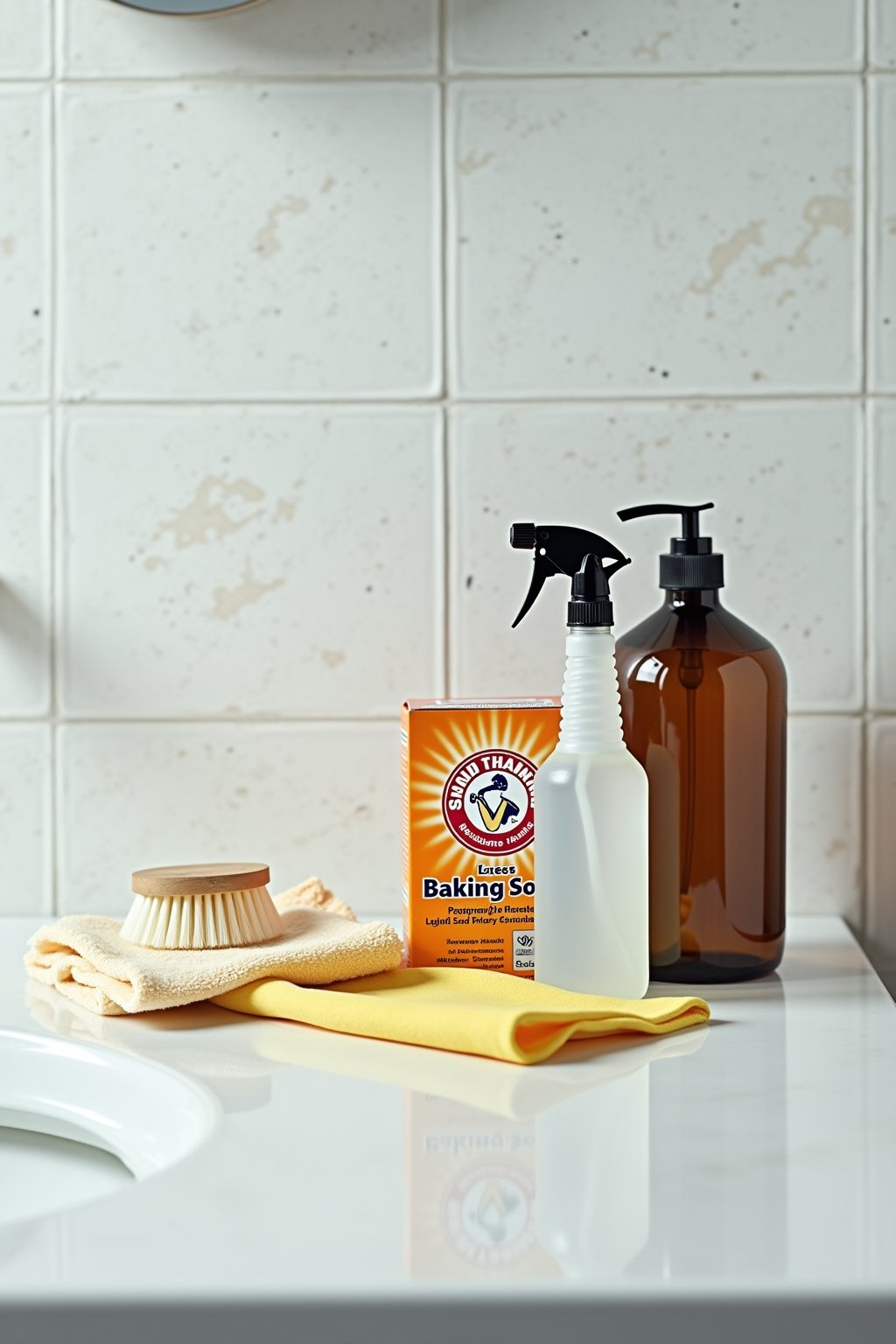
Gather these supplies before you start. Having everything ready means you can work through the whole shower without stopping:
- White distilled vinegar — a natural fungicide that kills most mold species on contact
- Baking soda — a mild abrasive that scrubs mold from textured grout without scratching tile
- Hydrogen peroxide (3%) — the standard drugstore concentration; bleaches mold stains from caulk and grout
- Spray bottle — for applying vinegar solution evenly across surfaces
- Old toothbrush or grout brush — small enough to scrub narrow grout lines effectively
- Plastic wrap or cling film — for the caulk poultice method that draws mold out of silicone
- Microfiber cloths — lint-free wiping that won’t leave fibers behind on glass or tile
- Rubber gloves — protects your skin from prolonged contact with cleaning solutions
Stepping Through
Start With the Grout Lines
Mix a paste of 3 parts baking soda to 1 part water. Spread this paste directly onto the moldy grout lines using your finger or an old toothbrush. Let it sit for 10 minutes — the baking soda needs time to penetrate the porous grout surface. Then spray undiluted white vinegar over the paste. It will fizz aggressively, and that reaction is loosening the mold from deep within the grout.
Scrub each grout line with the toothbrush or grout brush, working in short back-and-forth strokes. Rinse with warm water. For stubborn black stains that remain after scrubbing, apply 3% hydrogen peroxide directly to the grout, let it sit for 15 minutes, then scrub again. Peroxide is a bleaching agent that lightens discoloration the baking soda couldn’t remove. Most grout will look nearly new after this two-step process.
Tackle the Silicone Caulk
Silicone caulk is where mold gets truly stubborn. Unlike grout, silicone is non-porous on the surface but can trap mold underneath if the seal has micro-cracks. Soak cotton balls or strips of paper towel in undiluted hydrogen peroxide and press them directly against the moldy caulk. Wrap the area tightly with plastic wrap to hold the cotton in place and prevent the peroxide from evaporating.
Leave this poultice on for at least 2 hours — overnight is even better for severe mold. When you remove it, the mold stains should be significantly lighter or gone entirely. If any dark spots remain, repeat the process once more. If the caulk is still deeply stained or the mold has grown behind the silicone, it’s time to remove and replace the caulk entirely. A fresh bead of mildew-resistant silicone caulk takes 20 minutes to apply and lasts years.
Clean the Shower Curtain and Liner
Most fabric and plastic shower curtains can go straight into the washing machine. Add the curtain along with two bath towels (the towels act as scrubbers during the cycle). Use your regular detergent plus half a cup of baking soda in the drum. Run a warm cycle — not hot, which can warp plastic liners. Add one cup of white vinegar during the rinse cycle for extra mold-killing power.
Hang the curtain to dry immediately after washing — never leave it bunched in the machine or mold will return within hours. For non-machine-washable curtains, lay them flat in the bathtub, spray with a 50/50 vinegar-water solution, sprinkle baking soda over the moldy areas, and scrub with a soft brush. Rinse thoroughly and hang to dry. If your plastic liner has mold that won’t come clean, replace it — liners are inexpensive and should be swapped every 3-6 months in humid bathrooms.
Clean Glass Shower Doors
Mold loves the edges and tracks of glass shower doors where water pools and never fully dries. Fill a spray bottle with undiluted white vinegar and spray the entire glass surface, paying extra attention to the bottom track, hinges, and rubber door seals. Let the vinegar sit for 10 minutes. The acetic acid dissolves soap scum and kills mold spores simultaneously.
Wipe down the glass with a microfiber cloth, then use the toothbrush to scrub the door track and any rubber gaskets. For mineral deposits mixed with mold on the glass, make a paste of baking soda and a few drops of dish soap, apply it with a non-scratch sponge, and scrub in circular motions. Rinse completely and squeegee the glass dry. This one habit — squeegeeing after every shower — prevents roughly 80% of glass door mold growth.
Treat the Ceiling and Upper Walls
Shower ceilings are mold magnets because hot steam rises and condenses there. Fill a spray bottle with equal parts white vinegar and water, spray the ceiling and upper wall tiles generously, and let it sit for 15 minutes. Wipe clean with a microfiber cloth attached to a long-handled tool or mop — this saves you from craning your neck and working overhead.
If you see black mold spots on painted drywall ceiling areas (common in shower-over-tub setups), switch to 3% hydrogen peroxide in the spray bottle. Spray, wait 15 minutes, blot with a clean cloth. Avoid scrubbing painted surfaces aggressively or you’ll damage the paint. Once clean, ensure your bathroom fan runs for at least 20 minutes after every shower. This single habit prevents ceiling mold from ever returning.
Set Up a Mold Prevention Routine
Cleaning mold is only half the battle. Preventing it from coming back is what actually matters. After every shower, either squeegee the walls and glass or leave the shower door/curtain open to allow air circulation. Run your bathroom exhaust fan during and for 20 minutes after every shower. If your bathroom lacks a fan, open a window or use a small portable fan to keep air moving.
Once a week, spray your entire shower with a 50/50 white vinegar and water solution after your last shower of the day. Don’t rinse it off — just spray and leave. The vinegar creates an acidic environment that mold spores can’t establish in. This takes 30 seconds and is the single most effective prevention habit you can build. Every two weeks, give the grout lines a quick scrub with a baking soda paste to catch any early growth before it becomes visible.
If You’re Stuck
- Using bleach on silicone caulk — bleach whitens the surface but doesn’t kill mold roots in silicone. The mold comes back within weeks because the root system is still alive underneath
- Mixing vinegar and bleach — this creates toxic chlorine gas. Never combine these two products. Use one or the other, never both in the same cleaning session
- Scrubbing mold when dry — scrubbing dry mold releases spores into the air. Always wet the moldy surface first with your cleaning solution to trap spores before scrubbing
- Not fixing the moisture source — if your bathroom fan is broken, your shower leaks, or you never ventilate after bathing, the mold will return no matter how well you clean
- Ignoring the shower curtain rings — mold accumulates on curtain rings and the rod itself. Soak rings in vinegar monthly and wipe the rod when you clean the shower
Worth-It Times
Walk-In Shower With Glass Doors
These showers need the most attention because they have both grout-heavy tile work and glass surfaces that show every spot. Focus on squeegeeing after each use, weekly vinegar sprays, and monthly deep grout scrubs. The door track is the #1 problem area — clean it with a toothbrush and vinegar every two weeks.
Bathtub-Shower Combo
The caulk line where the tub meets the tile is ground zero for mold. This seam stays wet the longest and often has the oldest, most deteriorated caulk. Inspect this caulk twice a year and replace it at the first sign of peeling or dark staining underneath. Keep the shower curtain spread open after bathing so air reaches the tub edges.
Basement or Windowless Bathroom
These spaces have the highest mold risk because natural ventilation is limited. A working exhaust fan is non-negotiable here. Consider running a small dehumidifier in the bathroom if you notice condensation on surfaces even after the fan has run. The weekly vinegar spray-down is especially important in these environments — don’t skip it.
Common Questions
Is black mold in the shower dangerous?
Most black-colored mold in showers is Cladosporium or Stachybotrys, which can cause respiratory irritation, especially for people with asthma or allergies. While not all black mold is the toxic variety, any mold in your shower should be cleaned promptly. If you have a compromised immune system or severe mold allergies, wear an N95 mask while cleaning.
Can I use bleach to clean shower mold?
Bleach works well on non-porous surfaces like glazed tile and glass, but it is ineffective on porous surfaces like grout and silicone caulk. Bleach only whitens the surface mold on these materials without killing the roots. Hydrogen peroxide penetrates porous surfaces better and is a safer, more effective choice for grout and caulk.
How often should I clean my shower to prevent mold?
A quick vinegar spray after your last shower of the day prevents most mold growth. Do a deeper scrub of the grout lines every two weeks and a full deep clean of all surfaces monthly. If your bathroom is poorly ventilated, increase the deep clean to every two weeks.
Why does my shower mold keep coming back?
Recurring mold almost always means a moisture problem. Your exhaust fan may be undersized, broken, or not running long enough after showers. You may also have a slow leak behind the wall or caulk that needs replacement. Fix the moisture issue first, then clean the mold — otherwise you are fighting a losing battle.
Should I replace moldy caulk or try to clean it?
If the mold is on the surface only, the hydrogen peroxide poultice method can restore it. If the mold appears to be behind or inside the caulk (dark staining that doesn’t lighten after treatment), remove and replace the caulk entirely. Replacement takes about 20 minutes and gives you a fresh, mold-resistant seal.
Does tea tree oil kill shower mold?
Yes, tea tree oil is a natural fungicide. Mix one teaspoon of tea tree oil with one cup of water in a spray bottle, apply to moldy areas, and don’t rinse. It works but is slower than vinegar or hydrogen peroxide and costs significantly more. It is best used as a maintenance spray between deep cleans.