
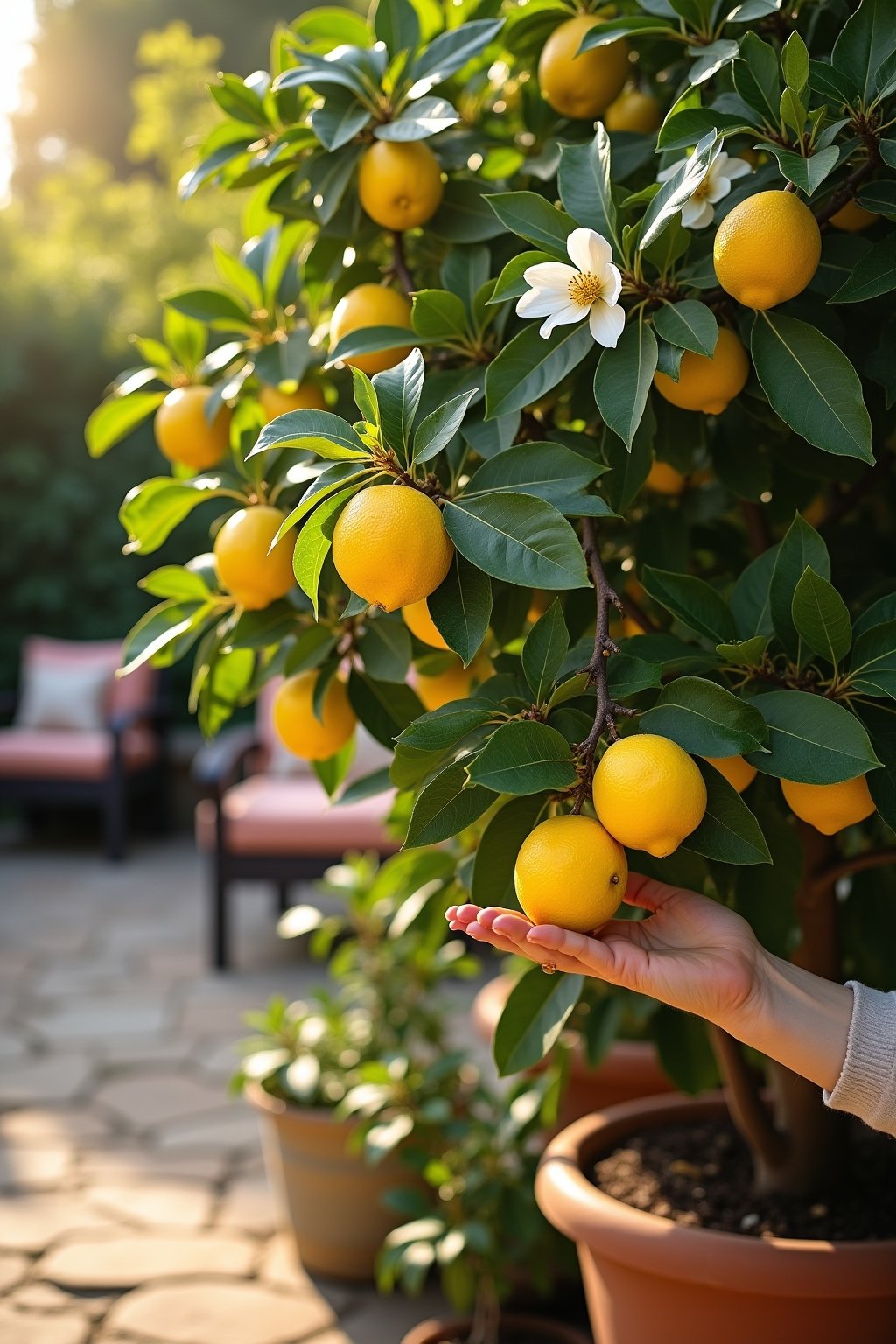
You do not have to live in California or Florida to grow lemons. A lemon tree in a pot can thrive anywhere — you just bring it indoors when temperatures drop. The Meyer lemon in particular is perfectly suited to container life: it stays compact, produces abundantly, and the scent of lemon blossoms in your living room during winter is absolutely incredible.
I started growing a potted Meyer lemon three years ago in zone 6, and it has produced fruit every year since. The tree lives on my patio from May through September and moves to a sunny window for winter. It requires surprisingly little maintenance and honestly makes me happier than any other plant I own. Here is how to grow your own.
Quick Facts
| Sun | Full Sun (6-8 hours, south-facing window indoors) |
| Difficulty | Intermediate |
| Season | Year-round (outdoors summer, indoors winter) |
| Zone | All zones in pots (USDA 9-11 permanently outdoors) |
| Time to Harvest | 1-2 years from a grafted tree |
Get Ready
- Meyer lemon tree (grafted, 2-3 year old)
- Large container (15-25 gallon with drainage)
- Citrus-specific potting mix (or mix with extra perlite)
- Citrus fertilizer
- Pot saucer with pebbles for humidity
- Grow light for winter (optional but helpful)
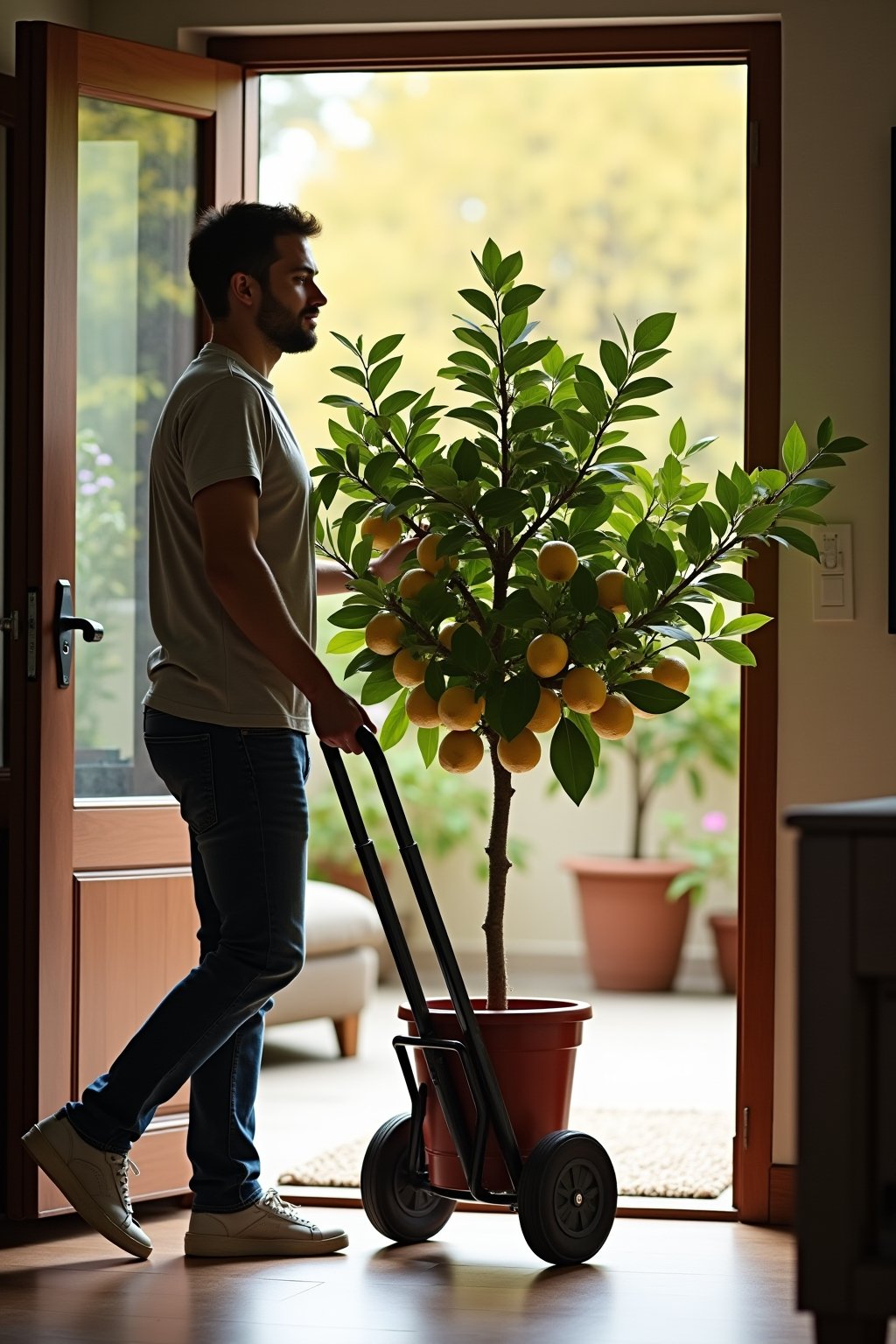
- Wheeled plant dolly for moving heavy pot
Buy a grafted Meyer lemon — not a seed-grown tree. Grafted trees fruit in 1-2 years; seed-grown take 7-15 years. Meyer lemons are a hybrid (lemon × mandarin) with sweeter, less acidic fruit and a compact growth habit ideal for containers.
Container size: Start a young tree in a 10-gallon pot and move up to 15-25 gallons as it grows. The pot MUST have drainage holes. Use a wheeled dolly underneath — a mature citrus tree in a 20-gallon pot is heavy.
Citrus-specific soil is slightly acidic and fast-draining. You can make your own: 1 part potting mix, 1 part perlite, 1 part pine bark fines. Citrus roots absolutely cannot sit in waterlogged soil.
Step 1: Choose the Right Variety and Container
Meyer lemon is the best choice for pots — it stays naturally compact (4-6 feet in a container), produces prolifically, and tolerates indoor conditions better than other citrus. Improved Meyer Lemon is disease-free and widely available at nurseries and online.
Start with a 10-15 gallon pot with multiple drainage holes. Terracotta looks beautiful but dries quickly and is heavy. A lightweight resin or fabric pot is more practical for a tree you’ll be moving seasonally. Place it on a wheeled dolly from day one.
Step 2: Plant and Position for Maximum Sun
Fill the container with citrus potting mix and plant the tree at the same depth it was in its nursery pot — don’t bury the graft union. Water thoroughly until it drains from the bottom holes.
Place the tree in the sunniest spot available — outdoors on a south-facing patio in summer, indoors by a south-facing window in winter. Lemon trees need a minimum of 6 hours of direct sun to produce fruit. Supplementing with a grow light in winter dramatically improves fruit production.
Step 3: Water Deeply but Let the Soil Dry Slightly
Citrus trees want deep, thorough watering followed by a partial dry-down. Water when the top 2 inches of soil feel dry, then water until it flows from the drainage holes. Never let the pot sit in standing water. In summer, this may mean watering every 2-3 days; in winter indoors, every 7-10 days.
Yellow leaves that drop are the classic sign of overwatering — the number one killer of potted citrus. If in doubt, stick your finger 2 inches into the soil. Dry? Water. Moist? Wait.
Step 4: Feed with Citrus Fertilizer Regularly
Lemon trees are heavy feeders that need regular fertilization to produce fruit. Use a citrus-specific fertilizer that contains nitrogen, phosphorus, potassium, plus micronutrients like iron, zinc, and manganese that citrus specifically needs.
Feed every 4-6 weeks during the growing season (spring through fall). Reduce to every 8 weeks in winter. Follow the package instructions — more is not better with citrus fertilizer. Yellow leaves with green veins indicate iron deficiency, which is common in potted citrus. An iron supplement fixes this quickly.
Step 5: Move Indoors Before Frost
When nighttime temperatures drop below 50°F consistently, it’s time to move your lemon tree indoors. Transition gradually over a week — sudden changes in light and temperature shock the tree and cause leaf drop. Move to a bright, cool room (55-65°F is ideal — not next to a heating vent).
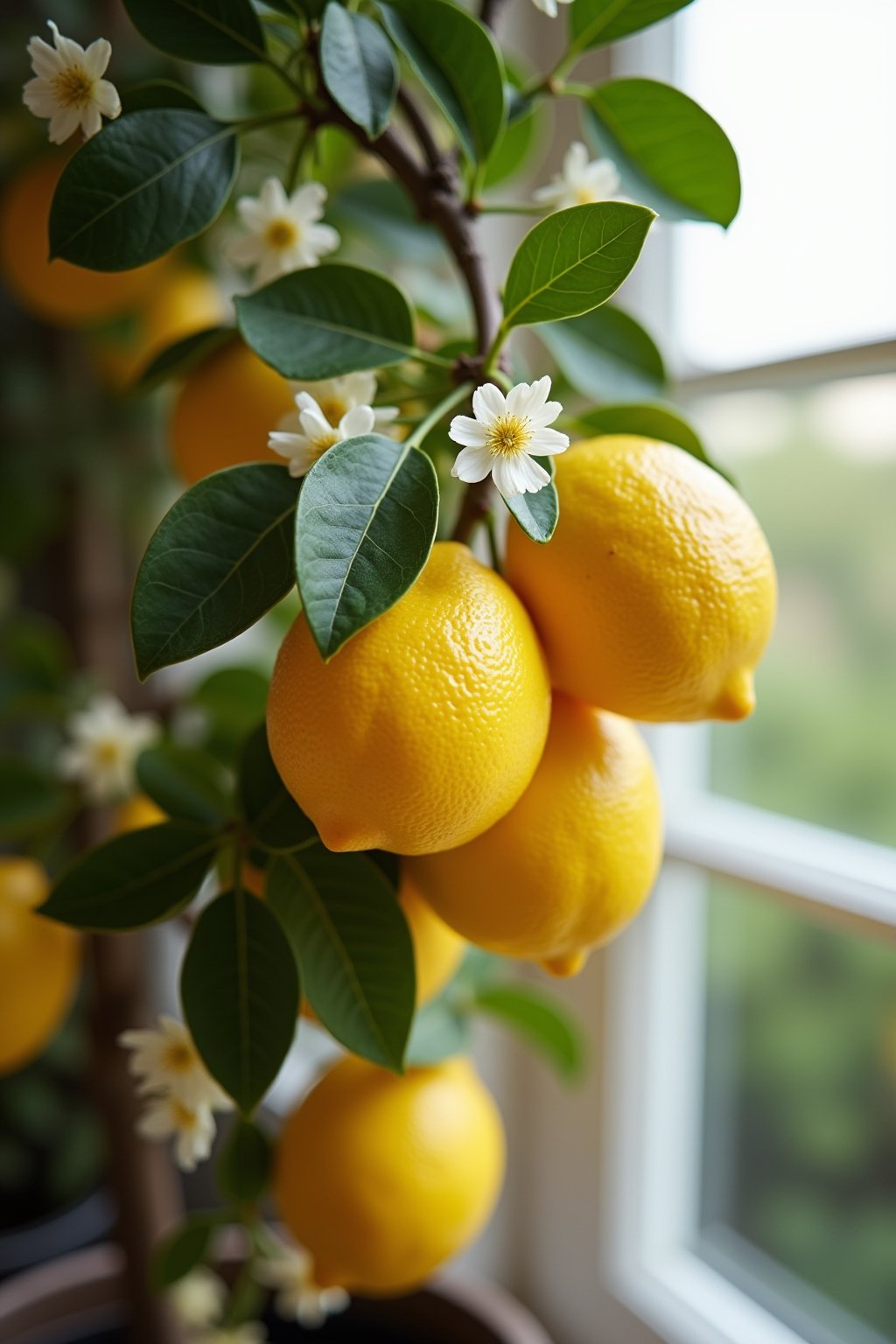
Indoor winter care: maximum light (south window + grow light), water less frequently, mist leaves or use a pebble tray for humidity. Some leaf drop is normal during the transition. The tree will adapt and may even bloom indoors — hand-pollinate flowers with a small paintbrush to set fruit.
Step 6: Harvest and Enjoy Year-Round Lemons
Meyer lemons turn from green to deep yellow-orange when ripe and yield slightly to gentle pressure. Unlike store-bought lemons, they don’t need to be picked at a specific time — lemons can hang on the tree for weeks after ripening without going bad. This means you can pick them one at a time as you need them.
A healthy potted Meyer lemon can produce 20-50 lemons per year once established. Use them for cooking, baking, lemonade, cocktails, preserves, or simply admire them on the tree — there are few things more beautiful than a small tree loaded with bright yellow fruit in your living room.
When It Doesn’t Set Right
Leaves turning yellow and dropping: Most commonly overwatering. Let the soil dry between waterings. Can also be caused by the transition from outdoors to indoors — some leaf drop is normal and the tree recovers.
Flowers but no fruit: Indoor trees may need hand-pollination. Use a small paintbrush to transfer pollen between flowers. Also ensure adequate light and fertilization.
Sticky leaves or white cottony spots: Scale insects or mealybugs. Wipe leaves with rubbing alcohol on a cotton swab. For heavy infestations, use insecticidal soap. Check regularly — indoor citrus is a favorite target for these pests.
Leaves curling: Usually underwatering or low humidity. Water thoroughly and mist leaves or use a humidifier. Indoor heating in winter dramatically drops humidity.
Timing Across the Year
Spring (Apr-May): Move the tree outdoors after last frost. Resume regular fertilizing. Prune any dead or leggy growth. The tree will likely produce a flush of new growth and blossoms.
Summer (Jun-Aug): Peak outdoor growing season. Full sun, regular watering (every 2-3 days), fertilize every 4-6 weeks. Fruit develops and grows through summer.
Fall (Sep-Oct): Gradually transition indoors before nights drop below 50°F. Reduce watering and fertilizing. Fruit continues to ripen on the tree.
Winter (Nov-Mar): Indoor care — brightest window, grow light supplement, mist for humidity, water when top 2 inches dry. Enjoy the scent of indoor citrus blossoms. Harvest ripe lemons as needed.
After a Lot of Trials
- Buy grafted, not seed-grown — a grafted Meyer lemon fruits in 1-2 years. A seed-grown tree takes 7-15 years and may produce inferior fruit.
- A wheeled dolly is essential — a 20-gallon pot with wet soil and a tree weighs 50+ lbs. Moving it seasonally is much easier on wheels.
- Don’t overpot — go up one pot size at a time. A tree in a too-large pot sits in excess wet soil and develops root rot.
- Hand-pollinate indoor flowers — use a small paintbrush to dab pollen between flowers. Outdoors, bees handle this. Indoors, you are the bee.
- Humidity is critical indoors — dry winter air causes leaf drop and brown tips. A pebble tray filled with water beneath the pot adds constant gentle humidity.
- Lemons store on the tree — unlike most fruit, ripe lemons can hang on the branch for weeks without deteriorating. Pick them as you need them for the freshest flavor.
Branches From Here
Common Questions
Can I grow a lemon tree from a seed?
You can, but it takes 7-15 years to produce fruit and the fruit may not be like the parent lemon. Buy a grafted Meyer lemon from a nursery — it will fruit in 1-2 years, stay compact, and produce reliable, sweet lemons.
How big does a Meyer lemon tree get in a pot?
In a container, Meyer lemons typically stay 4-6 feet tall. You can prune to keep them at 3-4 feet if space is limited. The container naturally restricts root growth, which limits the overall tree size.
How many lemons will a potted tree produce?
A healthy, established Meyer lemon in a large pot can produce 20-50 lemons per year. Young trees in their first year may produce 5-10. Production increases each year as the tree matures and develops more fruiting branches.
What temperature kills a lemon tree?
Lemon trees suffer damage below 28-30°F and can be killed outright by prolonged freezing. Bring potted trees indoors when nighttime temperatures regularly drop below 50°F. They prefer 55-85°F for optimal growth and fruiting.
Why are the leaves on my lemon tree sticky?
Sticky leaves are caused by scale insects or aphids that excrete a sticky substance called honeydew. Check the undersides of leaves and stems for small bumps (scale) or tiny green/black insects (aphids). Treat with insecticidal soap or rubbing alcohol on a cotton swab.
Do lemon trees bloom all year?
Meyer lemons can bloom multiple times per year under good conditions, meaning you can have flowers and ripe fruit on the tree at the same time. The heaviest bloom is typically spring, with smaller flushes in summer and sometimes winter indoors.