
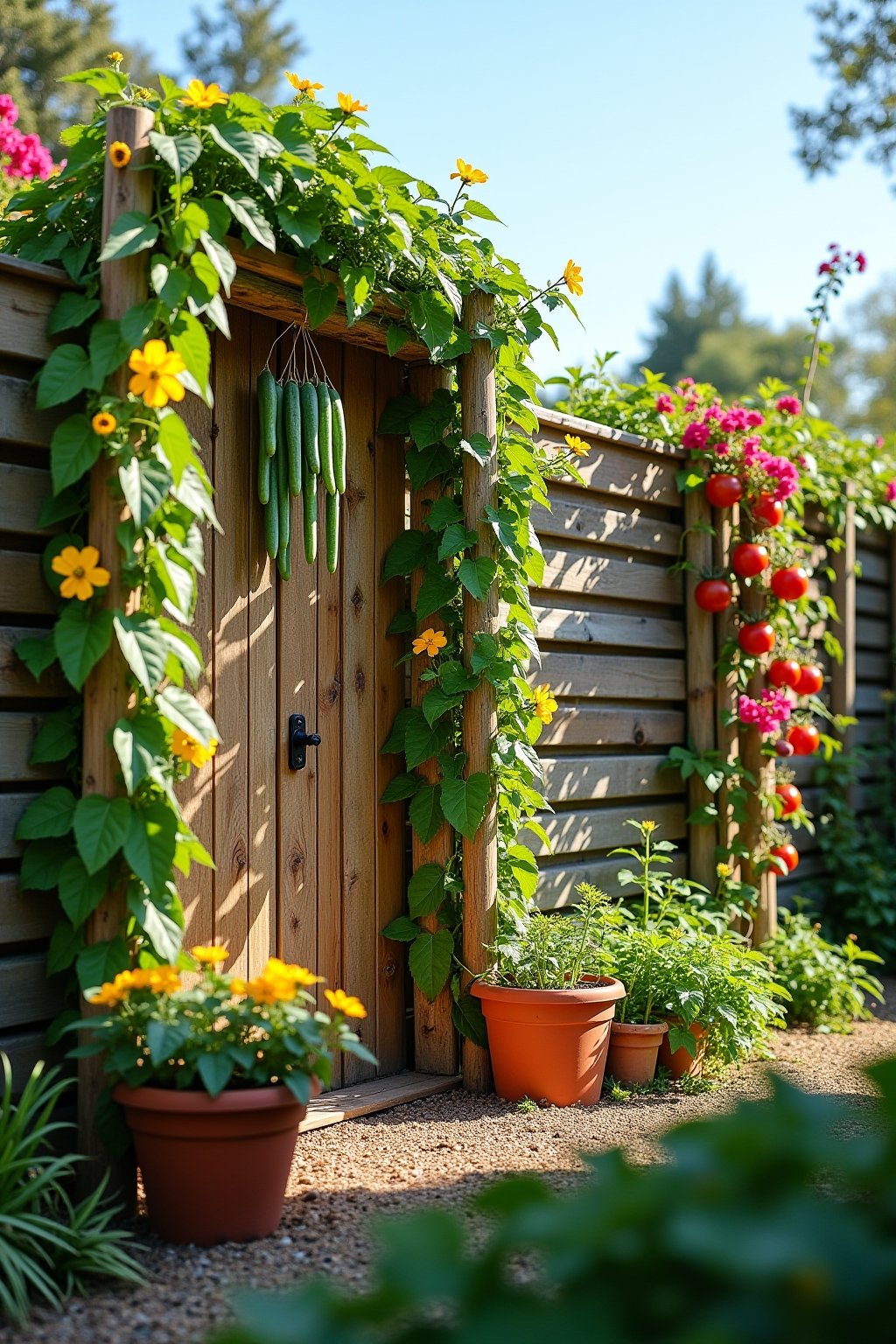
When I ran out of ground space in my backyard garden, I looked up — and everything changed. Vertical gardening is one of the best-kept secrets for small space growers, and a good trellis can triple your growing area while adding beautiful structure to your garden. The best part? You do not need to spend a fortune or be handy with power tools.
I have built every type of trellis you can imagine, from fancy cedar arches to quick and dirty string supports, and I have learned that simple designs often work best. In this guide, I will share 7 DIY trellis ideas that anyone can build in an afternoon using affordable materials. Whether you are growing cucumbers, pole beans, tomatoes, or flowering vines, there is a perfect trellis design here for your garden.
Quick Facts
| Sun | Full Sun (for most climbing vegetables) |
| Difficulty | Beginner to Intermediate |
| Season | Build in Early Spring before planting |
| Zone | USDA Zones 3-10 |
| Time to Harvest | N/A (structure project) |
What to Have Sorted
- Wooden stakes or bamboo poles (6-8 feet)
- Cattle panel or welded wire fencing (16 ft panel)
- T-posts or metal fence posts
- Garden twine, jute string, or trellis netting
- Zip ties or wire
- Wooden pallet (free from hardware stores)
- PVC pipes or electrical conduit
- Screws, nails, or brackets
- Drill or hammer
- Wire cutters
- Measuring tape
- Level
You do not need all of these materials — each trellis design uses different supplies. I have listed everything so you can pick the project that matches what you already have on hand. Cattle panels (also called livestock panels) are my all-time favorite trellis material because they are incredibly strong, last for years, and come in 16-foot lengths that can be cut or bent into arches. You can find them at farm supply stores.
For budget builds, bamboo poles and garden twine are hard to beat — they cost almost nothing and work beautifully for beans, peas, and lightweight vines. If you want something more permanent, cedar or pressure-treated lumber resists rot and looks polished in the garden for years. Avoid untreated pine, which rots within one or two seasons.
Trellis 1: The Classic A-Frame Trellis
The A-frame trellis is one of the most versatile designs and creates usable growing space on both sides. It is perfect for cucumbers, squash, peas, and beans. You can also grow shade-loving lettuce underneath.
How to build it: Take two matching panels of welded wire fencing, wooden lattice, or even old window screens. Each panel should be about 4 to 6 feet tall and 3 to 4 feet wide. Hinge them together at the top with zip ties, wire, or small hinges. Spread the bottoms apart to form an A shape and secure each base into the soil with stakes. The angle should be stable enough to resist wind. This trellis folds flat for easy winter storage, which is a huge bonus for small gardens.
Best for: Cucumbers, small melons, peas, beans, lightweight squash varieties.
Trellis 2: Cattle Panel Arch Trellis
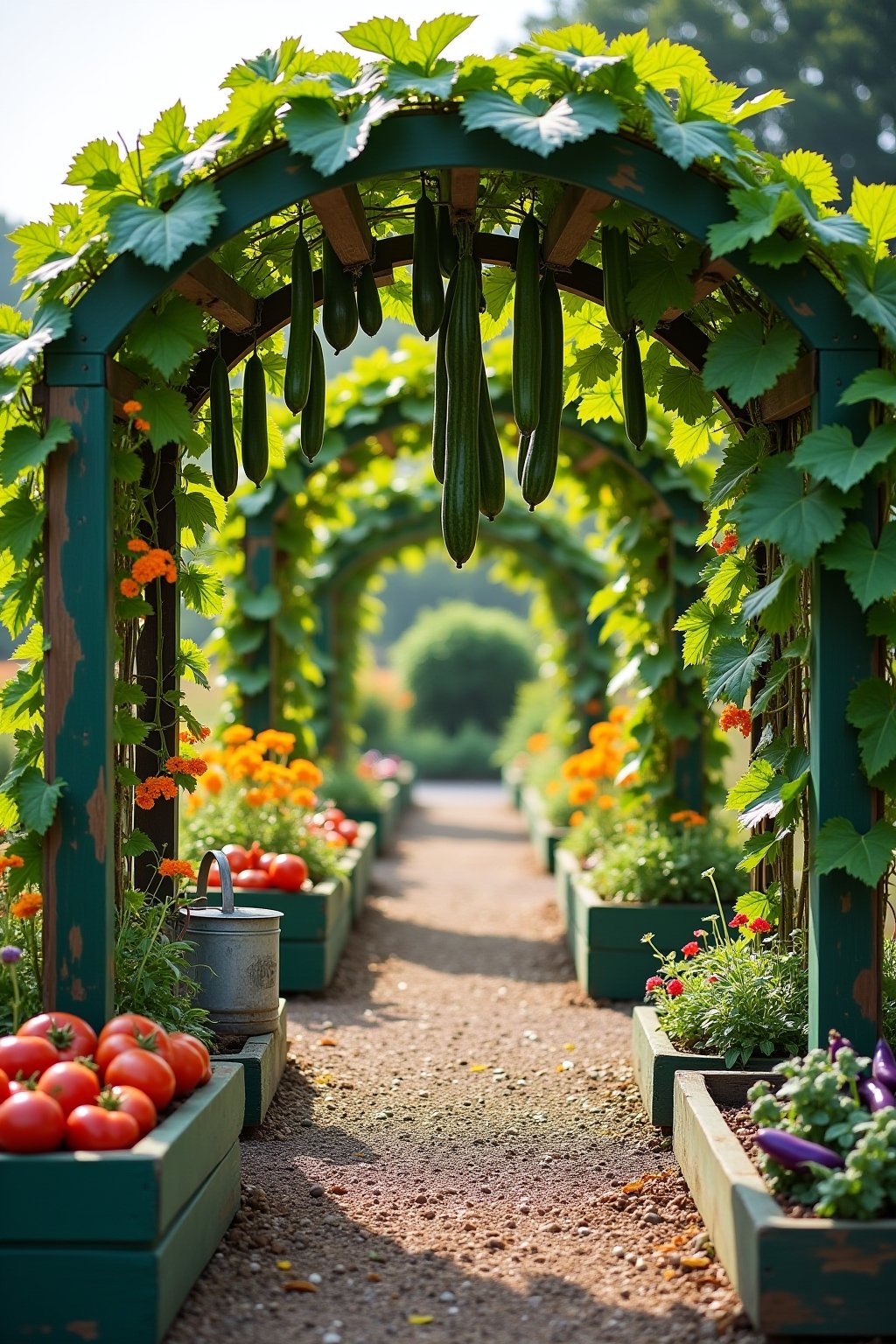
This is the trellis that transformed my garden, and it is the one I recommend most often. A cattle panel arch creates a stunning garden tunnel that is strong enough to support heavy crops like watermelons and winter squash. It is beautiful, productive, and lasts for a decade or more.
How to build it: Purchase a 16-foot cattle panel (these have a grid of heavy-gauge welded wire). Bend it into an arch by pushing the ends into the ground on opposite sides of a raised bed or garden path, spacing the bases about 4 feet apart. Secure each end to T-posts driven into the ground using wire or zip ties. For extra stability, use two panels side by side. The arch should be tall enough to walk under comfortably, about 6 feet at the peak.
Best for: Heavy crops like squash, melons, cucumbers, pole beans, gourds, and flowering vines like morning glories.
Trellis 3: Bamboo Teepee Trellis
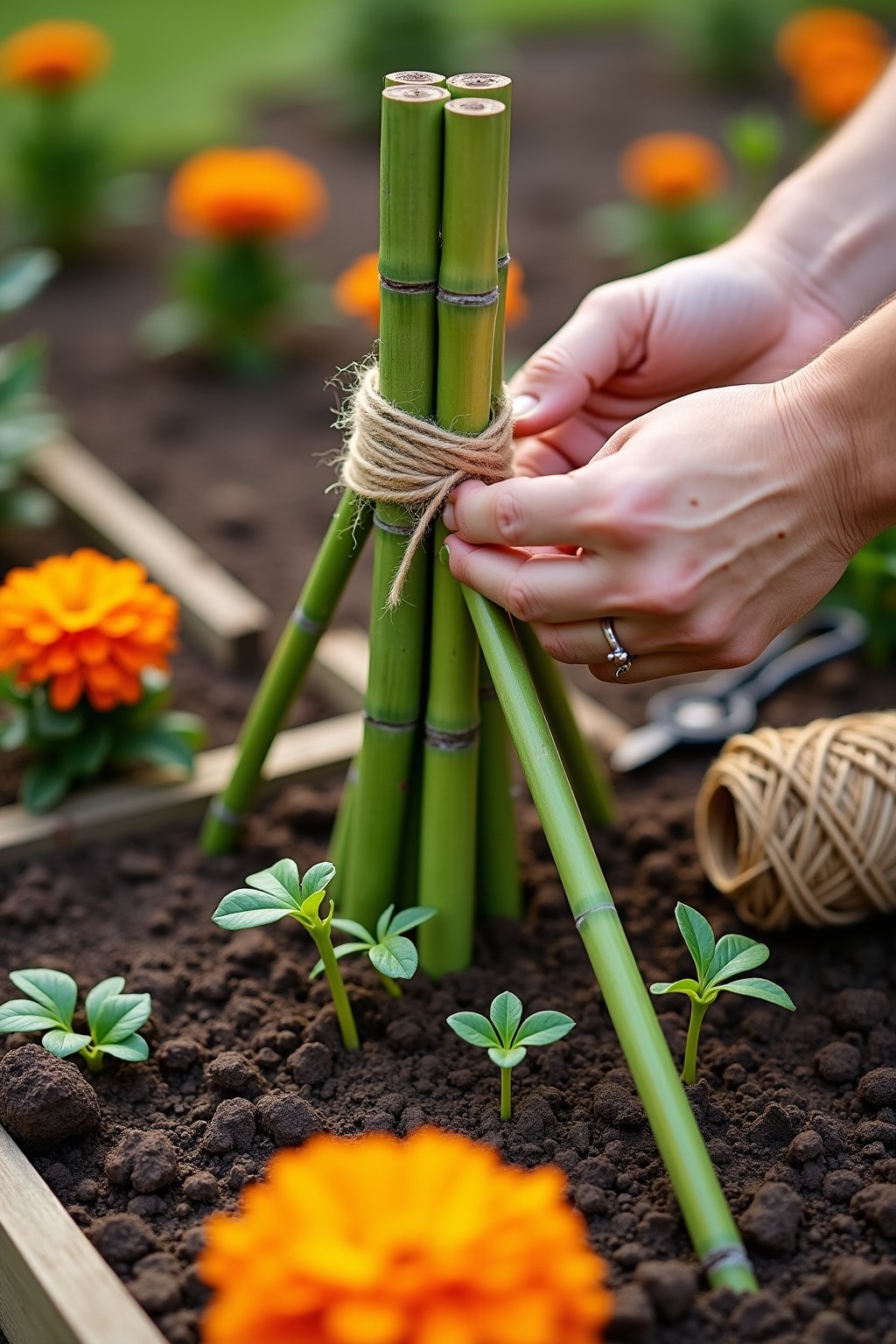
A bamboo teepee is the simplest trellis you can build — it takes about 10 minutes, costs almost nothing, and looks charming in the garden. Kids especially love growing beans or peas up a teepee structure because it creates a fun green hideaway.
How to build it: Push 5 to 7 bamboo poles (6-8 feet long) into the ground in a circle about 3 to 4 feet across. Angle them inward so the tops meet, then lash them together with twine or wire. For extra climbing surface, wrap horizontal rings of twine around the poles at 12-inch intervals. Plant seeds at the base of each pole. Within a few weeks, the vines will cover the structure in lush green foliage.
Best for: Pole beans, sugar snap peas, sweet peas, morning glories, and small-fruited cucumbers.
Trellis 4: Pallet Trellis (Free and Easy)
Free wooden pallets are one of the most underrated garden materials. Stand one upright and you instantly have a sturdy trellis with built-in horizontal slats that vines can grab onto. They are especially great for renters or anyone who wants a quick, no-cost vertical growing solution.
How to build it: Find a heat-treated pallet (look for the “HT” stamp — avoid pallets marked “MB” which are chemically treated). Stand the pallet upright and secure it to two T-posts or sturdy stakes driven into the ground. You can also lean it against a fence or wall at a slight angle. For an upgraded look, sand it lightly and apply exterior wood stain. Plant climbing crops at the base.
Best for: Peas, beans, cherry tomatoes, small cucumbers, and flowering vines. Also works as a vertical herb garden by attaching small pots to the slats.
Trellis 5: String Trellis (The Simplest Setup)
If you need a trellis today with materials you probably already have, the string trellis is your answer. It is the method used by most commercial greenhouse growers for tomatoes and cucumbers because it is simple, effective, and infinitely adjustable.
How to build it: Install a horizontal support — this could be a pipe, board, or wire — about 6 to 7 feet off the ground, running the length of your garden bed. Tie lengths of strong jute twine or trellis string from the overhead support down to stakes or anchors at the base of each plant. As plants grow, gently wind the main stem around the string. For a grid-style string trellis, run horizontal strings at 8-inch intervals between two vertical posts.
Best for: Tomatoes (single-stem pruning), cucumbers, pole beans, peas, and any lightweight climbing crop.
Trellis 6: Fan Trellis for Walls and Fences
A fan trellis mounts flat against a wall, fence, or the side of a raised bed, making it perfect for tight spaces where you cannot use a freestanding structure. It is decorative enough for front yard gardens and functional enough for serious food production.
How to build it: Use 5 to 7 bamboo poles or thin wooden stakes. Gather them at the base and fan them out at the top, securing them with horizontal crosspieces of twine or thin sticks tied at intervals. Attach the base to a fence post, wall mount, or stake it into a container. For a more permanent version, build a simple wooden frame (2 feet wide by 5 feet tall) and attach trellis netting or wire mesh inside the frame.
Best for: Climbing roses, clematis, sweet peas, peas, small cucumbers, and any vine you want to train flat against a surface.
Trellis 7: Lean-To Trellis Against a Raised Bed
A lean-to trellis is essentially a panel set at an angle against the back of a raised bed. It catches maximum sunlight, supports heavy crops, and is one of the easiest structures to build. This design keeps all your growing on one side, making it ideal for beds along fences or walls.
How to build it: Attach a cattle panel, welded wire panel, or wooden lattice to the back edge of your raised bed using brackets, screws, or zip ties. Lean it at about a 60 to 70 degree angle — steep enough that fruit hangs down for easy picking but angled enough to be stable. Anchor the top to a fence, wall, or horizontal support if possible. Plant climbing crops at the base of the panel.
Best for: Tomatoes, cucumbers, pole beans, peas, squash, and any heavy vine that needs strong support. The angle makes harvesting fruit that hangs underneath incredibly easy.
What I See Trip People Up
Trellis collapsing under weight: This is the most common problem, especially with heavy crops like squash and melons. Always build your trellis stronger than you think you need. Use T-posts as anchors, bury the base of supports at least 12 inches into the ground, and add cross-bracing for tall structures. Heavy fruit on vertical trellises can be supported individually with mesh slings or old pantyhose tied to the trellis frame.
Plants not climbing the trellis: Some plants need help getting started. Gently guide young vines toward the trellis and loosely tie them in place with soft twine. Once tendrils make contact, most climbing plants take over on their own. Cucumbers and beans are natural climbers, but tomatoes need to be tied to supports since they do not have tendrils.
Wind knocking over structures: Garden trellises act like sails when covered in foliage. Position trellises so their narrow edge faces the prevailing wind direction whenever possible. For exposed gardens, add guy wires anchored to stakes in the ground, or use heavier materials like cattle panels that resist wind better than lightweight netting.
Trellis shading other plants: Place tall trellises on the north side of your garden (in the Northern Hemisphere) so they do not cast shadows on other crops. Or use the shade intentionally by planting heat-sensitive crops like lettuce on the shaded side of a trellis — this is a smart way to extend cool-season growing into summer.
A Seasonal Rhythm
Here is a seasonal guide for building and using garden trellises throughout the year:
| Season | Task | Details |
|---|---|---|
| Late Winter | Plan and gather materials | Measure garden space, order cattle panels or supplies |
| Early Spring | Build and install trellises | Do this BEFORE planting so you do not disturb roots |
| Spring | Plant climbing crops at base of trellises | Peas, beans, cucumbers, small squash |
| Late Spring | Guide young vines, tie loosely | Check that tendrils are grabbing on |
| Summer | Train and maintain growth | Redirect wayward vines, add slings for heavy fruit |
| Fall | Remove dead vines, clean trellises | Remove all plant material to prevent disease carryover |
| Winter | Store foldable trellises, repair permanent ones | Check for rust, loose connections, rot |
Key timing tip: Always install trellises before planting. Pushing posts or stakes into the ground near established plants damages root systems and can set back or kill your crops.
After a Lot of Trials
- Install trellises before planting, always — Hammering posts and pushing stakes into the ground near established plants crushes roots and stunts growth. Set up all your vertical structures first, then plant at the base.
- Use cattle panels for bulletproof trellises — Cattle panels are heavy-gauge welded wire that supports even watermelons and winter squash. One 16-foot panel bent into an arch over a 4-foot bed creates the strongest, most versatile trellis you can build. They last 10 years or more.
- Face trellises east or south for maximum sun exposure — In the Northern Hemisphere, south-facing trellises get the most sunlight on the growing surface. East-facing trellises catch warm morning sun, which dries dew quickly and helps prevent fungal disease.
- Grow shade-loving crops behind tall trellises — The north side of a trellis covered in pole beans or cucumbers creates perfect dappled shade for lettuce, spinach, and cilantro that would otherwise bolt in summer heat.
- Support heavy fruit with mesh slings — When growing melons or squash vertically, create slings from mesh produce bags, old pantyhose, or fabric strips. Tie the sling to the trellis so the fruit hangs supported. Without slings, heavy fruit pulls vines off the trellis or breaks stems.
- Use biodegradable twine so cleanup is easier — Jute and sisal twine decomposes naturally. At the end of the season, you can cut everything down and toss vines and twine together into the compost bin instead of picking out plastic ties.
Common Questions
What is the easiest DIY garden trellis to build?
A bamboo teepee trellis is the easiest and fastest to build — push 5 to 7 bamboo poles into the ground in a circle, gather the tops together, and tie them with twine. It takes about 10 minutes, costs almost nothing, and works perfectly for beans, peas, and lightweight vines.
What vegetables grow best on a trellis?
Cucumbers, pole beans, peas, indeterminate tomatoes, small squash, melons (with sling support), and zucchini all grow well on trellises. Climbing flowers like morning glories, sweet peas, and nasturtiums also make beautiful trellis plantings. Most crops that vine or have tendrils are natural trellis candidates.
How tall should a garden trellis be?
Most vegetable trellises should be 5 to 7 feet tall. Pole beans and indeterminate tomatoes can easily reach 6 to 8 feet. Peas typically need only 4 to 5 feet. Build your trellis a foot taller than you think you need — plants often grow taller than expected, especially in rich soil with good moisture.
Can you grow tomatoes on a trellis?
Yes, indeterminate tomato varieties grow beautifully on string trellises and wire panels. Tie the main stem to the support as it grows and prune side suckers to keep the plant to one or two main stems. This vertical method improves air circulation, reduces disease, and makes harvesting easier.
What is the strongest material for a DIY garden trellis?
Cattle panels (also called livestock panels) are the strongest commonly available trellis material. They are made of heavy-gauge galvanized welded wire, can support over 100 pounds of fruit and foliage, resist rust, and last 10 to 15 years. They are available at farm supply stores for around 25 to 30 dollars per 16-foot panel.
Does vertical gardening really save space?
Absolutely. A single 4-by-8-foot trellis can grow as much as 20 to 30 square feet of horizontal garden space. Vertical growing is the most effective strategy for small gardens, raised beds, patios, and balconies. It also improves air circulation around plants, which reduces fungal disease.