
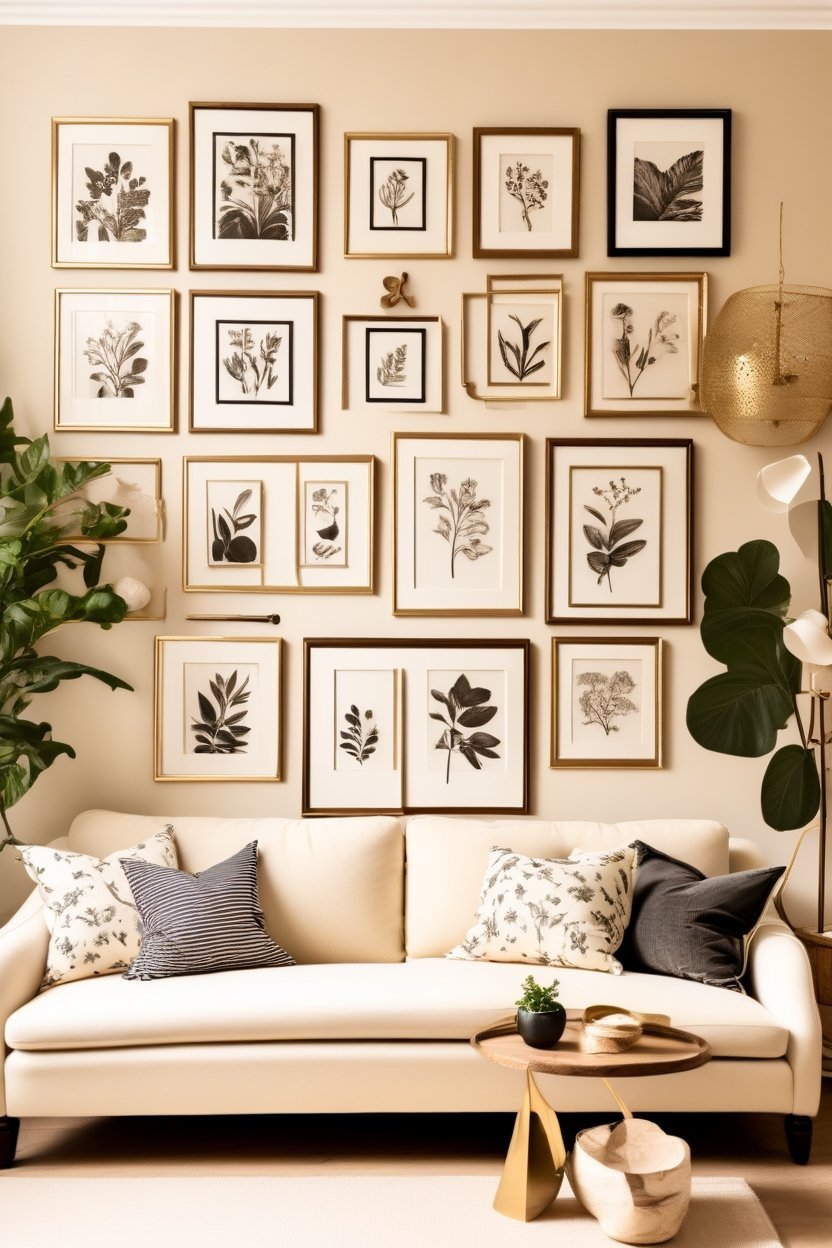
A gallery wall done well is one of the most personal and impactful things you can do to a room. Done poorly, it looks like an afterthought — a random collection of frames thrown at a wall. The difference between the two is planning, and it’s simpler than most people think.
Whether you want a tight grid of matching frames, an organic salon-style arrangement, or something in between, these steps will get you there without a single misplaced nail hole.
Choose Your Style First
Grid gallery wall: Identical or very similar frames arranged in a precise grid. Clean, modern, and easy to execute — especially if you’re using the same frame from IKEA or similar. Works beautifully in dining rooms and hallways.
Salon-style gallery wall: Mixed frames of different sizes and styles arranged organically. More personal and eclectic, works in cozy living room decor ideass and luxury hotel bedroom on a budgets. Requires more planning but feels more curated.
Single row: A horizontal line of frames at the same height, often above a sofa or console. Simple, elegant, and impossible to get wrong.
Curate Your Content
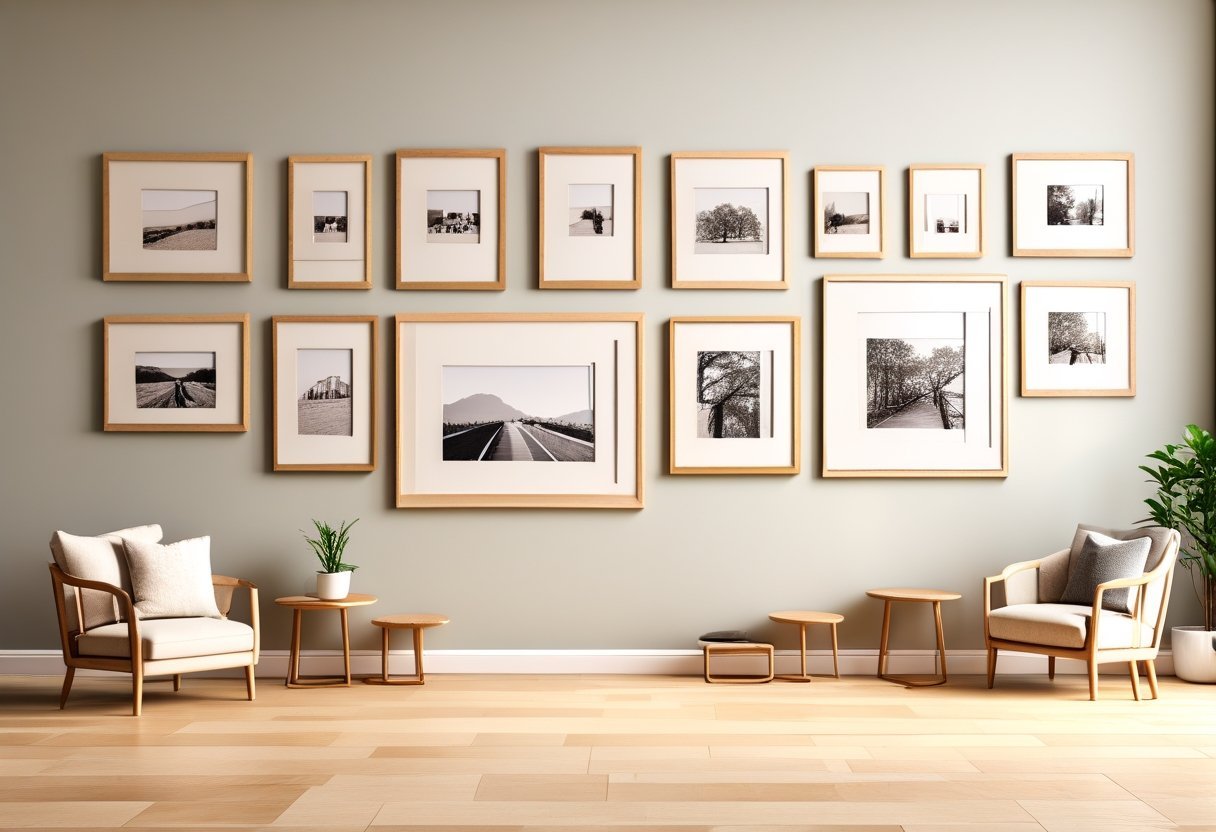
The most meaningful gallery walls combine different types of content: original art, printed photographs, typographic prints, mirrors, and even three-dimensional objects like pressed botanical specimens or architectural fragments. Aim for a mix that tells a story rather than a collection of prints downloaded from the same Etsy shop. Include at least one or two personal photographs — they anchor the wall to your actual life.
Create a Cohesive Look with Mixed Frames
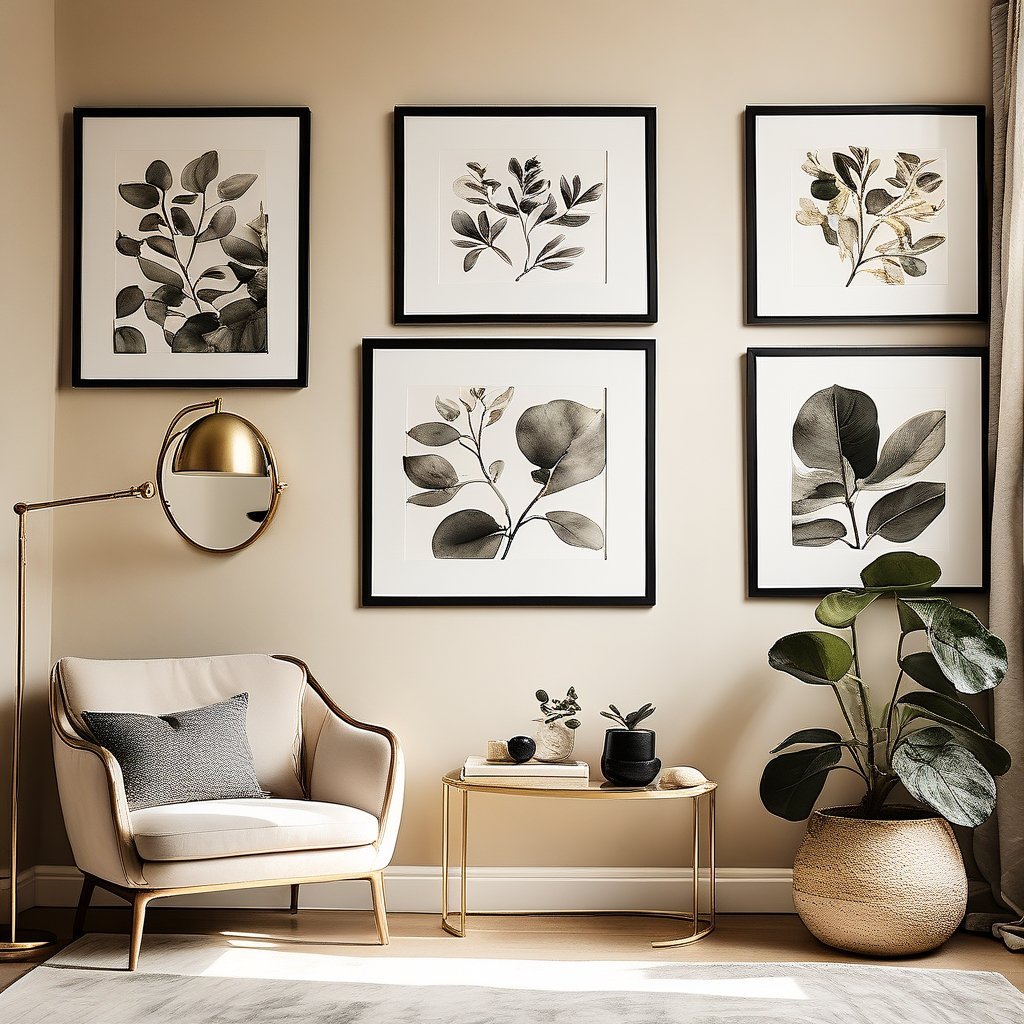
Mixed frames look curated when they share one unifying element: the same 2026 home color trends (all black, all white, all natural wood, all brass), or the same material (all metal, all wood). Mixing sizes and shapes within a single finish family creates beautiful variety without looking chaotic. If you’re buying new frames, pick one finish and stick to it.
Plan on Paper (or the Floor) First
Trace each frame on kraft paper, cut out the shapes, and tape them to the wall with painter’s tape. Live with the arrangement for a day or two — you’ll notice things in passing that you miss when standing directly in front of it. Alternatively, lay everything out on the how to clean every type of floor and take a photo from above — this gives you a bird’s eye view of how the arrangement reads as a whole.
The Spacing Rule
Consistent spacing between frames makes any arrangement look intentional. For a tight, modern look: 2 inches between frames. For a more relaxed, organic feel: 3-4 inches. For salon style: vary between 2 and 5 inches but maintain a general consistency. Use a ruler and a level — eyeballing spacing is how gallery walls go wrong.
Hang at the Right Height
The center of your gallery wall should be at approximately eye level — typically around 57-60 inches from the floor, which is the standard museum hanging height. When hanging above a sofa, leave 6-8 inches between the top of the sofa and the bottom of the lowest frame. The biggest gallery wall mistake is hanging too high, which disconnects the wall from the furniture below it.
A gallery wall is one of those projects that looks complicated but is almost entirely planning. Once the plan is solid and the paper templates are tested, the actual hanging takes 30 minutes — and the result is completely personal to you. For more inspiration, browse our home decor tips. For more ideas, explore our home decor ideas.