
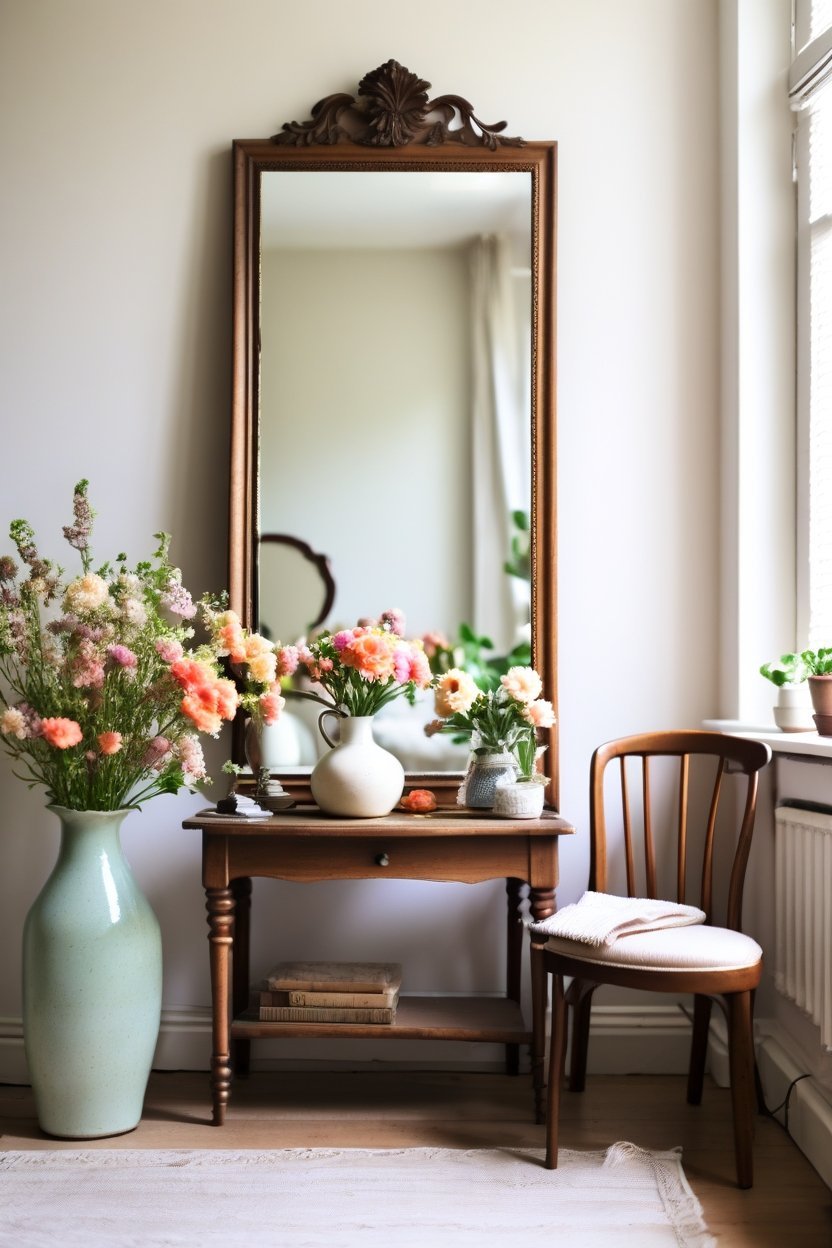
Some of the most beautiful, character-filled homes I’ve ever seen were small home decor changesated almost entirely from thrift stores, estate sales, and flea markets. There’s a reason designers have been sourcing second-hand for decades — vintage and pre-owned pieces have a quality, patina, and individuality that new mass-produced items simply can’t replicate. And they cost a fraction of the price.
The skill isn’t just finding good pieces — it’s knowing what to look for, what to pass on, and how to make thrifted finds look intentional and beautiful rather than mismatched. Here’s how to do it right.
Shop With a List (But Stay Open)
Go in with a clear idea of what you need — a lamp for the luxury hotel bedroom on a budget, a side table, frames for a create a gallery wall — so you’re not overwhelmed by the volume of stuff. But stay open to unexpected finds that aren’t on your list. Some of the best thrift store discoveries are things you didn’t know you needed until you saw them.
What to Always Buy at Thrift Stores
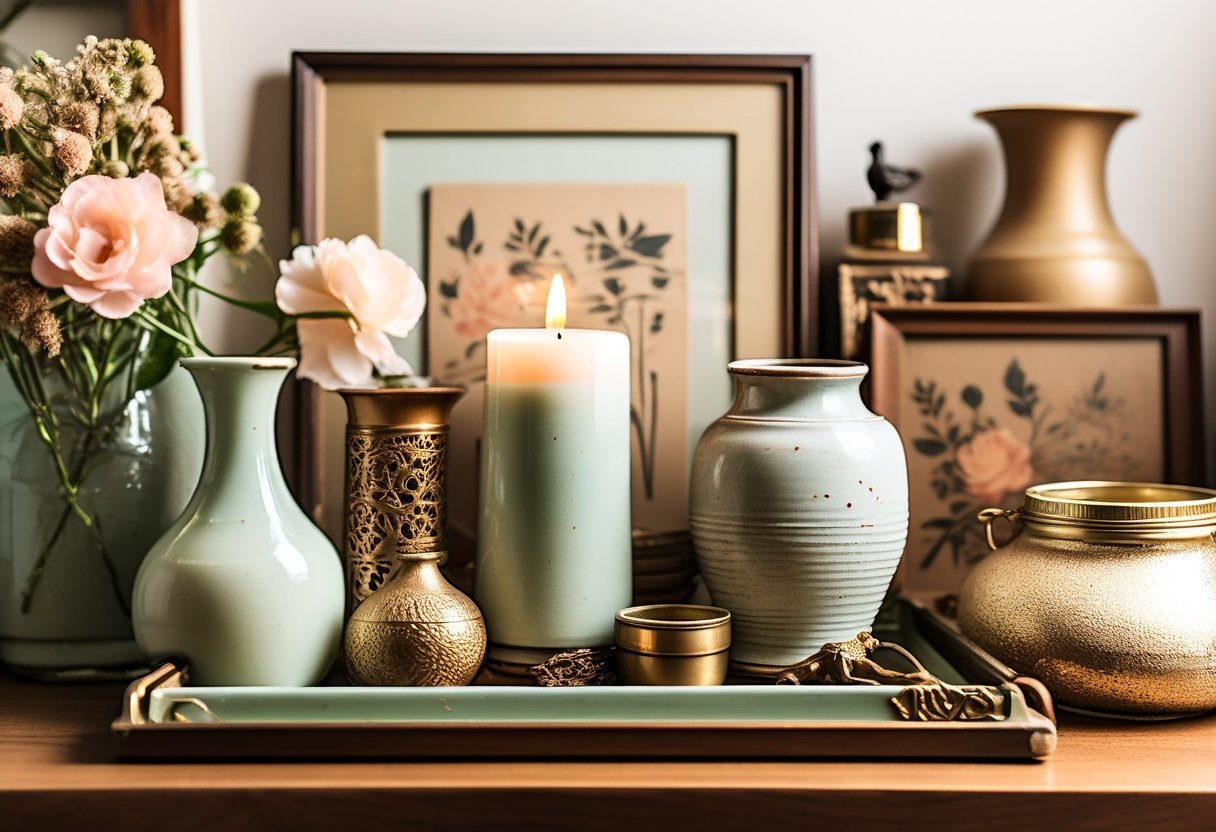
Picture frames: Buy any solid wood or brass frame in good condition — these are almost always worth painting, staining, or using as-is. New quality frames are expensive; thrifted ones cost $1-5.
Vases and ceramics: These are impossible to damage with use and easy to restyle. A spray of white or terracotta paint transforms any ceramic.
Solid wood furniture: Look for quality construction — dovetail joints, solid wood drawers, real wood veneer. These pieces can be refinished, painted, or used as-is.
Lamps: The base is what matters — a dated lampshade is a $15 replacement. Solid brass and ceramic lamp bases are excellent thrift store finds.
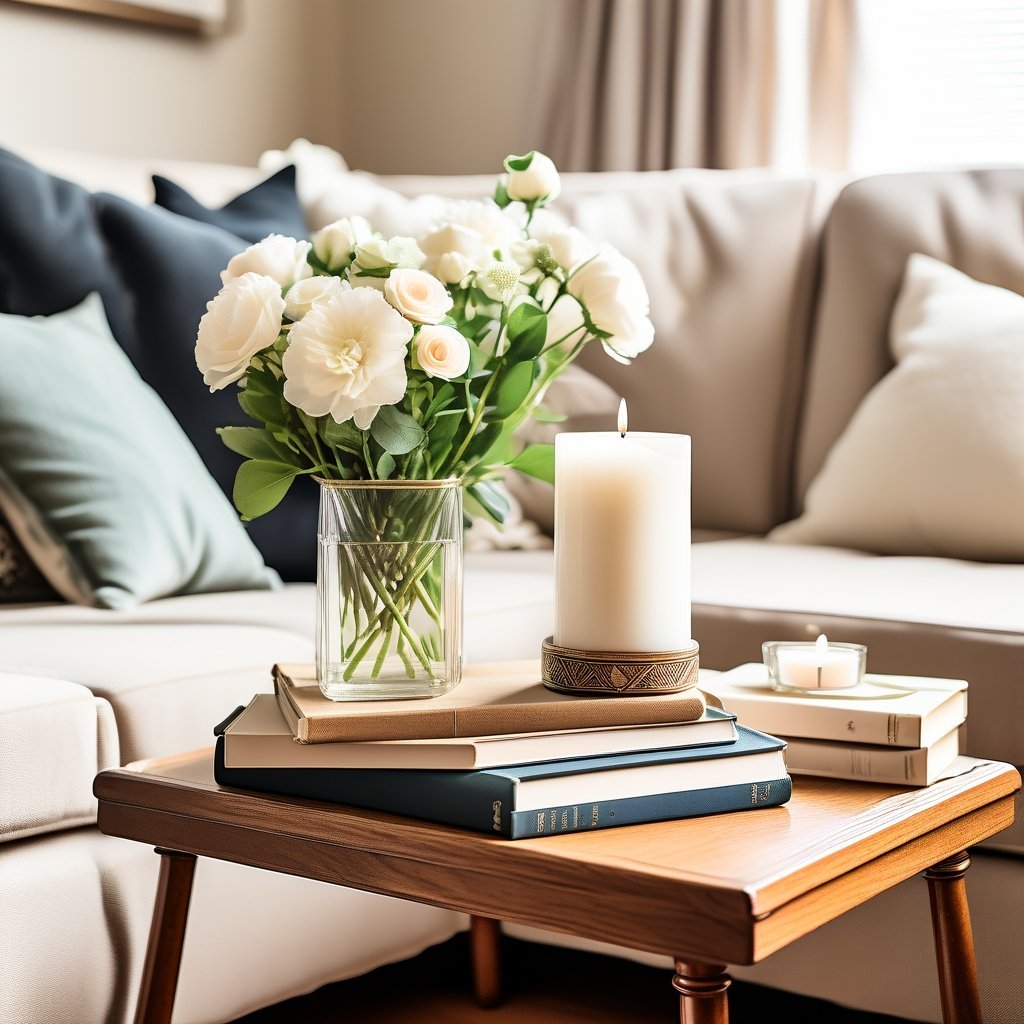
Books: Hardcover books in neutral or complementary 2026 home color trendss make excellent shelf Afrohemian decor ideas for essentially nothing.
What to Approach With Caution
Upholstered furniture requires careful inspection — check for stains, smell, and any signs of pests before buying. Anything with particleboard construction isn’t worth refinishing. Electronics and appliances should only be purchased if you can test them first. And anything you’re buying just because it’s cheap (not because you love it or need it) will end up in a donation bag.
The Transformation Techniques That Work Best
Spray paint: One can of spray paint turns a dated brass lamp, a mismatched frame, or a tired vase into something that looks current and intentional. Matte black, aged brass, and warm white are the most versatile colors.
Chalk paint: The miracle worker for wood furniture — it adheres to almost any surface without sanding, dries to a matte finish, and can be waxed or sealed for durability.
New hardware: Replacing drawer pulls and cabinet knobs is the highest-ROI upgrade for thrifted furniture. New hardware from a hardware store costs $3-8 per piece and completely transforms a dresser or cabinet.
How to Make Thrifted Pieces Look Cohesive
The secret to thrifted decor that looks curated rather than random is a consistent finish palette. If you commit to, say, natural wood, white ceramics, and brass accents throughout your home, even very different pieces will feel like a collection. Everything you bring in should fit one of your chosen finishes — if it doesn’t, a coat of paint usually fixes it.
Thrift store shopping is a skill that improves with every visit. After a few months of regular stops, you’ll develop an eye for quality and potential that makes every trip an enjoyable treasure hunt — and your home will be more interesting and personal for it.