
Why Birds Belong in Your Garden
A garden without birds is just a collection of plants. Add birds, and it becomes something alive — a dynamic ecosystem where chickadees hunt for caterpillars on your tomato plants, goldfinches perch on your coneflowers, and hummingbirds hover at your salvia. Birds aren’t just beautiful visitors. They’re pest controllers, pollinators, and seed dispersers. A single chickadee eats 6,000-9,000 caterpillars to raise one clutch of chicks. That’s organic pest control you couldn’t buy at any garden center.
Attracting birds to your garden isn’t complicated, but it does require understanding what birds actually need. It’s not just about hanging a feeder — it’s about creating a habitat that provides food, water, shelter, and nesting sites. Get those four elements right, and your yard will become a destination for dozens of species. Here’s how to make it happen.
Food: Beyond the Bird Feeder
Bird feeders are a great starting point, but the most bird-friendly gardens provide natural food sources through plants. Native plants produce the seeds, berries, and nectar that local bird species evolved to eat — and they attract the insects that form the primary diet of most songbirds, especially during breeding season.
Seed-producing plants: Sunflowers, coneflowers (Echinacea), black-eyed Susans, and ornamental grasses produce seeds that finches, sparrows, and chickadees love. Leave the seed heads standing through winter instead of cutting them back — they provide food when natural sources are scarce and birds need it most.
Berry-producing shrubs: Elderberry, serviceberry, winterberry holly, and viburnum produce berries that robins, waxwings, and thrushes devour. Plant a mix of species that fruit at different times — some in summer, some in fall — for continuous food availability.
Nectar plants: Trumpet vine, cardinal flower, bee balm, and salvia attract hummingbirds with their tubular, nectar-rich flowers. Red and orange flowers are particularly effective at catching hummingbirds’ attention.
For supplemental feeding, a well-maintained feeder dramatically increases the variety and number of birds visiting your garden. A Squirrel-Proof Tube Bird Feeder filled with black oil sunflower seeds attracts the widest range of species — from cardinals and blue jays to nuthatches and woodpeckers. Position it within 10-12 feet of shrubs or trees so birds have quick escape cover from predators.
Water: The Element Most Gardens Miss
Water is arguably the single most effective bird attractor. Many birds that won’t visit feeders will come to a water source. Birds need water for drinking and bathing — clean feathers are essential for flight and insulation.
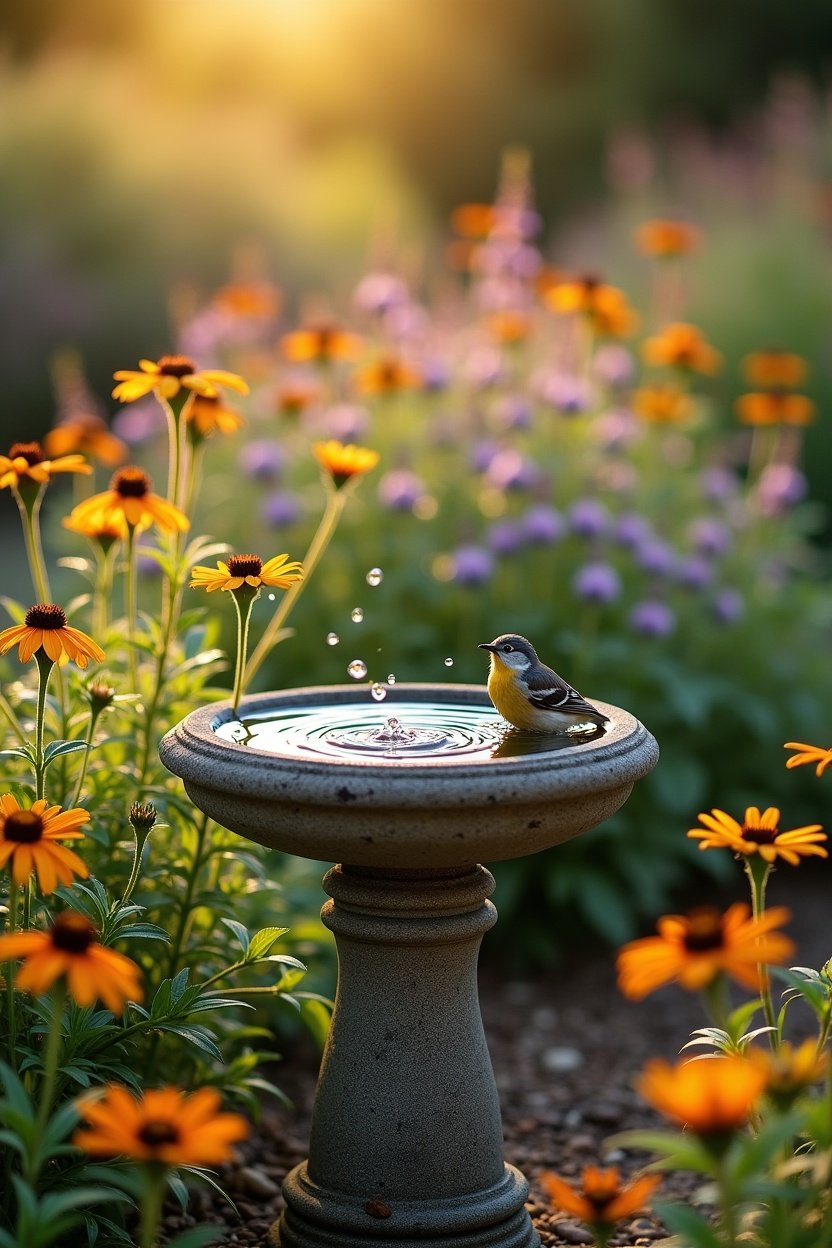
A simple birdbath is all you need, but the details matter. Birds prefer shallow water — no more than 2-3 inches deep — with a rough, textured surface they can grip. A Heated Birdbath with Solar Fountain provides year-round water even in freezing temperatures, and the gentle bubbling of a solar fountain creates water movement that attracts birds from a distance. They can hear and see moving water from much farther away than still water.
Place the birdbath in an open area where birds can see approaching predators, but within 15-20 feet of trees or shrubs for quick escape. Keep it clean — scrub it out and refill with fresh water every 2-3 days to prevent algae and mosquito breeding.
If you want to go beyond a birdbath, a small recirculating stream, a dripping hose, or a misting attachment on a garden hose creates irresistible water features that birds seek out specifically.
Shelter and Nesting Sites
Birds need safe places to rest, sleep, escape predators, and raise their young. Without adequate shelter, birds won’t stick around no matter how much food and water you provide.
Trees and shrubs: Dense evergreens like arborvitae, juniper, and holly provide year-round shelter and are critical winter roosting sites. Deciduous trees with complex branching — like oaks, maples, and dogwoods — offer nesting sites in spring and summer. Plant a mix of both for four-season coverage.
Brush piles: A small pile of branches and trimmings in a quiet corner of your yard provides excellent ground-level shelter for sparrows, wrens, and towhees. It doesn’t need to be large — even a 3-foot pile serves as valuable habitat.
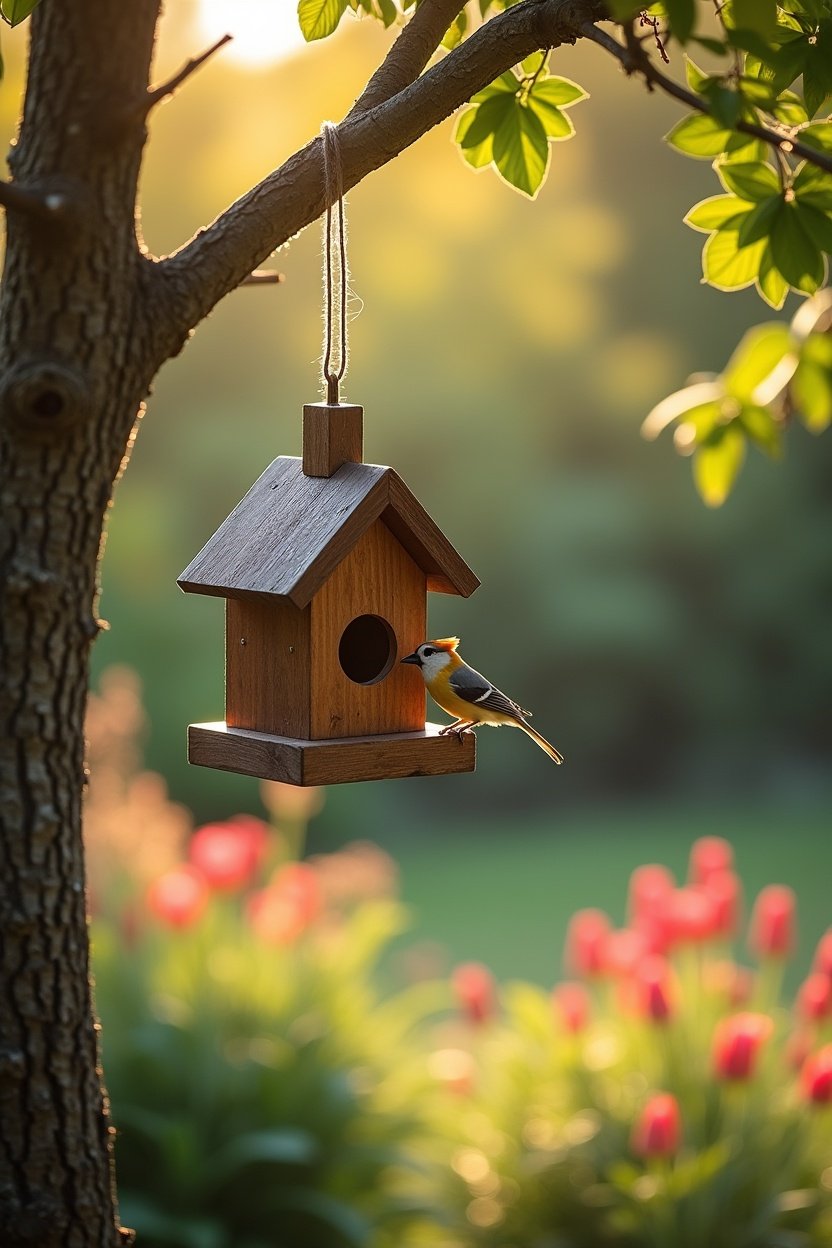
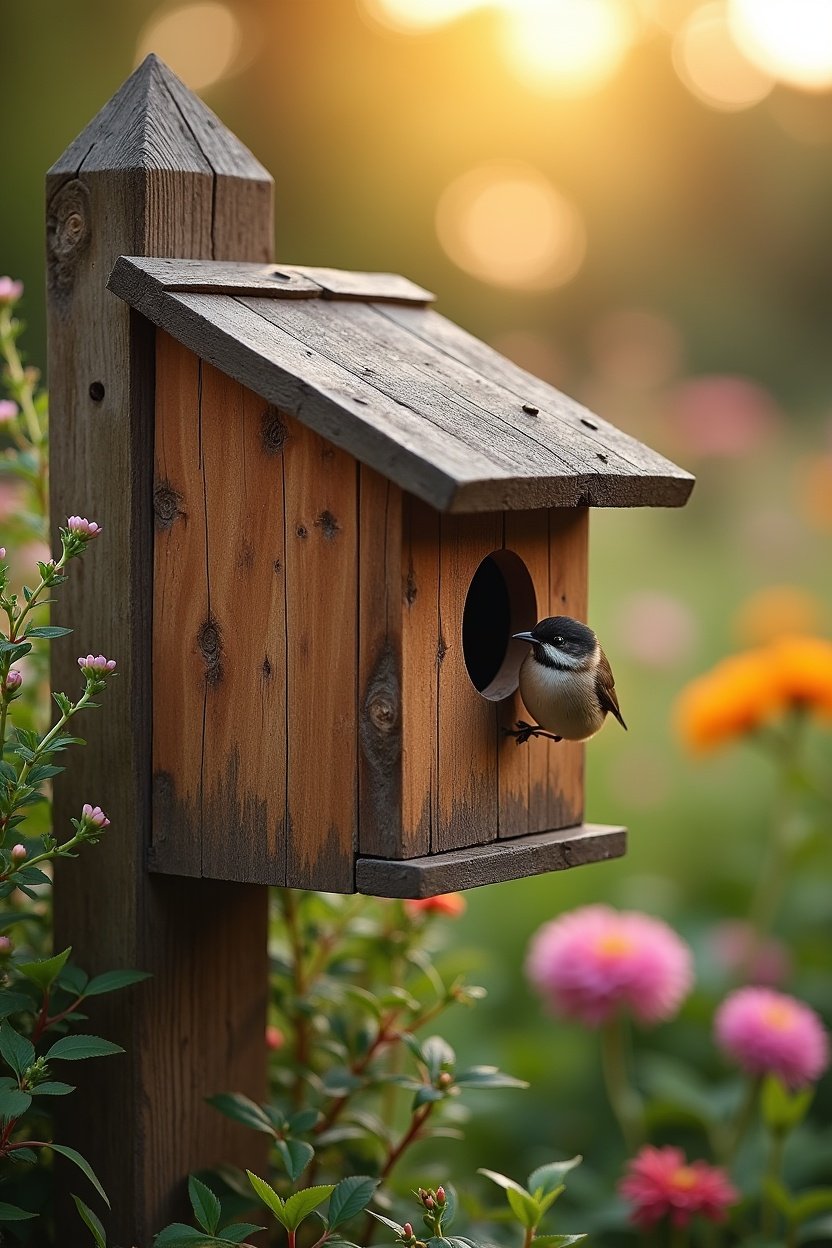
Birdhouses: Different species have very specific requirements for birdhouse dimensions, entry hole size, and placement height. A Cedar Birdhouse with Predator Guard designed for your target species (check the entry hole size — 1.5 inches for chickadees and wrens, 1.25 inches for nuthatches) provides a safe nesting site that cavity-nesting birds need.
Mount birdhouses 5-15 feet high on a pole or tree trunk, facing away from prevailing winds and direct afternoon sun. Clean them out in late winter before nesting season begins — removing old nesting material encourages new tenants.
Creating Layers: The Secret to a Bird-Rich Garden
The most bird-diverse gardens aren’t manicured lawns with a few trees — they have layers. Think of a natural forest: there’s a canopy layer (tall trees), an understory layer (smaller trees and large shrubs), a shrub layer, a ground cover layer, and a leaf litter layer. Each layer provides habitat for different bird species.
You can recreate this layered structure in even a modest backyard:
- Canopy: One or two shade trees (oak, maple, birch) provide high perching, nesting, and insect hunting for warblers, orioles, and tanagers.
- Understory: Flowering trees like dogwood, serviceberry, or redbud offer mid-level nesting and food.
- Shrub layer: Dense shrubs like viburnum, elderberry, and native holly provide cover, nesting sites, and berries.
- Ground cover: Native groundcovers and wildflowers attract insects and provide foraging habitat for ground-feeding birds like thrushes and sparrows.
- Leaf litter: Leave fallen leaves under shrubs and in garden beds. They shelter insects that birds eat and provide nesting material.
What to Avoid
A few common garden practices actually discourage or harm birds:
- Pesticides and herbicides. Insecticides kill the insects birds depend on for food. Herbicides eliminate the plants that produce seeds and shelter. If you want birds, go organic. The birds themselves provide surprisingly effective pest control.
- Outdoor cats. Domestic cats kill an estimated 2.4 billion birds per year in the United States alone. If your cat goes outdoors, consider keeping it inside or building a catio. Even well-fed cats hunt birds instinctively.
- Overly tidy yards. A manicured lawn is a desert for birds. Leave some areas wild: unmowed grass edges, standing dead flower stalks, brush piles, and leaf litter all provide critical food and habitat.
- Window collisions. Up to a billion birds die from window strikes annually in the U.S. If birds are visiting your yard, apply window decals or external screens to large windows to prevent collisions. Closing blinds during peak bird activity hours helps too.
A Month-by-Month Calendar for Bird Gardening
To maximize bird activity year-round, here’s a seasonal checklist:
- January-February: Keep feeders stocked (birds burn enormous calories in winter). Ensure water source isn’t frozen. Clean out birdhouses for spring nesters.
- March-April: Set out nesting materials (short pieces of yarn, pet fur, dryer lint). Avoid pruning shrubs and trees where birds may be starting to nest. Plant native shrubs and trees.
- May-June: Peak nesting season — minimize disturbance near nesting areas. Enjoy watching parents feed chicks. Plant annual nectar flowers for hummingbirds.
- July-August: Keep water sources clean and full — birds bathe more frequently in hot weather. Leave seed heads on flowers for visiting goldfinches.
- September-October: Fall migration — your garden may host species just passing through. Leave garden cleanup for spring. Plant berry-producing shrubs for winter food.
- November-December: Stock high-energy foods: suet, peanuts, sunflower seeds. Brush piles and evergreens provide essential winter shelter.
The Patience Payoff
Creating a bird-friendly garden is a long game. It takes time for trees and shrubs to mature, for word to spread through the bird community, and for your yard to develop the layered habitat that supports diverse species. But the payoff is extraordinary. Within a season of providing the basics — food, water, shelter, and nesting sites — you’ll notice more species visiting. Within a few years, your garden will be genuinely alive with birdsong, movement, and beauty that no amount of decoration can replicate. There’s nothing quite like sitting in your garden with a cup of coffee and watching a bluebird family discover the birdhouse you hung last winter. That’s what gardening is really about.