
The Design Secret Hiding in Plain Sight
Interior designers have been using mirrors to manipulate the perception of space for centuries — and for good reason. A well-placed mirror can make a narrow hallway feel wider, a dark room feel brighter, and a small living room feel twice its actual size. It’s one of the most cost-effective decorating tools that exists, and yet most people either hang a mirror in the wrong spot or don’t use them to their full potential.
The magic of mirrors isn’t just about reflection. It’s about what they reflect — light, views, depth, and architectural details. When you understand how to control what a mirror bounces back into the room, you can transform any space without knocking down a single wall.
How Mirrors Actually Make a Room Feel Bigger
Mirrors create the illusion of space through two mechanisms: reflecting light and creating visual depth. When a mirror reflects natural light from a window, it effectively doubles the brightness of that light source, making the room feel more open and airy. When it reflects a view — even just the view of the opposite wall — it creates the perception of extended space beyond the wall it hangs on.
This is why mirror placement matters so much. A mirror hung on a dark wall facing another dark wall just reflects darkness back into the room. But a mirror hung across from a window floods the room with reflected daylight. A mirror at the end of a narrow hallway creates the optical illusion of the hall continuing beyond the wall.
The effect is most powerful in rooms that feel cramped, dark, or boxy — exactly the kinds of rooms that benefit most from a decorating intervention.
The Rules of Mirror Placement
Not every wall is a good mirror wall. Here’s how to choose the right spot every time:
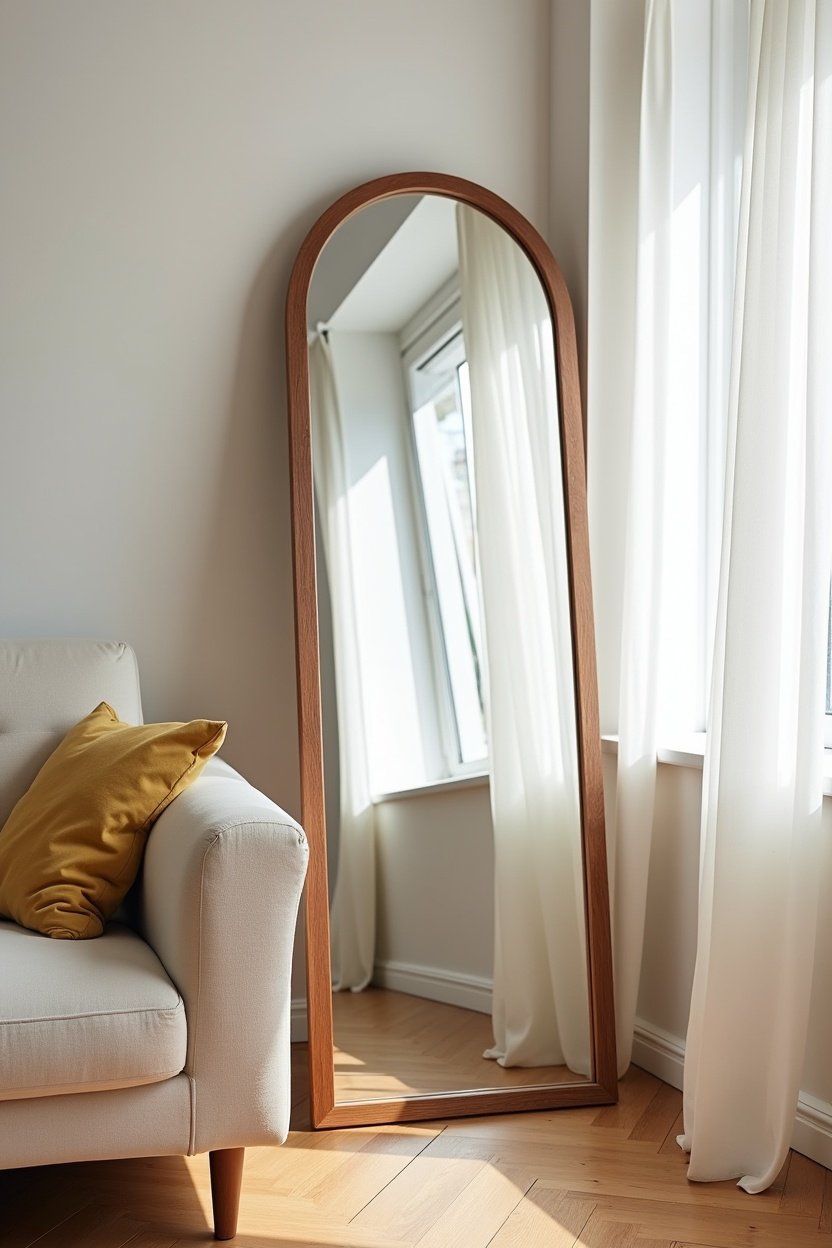
Opposite or adjacent to windows. This is the number one rule. Placing a mirror where it can catch and redistribute natural light is the single most effective way to brighten and visually expand a room. If the mirror can reflect a window view — trees, sky, even just daylight — even better. A Large Frameless Floor Mirror leaned against the wall opposite your main window creates a stunning light-doubling effect that transforms the entire room.
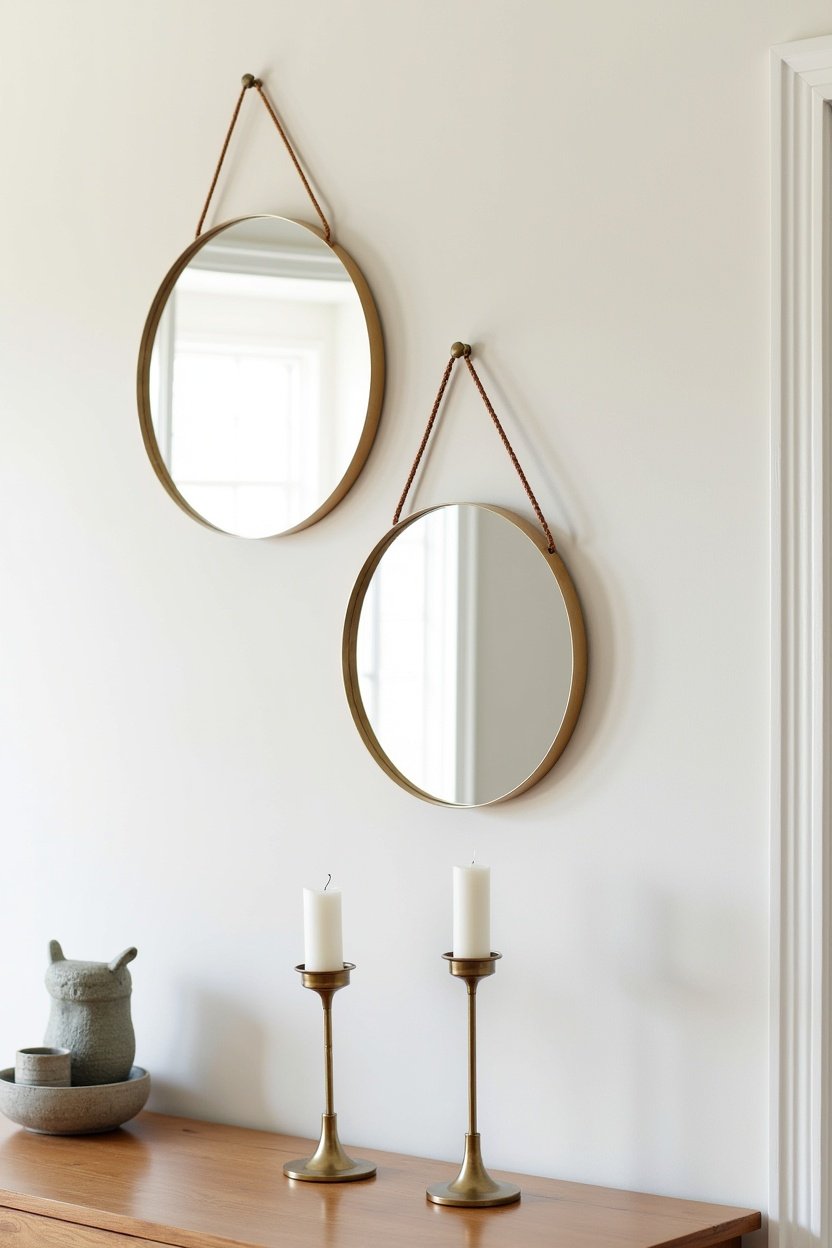
Behind light sources. Hanging a mirror behind a table lamp, candle arrangement, or wall sconce doubles the warmth and glow of that light. This technique works beautifully in dining rooms, where a mirror behind a buffet with candlesticks creates an intimate, luminous atmosphere.
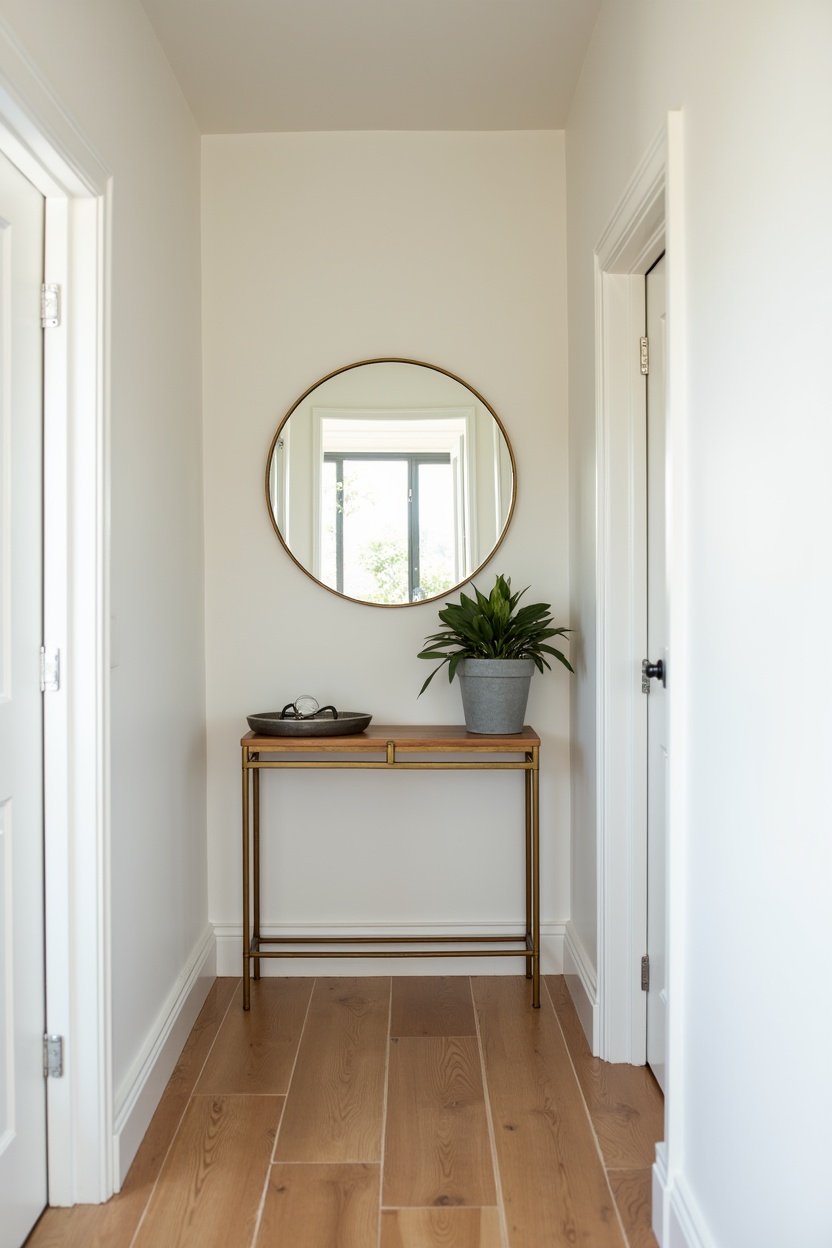
At the end of hallways. A mirror at the terminal wall of a hallway creates the illusion of the space continuing, making even the narrowest corridor feel less tunnel-like. Choose a mirror that’s proportional to the wall — it should fill most of the width for maximum effect.
In small rooms. Bathrooms, powder rooms, entryways, and small bedrooms all benefit enormously from mirrors. In these spaces, go as large as you can. An oversized mirror in a small room is one of the few cases where going bigger truly makes the room feel bigger, not smaller.
Where NOT to Hang a Mirror
There are a few spots where mirrors can actually make a room feel worse:
Directly across from clutter. A mirror reflects whatever it faces. If it’s reflecting a messy bookshelf, a pile of coats, or a cluttered desk, it’s doubling the visual chaos in the room. Before you hang a mirror, stand in the spot and look at what it will reflect. If it’s not something you’d want to see twice, choose a different wall.
Directly across from another mirror. The infinite-reflection effect might sound cool, but it actually creates a disorienting, funhouse feeling that makes most people uncomfortable. One mirror per sightline is the general rule.
Facing the front door (in some cases). In a small entryway, a mirror facing the door can make the space feel larger and help you check your appearance on the way out — that’s fine. But in a narrow foyer, it can create a confusing visual when you first walk in, as you momentarily walk toward your own reflection.
Where it reflects harsh overhead lighting. A mirror that catches the glare of a ceiling fixture can create uncomfortable brightness and visible hot spots. Adjust the mirror angle or relocate it to avoid direct overhead light reflection.
Choosing the Right Mirror Shape and Frame
The shape of your mirror should complement the room’s existing geometry and style. Here’s a quick guide:
Round mirrors soften rooms with lots of angular furniture and straight lines. They work beautifully above a vanity, in an entryway, or as a statement piece in a living room. An Oversized Round Mirror with Thin Metal Frame is one of the most versatile choices — it works in virtually any room and any style.
Rectangular mirrors are classic and versatile. Hung vertically, they elongate a room and make ceilings feel taller. Hung horizontally above a sofa or console table, they widen the room and create a focal point. They’re the safest choice when you’re unsure.
Arched mirrors add architectural interest and a touch of European elegance. They work beautifully leaned against a wall or hung above a fireplace. The curved top draws the eye upward, which helps rooms with standard-height ceilings feel more spacious.
Irregular or organic-shaped mirrors make a bold design statement and work well in eclectic, bohemian, or contemporary spaces. Use them as the focal point of a room rather than a supporting piece.
For frames, match the finish to your room’s existing hardware and fixtures. If your door handles and light fixtures are brushed gold, a gold-framed mirror ties the room together. If your space is modern with black accents, a thin black metal frame keeps things cohesive. Frameless mirrors work well in contemporary and minimalist spaces, and they maximize the reflective surface area.
Mirror Groupings and Gallery Arrangements
One large mirror makes a statement. But a group of mirrors can create an entire feature wall that transforms a room’s character. Mirror gallery walls work particularly well in dining rooms, stairwells, and above console tables.
When grouping mirrors, mix shapes but keep the frames in the same finish family. Three or five round mirrors in varying sizes, arranged in an organic cluster, creates a beautiful focal point. Alternatively, a row of identical mirrors hung in a line creates a modern, gallery-like effect.
For a dramatic dining room statement, try a collection of vintage mirrors in different ornate frames. The mixed shapes and patina catch and scatter light in unexpected ways, creating a warm, luminous atmosphere that’s perfect for dinner parties.
Practical Tips for Hanging Mirrors
A few practical considerations to keep in mind:
- Height: The center of a hanging mirror should be roughly at eye level — about 57-60 inches from the floor. Above a vanity or console table, leave 4-6 inches between the top of the furniture and the bottom of the mirror.
- Weight: Large mirrors are heavy. Always use appropriate wall anchors rated for the mirror’s weight. For mirrors over 25 pounds, toggle bolts or wall studs are essential. Never trust a picture hook for a heavy mirror.
- Safety: In bathrooms and areas where the mirror might get wet, use mirror-specific adhesive or clips designed for humid environments. In kids’ rooms, ensure the mirror is shatter-resistant or use acrylic mirror panels.
- Leaning mirrors: Floor mirrors leaned against a wall are a popular, rental-friendly option that requires no drilling. Anchor the base with furniture bumpers so it doesn’t slide, and angle the top slightly forward for the best reflection.
The One-Mirror Trick for Every Room
If you take away nothing else from this guide, remember this: one large mirror, hung directly across from the room’s best light source, will make any room feel bigger, brighter, and more inviting. You don’t need a collection. You don’t need a fancy frame. You just need one good mirror in the right spot. Start there, and you’ll be amazed at how much a single reflective surface can change the way a room feels.