
What Is Japandi Style — And Why Does It Work So Well?
Japandi is what happens when two of the world’s most beloved design philosophies — Japanese minimalism and Scandinavian hygge — meet in the middle. The result is a style that feels calm, warm, intentional, and surprisingly easy to pull off on any budget. If you’ve ever looked at a room and thought “this feels peaceful but not cold,” chances are you were looking at Japandi.
Unlike pure minimalism, Japandi doesn’t strip a room down to nothing. And unlike maximalist bohemian or eclectic styles, it doesn’t layer endlessly. Instead, it finds a sweet spot: every piece in the room earns its place through function, beauty, or both. There’s a Japanese concept called wabi-sabi — the beauty of imperfection — that runs through the entire aesthetic. Paired with Scandinavian warmth and practicality, it creates rooms that feel lived-in but never cluttered.
Here’s how to bring that balance into your own living room, no matter your budget.
Start With a Neutral, Earthy Color Palette
The foundation of every Japandi room is its color palette. Forget bright whites and stark contrasts — Japandi leans into warm neutrals with depth. Think soft warm whites, oatmeal, sand, light clay, warm grey, and muted sage green. These colors create a backdrop that feels serene without feeling sterile.
For your walls, a warm white or soft greige works beautifully. If you want to add subtle drama, consider painting one accent wall in a muted earthy tone like warm clay or soft olive. The key is restraint — you’re creating a canvas, not making a statement.
Layer your neutral base with natural wood tones. Both Japanese and Scandinavian design celebrate wood, but Japandi specifically favors light-to-medium tones: white oak, ash, light walnut, and birch. Avoid anything too orange or too dark — the wood should feel natural and unhurried.
Choose Furniture With Clean Lines and Natural Materials
Japandi furniture is defined by simplicity and craftsmanship. Every piece should have clean, low-profile lines — think sofas with slim wooden legs, low coffee tables, and dining tables with honest joinery you can actually see. There’s a shared love in both Japanese and Scandinavian design for showing how something is made rather than hiding it.
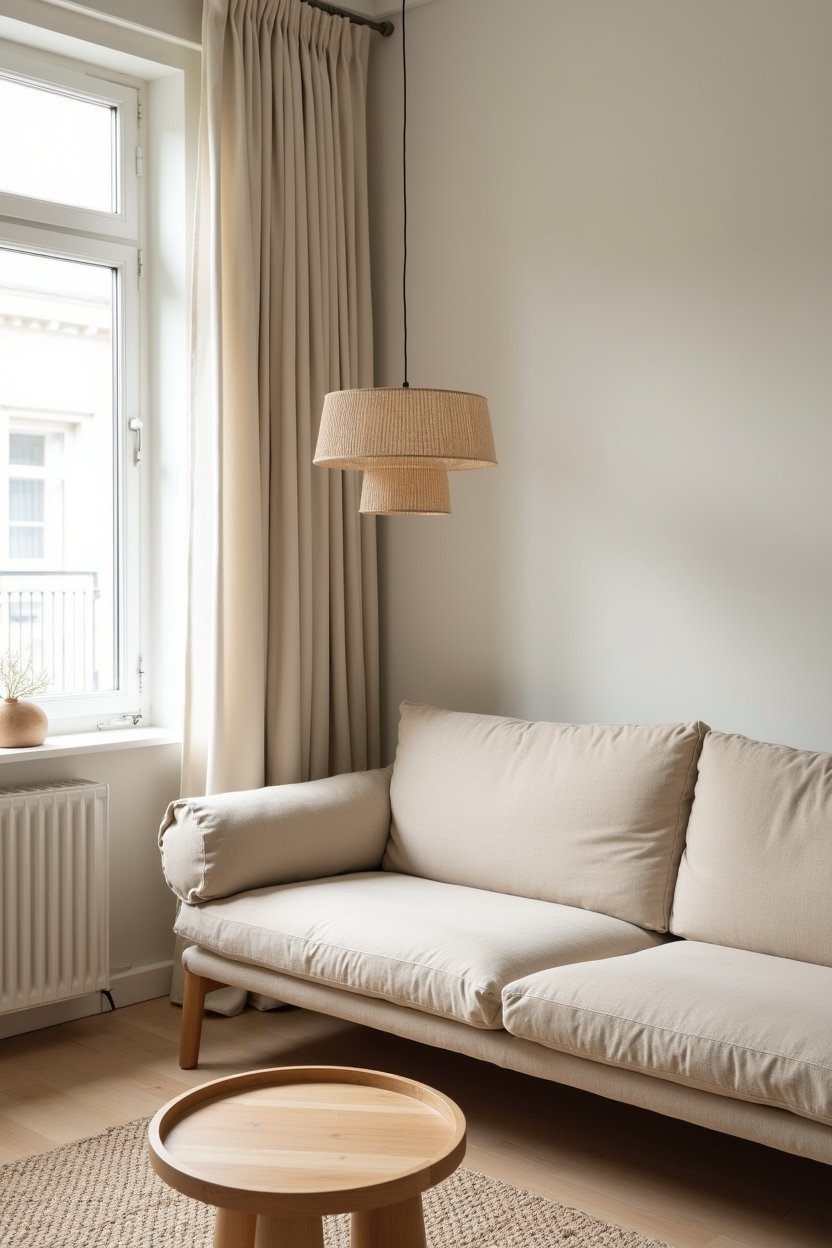
For your sofa, look for something with a low back, straight arms, and exposed wooden legs. A Japandi Low-Profile Sofa in Linen in oatmeal or warm grey sets the perfect tone. Pair it with a Solid Wood Coffee Table with Rounded Edges — the rounded edges are a distinctly Japanese touch that softens the geometry of the room.
Side tables and shelving should be equally restrained. Open shelving in light wood, a simple wooden stool used as a plant stand, or a low media console with sliding doors rather than drawers all read as authentically Japandi.
Layer Textures Without Adding Clutter
Texture is where Japandi rooms come alive. Without bold colors or heavy patterns to create visual interest, you rely on the interplay of materials — linen against wood, ceramic against wool, woven rattan against smooth stone. The trick is layering these textures thoughtfully so the room feels warm and tactile without feeling busy.
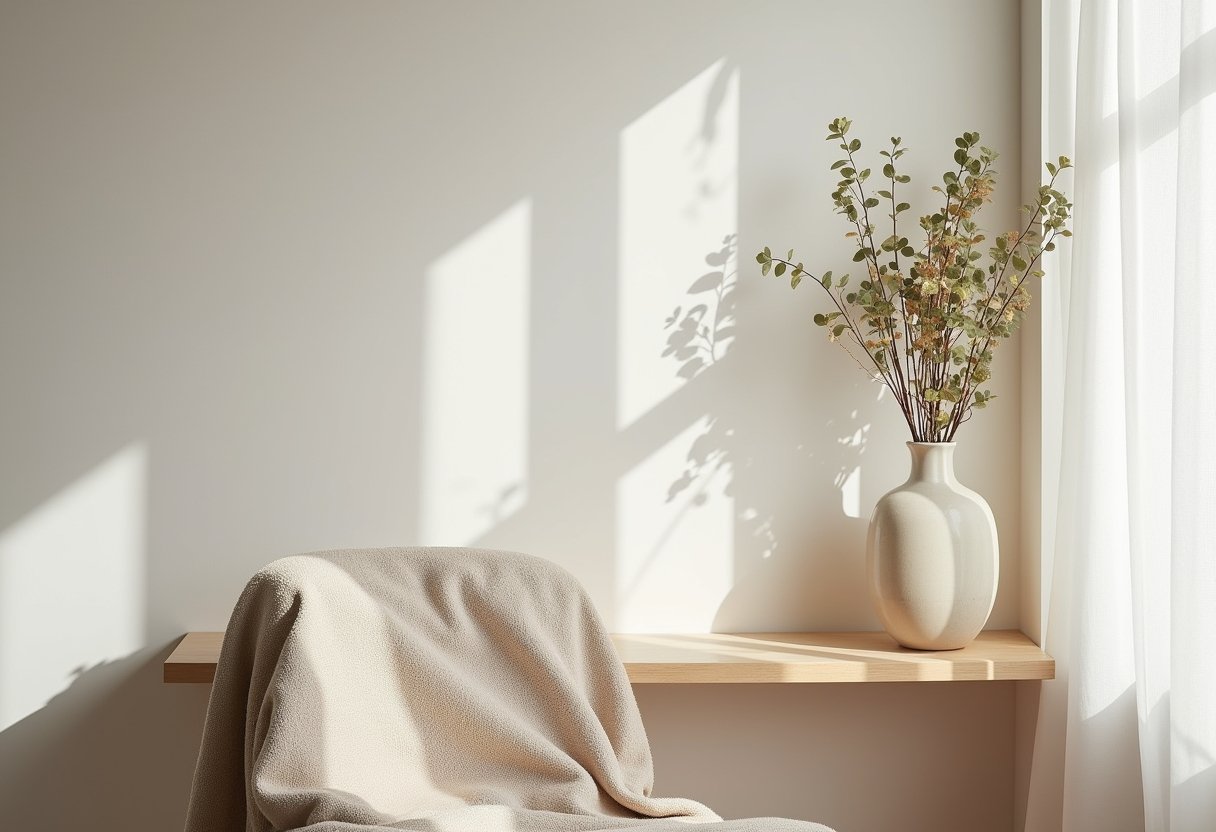
Start with your sofa: add a Linen-Blend Throw Blanket in Neutral Tone draped casually over one arm. Add two or three cushions in complementary textures — a nubby boucle, a smooth linen, and perhaps one in a muted, tone-on-tone pattern. Keep the colors within your neutral palette.
On the floor, a Handwoven Jute or Wool Area Rug in a natural tone anchors the seating area. Jute adds a raw, organic quality that both design traditions value. If you prefer something softer underfoot, a low-pile wool rug in oatmeal or soft grey works equally well.
Embrace the Art of Thoughtful Negative Space
One of the most important principles in Japandi design is what you leave out. In Japanese aesthetics, ma — the concept of negative space — is just as important as the objects themselves. Every empty surface, every gap between objects, every undecorated wall serves a purpose: it gives the eye a place to rest.
This doesn’t mean your room should feel empty. It means each object should have breathing room around it. Don’t push furniture against walls — float your sofa slightly away from the wall. Don’t fill every shelf — leave some sections intentionally bare. Don’t hang art on every wall — choose one or two meaningful pieces and let them command attention.
For wall art, a single large-format print — perhaps a Japanese ink wash painting, a minimalist botanical illustration, or a Scandinavian-style abstract in muted tones — creates a focal point without competing with the calm atmosphere.
Lighting: Warm, Layered, and Organic
Japandi lighting is all about warm, diffused glow rather than harsh overhead illumination. Think paper lanterns, wooden pendant lights, and ceramic table lamps. Both Japanese and Scandinavian cultures place enormous value on the quality of light in a space — soft, golden, and layered from multiple sources.
A Rice Paper Pendant Light is one of the most iconic Japandi lighting choices. Hung over a dining table or in a corner of the living room, it casts a beautiful warm glow through its translucent shade. Pair it with a couple of table lamps in ceramic or wood for evening ambiance.
Skip recessed can lights or bright LEDs. If you have overhead fixtures, fit them with warm-toned bulbs (2700K) and rely on lamps and pendants for most of your light. Natural light is equally important — keep window treatments simple. Sheer linen curtains or light-filtering roller shades let in maximum daylight while maintaining privacy.
Plants and Natural Elements: The Finishing Layer
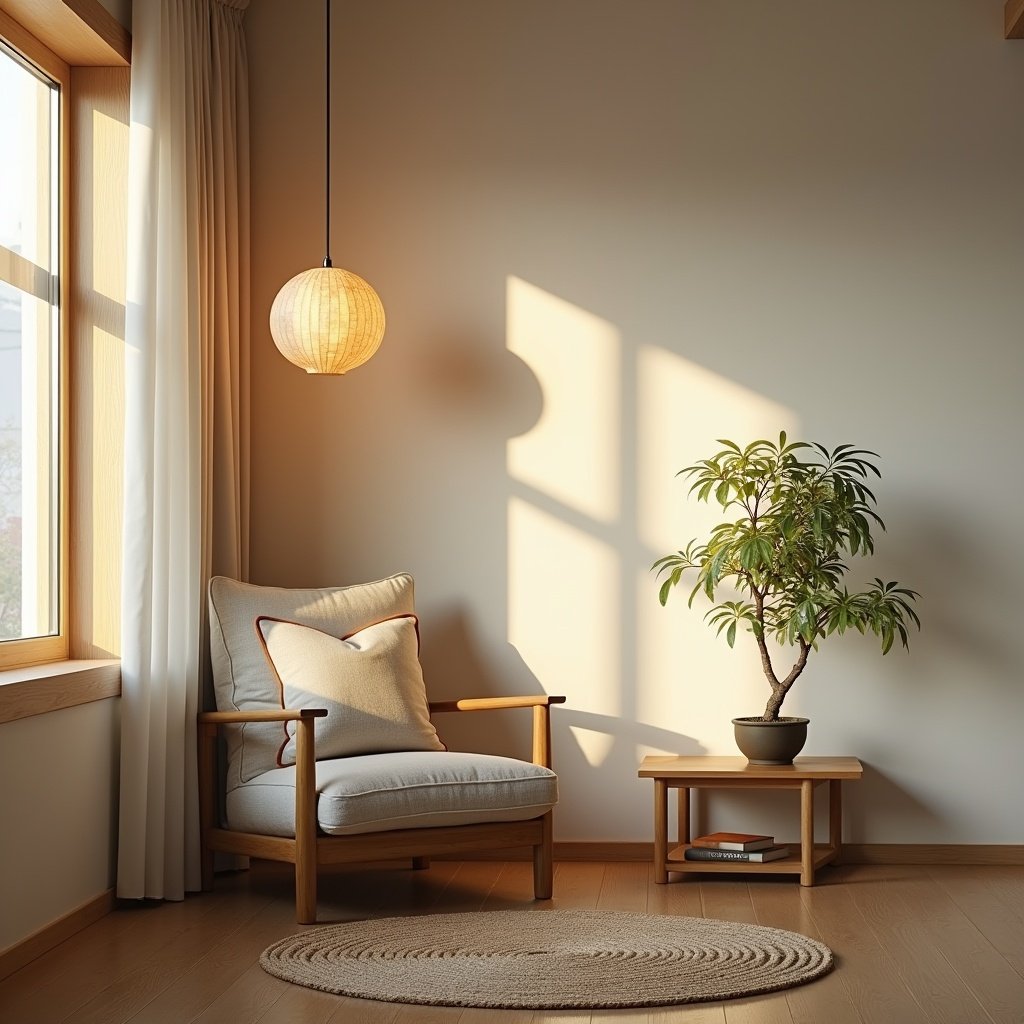
Both Japanese and Scandinavian interiors incorporate nature, but Japandi does it with characteristic restraint. Instead of a jungle of trailing plants, choose one or two statement plants in simple ceramic or terracotta pots. A single fiddle leaf fig, a sculptural olive tree, or a few stems of dried pampas grass in a stoneware vase can bring a room to life without overwhelming it.
Bonsai trees — or any small, sculptural plant — are a beautiful nod to the Japanese side of the equation. Place one on a windowsill or low shelf where it can catch natural light. For a Scandinavian touch, add a small vase of dried wildflowers or eucalyptus stems on your coffee table.
Other natural elements that work beautifully in Japandi spaces: smooth river stones as decorative accents, a wooden tray to corral items on a coffee table, linen napkins in an open kitchen, or a simple stoneware bowl as a catch-all near the entryway.
Japandi on a Budget: Where to Save and Where to Spend
The good news about Japandi is that simplicity is inherently budget-friendly. You don’t need a lot of things — you need the right things.
- Save on paint. A can of warm white paint and a weekend of work can transform any room into a Japandi canvas.
- Save on accessories. Thrift stores are gold mines for simple ceramic vases, wooden bowls, and linen textiles.
- Spend on your sofa. Since it’s the visual anchor of the room, invest in one with clean lines and quality upholstery.
- Spend on one statement light. A beautiful pendant or table lamp elevates the entire space.
- DIY what you can. Sand and refinish a thrift store coffee table. Sew simple linen cushion covers. Frame a botanical print from a free digital download.
Final Thoughts: Less, But Better
Japandi isn’t about deprivation — it’s about intention. Every piece in a Japandi living room should make you feel something: calm, comfortable, grounded. If an object doesn’t serve a function or bring you genuine pleasure, it doesn’t belong. That’s not a limitation — it’s freedom. Start with one corner of your living room. Clear it. Add back only what you love. You’ll be surprised how quickly the rest of the room follows.