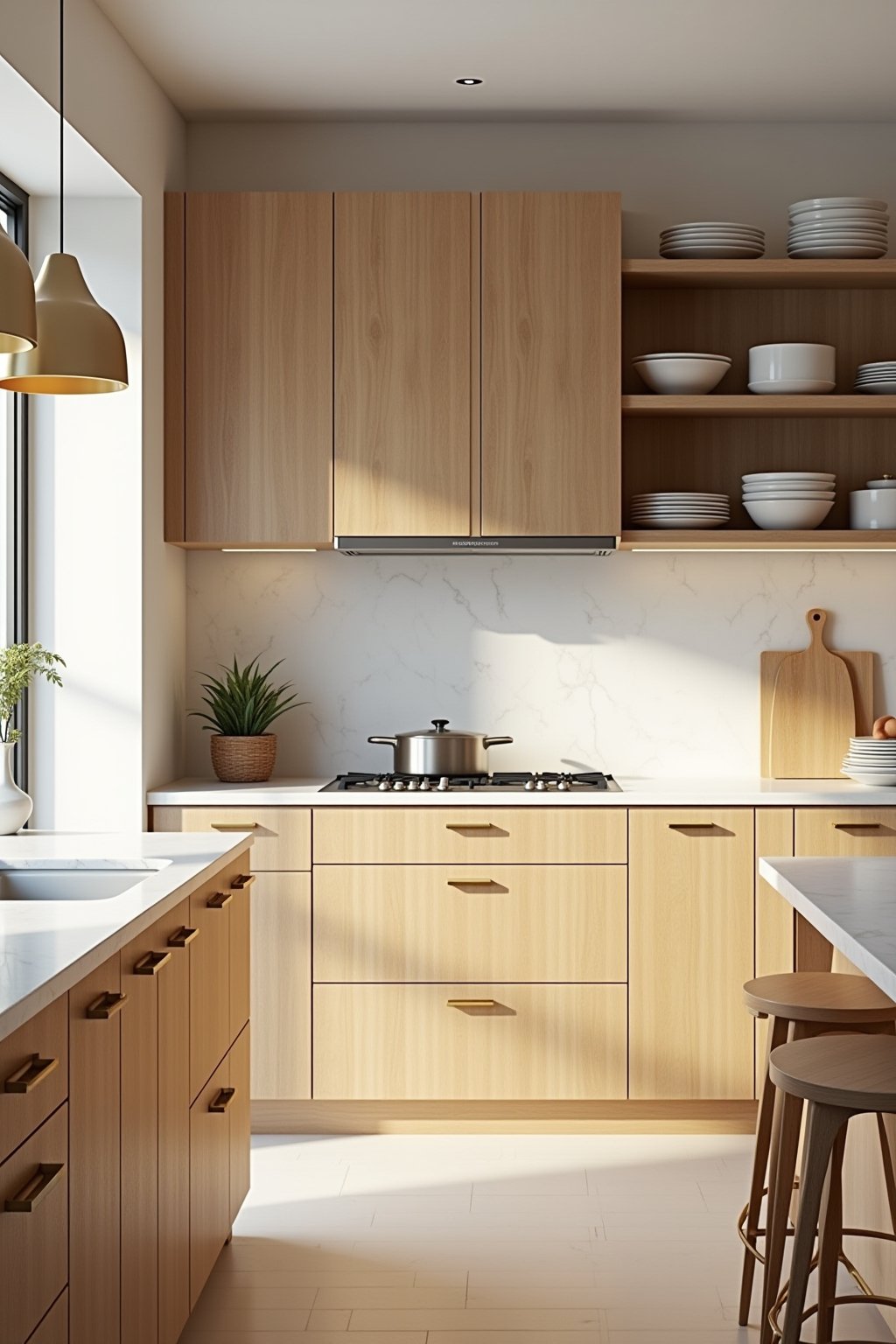
After a decade of all-white-everything kitchens, the pendulum has swung hard in the other direction. And I’m here for it. The warm wood kitchen trend — think honey oak, walnut, and natural maple cabinets — is the biggest shift in kitchen design we’ve seen in years.
I sold my soul to the all-white kitchen gods for years, but when I finally switched to warm wood cabinetry, my kitchen went from feeling like a sterile showroom to actually feeling like home. If you’ve been sensing that white kitchens have run their course, you’re not wrong.
Why This Works
- Warmth and character — natural wood grain brings texture, depth, and soul that painted cabinets simply can’t replicate
- Low maintenance — unlike white cabinets that show every fingerprint, wood hides daily wear gracefully
- Timeless material — wood kitchens have existed for centuries. This isn’t a trend — it’s a return to fundamentals
- Pairs with modern materials — wood with marble, concrete, or steel creates a warm-meets-industrial aesthetic
- Sustainable choice — responsibly sourced wood is one of the most eco-friendly cabinet options
What You’ll Need
Key elements for a warm wood kitchen:
- Wood cabinets or fronts — pre-made, custom, or refinished existing
- Complementary countertops — white marble, light quartz, or concrete
- Warm metal hardware — brass, unlacquered brass, or matte black
- Open shelving — matching wood for continuity
- Natural stone or ceramic backsplash — something that lets the wood shine
- Warm lighting — pendants or under-cabinet in 2700K-3000K
Step-by-Step Guide
Choose Your Wood Tone
The most trending wood tones right now are warm honey oak, natural walnut, and light maple. Avoid orange-toned or red-toned wood (like cherry or mahogany from the 2000s). The modern warm wood kitchen leans toward golden, caramel, and natural brown tones.
If you have existing cabinets, you can strip them back to natural wood and apply a warm stain. Or consider refacing with wood-veneer fronts for a fraction of the cost of new cabinets.
Balance Wood with Light Surfaces
The key to preventing a wood kitchen from looking dated is contrast. Light countertops (white marble or quartz), a bright backsplash (white tile or plaster), and open shelving break up the wood and keep things fresh.
The ceiling and walls should be white or cream to provide breathing room above the wood cabinets.
Select Hardware That Complements
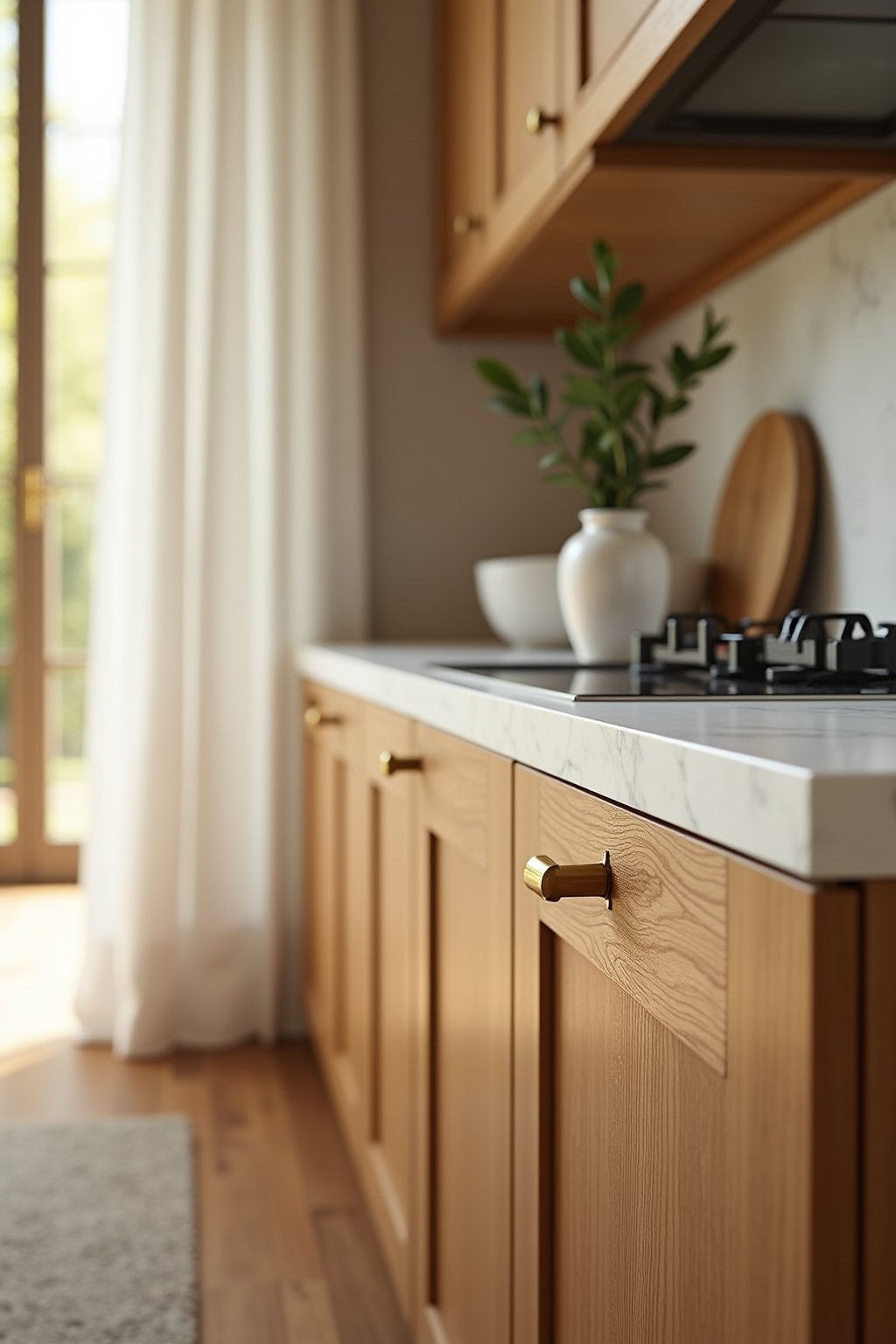
Brass or unlacquered brass pulls are the most popular choice for warm wood kitchens. Matte black works too for a more modern feel. The hardware should be simple and understated — the wood grain is the star.
Cup pulls, thin bar pulls, and round knobs all work well. Avoid ornate or overly decorative hardware.
Add Texture Through Materials
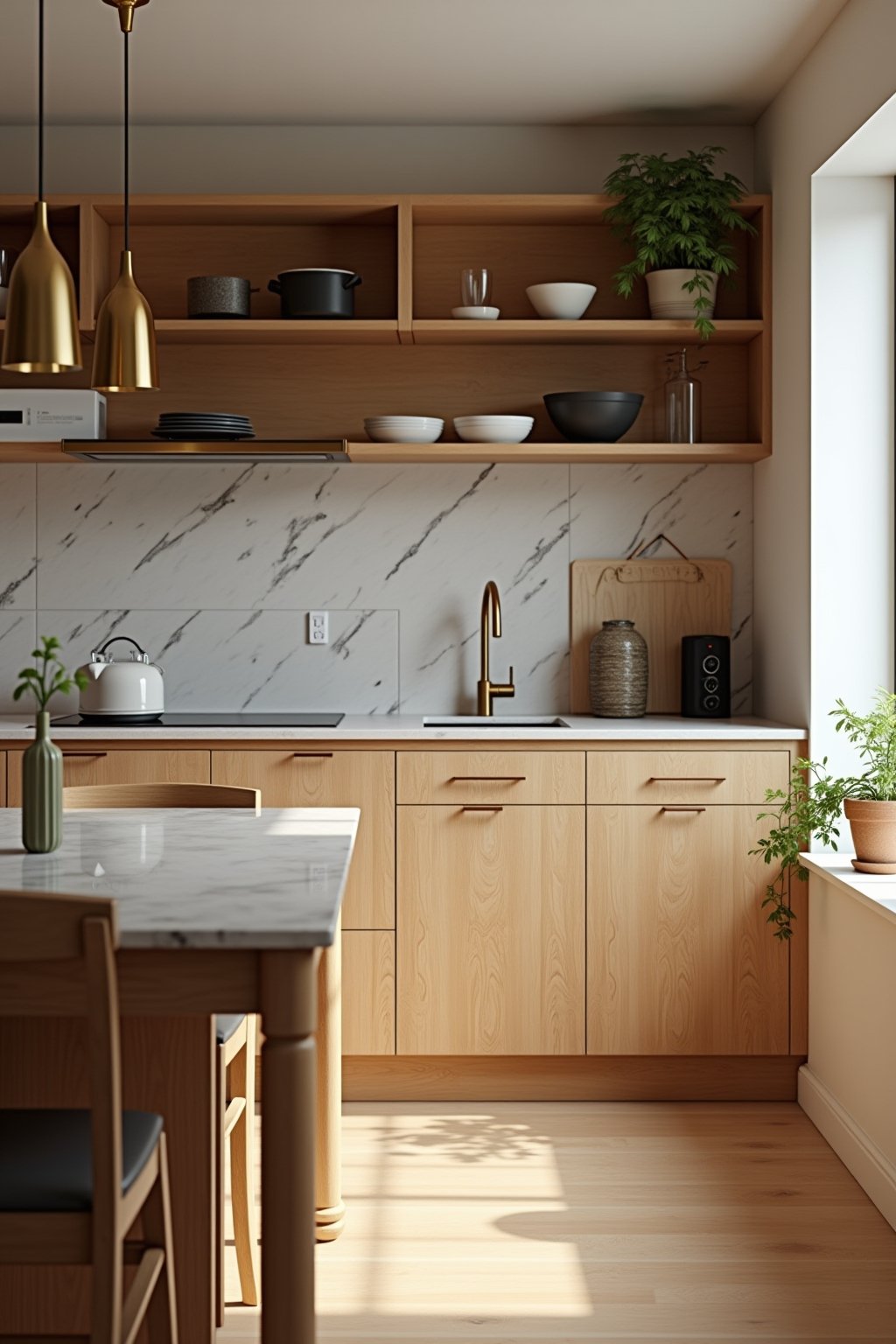
Mix materials to keep the kitchen interesting. A stone or ceramic backsplash, a concrete or quartzite countertop, and brass or iron lighting fixtures all add layers of texture that complement natural wood.
Avoid matching everything to the same wood tone. A slightly lighter shelf bracket or slightly darker island creates visual depth.
Style with Intention
A warm wood kitchen looks best when styled simply. Display a few high-quality items on open shelves — ceramic dishes, a wooden bowl, one plant. Avoid cluttering the countertops.
The beauty of wood is in its natural grain. Let it be the focal point rather than competing with it.
Common Mistakes to Avoid
- Choosing orange-toned wood — this looks like a 2005 kitchen. Stick to golden, honey, or natural brown tones
- All wood everything — wood cabinets, wood floors, wood countertops is too much. Break it up with stone, tile, and painted surfaces
- Matching wood tones too precisely — slightly different wood tones (cabinet vs. shelf vs. floor) looks more natural and collected
- Using cool-toned backsplash or countertops — gray quartz or blue tile clashes with warm wood. Keep adjacent surfaces warm
- Forgetting about the floor — if your floors are also warm wood, add a rug or choose a slightly different tone to prevent blending
Budget Tips
Getting the warm wood kitchen look without replacing cabinets:
- Strip and sand existing cabinets to reveal natural wood, then seal with a clear or lightly tinted polyurethane
- Replace just the cabinet doors and drawer fronts with wood-veneer versions — this is 60% cheaper than full replacement
- Add wood-veneer peel-and-stick panels to flat-front cabinets for an instant wood look
- Install open wood shelving above — removing upper cabinets and adding shelves costs almost nothing
- Find wood cutting boards and bowls at thrift stores for countertop styling
Styling Tips
- Display ceramics in contrasting colors — white and cream pottery makes wood pop
- Add one statement plant — a trailing pothos or small fiddle-leaf brings life to warm wood
- Use linen textiles — cream or natural linen tea towels, curtains, and runners soften the space
- Keep counters minimal — let the wood grain be the visual interest, not cluttered surfaces
- Add brass or warm lighting — pendant lights in brass or woven materials enhance the warmth
- Use stone trivets and coasters — marble or slate pieces on wood surfaces create elegant contrast
Room-by-Room Inspiration
Small Kitchen
Light maple or birch cabinets keep a small kitchen feeling bright while adding warmth that white can’t match. Pair with a white quartz countertop and simple brass pulls.
Large Family Kitchen
Walnut island with lighter oak perimeter cabinets creates a two-tone effect that’s rich without being heavy. Add a white marble backsplash for the ultimate warm-modern kitchen.
Open-Concept Kitchen
Wood cabinets in an open floor plan connect the kitchen to living areas with wooden furniture. The result is a cohesive, curated home that flows naturally.
Frequently Asked Questions
Are wood cabinets more expensive than painted?
Not necessarily. Refinishing or refacing existing cabinets with natural wood is often cheaper than professional painting. Custom wood cabinets cost more, but stock wood-front cabinets are competitively priced.
How do I prevent warm wood from looking dated like 1990s oak?
Stick to flat-panel (slab) door styles rather than raised panel, use simple hardware, and pair with modern countertops and backsplash. The door profile matters as much as the wood tone.
What countertop works best with warm wood cabinets?
White marble, light quartz, concrete, and butcher block all look stunning. The key is contrast — a lighter countertop prevents the kitchen from feeling heavy.
Can I mix wood tones in the same kitchen?
Yes, and designers encourage it. A walnut island with oak perimeter cabinets, or maple cabinets with a reclaimed wood shelf, looks intentional and collected rather than mismatched.
How do I maintain natural wood cabinets?
Wipe with a damp cloth and mild soap. Apply mineral oil or wood conditioner once or twice a year. Avoid harsh chemicals. Sealed wood cabinets are surprisingly low-maintenance.
Is the warm wood trend a fad or is it here to stay?
Wood kitchens have existed for as long as kitchens have existed. The current movement away from all-white is a correction back toward warmth and natural materials that’s likely to endure for decades.