
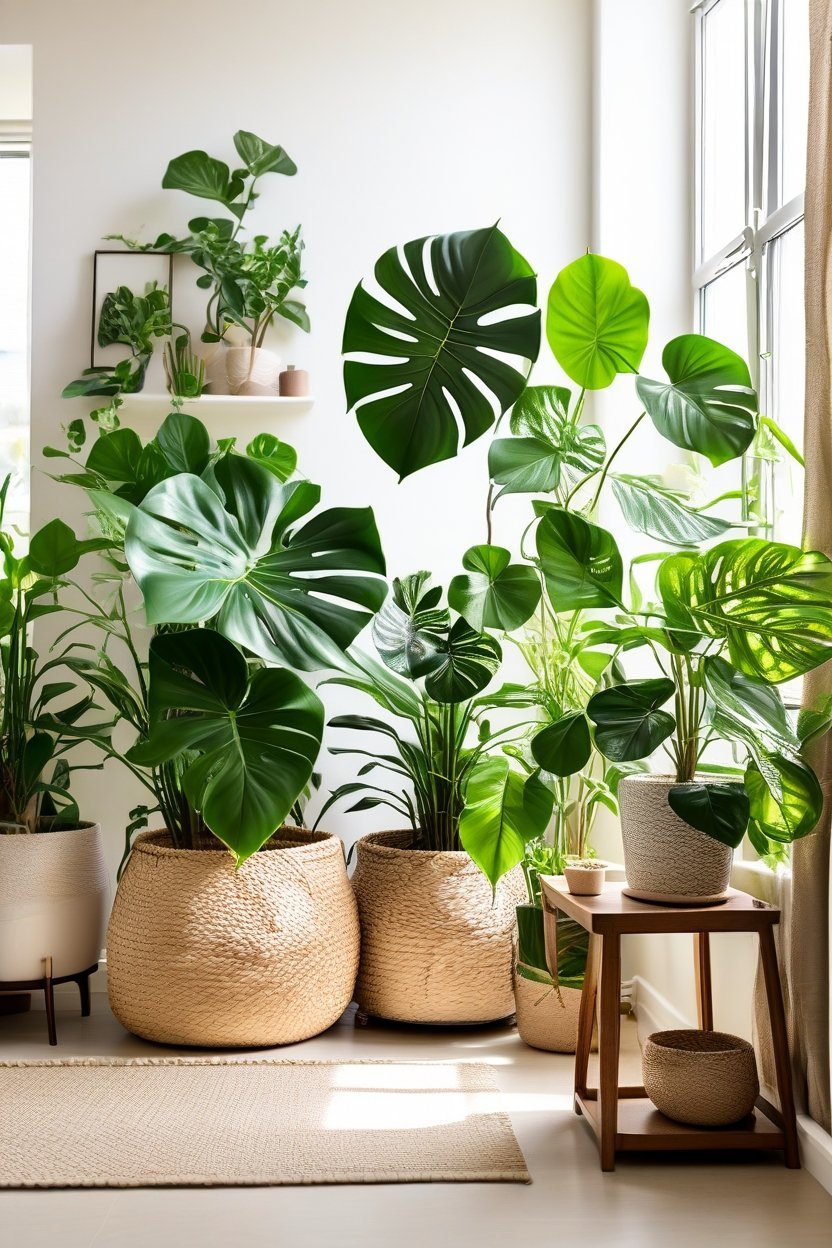
Indoor plants make any space feel more alive, cleaner, and more inviting — and the research consistently shows they have measurable positive effects on mood, productivity, and air quality. But many people have tried houseplants and failed, concluding they simply “don’t have a green thumb.” In most cases, the problem isn’t the person — it’s the plant choice.
These plants are genuinely easy to keep alive. They tolerate neglect, adapt to low light, and require minimal attention once established. Start with these, build your confidence, and your plant collection will naturally grow from there.
Pothos (Epipremnum aureum)
The ultimate beginner houseplant. Pothos tolerate low light, irregular watering, and virtually any indoor condition. They trail beautifully from shelves and hanging baskets, and they’re one of the most effective plants for removing common household toxins. Water when the top 2 inches of soil are dry, and they’ll reward you with rapid, lush growth. Propagating new plants from cuttings is as simple as putting a stem in water — it roots in two weeks.
Snake Plant (Sansevieria)
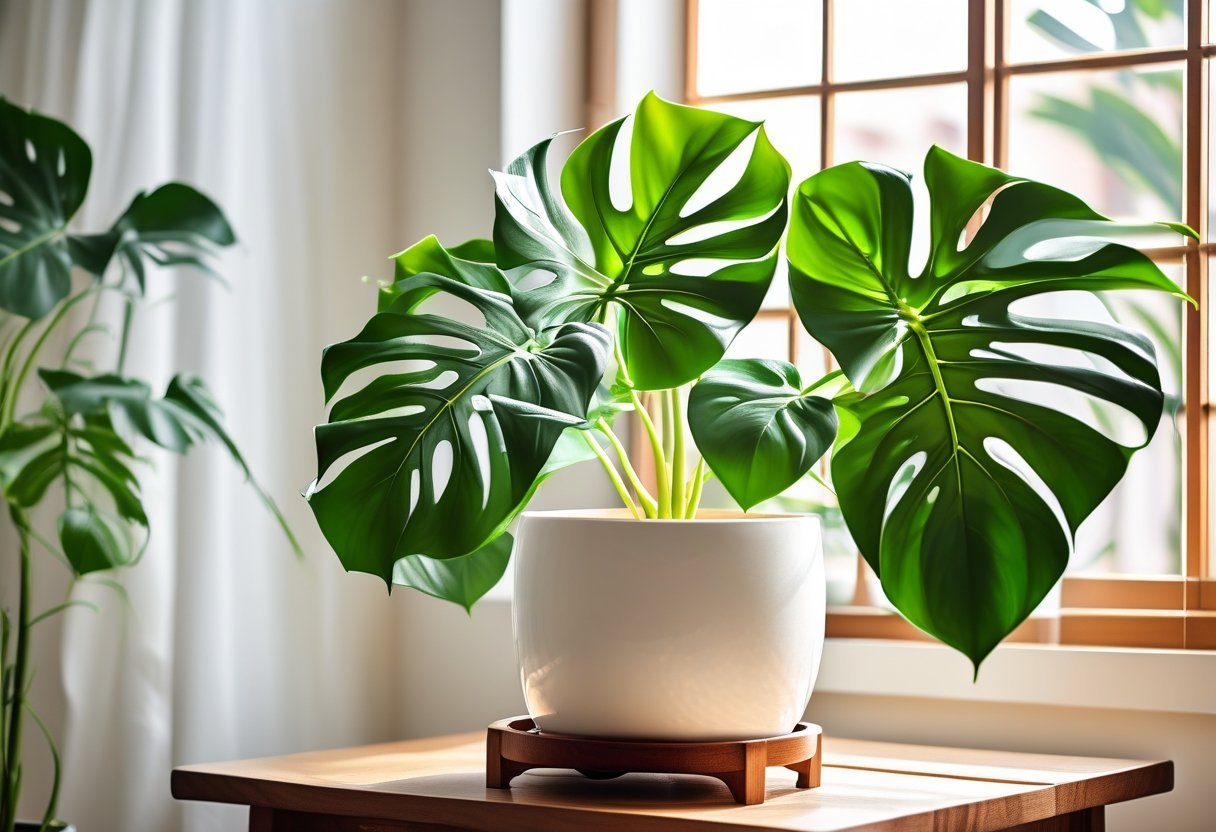
Snake plants are practically impossible to kill. They thrive in low to bright indirect light, require watering only once every 2-4 weeks (less in winter), and tolerate irregular temperatures. They’re also one of the few plants that convert CO2 to oxygen at night, making them excellent luxury hotel bedroom on a budget plants. Their upright, architectural form looks beautiful in corners and alongside furniture.
ZZ Plant (Zamioculcas zamiifolia)
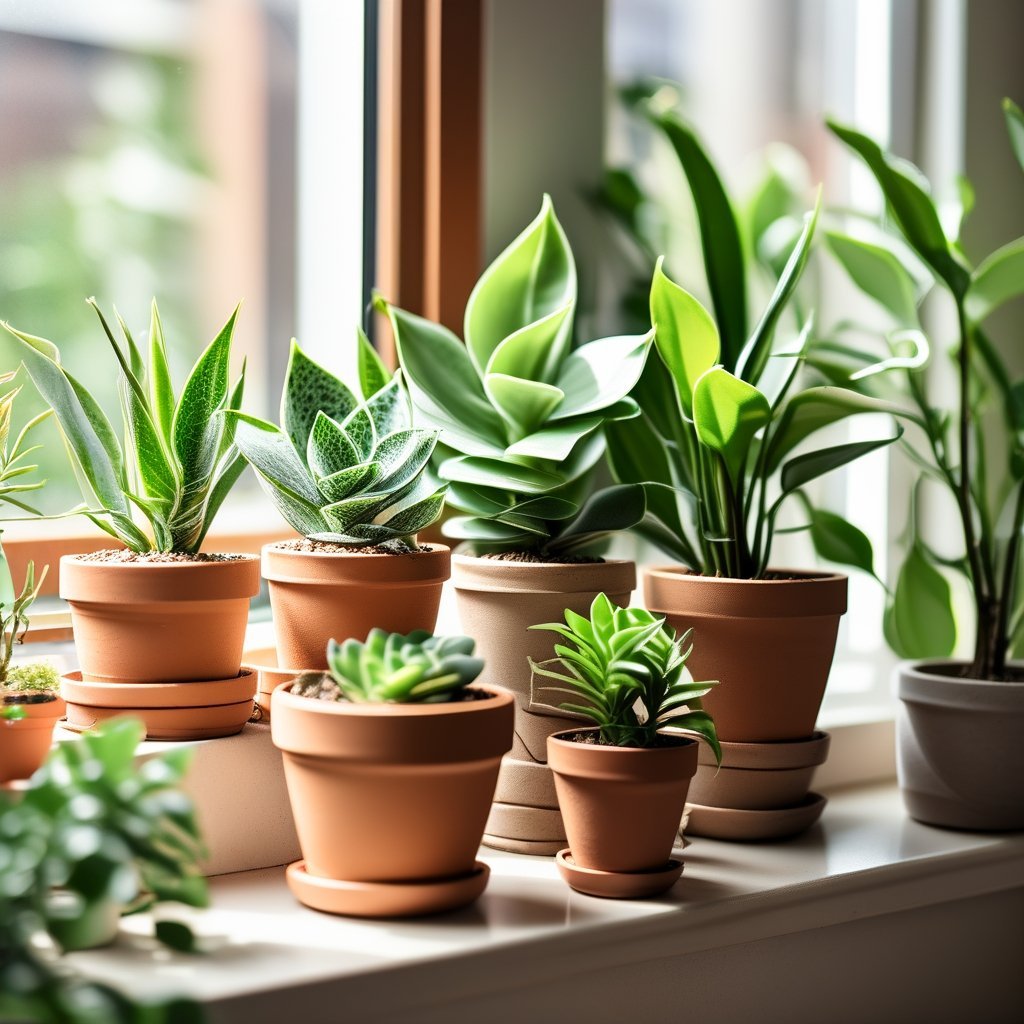
The ZZ plant stores water in its rhizomes, making it extraordinarily drought-tolerant. Water every 2-3 weeks, give it any light level from low to bright indirect, and it will grow slowly but reliably with virtually no attention. Its glossy, dark green leaves look elegant and expensive — it’s one of the best-looking low-maintenance plants available.
Spider Plant (Chlorophytum comosum)
Spider plants are cheerful, adaptable, and prolific — they produce cascading “babies” (small offshoots) that you can propagate into new plants endlessly. They tolerate low to bright indirect light and irregular watering, and they’re non-toxic to cats and dogs, making them one of the best choices for pet households. The variegated green-and-white variety is especially attractive in hanging baskets.
Peace Lily (Spathiphyllum)
Peace lilies are one of the few flowering houseplants that bloom reliably in low light. Their white flowers appear in spring and sometimes again in fall, and their lush dark green leaves look beautiful year-round. They’re also excellent air purifiers. The key: they will tell you when they need water by drooping slightly — a characteristic that looks dramatic but causes no lasting harm. Water when you see this wilting and the plant recovers within hours.
The Most Common Houseplant Mistakes
Overwatering: This kills more houseplants than any other cause. Most indoor plants want to dry out partially between waterings. Always check the soil before watering — if it’s still moist an inch down, wait.
Wrong light: Most houseplants need bright indirect light — near a window, but not in direct sun. “Low light” means they survive, not that they prefer it.
Pot without drainage: small home decor changesative pots without drainage holes cause root rot. Either plant in a nursery pot with drainage and use the decorative pot as a cachepot, or drill drainage holes.
Start with two or three of these plants, learn their signals, and build from there. Within a few months, you’ll have the confidence and knowledge to grow almost anything — and a home that looks and feels significantly more beautiful for it. For more inspiration, browse our gardening guides. For more ideas, explore our gardening tips.