
If you haven’t cooked with gochujang yet, these sticky chicken thighs are about to change your entire dinner routine. The Korean chili paste brings this incredible sweet-smoky-spicy flavor that caramelizes into the crispiest glaze you’ve ever seen on chicken.
I make these at least twice a month because they’re embarrassingly easy for how impressive they taste. You just whisk together a quick sauce, sear the thighs until the skin is crackling-crispy, then let everything get sticky and glazed in the oven. The whole house smells amazing.
Serve them over steamed rice with some quick-pickled cucumbers and you’ve got a restaurant-quality meal in about 35 minutes. These disappear fast, so you might want to double the batch.
Why This Sticky Gochujang Chicken Thighs Is a Must-Try
- Crispy caramelized skin — the gochujang glaze creates an irresistible sticky-crispy coating that shatters with every bite
- Sweet-spicy balance — honey and gochujang work together for that perfect Korean flavor profile without overwhelming heat
- One-pan simplicity — sear on the stovetop and finish in the oven using the same skillet, minimal cleanup
- Ready in 35 minutes — this is a weeknight dinner that tastes like it took hours of slow cooking
- Budget-friendly protein — bone-in chicken thighs are inexpensive and always juicy, never dry like chicken breast
- Meal prep friendly — the glazed thighs reheat beautifully and taste even better the next day as the flavors deepen
Ingredients You’ll Need for Sticky Gochujang Chicken Thighs
Gochujang is a fermented Korean chili paste found in the international aisle of most grocery stores. It’s sweet, spicy, and deeply savory — there’s no real substitute, but in a pinch you can mix 1 tablespoon sriracha with 1 tablespoon miso paste and 1 teaspoon sugar.
Bone-in, skin-on thighs are essential here for crispy skin and juicy meat. Boneless skinless thighs will work but reduce cook time by 5-8 minutes and you’ll lose the crispy skin element.
Rice vinegar adds brightness to cut through the richness. Apple cider vinegar works as a swap. Don’t skip the acid — it balances the sweetness of the honey.
Toasted sesame oil is for flavor, not cooking. Regular sesame oil won’t give you the same nutty depth. A little goes a long way.
Sticky Gochujang Chicken Thighs
Ingredients
Equipment
Method
- Preheat your oven to 425°F (220°C).
- Pat the chicken thighs very dry with paper towels on both sides. Season generously with salt and pepper.
- Whisk together the gochujang, honey, soy sauce, rice vinegar, sesame oil, minced garlic, and grated ginger in a small bowl until smooth. Set aside.
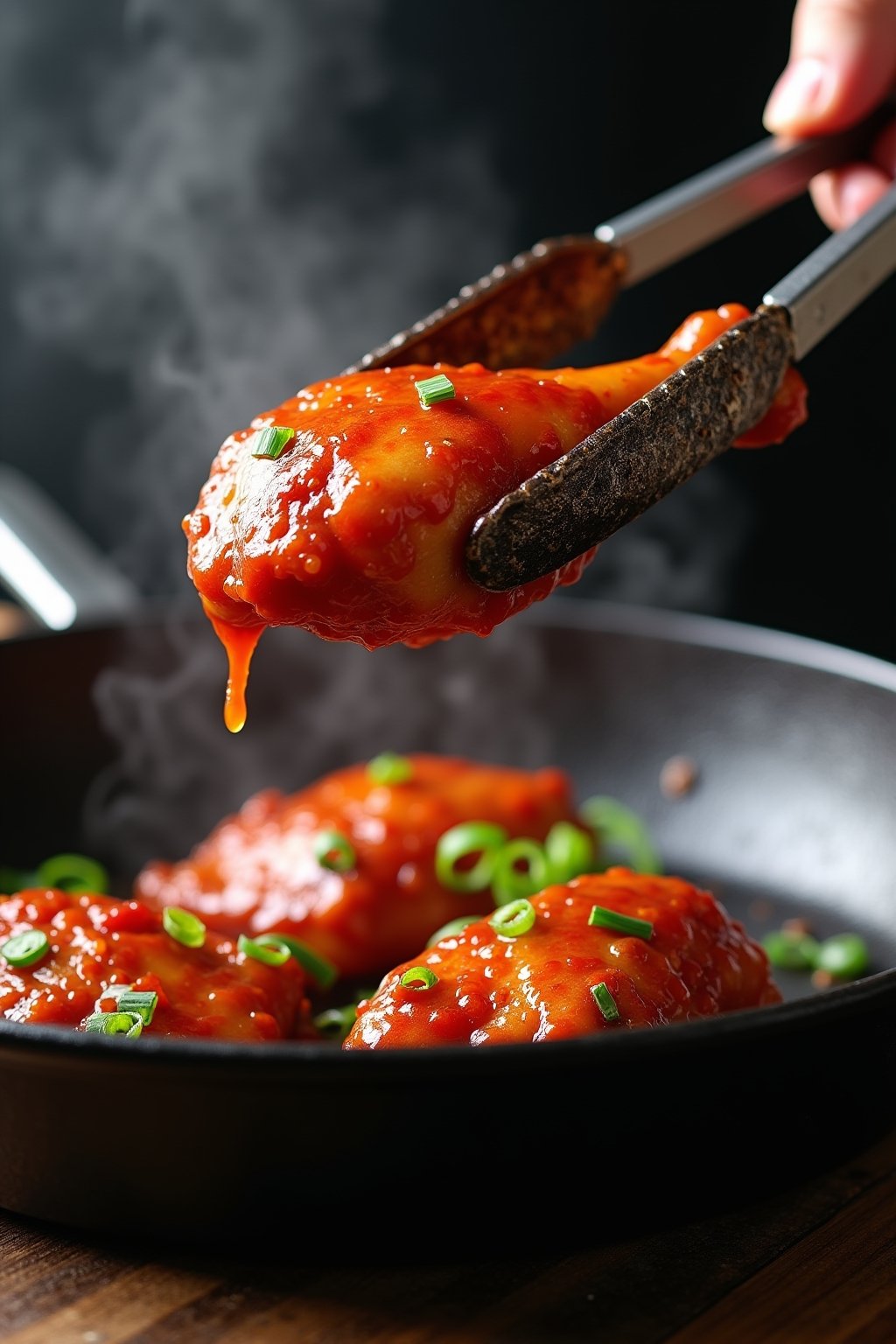
- Heat vegetable oil in a large oven-safe skillet over medium-high heat until just smoking. Place chicken thighs skin-side down and cook without moving for 6-7 minutes until the skin is deeply golden and crispy.
- Flip the thighs and cook for 2 minutes on the other side. Remove the skillet from heat and drain off all but 1 tablespoon of rendered fat.
- Pour the gochujang glaze over the chicken thighs, flipping each piece to coat evenly. Arrange them skin-side up in the skillet.
- Transfer the skillet to the oven and bake for 18-22 minutes until the internal temperature reaches 175°F (80°C) and the glaze is sticky and caramelized.
- Remove from the oven and let the chicken rest in the skillet for 5 minutes. The glaze will thicken as it cools slightly.
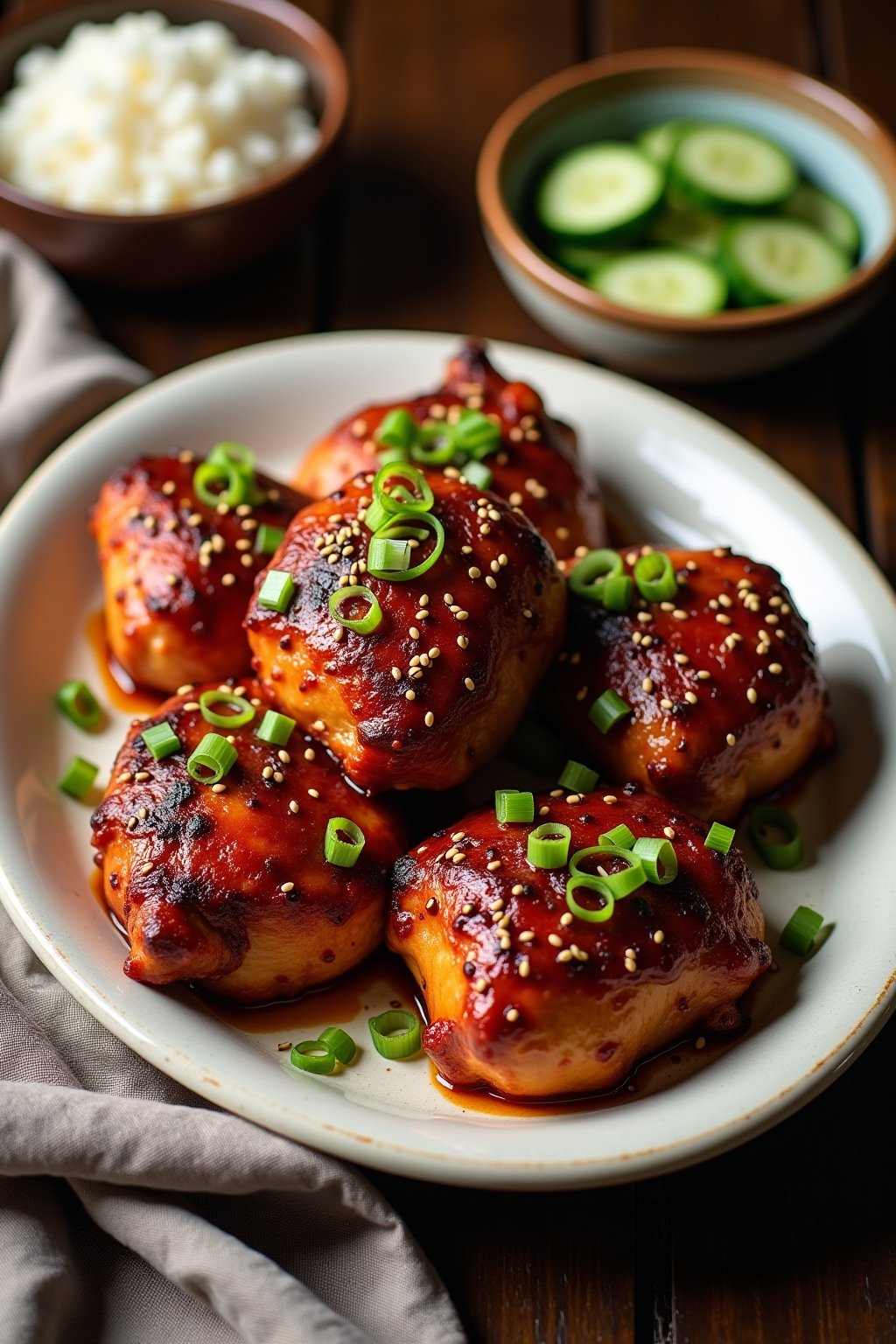
- Spoon any pan sauce over the thighs, then garnish generously with sliced green onions and toasted sesame seeds.
- Serve immediately over steamed white rice with the extra sticky sauce from the pan drizzled on top.
Notes
Nutrition Facts
Per serving
| Calories | 485 |
| Total Fat | 28g |
| Saturated Fat | 7g |
| Carbohydrates | 16g |
| Fiber | 1g |
| Sugar | 13g |
| Protein | 42g |
| Sodium | 780mg |
| Potassium | 420mg |
| Vitamin A | 10% |
| Vitamin C | 20% |
| Calcium | 3% |
| Iron | 10% |
* Percent Daily Values are based on a 2,000 calorie diet.
Storage and Freezing Tips
Refrigerator: Store leftover chicken thighs in an airtight container for up to 4 days. The glaze actually intensifies in flavor overnight, making leftovers even better.
Freezer: Freeze glazed chicken thighs in a single layer on a baking sheet, then transfer to a freezer bag for up to 3 months. Thaw overnight in the refrigerator before reheating.
Reheating: For the best results, reheat in a 375°F oven for 12-15 minutes to re-crisp the skin. Microwave works in a pinch but the skin will soften. Add a splash of water to the container before microwaving to keep the meat moist.
Tasty Variations to Try
- Air fryer version — cook at 400°F for 18-20 minutes, flipping and brushing with glaze halfway through for extra-crispy skin
- Gochujang chicken wings — use this same glaze on party wings, bake at 425°F for 40-45 minutes flipping once
- Spicier kick — add 1 teaspoon gochugaru (Korean chili flakes) or a finely diced Fresno pepper to the glaze
- Boneless thigh version — reduce oven time to 12-15 minutes, great sliced over grain bowls or salads
- Sticky gochujang salmon — brush the glaze on salmon fillets and broil for 8-10 minutes for a lighter protein option
- Sheet pan dinner — add broccoli florets and sliced bell peppers around the chicken for the last 12 minutes of baking
- Maple gochujang — swap the honey for pure maple syrup for a slightly more complex sweetness with autumn vibes
Expert Tips for Perfect Sticky Gochujang Chicken Thighs
- Dry the chicken thoroughly — moisture is the enemy of crispy skin, so pat those thighs dry with paper towels on both sides before seasoning
- Don’t crowd the skillet — cook in two batches if needed so each thigh has contact with the hot pan surface for maximum crispiness
- Use an oven-safe skillet — cast iron works best here because it retains heat and gives you the best sear, plus it goes straight into the oven
- Check the internal temperature — thighs are safe at 165°F but taste best at 175°F when the connective tissue has fully rendered
- Rest before serving — those 5 minutes of resting let the juices redistribute and the glaze thickens into a syrupy sauce
- Save the pan drippings — the sticky sauce left in the skillet is liquid gold, spoon every bit of it over your rice
What to Serve With Sticky Gochujang Chicken Thighs
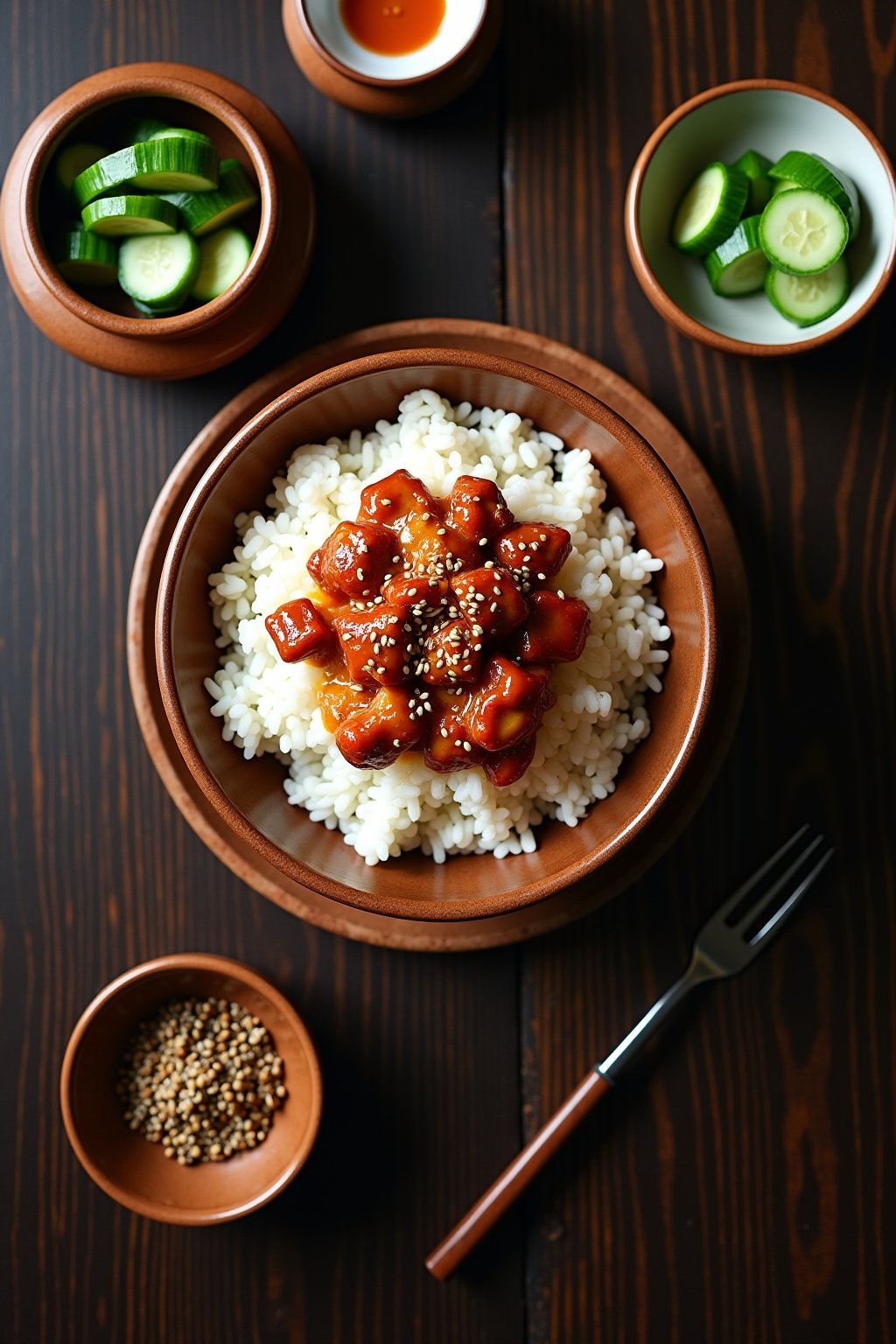
- Steamed jasmine rice — the fluffy, fragrant rice soaks up all that sticky gochujang sauce perfectly
- Quick-pickled cucumbers — thinly sliced cucumbers in rice vinegar, sugar, and sesame seeds cut through the richness beautifully
- Steamed bok choy — lightly wilted with garlic and a splash of soy sauce for a simple green side
- Kimchi — the tangy fermented crunch is the classic Korean pairing and adds probiotics to your meal
- Sesame slaw — shredded cabbage and carrots tossed in sesame dressing for a fresh, crunchy contrast
- Korean corn cheese — sweet corn baked with mayo and mozzarella is an addictive side that complements the spicy chicken
- Roasted sweet potatoes — their natural sweetness pairs beautifully with the spicy-sweet gochujang glaze
Looking for more recipe ideas? Check out these favorites:
- Crispy Honey Garlic Chicken Thighs
- Easy Chicken Fried Rice (Better Than Takeout)
- One-Pan Honey Garlic Chicken and Vegetables
Make-Ahead Options
You can mix the gochujang glaze up to 3 days in advance and store it in the refrigerator — the flavors actually meld and improve with time. Keep it in a jar or airtight container.
For meal prep, sear and glaze the chicken thighs, then refrigerate before baking. When ready to eat, bake from cold in a 425°F oven for 25-28 minutes (add a few extra minutes since they’re starting cold).
The fully cooked thighs make excellent meal prep. Slice them over rice bowls with pickled veggies and a drizzle of sriracha mayo for easy lunches all week.
Frequently Asked Questions
What does gochujang taste like?
Gochujang is a fermented Korean chili paste that’s sweet, smoky, slightly spicy, and deeply savory all at once. It’s much more complex than regular hot sauce — think of it as a flavor bomb that adds richness rather than just heat. The fermentation gives it an almost umami quality similar to miso.
How spicy are these chicken thighs?
These are moderately spicy — more of a warm tingle than a burning heat. The honey and caramelization mellow the spice significantly. If you’re sensitive to heat, reduce the gochujang to 2 tablespoons. For more fire, add gochugaru flakes or a diced Fresno pepper to the glaze.
Can I use boneless skinless chicken thighs?
Yes, boneless skinless thighs work well but reduce the oven time to 12-15 minutes since they cook faster. You’ll lose the crispy skin element which is a highlight of this recipe, but the glaze will still be delicious. Sear them for 4-5 minutes per side before glazing.
Where can I buy gochujang?
Gochujang is available in the international or Asian foods aisle of most major grocery stores including Walmart, Target, and Kroger. Popular brands include CJ Haechandle and Chung Jung One. You can also order it online. Once opened, it lasts for months in the refrigerator.
Can I grill these instead of baking?
Absolutely! Grill over medium-high heat for 6-7 minutes per side, brushing with the glaze during the last few minutes. Watch carefully because the honey in the glaze can burn quickly over direct flame. Move to indirect heat if flare-ups occur.
Why is my chicken skin not crispy?
The most common reason is moisture — make sure you pat the thighs completely dry before seasoning. Also ensure your skillet is very hot before adding the chicken, and don’t move the thighs during the initial sear. Crowding the pan causes steaming instead of crisping, so cook in batches if needed.