
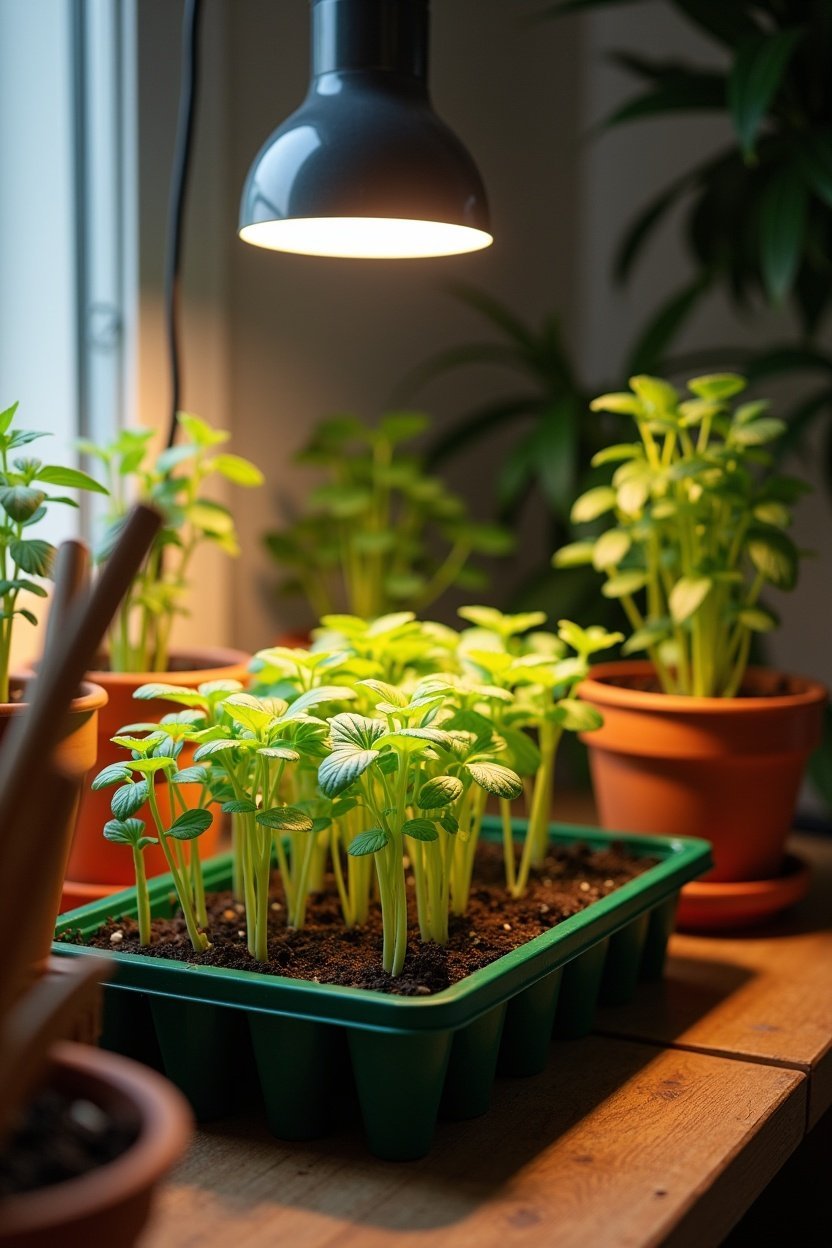
February can feel like an unlikely time to think about gardening. Outside, the ground may still be frozen, the days are short, and spring feels like a distant rumor. But for gardeners in zones 4 through 8, February is exactly the right moment to start seeds indoors. Start too late and you will be scrambling to catch up when planting season arrives. Start in February and you will have healthy, established seedlings ready to go into the ground the moment conditions allow.
Why Start Seeds Indoors at All?
Some crops — grow tomatoes that actually taste goodes, peppers, eggplant, broccoli, and celery — need a very long growing season that starts well before create an outdoor living space temperatures are safe for planting. Starting them indoors gives them the weeks or months of head start they need. It is also dramatically cheaper than buying transplants from a garden center. A single packet of tomato seeds can start twenty or more plants for the cost of one or two nursery transplants.
What to Start in February
Start Now (8–12 Weeks Before Last Frost)
- Tomatoes — start 6 to 8 weeks before last frost
- Peppers and chiles — 8 to 10 weeks before last frost; peppers are slow and benefit from the longest indoor season
- Eggplant — 8 to 10 weeks before last frost
- Celery — 10 to 12 weeks before last frost
- Leeks and onions (from seed) — 10 to 12 weeks before last frost
Start in Late February to Early March
- Broccoli, cauliflower, and cabbage — 6 to 8 weeks before last frost
- Head lettuce — 4 to 6 weeks before last frost
- Herbs: basil, parsley, dill — 6 to 8 weeks before last frost
The Essential Equipment
Seed Starting Mix
Regular potting soil is too dense for germination. You need a fine-textured, well-draining medium specifically designed for seeds. A dedicated seed starting mix is sterile and designed to provide fast drainage and gentle moisture retention. Never substitute garden soil or start composting at home — both carry pathogens and compact around fragile roots.
Biodegradable Seed Starter Trays
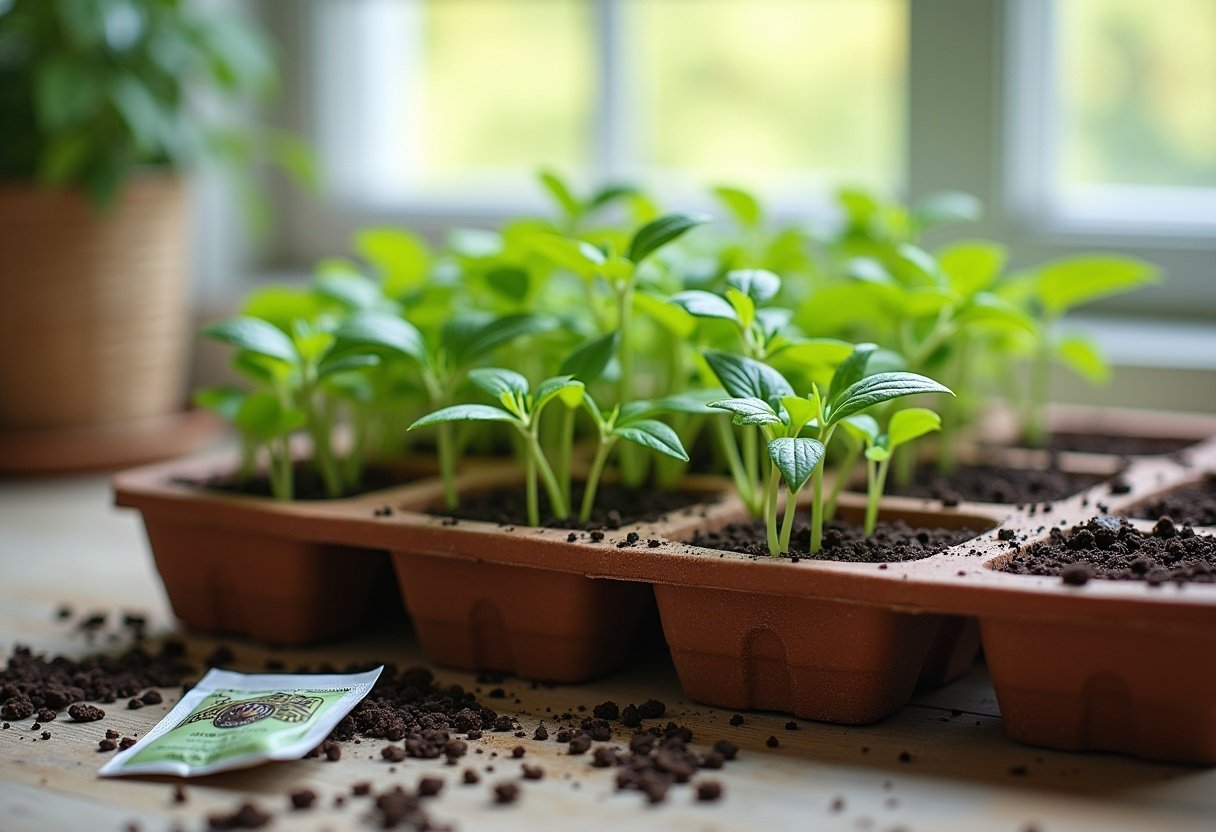
Biodegradable seed starter trays have a practical advantage: when it’s time to transplant, you plant the entire cell directly into the garden. No root disturbance, no transplant shock. Look for trays made from peat, coconut coir, or compressed paper.
LED Grow Light
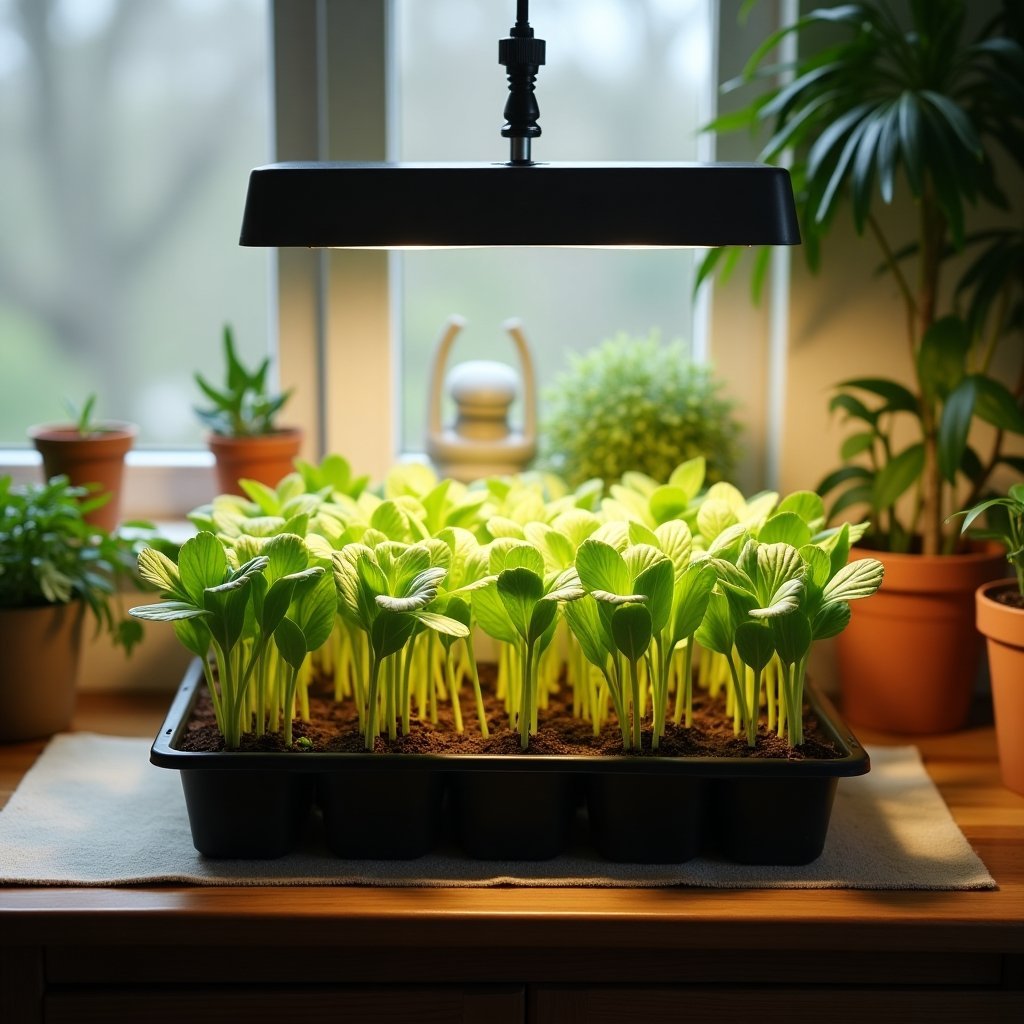
A sunny windowsill is rarely sufficient for seed starting in February. Seedlings need 14 to 16 hours of bright light daily or they stretch into pale, floppy stems — called legginess — that never fully recover. A full-spectrum LED grow light strip suspended 2 to 4 inches above your seedlings for 16 hours per day solves this completely. Modern LED grow lights are energy-efficient and run cool enough not to overheat delicate plants.
Seedling Heat Mat
Most seeds germinate best at soil temperatures between 70°F and 85°F. A seedling heat mat placed beneath trays maintains soil temperature reliably, which speeds germination and improves germination rates — especially important for peppers and eggplant.
Watering Can with Long Spout
Overwatering is the leading cause of seedling death, and the problem is usually delivery, not quantity. A watering can with a long, narrow spout lets you water gently and precisely, directing a thin stream to the base of each cell without disturbing the soil surface.
Step-by-Step Seed Starting
Step 1: Pre-moisten your seed starting mix in a bucket before filling cells — dry mix is difficult to re-wet once it’s in containers. Step 2: Fill cells to just below the rim, pressing gently to eliminate large air pockets. Step 3: Sow at a depth of two to three times the seed diameter. Plant two seeds per cell to ensure at least one germinates, then snip the weaker one at soil level with scissors. Step 4: Label every cell immediately with the variety name and date sown. Step 5: Cover with a humidity dome, place on the heat mat, and check for germination daily. Step 6: The moment seedlings emerge, move them directly under the grow light — the first 48 hours after germination are critical for preventing legginess.
Hardening Off: The Step Most Beginners Skip
Hardening off is the process of gradually introducing your indoor seedlings to outdoor conditions before transplanting. A seedling grown under artificial light cannot go straight into full outdoor sun without serious stress. Start about 10 days before your planned transplant date. Day 1: set seedlings outside in a sheltered, shaded spot for one hour. Add an hour each day. By day 7 to 10, they can handle full outdoor conditions and are ready to plant. For more inspiration, browse our gardening guides. For more ideas, explore our gardening tips.
Products Featured in This Article
- Burpee Natural and Organic Seed Starting Mix, 8 Quarts
- Jiffy Biodegradable Seed Starting Peat Pellet Tray
- Barrina Full Spectrum LED Grow Light Strip, 2ft, 4-pack
- iPower Seedling Heat Mat, 10×20 Inch
- Haws Slimline Watering Can with Brass Rose Head, 1 Liter